Hiccups and Chemotherapy: How It Works, Results and What to Expect

Chemotherapy-related hiccups may be caused by anti-nausea steroids, certain cancer medicines, reflux, constipation or metabolic changes. Persistent hiccups can affect sleep, nutrition, hydration, communication and overall comfort during cancer treatment.
Key Takeaways
- Chemotherapy-related hiccups may be caused by anti-nausea steroids, certain cancer medicines, reflux, constipation or metabolic changes.
- Persistent hiccups can affect sleep, nutrition, hydration, communication and overall comfort during cancer treatment.
- The oncology team can review medicines and look for treatable causes rather than expecting a patient to simply tolerate persistent hiccups.
- Cancer response is assessed through symptoms, examinations, blood tests and scans; hiccups alone do not show whether chemotherapy is working.
- Urgent assessment is needed when hiccups occur with breathing difficulty, chest pain, confusion, severe vomiting or new neurological symptoms.
Hiccups during chemotherapy are often short-lived and can result from treatment medicines, nausea, reflux, stomach fullness or irritation of nerves involved in the hiccup reflex. Although usually not dangerous, hiccups that last more than 48 hours, disrupt sleep or eating, or occur with concerning symptoms should be discussed promptly with the oncology team.
Overview: How hiccups and chemotherapy are connected
Hiccups and chemotherapy can occur together because cancer treatment and supportive medicines may stimulate the body’s hiccup reflex. A hiccup is an involuntary contraction of the diaphragm, the main breathing muscle, followed by rapid closure of the vocal cords. Most episodes are brief, harmless and settle without treatment.
During chemotherapy, hiccups may be linked to medicines used to prevent nausea, particularly corticosteroids, as well as some chemotherapy drugs. Other common contributors include acid reflux, bloating, constipation, irritation of the stomach or esophagus, dehydration, and changes in salts or minerals in the blood. Cancer itself may occasionally contribute, depending on its location and effects on nearby organs or nerves.
The important distinction is duration and impact. Brief hiccups are generally a comfort issue, while persistent hiccups lasting longer than 48 hours can interfere with rest, meals, fluids and recovery. The oncology team should know about persistent or recurrent episodes because there may be a treatable cause or a change in supportive care that can help.
How the hiccup reflex works during cancer treatment
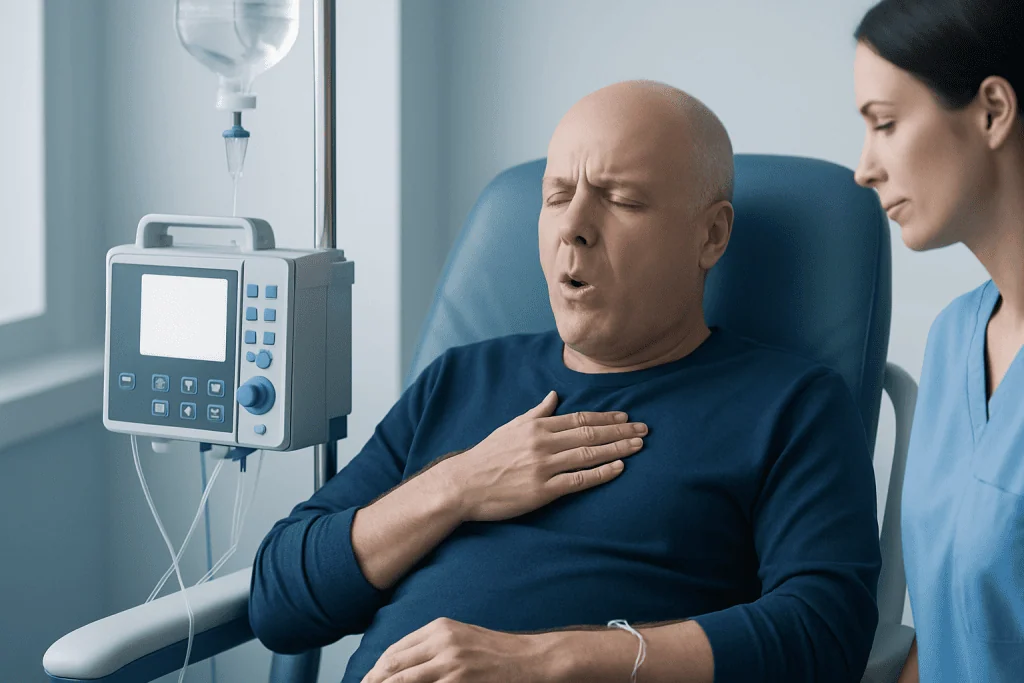
The hiccup reflex involves the diaphragm, nerves in the chest and neck, and areas of the brain that coordinate breathing. Signals can be triggered by stomach distension, irritation of the diaphragm, reflux, medications, or conditions affecting the central nervous system. Chemotherapy does not create one single type of hiccup; instead, it can influence several parts of this pathway directly or indirectly.
For example, medicines given alongside chemotherapy to control nausea and allergic reactions can affect the nervous system or stomach. Steroids, including dexamethasone, are a recognized cause of troublesome hiccups in some people. Nausea, reduced movement, constipation and dietary changes after treatment may also increase reflux or abdominal pressure, which can trigger the reflex.
Before recommending treatment, clinicians usually consider when the hiccups started, their relation to an infusion or new medication, how long they last, and whether they are accompanied by reflux, constipation, pain, vomiting or neurological symptoms. This helps the team choose an approach that addresses the likely cause rather than only suppressing the hiccups.
Why do cancer patients hiccup?

Cancer patients may hiccup for many reasons, and chemotherapy is only one possible factor. Treatment-related triggers include chemotherapy drugs, steroid medicines, opioid pain medicines and some anti-nausea drugs. Reflux, eating quickly, carbonated drinks, constipation and abdominal bloating can also be important, especially around treatment days.
Some cancers or cancer-related complications can irritate the diaphragm or the nerves that control it. This may occur with disease affecting the chest, upper abdomen, liver, esophagus or brain, although persistent hiccups do not automatically mean cancer has progressed. Infections, kidney or liver problems, and imbalances in electrolytes may also need consideration in a person receiving cancer care.
Because there are several possible causes, patients should avoid stopping prescribed chemotherapy or supportive medication on their own. A clinician can determine whether a medicine adjustment, reflux management, bowel care, hydration support, blood testing or further assessment is appropriate. Related symptoms such as nausea, appetite changes and constipation are often managed as part of chemotherapy supportive care.
Who is more likely to need assessment and what to expect
Any person receiving chemotherapy can develop hiccups, but assessment is especially important for people whose episodes are persistent, severe or recurrent after each treatment cycle. Those taking steroid-containing anti-nausea regimens, people with known reflux disease, constipation, kidney or liver impairment, or cancers involving the chest or upper abdomen may have additional risk factors.
At an appointment or by telephone triage, the oncology team may ask about the timing of hiccups, recent infusions, all prescription and non-prescription medicines, food and fluid intake, bowel habits, sleep, and associated symptoms. They may also review blood results or arrange further tests if there are signs of infection, dehydration, metabolic disturbance or another underlying concern.
This evaluation is not a separate cancer procedure and usually does not require preparation beyond keeping a brief symptom record. Recording the start time, duration, likely triggers, medicines taken and effect on sleep or eating can provide useful information. Patients should report symptoms honestly, including embarrassment or distress, because comfort and adequate nutrition are meaningful parts of cancer care.
Treatment options, relief measures and expected timeline
Short-lived hiccups may improve with simple measures such as taking small, slow meals, avoiding carbonated drinks and alcohol if these are personal triggers, sitting upright after eating, and managing constipation as advised by the care team. Sipping cool water slowly or using calm, controlled breathing may help some people, but forceful breath-holding techniques should be avoided if they cause dizziness or discomfort.
If reflux is suspected, clinicians may recommend dietary adjustments or medicines to reduce stomach acid. When a treatment medicine is the likely trigger, the oncology team may consider changing the timing, dose or choice of supportive medicine when clinically safe. For persistent hiccups, clinicians can prescribe medicines that act on the hiccup reflex; the choice depends on a person’s other conditions, medications and possible side effects.
The recovery timeline varies with the cause. Hiccups linked to a single infusion or medication may settle within hours to days, while episodes driven by reflux, constipation or another medical problem may continue until that contributor is treated. Patients should contact their oncology team rather than waiting through several days of distress, particularly if they cannot sleep, eat or drink adequately.
For international patients, Acibadem International’s multidisciplinary specialists at JCI-accredited hospitals can assess treatment-related symptoms alongside the person’s cancer plan and supportive-care needs.
What are good signs that chemo is working?
Good signs that chemotherapy is working are determined by the oncology team using planned follow-up, not by hiccups or other individual side effects. Depending on the cancer type, assessment may include physical examination, symptom changes, blood tests, tumor markers when appropriate, and imaging such as CT, MRI or PET scans. For some blood cancers, bone marrow or other specialized testing may be used.
Symptoms caused by a tumor may improve when treatment is effective, such as less pain, easier breathing, reduced bleeding or better appetite. However, symptoms can fluctuate for many reasons during chemotherapy, and some people feel worse temporarily because of treatment side effects even when the cancer is responding. Conversely, having few side effects does not mean chemotherapy is ineffective.
Response assessment is scheduled at intervals appropriate to the diagnosis and treatment plan. Patients are encouraged to ask their oncologist when and how response will be measured, what changes they may realistically notice, and what the next steps will be if the results show benefit, stability or a need to adjust treatment.
What are the worst days after chemo?
The most difficult days after chemotherapy differ according to the drugs used, treatment schedule, dose intensity, cancer type and individual health. Some effects, such as fatigue, nausea or hiccups related to infusion-day medicines, may begin on the day of treatment or within the first few days. Other effects can appear later in the cycle.
For many regimens, blood cell counts may fall days after chemotherapy rather than immediately. This can increase infection risk during a period often called the nadir, but its timing varies and the oncology team will explain the expected pattern for the specific regimen. Fatigue may also build over several cycles, while mouth soreness, bowel changes or appetite changes can occur at different times.
A written treatment plan and symptom diary can make the pattern easier to understand. Patients should follow their center’s instructions for nausea prevention, hydration, food safety and temperature monitoring. New or worsening symptoms should be reported rather than assumed to be an expected part of treatment.
What are hiccups a warning of? When to seek medical care
Most hiccups are not a warning of a serious problem. In a person receiving chemotherapy, however, persistent hiccups can signal an issue that deserves attention, such as a medication effect, reflux, severe constipation, dehydration, electrolyte imbalance or irritation involving the chest or abdomen. They can also become clinically important simply because they prevent normal eating, drinking or sleep.
Patients should contact the oncology team promptly if hiccups last more than 48 hours, repeatedly return, or cause vomiting, weight loss, inability to take fluids, severe fatigue or disrupted sleep. The care team should also be contacted if hiccups begin soon after a new medicine, as medication review may be helpful.
Urgent medical assessment is appropriate for hiccups with shortness of breath, chest pain, fainting, confusion, fever according to the cancer center’s instructions, severe abdominal pain, persistent vomiting, a severe headache, weakness, speech changes or other new neurological symptoms. These symptoms may not be caused by hiccups themselves, but they require timely evaluation during cancer treatment.
- Do not stop chemotherapy, steroids, anti-nausea medicines or pain medicines without medical advice.
- Keep a list of all medicines and note when hiccups start and stop.
- Seek support early if symptoms affect nutrition, hydration, rest or emotional wellbeing.
Frequently asked questions
Can chemotherapy cause hiccups?
Yes. Chemotherapy-related hiccups may be caused by a cancer medicine itself or by supportive medicines, particularly steroids used to prevent nausea or reactions. Reflux, constipation and bloating around treatment can also contribute.
Are hiccups a sign that chemotherapy is working?
No. Hiccups are not a reliable sign of cancer response or treatment effectiveness. Chemotherapy response is evaluated through planned clinical reviews, blood tests and imaging or other disease-specific tests.
How long do chemotherapy hiccups last?
Brief episodes may last minutes to hours and may resolve within a few days if they are linked to an infusion-day medicine. Hiccups that persist beyond 48 hours, recur often or interfere with sleep and intake should be reported to the oncology team.
Can I treat chemotherapy hiccups at home?
Small meals, slow eating, avoiding personal reflux triggers and staying upright after meals may help mild episodes. Patients should ask their oncology team before using medicines, supplements or home remedies, especially if hiccups are persistent.
What should I tell my doctor about persistent hiccups?
It is helpful to describe when the hiccups began, how long they last, recent treatment dates, all medicines, food and fluid intake, bowel habits and associated symptoms. Reporting effects on sleep, eating, vomiting or breathing helps the team judge urgency and choose treatment.
Should I go to emergency care for hiccups during chemotherapy?
Emergency assessment is needed if hiccups occur with breathing difficulty, chest pain, confusion, fainting, severe vomiting, new weakness or speech problems, or other serious symptoms. Otherwise, persistent hiccups should be discussed promptly with the oncology team or treatment center.
References
- National Cancer Institute
- American Cancer Society
- European Society for Medical Oncology
- Macmillan Cancer Support
- Merck Manual Professional Edition
This article is for general information only and is not a substitute for professional medical advice. Please consult a qualified doctor about your individual situation.
Chemotherapy in Turkey — costs, top hospitals & a free quote
JCI-accredited · board-certified surgeons · reply within 24h
Add us as a Preferred Source to see more of our trusted health content across Google Search, AI Overviews and Discover.