How Orthopedic Evaluation Works: What to Expect at a Bone and Joint Visit

An orthopedic evaluation helps identify the cause of bone, joint, muscle, or spine symptoms. The visit usually includes questions about symptoms, a movement-based physical exam, and review of prior records.
Key Takeaways
- An orthopedic evaluation helps identify the cause of bone, joint, muscle, or spine symptoms.
- The visit usually includes questions about symptoms, a movement-based physical exam, and review of prior records.
- Imaging or other tests may be recommended, but not every patient needs them at the first visit.
- Treatment plans often begin with conservative care such as rest, physical therapy, exercise changes, or medication guidance.
- Preparing a symptom timeline, medication list, and previous imaging reports can make the appointment more useful.
An orthopedic evaluation is a step-by-step assessment of bone, joint, muscle, tendon, ligament, and spine concerns. It usually includes a medical history, physical exam, and sometimes imaging or lab tests to identify the cause of pain, stiffness, weakness, or limited movement.
Overview: What an Orthopedic Evaluation Is
An orthopedic evaluation is a medical assessment focused on the musculoskeletal system. This includes bones, joints, muscles, tendons, ligaments, and the spine. People may be referred for an evaluation because of pain, swelling, stiffness, numbness, weakness, injury, or problems with walking, balance, or everyday movement.
The main goal of the visit is to understand what is causing symptoms and how they affect function. An orthopedic specialist does not only look at where pain is felt. They also assess how the whole area moves and works together. For example, knee pain may relate to the hip, foot, alignment, or muscle weakness rather than the knee joint alone.
Many people worry that an orthopedic appointment automatically means surgery. In reality, an evaluation is designed to guide diagnosis and treatment, and treatment often begins with non-surgical options. The visit helps decide whether symptoms are likely due to overuse, injury, inflammation, wear-and-tear changes, a structural problem, or another condition that needs closer attention.
When Someone May Need a Bone and Joint Visit
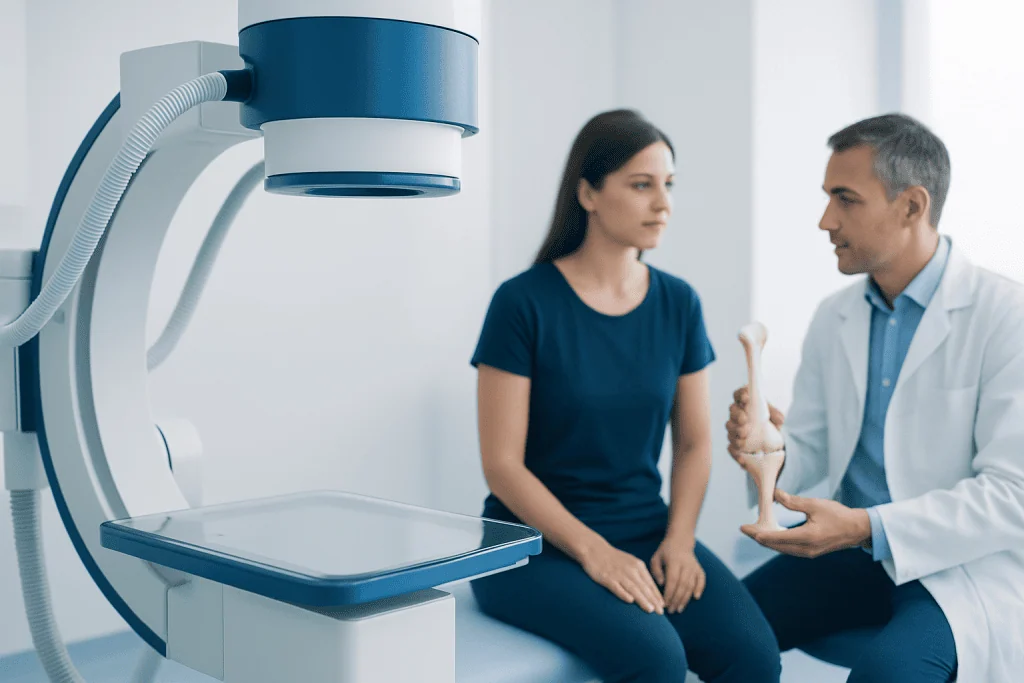
An orthopedic evaluation may be helpful when symptoms do not improve with rest, keep returning, or interfere with daily activities. Common reasons include joint pain, back or neck pain, sports injuries, sprains, fractures, tendon problems, shoulder pain, hip pain, knee pain, hand or wrist symptoms, and difficulty walking.
Some people seek care after a sudden injury, such as a fall, twist, or direct blow. Others come because of gradual symptoms that build over time, such as stiffness in the morning, swelling after activity, reduced flexibility, or discomfort that gets worse with repetitive movements. Long-standing conditions such as osteoarthritis can also be assessed during an orthopedic visit.
Children, adults, athletes, and older adults may all need orthopedic assessment, but the causes can differ by age and lifestyle. For example, a young athlete may have an overuse injury, while an older adult may have joint degeneration, reduced bone strength, or balance-related falls. The evaluation helps match treatment to the person’s needs, activity level, and general health.
What Happens During the Appointment

The visit usually begins with a detailed conversation about symptoms. The doctor may ask when the problem started, whether it followed an injury, what movements make it worse or better, and how symptoms affect sleep, work, sports, or everyday tasks. Patients may also be asked about previous injuries, surgeries, medical conditions, medications, and family history.
Next comes the physical examination. This often includes looking at posture, gait, swelling, skin changes, joint alignment, and muscle bulk. The doctor may gently feel the area, test range of motion, evaluate strength, and check stability, balance, reflexes, or sensation depending on the body part involved. Some maneuvers are designed to reproduce symptoms in a controlled way to help narrow the diagnosis.
The examination is usually interactive. Patients may be asked to bend, walk, raise an arm, grip, squat, or lie down so the joint or spine can be assessed from different angles. If pain limits movement, the clinician will generally work carefully and stop or modify certain parts of the exam as needed. The purpose is to gather useful information, not to force painful movements.
At the end of this stage, the doctor often explains the likely causes and whether more testing is needed. In many cases, the history and physical exam already provide a strong idea of the diagnosis. Additional tests are used to confirm findings, rule out other problems, or help plan treatment.
Tests That May Be Recommended
Not every orthopedic evaluation requires imaging on the first visit. If symptoms appear straightforward and there are no warning signs, the doctor may begin treatment based on the examination alone. When imaging is needed, the choice depends on the suspected problem and the body area involved.
X-rays are commonly used to look at bones, alignment, fractures, joint space narrowing, and some arthritic changes. Ultrasound may help assess tendons, fluid collections, or soft-tissue structures near a joint. MRI is often used when more detail is needed for ligaments, cartilage, discs, tendons, muscles, or nerve-related problems. In selected cases, the doctor may recommend MRI imaging or X-ray imaging to clarify the diagnosis.
CT scans can be useful for complex bone detail, especially after certain fractures or when surgery is being considered. Lab tests are less common in routine orthopedic visits, but they may be ordered if infection, inflammatory arthritis, metabolic bone disease, or another medical cause is suspected. When appropriate, tests may also be used to distinguish orthopedic conditions from nerve or vascular problems.
Patients should feel comfortable asking why a test is being ordered and how it may affect treatment decisions. Understanding the purpose of imaging can help set expectations, especially because some findings may reflect age-related changes that do not always explain symptoms by themselves.
Possible Diagnoses and How Doctors Interpret Findings
Orthopedic specialists evaluate both symptoms and function. A diagnosis may involve acute injury, overuse, inflammation, instability, degeneration, or referred pain from another area. For example, shoulder pain may come from tendinitis, bursitis, a rotator cuff problem, or pain traveling from the neck. Knee symptoms may reflect cartilage wear, ligament injury, meniscus damage, or alignment issues.
In spine-related visits, the doctor considers whether pain is mainly mechanical, muscle-based, disc-related, or associated with nerve irritation. Numbness, tingling, or shooting pain can suggest that nerves are involved, which may lead to a more detailed neurologic exam. Some patients being assessed for chronic back pain may also be evaluated for conditions such as herniated disc if the history and exam point in that direction.
The diagnosis is often made by combining several clues rather than relying on one test result. Pain location, pattern of movement restriction, swelling, weakness, exam maneuvers, and imaging findings are interpreted together. This is important because scans can show changes that are present even in people without symptoms, so treatment should be based on the full clinical picture.
Treatment Options After an Orthopedic Evaluation
Treatment depends on the cause, severity, duration of symptoms, and the patient’s age, health, and activity goals. For many problems, the first step is conservative care. This may include modifying activities, using ice or heat as advised, guided exercise, physical therapy, bracing, supportive footwear, or short-term pain relief strategies recommended by a doctor.
Rehabilitation is often central to recovery. Structured therapy can improve strength, flexibility, balance, posture, and joint mechanics. In some cases, especially after injury or surgery, a clinician may recommend physical therapy and rehabilitation to restore movement safely and reduce the chance of recurring problems.
Some conditions may need procedures such as injections, fracture care, casting, or aspiration of fluid from a joint. Surgery is usually considered when symptoms are severe, structures are clearly damaged, or non-surgical treatment has not brought enough improvement. Depending on the condition, a specialist might discuss options such as orthopedic surgery only if it is genuinely appropriate.
A good treatment plan should explain the diagnosis, expected recovery timeline, warning signs, and when follow-up is needed. Patients benefit from knowing what they can do at home, what activities to avoid for now, and what level of improvement should be expected over weeks or months.
How to Prepare for the Visit and Support Recovery
Preparation can make an orthopedic evaluation more productive. It helps to bring a list of symptoms, when they started, and what makes them better or worse. If symptoms come and go, noting patterns can be useful. Patients should also bring medication lists, previous imaging reports, records of past surgeries, and details about treatments already tried, such as rest, exercises, braces, or injections.
Wearing comfortable clothing can make the exam easier, especially if the knee, shoulder, back, or hip needs to be assessed. For example, shorts may help during a knee evaluation, and a loose top may help during a shoulder or neck exam. Supportive shoes are also helpful if walking or gait will be assessed.
Self-care after the appointment depends on the diagnosis, but common advice includes pacing activity, following exercise instructions correctly, protecting an injured area, and attending follow-up visits. Recovery is often gradual rather than immediate. Overdoing activity too soon can worsen symptoms, while complete inactivity can sometimes increase stiffness and weakness.
Near the end of the care journey, some patients may seek coordinated assessment and treatment across imaging, rehabilitation, and surgical services if needed. Acibadem International’s multidisciplinary specialists and JCI-accredited hospitals provide diagnosis and treatment for international patients with orthopedic conditions.
When to See a Doctor Urgently
Many orthopedic problems can be assessed in a routine clinic visit, but some symptoms need more urgent medical attention. Sudden inability to bear weight, severe deformity after an injury, rapidly increasing swelling, or pain after significant trauma should be evaluated promptly. A possible fracture or dislocation should not be ignored.
Urgent assessment is also important if bone or joint symptoms occur with fever, redness, warmth, or feeling generally unwell, as these can suggest infection or significant inflammation. New weakness, loss of bladder or bowel control, or numbness in the groin area with back pain needs immediate evaluation because it may indicate a serious nerve-related problem.
Even when symptoms are not an emergency, medical review is sensible if pain lasts more than a few weeks, keeps returning, disturbs sleep, or limits work, sport, or routine activities. Early evaluation can help identify the cause, prevent compensation injuries, and support a safer, more effective recovery plan.
Frequently asked questions
What is checked during an orthopedic evaluation?
An orthopedic evaluation usually checks symptoms, movement, strength, joint stability, posture, and how the affected area functions in daily life. The doctor also reviews medical history, previous injuries, and any prior imaging or treatments.
Will an orthopedic visit always include imaging?
No. Many diagnoses can be strongly suspected from the history and physical examination alone. Imaging is used when it is needed to confirm the cause, rule out another problem, or help guide treatment.
Does seeing an orthopedic specialist mean surgery is needed?
Not at all. Many bone, joint, and muscle conditions are treated without surgery using exercise, physical therapy, activity changes, braces, or medication guidance. Surgery is usually considered only when clearly appropriate.
How long does an orthopedic appointment usually take?
The exact time varies by clinic and by how complex the problem is. In general, the first visit takes longer than a follow-up because it includes a full history, examination, and discussion of next steps.
What should someone bring to a bone and joint visit?
It is helpful to bring a list of symptoms, current medications, allergy information, previous scan reports, and records of past treatments or surgeries. Comfortable clothing can also make the physical examination easier.
Can orthopedic pain come from a different area than where it is felt?
Yes. Pain can be referred from nearby joints, the spine, nerves, or altered movement patterns. That is one reason an orthopedic specialist may examine more than just the painful area.
References
- American Academy of Orthopaedic Surgeons
- National Institute of Arthritis and Musculoskeletal and Skin Diseases
- MedlinePlus
- NHS
- American College of Radiology
This article is for general information only and is not a substitute for professional medical advice. Please consult a qualified doctor about your individual situation.
Explore treatments in Turkey — costs, top hospitals & a free quote
JCI-accredited · board-certified surgeons · reply within 24h