How to Increase Vo2 Max? Here Is What the Evidence Says

VO2 max is a measure of how well the body uses oxygen during exercise and is one marker of cardiorespiratory fitness. The most reliable ways to improve VO2 max are consistent endurance exercise, appropriately dosed interval training, and progressive overload.
Key Takeaways
- VO2 max is a measure of how well the body uses oxygen during exercise and is one marker of cardiorespiratory fitness.
- The most reliable ways to improve VO2 max are consistent endurance exercise, appropriately dosed interval training, and progressive overload.
- Sleep, nutrition, iron status, hydration, and recovery all influence training response and exercise capacity.
- Not everyone responds at the same rate; age, genetics, health conditions, and baseline fitness all play a role.
- New exercise intolerance, chest pain, wheezing, fainting, or unexplained fatigue should prompt medical assessment.
Most people who want to know how to increase VO2 max can improve it safely with structured aerobic exercise, interval training, recovery, and healthy daily habits. If exercise causes unusual breathlessness, chest symptoms, fainting, or a major drop in performance, a doctor should check for an underlying heart, lung, blood, or metabolic problem.
Overview: What Evidence Says About Raising VO2 Max
For most healthy adults, the answer to how to increase VO2 max is straightforward: regular aerobic training, some higher-intensity sessions, and enough recovery usually improve it over time. VO2 max reflects the maximum amount of oxygen the body can take in, transport, and use during intense exercise, so it depends on the lungs, heart, blood, circulation, and working muscles all functioning together.
It is important to remember that VO2 max is only one piece of fitness. A person can become healthier, stronger, and more active even if their number changes slowly. Genetics, age, sex, training history, and underlying health all affect where someone starts and how much improvement is realistic.
Most of the time, wanting to improve VO2 max is not a sign of illness. However, if a person has a sudden decline in exercise capacity, becomes breathless with mild effort, or develops chest discomfort, palpitations, dizziness, wheezing, or unusual fatigue, medical review is sensible before pushing training harder.
What VO2 Max Means in Daily Life and Sport
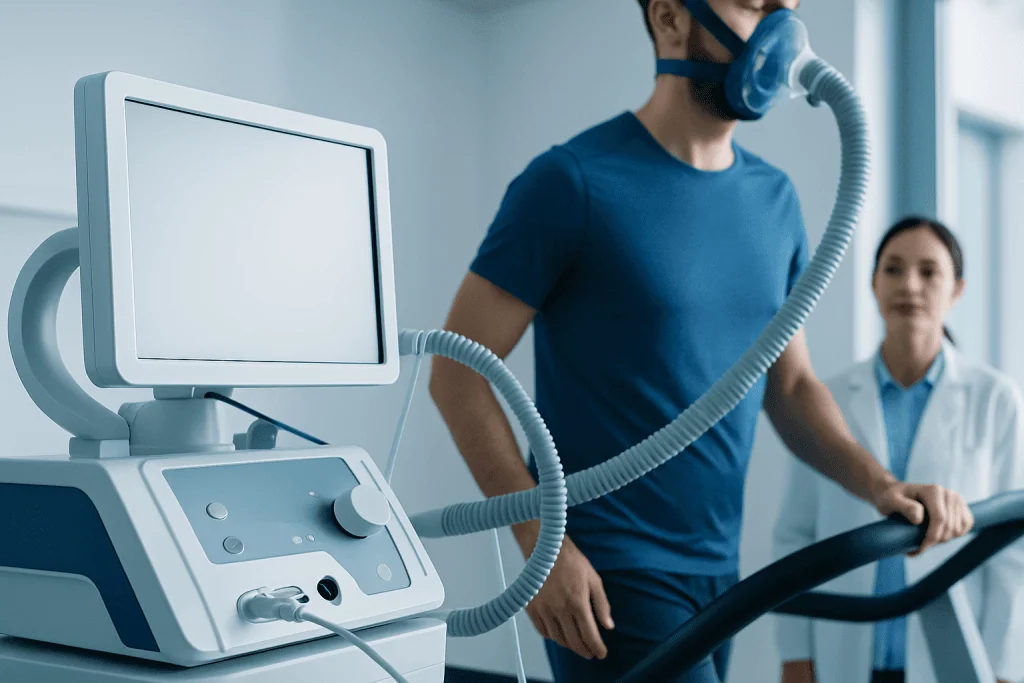
VO2 max is commonly discussed in endurance sports, but it matters beyond athletes. A higher VO2 max is generally associated with better cardiorespiratory fitness and an improved ability to sustain physical activity. In practical terms, it may mean walking uphill with less effort, recovering faster from exertion, or tolerating longer exercise sessions.
VO2 max is not the same as athletic performance. Two people with similar VO2 max values may perform very differently depending on movement efficiency, muscle strength, motivation, fueling, and training specificity. That is why an exercise plan should focus on overall function rather than a single metric from a watch or fitness app.
Wearables can estimate VO2 max, but they do not replace clinical testing. Estimates may be useful for following trends, though they can be affected by heart rate variability, terrain, heat, dehydration, and device accuracy. Formal cardiopulmonary exercise testing provides a more precise measurement when needed.
The Most Effective Ways to Increase VO2 Max

The strongest evidence supports a combination of steady aerobic exercise and interval training. Regular moderate-intensity activities such as brisk walking, cycling, swimming, rowing, or jogging help build the cardiovascular base. Over time, the body adapts by improving stroke volume, oxygen delivery, and muscular efficiency.
Higher-intensity interval training can produce additional gains, especially in people who already exercise regularly. Short or longer intervals performed near a hard but sustainable effort challenge the heart, lungs, and muscles in a way that can raise aerobic capacity. This should be introduced progressively, especially for beginners or anyone returning after illness or injury.
Progressive overload matters more than any single workout style. Training needs to become slightly more demanding over time, whether by adding duration, frequency, or intensity. At the same time, doing too much too quickly may lead to fatigue, injury, or overtraining-like symptoms that reduce performance rather than improve it.
- Aim for consistent weekly aerobic activity rather than occasional very hard sessions.
- Add 1 to 2 interval sessions per week if fitness level and medical status allow.
- Include recovery days and easier sessions to support adaptation.
- Choose activities that can be sustained regularly; consistency is more important than perfection.
Training Principles That Support Better Results
Exercise intensity should match the person’s current fitness. Someone new to training may improve VO2 max significantly with walking, incline treadmill sessions, or easy cycling, while a trained runner may need more structured intervals or threshold work. The best plan is one that is challenging enough to stimulate change but realistic enough to continue.
Frequency is also important. Three to five aerobic sessions each week is a common starting framework, though individual needs vary. Longer low- to moderate-intensity sessions help build endurance, while shorter high-intensity sessions can increase the training stimulus. Resistance training does not directly raise VO2 max as much as aerobic work, but it can support exercise economy, posture, injury prevention, and overall performance.
Recovery is part of training, not a break from it. Sleep, rest days, hydration, and adequate calorie and protein intake help the body adapt to exercise. If a person is training consistently but not improving, poor recovery, low energy availability, iron deficiency, or an unrecognized health issue may be limiting progress.
Technique and environment can also influence exercise tolerance. Heat, altitude, humidity, illness, and certain medications may lower apparent performance. A temporary dip in fitness does not always mean the training plan is failing.
Health Factors That Can Limit VO2 Max Improvement
If fitness does not improve despite a sensible program, clinicians consider both training and medical factors. Common explanations include doing most exercise at the same easy pace, insufficient weekly volume, inconsistent training, or not enough recovery. But health conditions can also reduce oxygen delivery or use.
Examples include asthma and other respiratory conditions, anemia or low iron stores, thyroid disorders, heart rhythm problems, structural heart disease, poorly controlled blood pressure, infection, and sleep problems. Sometimes a person assumes they are simply “out of shape” when the real issue is an underlying condition such as anemia or asthma.
Nutrition matters as well. Inadequate carbohydrate intake can reduce the quality of harder training sessions, while dehydration can increase heart rate and perceived effort. Restrictive diets, significant weight loss, or disordered eating patterns may impair recovery and reduce performance.
Smoking, heavy alcohol use, and persistent psychological stress can also affect aerobic capacity. Addressing these factors may improve exercise tolerance as much as changing the workout plan.
How Doctors Evaluate Low Exercise Capacity
When a person seeks medical care for poor exercise tolerance, the evaluation usually begins with a detailed history. A doctor asks when the problem started, whether it is new or worsening, what symptoms occur during exercise, what medications are used, and whether there is a history of heart, lung, blood, thyroid, or sleep disorders. Training volume, recent illness, travel to altitude, and menstrual or nutritional history may also be relevant.
The next step is a physical examination and, if indicated, targeted testing. Depending on symptoms and risk factors, this may include blood tests to check for anemia, iron deficiency, thyroid problems, or infection; lung function testing; electrocardiography; echocardiography; or exercise testing. In some cases, a doctor may recommend check-up and diagnostics or formal cardiology assessment to look more closely at exercise-related symptoms.
For people with significant unexplained breathlessness, cardiopulmonary exercise testing can be especially helpful. This test measures breathing, oxygen use, carbon dioxide production, and heart response during exercise, helping clinicians determine whether the main limitation is cardiovascular, respiratory, muscular, deconditioning-related, or mixed.
If respiratory symptoms such as wheeze, chest tightness, or cough occur with exertion, further evaluation may include testing for exercise-induced bronchoconstriction or other lung conditions. Some patients may also benefit from pulmonology evaluation depending on the pattern of symptoms.
Practical Self-Care: How to Build VO2 Max Safely
A safe starting point is to build a regular aerobic routine before focusing on harder intervals. For many people, this means beginning with manageable sessions and gradually extending total weekly time. Once a stable base is in place, brief harder efforts can be added with easy recovery between them.
Warm-up and cool-down matter, particularly before vigorous exercise. A gradual warm-up prepares the heart, lungs, and muscles for higher demand and may reduce symptoms in people prone to exercise-related breathing issues. After training, a cool-down can help heart rate and breathing return to baseline more comfortably.
Daily habits strongly influence progress. Helpful measures include:
- Prioritizing 7 to 9 hours of sleep when possible.
- Eating enough to support training, including adequate protein and carbohydrate.
- Replacing fluids lost during exercise, especially in heat.
- Taking rest days after very intense sessions.
- Tracking trends in fatigue, mood, and performance instead of relying on one workout.
People with chronic health conditions, those over a certain age who are starting vigorous exercise, or anyone with concerning symptoms should discuss plans with a qualified clinician. Near the end of the care pathway, if specialist input is needed, Acibadem International’s multidisciplinary specialists in JCI-accredited hospitals diagnose and treat heart, lung, and exercise-related conditions for international patients.
When to Seek Medical Care
In most cases, a low VO2 max estimate from a fitness device is not an emergency. It often reflects training status, recent illness, stress, poor sleep, heat, or simple measurement variation. Even so, a person should not ignore symptoms that suggest exercise is becoming unsafe or unusually difficult.
Medical review is important if exercise causes chest pain, pressure, fainting, near-fainting, marked palpitations, new wheezing, bluish lips, severe shortness of breath, or a sudden unexplained drop in performance. Review is also sensible if fatigue is persistent, if breathlessness seems out of proportion to effort, or if there are signs of a condition such as heart disease.
People recovering from COVID-19, pneumonia, major surgery, or prolonged inactivity may also need guidance on returning to exercise safely. A doctor can help distinguish normal deconditioning from a problem that needs treatment and decide whether supervised exercise or specialist testing would be appropriate.
Frequently asked questions
How long does it take to increase VO2 max?
Many people see some improvement within several weeks of consistent training, especially if they are new to exercise. The exact pace varies with age, baseline fitness, training quality, recovery, and overall health.
Is interval training the best way to improve VO2 max?
Interval training is effective, but it works best when added to a solid aerobic base. For beginners, steady moderate exercise may be the safest and most sustainable first step before harder sessions are introduced.
Can walking increase VO2 max?
Yes, especially in people who are inactive or returning to exercise. Brisk walking, hills, longer duration, and regular weekly practice can all improve cardiorespiratory fitness over time.
Why is my VO2 max not improving even though I exercise?
Possible reasons include not enough training intensity or volume, too little recovery, inconsistent exercise, poor sleep, dehydration, or under-fueling. Medical causes such as asthma, anemia, thyroid problems, or heart conditions may also need to be considered if symptoms are present.
Do fitness watches measure VO2 max accurately?
Wearables provide an estimate rather than a direct medical measurement. They can be useful for observing trends, but heat, terrain, illness, and device limitations can affect the number.
Should someone with asthma or heart disease try to increase VO2 max?
Often yes, but the approach should be individualized and medically guided. Exercise can be beneficial, but symptoms, medications, and safety limits need to be reviewed with a doctor before vigorous training.
References
- American College of Sports Medicine
- Centers for Disease Control and Prevention
- National Heart, Lung, and Blood Institute
- American Heart Association
- World Health Organization
This article is for general information only and is not a substitute for professional medical advice. Please consult a qualified doctor about your individual situation.
Explore treatments in Turkey — costs, top hospitals & a free quote
JCI-accredited · board-certified surgeons · reply within 24h
Check your numbers in seconds
BMI, calories, due date, blood pressure and 30+ more clinical calculators — free, instant, doctor-reviewed ranges.

More from the Health Library



Related Specialists

Assoc. Prof. Dr. Sabri Berkem Ökten
Gynecology & Obstetrics
Prof. Dr. Selami Çakmak
Orthopedic Surgery & Traumatology
Prof. Dr. Özlem Pata
Gynecology & Obstetrics
Dr. Ruhan Özer Güzeldere
Pediatrics