Images of Second Degree Burns: An Evidence-Based Guide for Patients
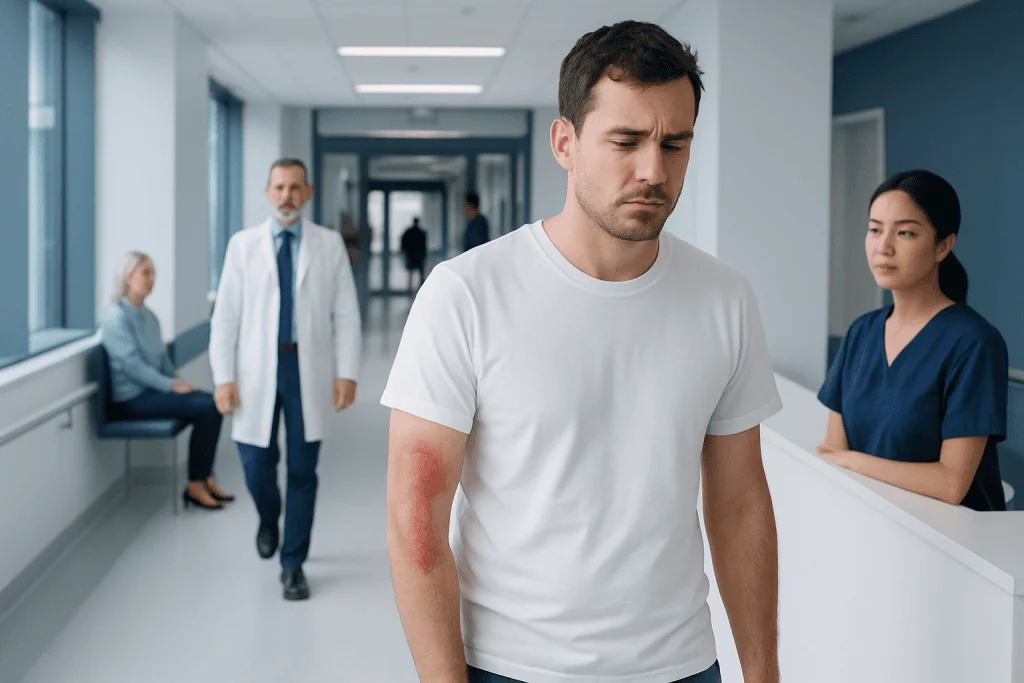
Second degree burns often appear red, swollen, moist, and blistered rather than dry or charred. These burns are usually very painful because deeper skin structures are exposed or inflamed.
Key Takeaways
- Second degree burns often appear red, swollen, moist, and blistered rather than dry or charred.
- These burns are usually very painful because deeper skin structures are exposed or inflamed.
- Cool running water, gentle covering, and avoiding ice or home remedies are key first-aid steps.
- Burns on the face, hands, feet, genitals, major joints, or large body areas need prompt medical evaluation.
- A doctor may recommend dressings, pain control, and follow-up to lower the risk of infection and scarring.
Images of second degree burns typically show red, moist, blistered skin that is very painful to touch. These burns affect the outer skin and part of the deeper skin layer, so early cooling, protection, and medical assessment can help support healing and reduce complications.
What images of second degree burns usually show
Images of second degree burns usually show skin that looks bright red or deep pink, wet or shiny, swollen, and blistered. In many cases, the skin surface appears uneven because blisters can be small and scattered or large and fluid-filled. Compared with a mild first degree burn, the area often looks more damaged and is usually much more painful.
A second degree burn is also called a partial-thickness burn. This means the injury extends through the outer layer of skin and into part of the deeper layer. Because nerves in the deeper skin remain exposed or irritated, these burns commonly hurt with air movement, touch, or washing.
Photographs can help people recognize general features, but no image can confirm burn depth or severity with certainty. Lighting, skin tone, the age of the burn, and whether a blister has broken can all change how a burn looks. A healthcare professional may be needed to tell whether a burn is superficial partial-thickness, deeper partial-thickness, or more severe.
How a second degree burn looks on different skin tones

Burn images online often overrepresent lighter skin tones, which can make self-recognition harder for many patients. On lighter skin, a second degree burn may look pink, red, or bright red with obvious blistering. On darker skin, the burn may appear deep red, reddish-brown, violaceous, or darker than the surrounding skin, and color change may be less easy to see than swelling, tenderness, and blistering.
The surface may look moist, shiny, or weeping if a blister has opened. Intact blisters can look clear, yellowish, or slightly cloudy. If a burn is healing normally, the area may gradually become less swollen and less wet over time, although color differences can persist for weeks.
Some visual clues are more dependable than color alone. These include severe tenderness, a soft or moist surface, blister formation, and skin that looks raw after a blister breaks. If there is uncertainty, especially in a child, older adult, or person with darker skin where redness may be subtle, a medical review is sensible.
Symptoms that help distinguish second degree burns
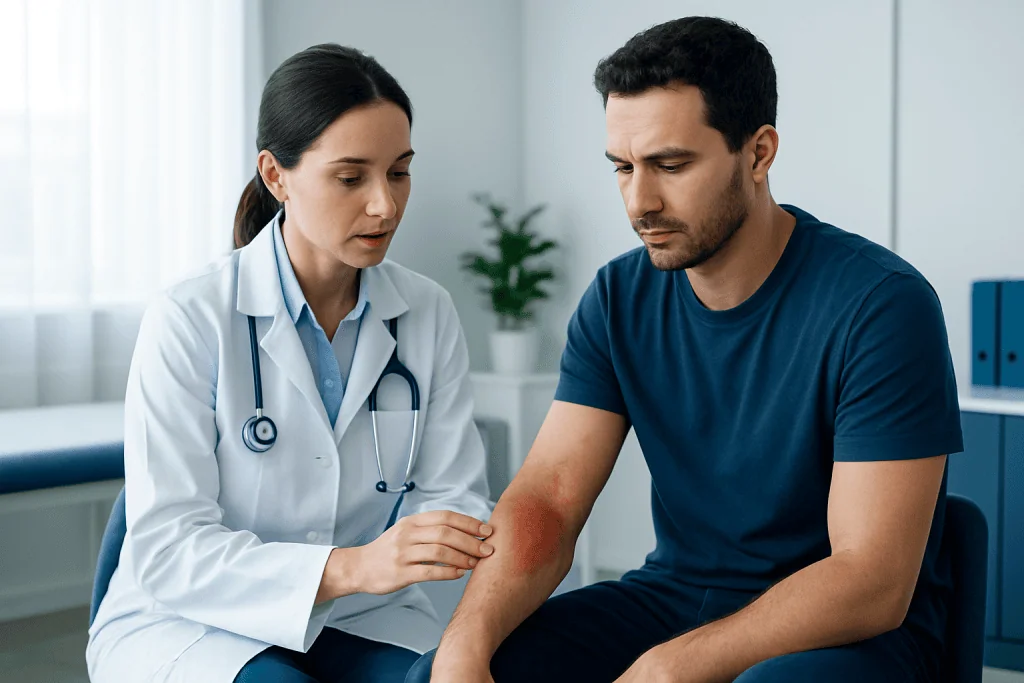
In addition to appearance, symptoms help explain what the images mean. Second degree burns are usually very painful, often more painful than people expect from the size of the injury. The skin may sting, throb, or burn continuously, and the area can become more sensitive over the first several hours.
Common features include blistering, swelling, warmth, redness or darkening, and a moist surface. If a blister opens, the exposed skin underneath can look raw and feel extremely tender. Many people also notice that clothing, shower water, or air movement causes discomfort.
These burns differ from first degree burns, which generally cause redness without blisters. They also differ from deeper third degree burns, which may look white, waxy, leathery, brown, or charred and can be less painful in the center because nerve endings are more severely damaged. Burn depth can be mixed, so one injury may contain areas with different appearances.
- Typical second degree burn signs: blistering, moisture, redness or deeper discoloration, swelling, and strong pain
- Less typical signs that may suggest a deeper injury: pale, dry, leathery, or numb areas
- Concerning changes over time: increasing redness around the burn, pus, fever, or worsening pain after initial improvement
Common causes and factors that affect severity
Second degree burns can happen after contact with hot liquids, steam, flames, hot surfaces, chemicals, electricity, or intense sun exposure. Scalds from coffee, soup, bath water, and cooking liquids are especially common in children, while adults may be injured by workplace heat sources, kitchen accidents, and outdoor fire exposure.
The severity of a burn depends on more than what caused it. Important factors include how long the skin was exposed, how hot the source was, where the burn is located, and how large the affected area is. Very young children and older adults may develop deeper burns more easily because their skin can be more delicate.
Underlying health conditions can also influence healing. Diabetes, circulation problems, immune suppression, and poor nutrition may slow recovery and raise the risk of infection. If a burn occurs together with smoke inhalation, significant trauma, or electrical exposure, it needs urgent assessment because the visible skin injury may not show the full extent of the damage.
First aid and diagnosis: what to do after noticing a burn
If images of second degree burns look similar to a recent injury, the first step is simple first aid. The burned area should be cooled under cool running water for about 20 minutes as soon as possible, ideally within the first few hours. Rings, watches, or tight clothing near the burn should be removed early in case swelling develops.
Ice, butter, toothpaste, oils, and other home remedies should be avoided because they can worsen tissue injury or increase infection risk. Blisters should not be intentionally popped. After cooling, the burn can be loosely covered with a clean, non-stick dressing or cloth to protect the skin until medical advice is available.
Doctors diagnose second degree burns mainly by examining the skin and asking how the injury happened. They assess depth, size, location, pain level, and signs of infection. In some cases, patients may benefit from specialist evaluation through burn treatment services, especially when the injury is extensive, deep, or in a sensitive area. If there is concern for related skin damage or healing problems, broader assessment in dermatology care may also be helpful.
Treatment options and healing expectations
Treatment depends on the depth and extent of the burn. Smaller superficial partial-thickness burns may heal with wound cleaning, protective dressings, pain relief, and regular follow-up. The main goals are to keep the wound clean, support healing, control discomfort, and reduce the chances of infection and scarring.
Deeper or larger burns may need more advanced dressings, closer observation, fluid support, or procedures to remove damaged tissue. Some deeper partial-thickness burns can take longer to heal and may require specialist burn or surgical care. When reconstruction or scar-related concerns arise, doctors may involve teams experienced in plastic and reconstructive surgery.
Healing time varies widely. A more superficial second degree burn may improve over days to a few weeks, while deeper burns can take longer and leave more noticeable color change or scarring. If a wound becomes increasingly red, swollen, foul-smelling, or painful, or starts draining pus, medical reassessment is important because infection can resemble delayed healing. Patients with severe skin inflammation or overlapping conditions may also need evaluation for related skin diseases that affect recovery.
Prevention, self-care, and scarring after a burn
Prevention starts with everyday heat safety. Hot drinks should be kept away from the edge of tables, pot handles turned inward on the stove, bath water tested before use, and children kept away from cooking areas. Sun protection also matters because severe sunburn can sometimes reach second degree depth with blistering.
During recovery, it is important to follow dressing instructions and keep the wound clean and protected. Once the skin has closed, gentle moisturization and sun protection may help reduce dryness and pigment changes. New skin is fragile, so rubbing, scratching, or exposing it to strong sunlight should be minimized.
Scarring risk is generally higher when a burn is deeper, larger, infected, or slow to heal. Some people also develop long-lasting color changes even if the skin texture heals well. Near the end of the care pathway, patients who need multidisciplinary follow-up may seek advice at centers such as Acibadem International, where JCI-accredited hospitals care for international patients with burn, wound, and skin recovery needs.
When to seek medical care
Medical care is recommended if a second degree burn involves the face, hands, feet, genitals, buttocks, major joints, or a large area of the body. The same is true if the person is an infant, an older adult, pregnant, or has a condition such as diabetes that may impair healing. Burns caused by chemicals, electricity, or suspected smoke inhalation should be assessed urgently.
Emergency care is also needed if there is trouble breathing, signs of shock, severe pain that is hard to control, or concern that the burn may be deeper than it first seemed. A burn that looks white, brown, leathery, or numb in the center may not be a simple second degree injury. Prompt assessment can help guide safe wound care and identify complications early.
If the injury seems small but symptoms worsen after a day or two, it is still wise to contact a doctor. Increasing redness around the wound, fever, pus, bad odor, or delayed healing are reasons for review. Patients with uncertain burn severity may also need assessment to rule out overlapping conditions such as skin cancer when a chronic non-healing lesion does not follow the expected pattern of a burn.
Frequently asked questions
What do images of second degree burns usually look like?
They usually show red or darkened skin with blisters, swelling, and a moist or shiny surface. The area often looks raw if a blister has broken and is typically very painful.
How can someone tell a second degree burn from a first degree burn?
A first degree burn usually causes redness and pain without blisters. A second degree burn goes deeper, so blistering, more swelling, and stronger tenderness are common.
Should burn blisters be popped?
In general, no. Blisters help protect the skin underneath, and opening them at home can increase infection risk and delay healing.
What is the best first aid for a suspected second degree burn?
Cool the area under cool running water for about 20 minutes, remove tight items nearby, and cover it loosely with a clean non-stick dressing. Ice, greasy products, and household remedies should be avoided.
When should a second degree burn be seen by a doctor?
A doctor should assess burns on the face, hands, feet, genitals, major joints, or large body areas, as well as burns in children, older adults, or people with chronic illness. Medical review is also important if there are signs of infection or if the burn came from chemicals, electricity, or smoke exposure.
How long does a second degree burn take to heal?
Healing time depends on how deep the burn is and whether complications occur. More superficial burns may heal within a few weeks, while deeper burns can take longer and may leave scarring or color changes.
References
- American Burn Association
- Mayo Clinic
- National Institute of General Medical Sciences
- National Health Service
- World Health Organization
This article is for general information only and is not a substitute for professional medical advice. Please consult a qualified doctor about your individual situation.
Explore treatments in Turkey — costs, top hospitals & a free quote
JCI-accredited · board-certified surgeons · reply within 24h

More from the Health Library


Related Specialists

Asst. Prof. Dr. Neval Yurttutan Uyar
Clinical Laboratory
Dr. Ahmet Kurt
Internal Medicine
Dr. Talat Sarıkavak
Psychiatry
Prof. Dr. Erhan Serin
Orthopedic Surgery & Traumatology