Inner Thigh Muscles: A Complete Medical Overview

The inner thigh muscles are mainly the adductor muscle group, which helps move the leg inward and stabilize the pelvis. Pain in this area is often related to muscle strain, overuse, limited flexibility, or sports involving sudden direction changes.
Key Takeaways
- The inner thigh muscles are mainly the adductor muscle group, which helps move the leg inward and stabilize the pelvis.
- Pain in this area is often related to muscle strain, overuse, limited flexibility, or sports involving sudden direction changes.
- Symptoms can include tenderness, tightness, bruising, weakness, and pain with walking, squeezing the legs together, or exercise.
- Most mild injuries improve with rest, activity modification, gentle rehabilitation, and a gradual return to movement.
- Medical assessment is important if pain is severe, persistent, follows a pop or tear, or is associated with swelling, numbness, or trouble bearing weight.
Inner thigh muscles are a group of adductor muscles that help bring the leg toward the body, stabilize the pelvis, and support walking, running, and balance. When these muscles are strained or overused, they can cause inner thigh or groin pain, stiffness, weakness, and difficulty with activity.
Overview: what the inner thigh muscles do
The inner thigh muscles are primarily the adductor muscles, a group on the inside of the thigh that helps draw the leg toward the midline of the body. This group includes the adductor longus, adductor brevis, adductor magnus, gracilis, and pectineus. Together, they support everyday movement as well as more demanding actions such as sprinting, pivoting, climbing stairs, and changing direction.
These muscles do more than move the leg inward. They also help steady the pelvis, assist with hip flexion or extension depending on position, and contribute to balance during walking. Because they work closely with the hip, pelvis, lower abdomen, and hamstrings, discomfort in the inner thigh can sometimes overlap with groin pain or hip-related symptoms.
From a medical perspective, inner thigh symptoms are often linked to strain, overuse, or reduced flexibility rather than a serious illness. Still, the same area can also be affected by tendon irritation, hip joint problems, hernias, or referred pain from nearby structures. A careful evaluation helps identify whether the discomfort is a straightforward muscle problem or part of a broader condition.
Anatomy and how these muscles work in daily life
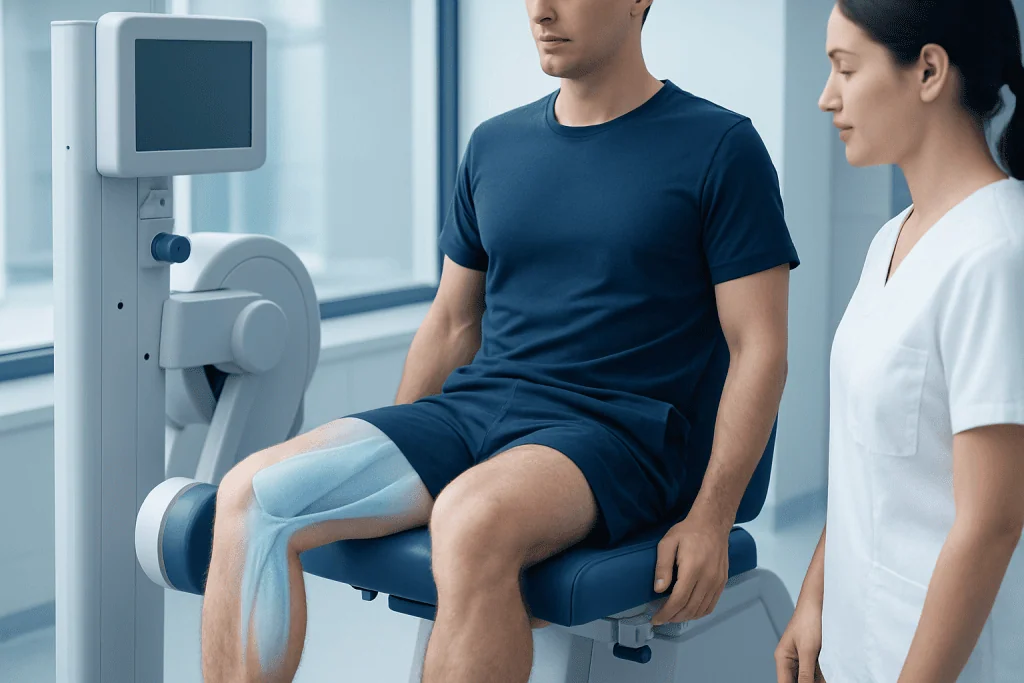
The adductor muscles attach from the pelvis to the femur and, in the case of the gracilis, continue toward the inner knee. This arrangement allows them to control the leg during side-to-side movement and stabilize the lower body when one foot is off the ground. Even simple actions such as getting out of a car or crossing the legs depend on coordinated inner thigh muscle function.
During sports and exercise, the inner thigh muscles help absorb force and control motion. They are especially active in football, hockey, tennis, martial arts, dance, and running drills that involve sudden stopping or cutting. If these muscles are asked to lengthen rapidly while under load, they are more vulnerable to strain.
The inner thigh also works in partnership with the core and gluteal muscles. If the surrounding muscles are weak or movement patterns are unbalanced, the adductors may be overloaded. This is one reason why treatment often includes not only the painful area, but also the hips, pelvis, and lower trunk.
Common symptoms and possible injuries
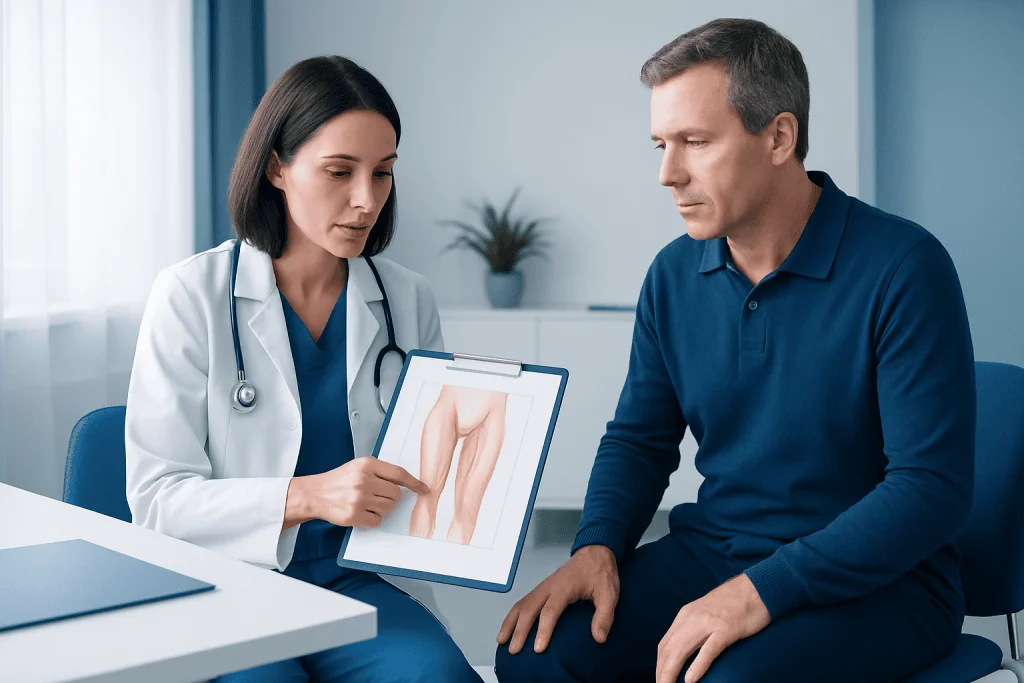
Inner thigh muscle problems can range from mild tightness after exercise to a more definite adductor strain. A strain happens when muscle fibers or the tendon are overstretched or partially torn. Many people notice sudden pain during a sprint, kick, wide step, or quick change of direction, although symptoms can also build gradually with repetitive training.
Common symptoms include tenderness along the inner thigh, pain near the groin, stiffness, and discomfort when squeezing the knees together. Some people also have weakness, bruising, swelling, or a pulling sensation. Walking, climbing stairs, turning in bed, and athletic movements may become uncomfortable depending on the severity of the injury.
Not all inner thigh pain is caused by the muscles themselves. In some cases, symptoms may be related to hip joint conditions, nerve irritation, tendon problems, or a hernia. If groin pain is ongoing or difficult to explain, doctors may also consider related conditions such as hip pain or other sources of referred pain from the pelvis and lower back.
Causes and risk factors
The most common cause of inner thigh muscle pain is overloading the adductors beyond what they are prepared to handle. This may happen during sports, a sudden increase in training, a slip or overstretch, or returning to activity too quickly after time off. Tight muscles, fatigue, and poor warm-up habits may also raise the risk.
Biomechanics matter as well. Limited hip mobility, weak gluteal or core muscles, and uneven movement patterns can place extra strain on the inner thigh. Previous groin injury is a known risk factor because healed tissue may still be sensitive to rapid force or incomplete rehabilitation.
Other contributors include repetitive kicking, skating, or lateral drills, as well as occupations that require frequent climbing or awkward leg positions. In some people, pain around the inner thigh may be connected to nearby soft-tissue problems such as tendon irritation or a sports injury affecting the hip and groin region more broadly.
- Sudden sprinting, cutting, or kicking
- Rapid increase in exercise intensity or volume
- Insufficient warm-up or recovery
- Poor flexibility or muscle imbalance
- Previous groin or adductor injury
How doctors diagnose inner thigh muscle problems
Diagnosis begins with a medical history and physical examination. A doctor will usually ask when the pain started, what movement caused it, whether there was a pop or snap, and what makes the pain better or worse. The exam often includes checking tenderness, muscle strength, range of motion, and pain with resisted adduction, meaning squeezing the leg inward against pressure.
The location of pain can offer clues, but it is not always enough to confirm the cause. Doctors also look for signs that point away from a simple muscle strain, such as hip joint restriction, abdominal wall tenderness, a lump suggestive of hernia, or symptoms traveling down the leg. If the history suggests a more complex problem, imaging may be considered.
Ultrasound or MRI may help show muscle or tendon injury, especially in athletes, severe pain, or symptoms that do not improve as expected. X-rays are sometimes used when a bone or hip problem needs to be excluded. In selected cases, evaluation may involve orthopedics, sports medicine, or physical therapy and rehabilitation to guide recovery and prevent recurrence.
Treatment options and recovery
Treatment depends on the cause and severity. For a mild to moderate strain, the first steps usually include reducing painful activity, relative rest, and using comfort measures such as ice during the early phase. The goal is not complete inactivity for long periods, but protecting the area while pain settles and normal movement gradually returns.
Rehabilitation is central to recovery. Gentle range-of-motion work is often followed by progressive strengthening of the adductors, gluteal muscles, core, and hip stabilizers. Stretching can be helpful when introduced carefully, but aggressive stretching too soon may worsen symptoms. A structured program through rehabilitation can help restore strength, balance, and confidence before return to sport.
If pain is persistent or the diagnosis is uncertain, doctors may investigate related hip and groin problems. In some cases, further assessment by orthopedic specialists is useful, particularly if a tendon injury, significant tear, or underlying joint issue is suspected. Surgery is uncommon for routine adductor strains and is generally reserved for selected cases where a more serious structural problem is identified.
Recovery time varies. Mild strains may improve within days to a few weeks, while more significant injuries can take longer. Returning to full activity too early increases the chance of re-injury, so progression is usually based on pain-free walking, improving strength, and the ability to perform sport-specific movements safely.
Prevention and self-care
Prevention focuses on preparing the inner thigh muscles for the loads they are expected to handle. A gradual training plan, good warm-up, and regular strengthening of the hips and core can reduce strain on the adductors. For active adults and athletes, side-stepping drills, controlled resistance work, and balanced lower-body conditioning are often more helpful than stretching alone.
Self-care at home should be guided by symptoms. In the first few days after a strain, reducing painful activity and avoiding forceful stretching is usually wise. As pain improves, gentle mobility and light strengthening can begin if tolerated. If an activity causes sharp pain or worsening symptoms afterward, it is usually too much too soon.
Good recovery habits matter as well. These include allowing rest between intense sessions, addressing persistent tightness or weakness, and wearing suitable footwear for training surfaces. When pain keeps returning, a professional assessment can identify movement patterns or hip-related issues that may need targeted care, including sports medicine support for active patients.
When to seek medical care
Many cases of inner thigh soreness improve with time and sensible activity modification, but some situations should be evaluated by a doctor. Medical advice is appropriate if pain is severe, if there was a sudden pop, if walking is difficult, or if swelling and bruising are significant. Persistent symptoms beyond a short recovery period also deserve assessment.
Prompt medical care is especially important if there is a visible lump in the groin, numbness, fever, marked weakness, or pain that spreads from the back or hip. These features can suggest a problem other than a simple muscle strain. A doctor can help determine whether the source is muscular, tendon-related, joint-related, or due to another condition.
For international patients who need assessment and treatment, Acibadem International’s multidisciplinary specialists in JCI-accredited hospitals evaluate muscle, hip, and sports-related conditions using a coordinated approach. Timely diagnosis helps match treatment to the actual cause rather than treating all inner thigh pain the same way.
Frequently asked questions
What are the inner thigh muscles called?
The inner thigh muscles are mainly called the adductor muscles. This group includes the adductor longus, adductor brevis, adductor magnus, gracilis, and pectineus, which work together to move the leg inward and stabilize the pelvis.
Why do the inner thigh muscles hurt after exercise?
Inner thigh muscles can hurt after exercise because of temporary muscle soreness, overuse, or a mild strain. Pain is more likely after activities that involve sprinting, kicking, sudden direction changes, or movements the body is not used to doing.
How can someone tell if it is a strain or just soreness?
General soreness tends to feel dull, symmetrical, and gradual, often starting hours after activity. A strain is more likely to cause sharper pain, tenderness in one spot, pain with squeezing the legs together, and trouble with walking or sport-specific movement.
How long does an inner thigh muscle strain take to heal?
Healing time depends on how severe the strain is. Mild strains may settle within days to a few weeks, while moderate or more significant injuries can take several weeks or longer, especially if activity is resumed too quickly.
Should inner thigh muscles be stretched when they hurt?
Stretching can help later in recovery, but aggressive stretching right after an injury may irritate the tissue further. Early care is usually focused on reducing pain and protecting the area, then gradually adding mobility and strengthening as symptoms improve.
Can inner thigh pain come from the hip or groin instead of the muscle?
Yes. Pain felt in the inner thigh may sometimes come from the hip joint, a tendon, a hernia, or referred pain from the back or pelvis. This is one reason persistent or unexplained pain should be checked by a qualified doctor.
References
- American Academy of Orthopaedic Surgeons
- National Health Service
- American College of Sports Medicine
- Mayo Clinic
- National Institute of Arthritis and Musculoskeletal and Skin Diseases
This article is for general information only and is not a substitute for professional medical advice. Please consult a qualified doctor about your individual situation.
Explore treatments in Turkey — costs, top hospitals & a free quote
JCI-accredited · board-certified surgeons · reply within 24h