Knots in the Armpit: An Evidence-Based Guide for Patients

Knots in the armpit may come from lymph nodes, sweat glands, hair follicles, fatty tissue, or nearby breast tissue. Common causes include infection, shaving-related irritation, cysts, ingrown hairs, and inflammatory skin conditions.
Key Takeaways
- Knots in the armpit may come from lymph nodes, sweat glands, hair follicles, fatty tissue, or nearby breast tissue.
- Common causes include infection, shaving-related irritation, cysts, ingrown hairs, and inflammatory skin conditions.
- A new armpit lump is not always serious, but one that lasts more than a few weeks or keeps growing needs medical assessment.
- Warning signs include redness, warmth, severe pain, fever, drainage, weight loss, or a hard fixed lump.
- Doctors may use physical examination, ultrasound, blood tests, or biopsy depending on the lump’s features and associated symptoms.
Knots in the armpit are common and often caused by swollen lymph nodes, irritated skin glands, cysts, or ingrown hairs. Many are harmless and improve on their own, but a lump that persists, enlarges, or comes with other symptoms should be checked by a doctor.
What knots in the armpit usually mean
Knots in the armpit usually refer to a lump, swelling, or tender bump felt under the arm. In many cases, the cause is benign, such as a swollen lymph node reacting to a minor infection, an ingrown hair, a blocked sweat gland, or a small cyst. The armpit contains lymph nodes, hair follicles, sweat glands, fat, blood vessels, and connective tissue, so several different structures can produce a lump.
The exact meaning often depends on how the knot feels and how long it has been present. A painful, red bump that appeared quickly may suggest inflammation or infection. A soft, mobile lump may be a fatty growth or cyst. A firm lump that does not move, continues to enlarge, or lasts for weeks deserves prompt medical review.
Because the underarm is close to the breast and chest wall, some lumps are related to nearby tissues rather than the skin itself. This is one reason doctors consider the person’s age, sex, symptoms, medical history, and physical examination together rather than relying on the feel of the lump alone.
Common causes of armpit knots
One of the most common causes is a swollen lymph node. Lymph nodes are part of the immune system and can become enlarged when the body is responding to a cold, skin infection, sore throat, dental infection, or irritation in the arm or chest. Sometimes a recent vaccination can also temporarily enlarge lymph nodes in the armpit on the same side.
Skin and gland problems are also frequent. Shaving, friction, deodorants, antiperspirants, and trapped sweat can irritate the underarm. This may lead to folliculitis, which is inflammation around a hair follicle, or to an abscess, which is a deeper pocket of infection. Blocked ducts can form cysts, and ingrown hairs may create small, tender bumps.
Another possible cause is hidradenitis suppurativa, a chronic inflammatory skin condition that often affects the armpits and groin. It can cause recurrent painful nodules, draining bumps, and scarring. Less commonly, a knot may be a lipoma, which is a benign fatty lump, or a sign of disease involving lymph nodes, breast tissue, or other nearby structures.
- Swollen lymph node from infection or immune response
- Ingrown hair or folliculitis
- Cyst or abscess
- Skin irritation from shaving or products
- Hidradenitis suppurativa
- Lipoma or other soft tissue lump
- Less commonly, breast-related or lymphatic disease
Symptoms that help doctors tell causes apart

The characteristics of the knot can offer important clues. Pain often points toward inflammation, infection, or a blocked gland, especially if the area is red, warm, or draining. Itching, recent shaving, or a visible hair follicle may suggest a superficial skin cause. A lump that changes in size over a few days may also fit with reactive lymph nodes or infection.
By contrast, a hard, non-tender lump that feels fixed in place can be more concerning, especially if it continues to grow or is accompanied by unexplained fever, night sweats, weight loss, or fatigue. A soft, rubbery, movable knot may be less urgent, but it still should be evaluated if it persists.
Doctors also ask whether there are symptoms outside the armpit. Breast changes, skin wounds on the arm, recent viral illness, cat scratches, or a history of eczema or recurrent boils may all guide the diagnosis. In some people, there may be more than one cause present at the same time, such as shaving irritation together with enlarged lymph nodes.
How knots in the armpit are diagnosed
Diagnosis begins with a careful history and physical examination. A doctor will usually ask when the lump appeared, whether it is painful, whether it has changed in size, and whether there are symptoms such as fever, recent infection, skin irritation, or breast changes. The examination may include the armpit, breast area, neck, and other lymph node regions.
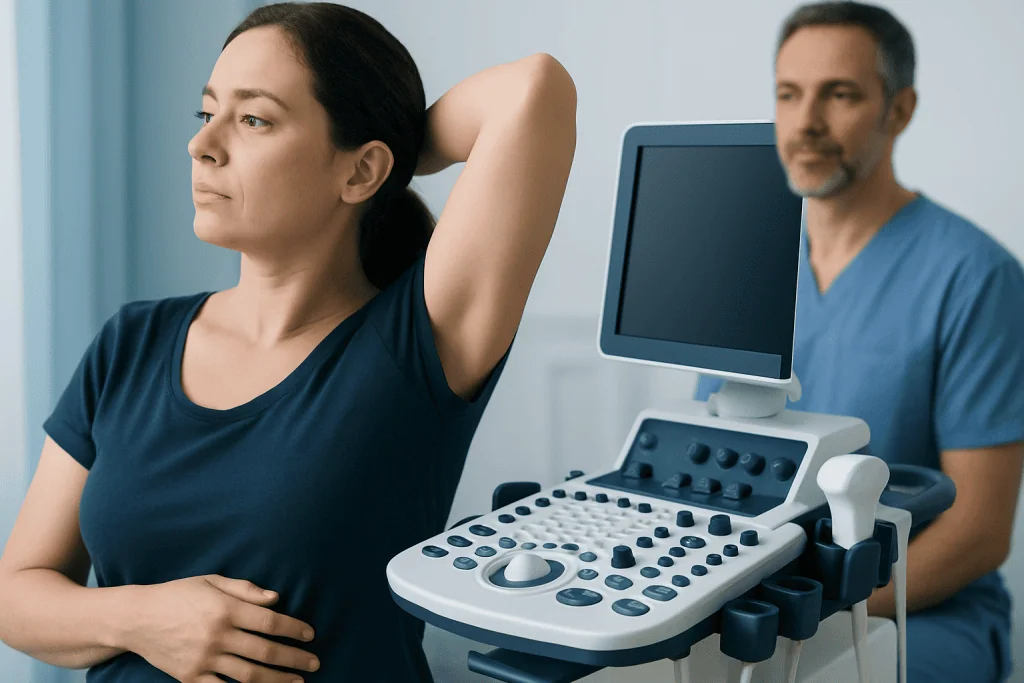
If the cause is not clear or the lump has features that need closer assessment, imaging may be recommended. Ultrasound is commonly used because it can help distinguish between a fluid-filled cyst, an inflamed gland, a lymph node, or a solid mass. In some situations, doctors may also recommend mammography or other breast imaging if there is concern about adjacent breast tissue.
Additional tests depend on the suspected cause. Blood tests may be used if infection or a systemic illness is possible. If there is drainage, a sample may be tested. When a lump is persistent, suspicious, or unexplained, tissue sampling such as biopsy may be needed to confirm the diagnosis. The goal is to identify not only what the knot is, but also whether it needs treatment or simply monitoring.
Treatment options and what recovery may look like
Treatment depends on the underlying cause rather than the lump itself. Reactive lymph nodes often shrink after the triggering infection or irritation settles. Small irritated bumps from shaving or friction may improve with gentle skin care and avoiding the trigger for a short period. Warm compresses can sometimes help comfort and drainage in superficial inflamed areas, but squeezing or puncturing a lump at home can worsen infection or delay diagnosis.
If there is a bacterial infection, a doctor may prescribe antibiotics. A painful abscess may need drainage by a clinician. Recurrent or complex underarm abscesses are sometimes managed with abscess drainage and follow-up wound care. Chronic inflammatory conditions may require longer-term treatment plans that focus on reducing flare-ups and protecting the skin.
When the lump is a cyst, lipoma, or another growth that causes discomfort or uncertainty, removal may sometimes be discussed. If evaluation suggests a breast or lymphatic cause, treatment is directed accordingly and may involve coordinated care with specialists. In complex cases, Acibadem International’s multidisciplinary specialists in JCI-accredited hospitals evaluate and treat international patients using imaging, pathology, and specialty consultation as needed.
Self-care and prevention
Some causes of underarm knots can be reduced with simple preventive habits. Gentle shaving techniques, clean razors, and avoiding products that irritate the skin may lower the chance of folliculitis and ingrown hairs. Wearing breathable fabrics and keeping the area dry can also help reduce friction and moisture buildup.
For people prone to recurrent bumps, it may help to avoid picking, squeezing, or using harsh scrubs. Mild cleansing and prompt attention to cuts or rashes on the arm or chest can reduce the risk of nearby lymph node swelling. If certain deodorants or antiperspirants seem to trigger irritation, changing to a fragrance-free product may be useful.
Healthy general habits also matter. Good control of chronic conditions, not smoking, and maintaining a healthy weight may support skin health and lower inflammation in some individuals, particularly those with recurrent hidradenitis suppurativa. Prevention cannot stop every armpit lump, but it may reduce avoidable irritation and help people notice new changes earlier.
When to seek medical care
Many armpit knots can be watched briefly, especially if they are small, tender, and clearly linked to shaving, a pimple, or a recent minor infection. However, medical care is important if a lump lasts more than two to four weeks, enlarges, returns repeatedly, or does not have an obvious explanation. A clinician can decide whether observation, imaging, or treatment is most appropriate.
More urgent evaluation is advised if the knot is very painful, red, hot, or draining pus, or if it is accompanied by fever or spreading redness. Care is also important if the lump feels hard or fixed, or if there are symptoms such as unexplained weight loss, night sweats, unusual fatigue, or breast changes. In these situations, early assessment helps rule out serious causes and allows timely treatment when needed.
- Seek care soon for a lump that persists, grows, or keeps coming back.
- Seek prompt care for severe pain, fever, redness, warmth, or drainage.
- Do not squeeze or try to cut open an underarm lump at home.
- If there are breast symptoms, a doctor may evaluate for related conditions including breast cancer.
Frequently asked questions
Are knots in the armpit usually cancer?
No. Many armpit knots are caused by swollen lymph nodes, skin irritation, cysts, or ingrown hairs. Even so, a persistent, growing, hard, or unexplained lump should be evaluated by a doctor.
How long should an armpit lump last before it is checked?
A small lump linked to a recent infection or shaving irritation may settle within days to a couple of weeks. If it lasts more than two to four weeks, enlarges, or keeps returning, medical assessment is a sensible next step.
Can deodorant cause knots in the armpit?
Deodorants and antiperspirants do not usually cause true internal lumps, but they can irritate the skin and hair follicles. This may lead to tender bumps, rash, or inflammation that feels like a knot.
What does a swollen lymph node in the armpit feel like?
A swollen lymph node may feel like a small round or oval lump under the skin. It can be tender or painless, soft or rubbery, and sometimes movable under the fingers.
Should a painful armpit lump be squeezed or drained at home?
No. Squeezing can push infection deeper, increase inflammation, and make diagnosis harder. A doctor can decide whether the area needs medication, monitoring, or a safe drainage procedure.
Can shaving cause knots in the armpit?
Yes. Shaving can irritate follicles, cause ingrown hairs, or create tiny skin breaks that allow infection to develop. These problems may cause small painful bumps or swelling in the underarm.
References
- Mayo Clinic
- American Academy of Dermatology
- National Health Service
- Centers for Disease Control and Prevention
- American Cancer Society
This article is for general information only and is not a substitute for professional medical advice. Please consult a qualified doctor about your individual situation.
Hair transplant in Turkey — costs, graft counts & a free assessment
JCI-accredited · board-certified surgeons · reply within 24h
Add us as a Preferred Source to see more of our trusted health content across Google Search, AI Overviews and Discover.

More from the Health Library



Related Specialists

Prof. Dr. Berrin Karadağ
Internal Medicine
Prof. Dr. İbrahim Kaya
Orthopedic Surgery & Traumatology
Ody. İrem Mürtekin
Audiology
Dr. Habibe Seyisoğlu
Gynecology & Obstetrics