Parenchymal: An Evidence-Based Guide for Patients

Parenchymal means the specialized tissue that carries out an organ’s main job. A parenchymal finding is a description, not always a final diagnosis.
Key Takeaways
- Parenchymal means the specialized tissue that carries out an organ’s main job.
- A parenchymal finding is a description, not always a final diagnosis.
- Symptoms depend on which organ is affected, such as the lungs, liver, kidneys, or brain.
- Diagnosis usually combines medical history, examination, blood tests, and imaging.
- Treatment focuses on the underlying cause, not the word parenchymal alone.
- Persistent symptoms or unclear imaging results should be reviewed by a qualified doctor.
Parenchymal refers to the functional, working tissue of an organ, such as the lungs, liver, kidneys, or brain. In medicine, the term is often used in imaging reports or diagnoses to describe where a disease process is happening rather than naming a single disease by itself.
Overview: what parenchymal means
Parenchymal is a medical term for the tissue in an organ that performs its main function. For example, lung parenchyma helps with oxygen exchange, kidney parenchyma filters blood, liver parenchyma supports metabolism and detoxification, and brain parenchyma contains the nerve cells and supporting tissue that allow the brain to work. When a clinician uses the word parenchymal, they are usually describing where a problem is located.
This is why the term can appear in many different settings. A radiology report may mention a “parenchymal lesion,” “parenchymal changes,” or “parenchymal disease.” These phrases do not always mean the same thing, and they do not automatically indicate cancer or severe illness. They simply signal that the organ’s working tissue looks abnormal or is affected by a condition that needs interpretation in context.
Patients often encounter this word on imaging reports and feel uncertain because it sounds technical. A helpful way to understand it is to compare an organ to a factory: the parenchyma is the area where the main work happens, while other tissues such as blood vessels, ducts, or supportive structures help the factory run. If the report says a change is parenchymal, it means the change is in the part of the organ that does the job.
How doctors use the term in different organs
The meaning of parenchymal depends on the organ being discussed. In the lungs, parenchymal changes may refer to inflammation, scarring, infection, fluid, or other abnormalities in the air sacs and supporting tissue. In the liver, parenchymal disease can suggest fatty change, inflammation, fibrosis, or other diffuse problems affecting liver cells rather than the bile ducts alone. In the kidneys, it may point to changes in the filtering tissue, and in the brain, it can describe bleeding, swelling, infection, stroke-related injury, or a mass in brain tissue.
Because of this, parenchymal is best understood as a descriptor rather than a stand-alone diagnosis. For example, “parenchymal lung disease” is a broad category, while a more specific diagnosis could be interstitial lung disease, pneumonia, or another condition. Similarly, “diffuse parenchymal liver disease” may be a radiology phrase that leads to further evaluation for fatty liver, hepatitis, or other causes.
Doctors interpret parenchymal findings together with symptoms, laboratory results, physical examination, and the exact imaging appearance. A small focal area and a widespread diffuse pattern can mean very different things. The wording matters, but the full clinical picture matters even more.
Sometimes patients are already being assessed for a more specific condition. In those cases, a parenchymal finding may support evaluation for diseases such as lung cancer or other organ-specific disorders, but it should never be interpreted in isolation.
Symptoms and what they may suggest

Parenchymal changes do not cause one universal set of symptoms. The symptoms depend on which organ is involved and what process is affecting it. Some people have no symptoms at all, and the finding is discovered incidentally on an ultrasound, CT scan, or MRI done for another reason.
If the lungs are involved, symptoms may include cough, shortness of breath, chest discomfort, fatigue, or reduced exercise tolerance. If the liver is affected, a person may notice tiredness, abdominal discomfort, loss of appetite, nausea, dark urine, jaundice, or swelling in advanced disease. Kidney-related symptoms can include changes in urination, swelling, high blood pressure, or fatigue. Brain parenchymal problems may cause headaches, weakness, speech changes, seizures, confusion, or balance difficulties.
Symptoms also vary by whether the change is acute or chronic. Acute inflammation or infection may cause fever, pain, or sudden worsening. Chronic parenchymal disease may develop gradually and be noticed only when function becomes impaired. This is one reason follow-up testing is often important even when symptoms seem mild.
- Lung: cough, breathlessness, chest symptoms
- Liver: fatigue, abdominal discomfort, jaundice
- Kidney: swelling, urine changes, blood pressure changes
- Brain: headache, weakness, confusion, seizure-like events
Common causes and risk factors
There are many possible causes of parenchymal abnormalities. Infections, inflammation, autoimmune conditions, trauma, reduced blood supply, benign growths, malignant tumors, scarring, metabolic disease, and age-related changes can all affect organ tissue. The same imaging description may therefore have very different causes in different people.
For lung parenchyma, common causes include respiratory infections, smoking-related injury, environmental exposures, autoimmune disease, and chronic inflammatory conditions. In the liver, common contributors include fatty liver disease, alcohol-related injury, viral hepatitis, medication effects, autoimmune liver disease, and inherited metabolic disorders. In the kidneys, diabetes, high blood pressure, chronic infection, obstruction, and immune-related diseases may damage renal parenchyma. In the brain, stroke, infection, trauma, bleeding, tumors, or demyelinating disease are among the possibilities.
Risk factors often come from a person’s medical history and lifestyle. Smoking, heavy alcohol use, obesity, diabetes, uncontrolled blood pressure, chronic viral infection, occupational exposures, and family history may increase the likelihood of parenchymal disease in some organs. Medication review is also important because certain drugs can affect the liver, lungs, kidneys, or brain.
Importantly, a radiology report cannot always distinguish between all possible causes on its own. That is why clinicians often recommend additional tests instead of drawing conclusions from one term alone.
How parenchymal findings are diagnosed
Diagnosis begins with the basics: symptoms, medical history, medicines, family history, lifestyle, and physical examination. From there, doctors choose tests based on the organ involved. Blood tests may assess inflammation, infection, liver enzymes, kidney function, oxygen levels, blood counts, or markers of autoimmune disease. Urine tests can be especially helpful in kidney-related problems.
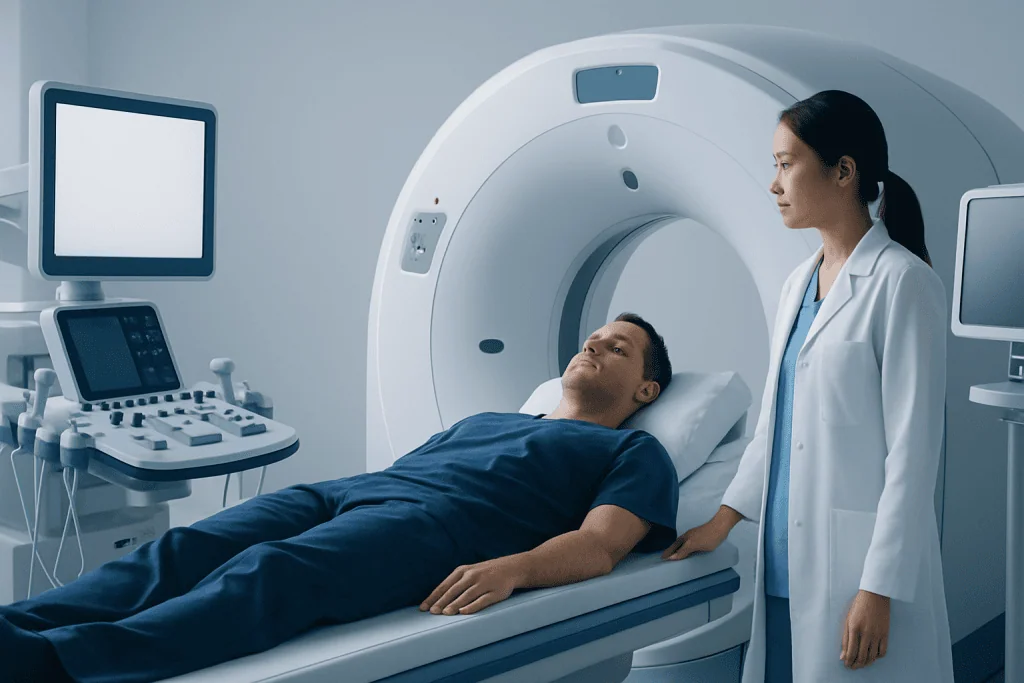
Imaging often plays a central role. Ultrasound is commonly used for liver and kidney structure. Chest X-ray and CT may assess lung parenchyma in greater detail, while MRI is especially useful for brain and some liver findings. In many situations, imaging does not just detect a problem; it helps describe whether it is focal or diffuse, acute or chronic, and mild or advanced.
Sometimes more specialized testing is needed. Pulmonary function tests can help evaluate how well the lungs are working. In liver assessment, elastography may estimate stiffness or scarring. In brain evaluation, MRI with contrast, vascular imaging, or electroencephalography may be relevant. If a mass or unclear lesion is found, biopsy may be recommended to determine exactly what it is.
When appropriate, doctors may use advanced imaging and tissue sampling to clarify uncertain findings, such as biopsy or MRI. The goal is not simply to label a finding as parenchymal, but to identify the underlying cause and the best next step.
Treatment options and follow-up
Treatment for a parenchymal abnormality depends entirely on the diagnosis behind it. There is no single treatment for “parenchymal disease” because the term covers many different conditions. Some changes need only monitoring, while others require medicines, procedures, long-term disease management, or urgent care.
If infection is the cause, treatment may involve appropriate antimicrobial therapy. If inflammation or autoimmune disease is responsible, anti-inflammatory or immune-modulating treatment may be considered. Metabolic conditions such as fatty liver disease often improve with risk-factor management. Kidney disease may require blood pressure control, diabetes management, dietary adjustments, and specialist follow-up. Brain or lung lesions may call for more targeted care depending on whether the cause is vascular, inflammatory, infectious, or neoplastic.
When a tumor or suspicious mass is identified in organ parenchyma, treatment may include surgery, image-guided procedures, systemic therapy, or radiation depending on the organ and pathology. In selected situations, care pathways may involve oncology treatment or interventional radiology as part of a broader multidisciplinary plan.
Follow-up is often as important as the first treatment decision. Repeat imaging, blood tests, symptom monitoring, and specialist review can show whether the condition is stable, improving, or progressing. For international patients who need coordinated evaluation, Acibadem International’s multidisciplinary specialists and JCI-accredited hospitals diagnose and treat a wide range of parenchymal conditions.
Prevention, self-care, and when to seek medical care
Not every parenchymal condition can be prevented, but many risk factors can be reduced. General self-care includes not smoking, limiting alcohol, maintaining a healthy weight, staying physically active, managing diabetes and blood pressure, keeping vaccinations up to date when appropriate, and attending regular medical follow-up for chronic illnesses. Taking medicines only as prescribed and discussing supplements with a doctor can also help protect organs such as the liver and kidneys.
Patients who receive an imaging report with the word parenchymal should avoid assuming the worst, but they should also avoid ignoring it. A sensible next step is to review the report with the requesting doctor and ask three practical questions: which organ is involved, how concerning the finding appears, and what additional tests or follow-up are needed. This approach is often more useful than focusing on the unfamiliar term itself.
Medical care should be sought promptly if there is worsening shortness of breath, chest pain, jaundice, severe abdominal pain, major swelling, confusion, new weakness, seizures, severe headache, or any sudden neurological symptom. Urgent evaluation is also appropriate if fever accompanies serious symptoms or if a person’s existing chronic disease rapidly worsens.
Even when symptoms are mild, persistent fatigue, chronic cough, ongoing abnormal liver or kidney tests, or a new lesion on imaging deserves professional review. Early assessment can help clarify whether the change is temporary, manageable, or something that needs specialist treatment.
Frequently asked questions
Does parenchymal mean cancer?
No. Parenchymal is a descriptive term that refers to the working tissue of an organ, not a diagnosis of cancer. Some parenchymal lesions are benign, some are inflammatory or infectious, and some may need further testing to rule out malignancy.
What does parenchymal changes on a scan mean?
It means the imaging study has found an abnormality in the functional tissue of an organ. The importance of that finding depends on the organ involved, the exact imaging pattern, symptoms, and other test results.
Can parenchymal disease be treated?
Yes, but treatment depends on the underlying cause. Some conditions improve with medication or lifestyle changes, while others need ongoing specialist care, procedures, or monitoring.
Is diffuse parenchymal disease more serious than a focal lesion?
Not always. Diffuse means the change is spread through more of the organ, while focal means it is limited to one area. Either pattern can be mild or significant depending on the cause and the degree of organ dysfunction.
What doctor treats parenchymal problems?
The right specialist depends on the organ involved. A pulmonologist, hepatologist, nephrologist, neurologist, radiologist, or oncologist may be involved, often together with a primary care doctor.
Should an incidental parenchymal finding be rechecked?
Often, yes. Even when there are no symptoms, a doctor may recommend repeat imaging, blood tests, or referral to a specialist based on the size, appearance, and location of the finding. The purpose is to make sure the abnormality is understood and followed safely.
References
- World Health Organization
- National Institutes of Health
- Centers for Disease Control and Prevention
- American College of Radiology
- National Institute of Diabetes and Digestive and Kidney Diseases
This article is for general information only and is not a substitute for professional medical advice. Please consult a qualified doctor about your individual situation.
Medical weight-loss options in Turkey — costs & eligibility
JCI-accredited · board-certified surgeons · reply within 24h
Check your numbers in seconds
BMI, calories, due date, blood pressure and 30+ more clinical calculators — free, instant, doctor-reviewed ranges.