Peeled Finger: A Complete Medical Overview

A peeled finger is a symptom rather than a diagnosis, and it can have many causes. Common triggers include dryness, frequent handwashing, irritants, friction, eczema, and some infections.
Key Takeaways
- A peeled finger is a symptom rather than a diagnosis, and it can have many causes.
- Common triggers include dryness, frequent handwashing, irritants, friction, eczema, and some infections.
- Treatment depends on the cause but often includes protecting the skin barrier and avoiding triggers.
- Medical care is important if there is severe pain, pus, fever, numbness, or skin that does not heal.
- Prevention focuses on moisturization, glove use, and reducing repeated exposure to harsh substances.
A peeled finger usually happens when the outer layer of skin becomes irritated, overly dry, inflamed, or damaged by friction, chemicals, infection, or skin conditions such as eczema. Most cases improve with gentle skin care and trigger avoidance, but persistent pain, swelling, drainage, or spreading skin changes should be checked by a doctor.
What a Peeled Finger Usually Means
A peeled finger usually means the top layer of skin has been damaged or shed faster than normal. This can happen after dryness, repeated handwashing, friction, exposure to detergents or solvents, mild burns, allergic reactions, or inflammatory skin conditions. In some people, a peeled fingertip is temporary and settles with rest and moisturizer. In others, it can be a sign of a skin disorder or infection that needs medical assessment.
Skin on the fingers works as a protective barrier. When that barrier is disrupted, the area may look flaky, cracked, shiny, red, tender, or raw. Some people notice only a small patch of peeling near the fingertip, while others develop widespread peeling on several fingers or the palms.
Because the hands are used constantly, healing can take longer than expected. Water exposure, soap, friction from tools, and cold weather can repeatedly reopen irritated skin. For that reason, understanding the cause is as important as treating the visible peeling.
Signs and Symptoms That Can Occur With Finger Peeling

A peeled finger can look different depending on the cause. The skin may come off in fine flakes, larger sheets, or thin rings. Some people notice a dry, rough texture, while others feel stinging, itching, burning, or sensitivity when touching water or everyday objects.
Other symptoms may help point to the underlying problem. These can include redness, swelling, cracks, bleeding, thickened skin, blisters, small bumps, nail changes, or soreness around the fingertips. If bacteria enter through broken skin, signs of infection such as warmth, pus, and increasing tenderness may develop.
- Dryness and tightness after washing hands
- Itching or burning with rashes
- Painful cracks near the fingertip or knuckle
- Blisters before peeling begins
- Peeling that affects one finger or several fingers
- Associated nail ridges, discoloration, or splitting
The pattern matters. Peeling limited to one finger may suggest local trauma, a mild burn, or contact with an irritant. Peeling on both hands, especially with itching or recurring flares, may be more consistent with eczema, allergy, or a broader skin condition.
Common Causes and Risk Factors
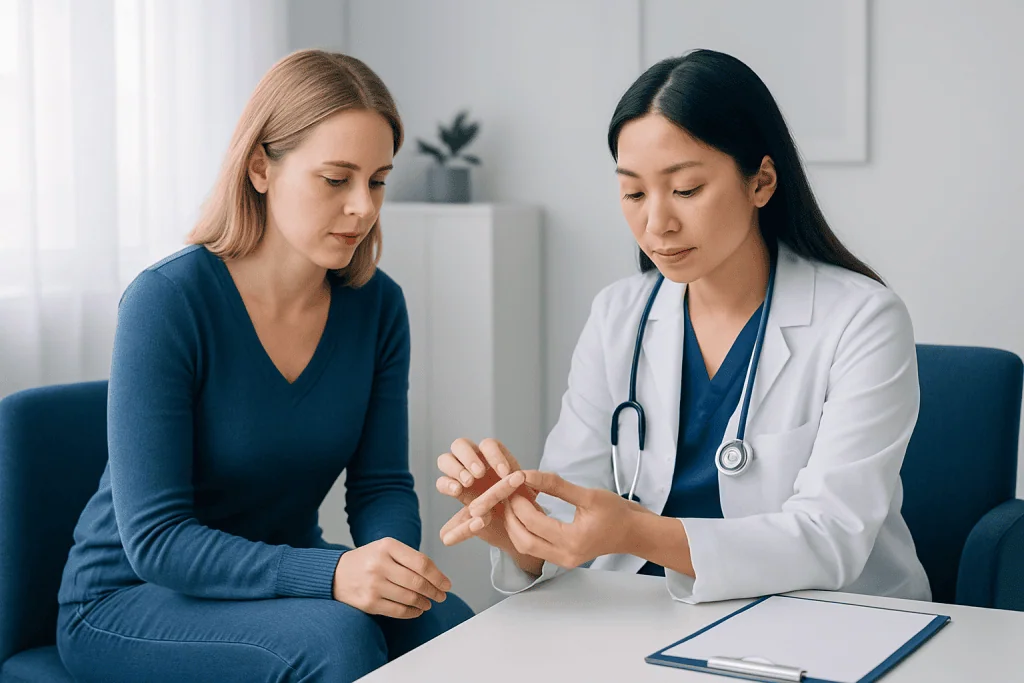
Dry skin is one of the most common reasons for a peeled finger. Frequent handwashing, alcohol-based sanitizers, cold air, low humidity, and exposure to hot water can remove the skin’s natural oils. When the barrier weakens, peeling and small cracks are more likely to appear.
Irritant contact dermatitis is another frequent cause. This happens when the skin reacts to repeated contact with soaps, detergents, cleaning products, cement, solvents, or prolonged glove use. Allergic contact dermatitis can look similar but is triggered by an immune reaction to a specific substance such as fragrance, preservatives, rubber chemicals, nickel, or nail products.
Inflammatory skin conditions can also cause peeling. Hand eczema is especially common and may include itching, redness, blistering, and painful fissures. Psoriasis may lead to thicker, scaly plaques and can affect the nails as well. Fungal infections are more likely if one hand and the feet are involved at the same time, and a doctor may consider psoriasis or eczema when symptoms are recurrent or widespread.
Other causes include friction from sports or tools, minor burns, sun exposure, excessive sweating, nutritional deficiency in select cases, and less commonly autoimmune or infectious conditions. Risk factors include occupations involving wet work, healthcare or food service duties, cleaning chemicals, preexisting skin disease, a history of allergies or asthma, and repeated trauma to the fingertips.
How Doctors Diagnose the Cause
Diagnosis starts with a careful history and skin examination. A doctor will ask when the peeling began, whether it is itchy or painful, what products touch the hands, and whether the rash is recurrent. Details such as hobbies, work exposures, recent travel, nail cosmetics, glove use, and family history of skin disease can be very helpful.
The appearance and distribution of the skin changes often provide important clues. A doctor may examine the nails, palms, soles, and other parts of the body to look for signs of eczema, psoriasis, fungal infection, or allergy. If infection is suspected, a skin scraping, swab, or culture may be used. In chronic cases, patch testing may help identify allergic triggers.
Most people do not need extensive testing for a simple peeled fingertip. However, further evaluation may be recommended if symptoms are severe, keep returning, do not respond to standard care, or are associated with signs of systemic illness. When specialist input is needed, a dermatology evaluation can help clarify the diagnosis and guide treatment.
Treatment Options for a Peeled Finger
Treatment depends on the cause, but protecting the skin barrier is central in most cases. Gentle cleansing with lukewarm water, fragrance-free soap substitutes, and frequent use of thick moisturizers can help the skin recover. Ointments and barrier creams often work better than light lotions for fingertip peeling.
If an irritant or allergen is responsible, avoiding the trigger is essential. Wearing protective gloves for wet work can help, although cotton liners may be needed if sweating worsens irritation. For inflammatory conditions such as eczema, doctors may recommend medicated creams or ointments to calm redness and itching. If a fungal or bacterial infection is identified, treatment is directed specifically at that organism rather than using general moisturizers alone.
People should avoid picking at loose skin, using harsh exfoliants, or applying strong household disinfectants directly to damaged areas. Open cracks may need dressings to reduce pain and support healing. When recurrent hand rash is part of a chronic condition, tailored eczema treatment or broader skin disease treatment may be appropriate.
If peeling follows a burn, severe chemical exposure, or a painful injury, prompt medical assessment is important. In selected situations, doctors may advise wound care, prescription medication, or further review by a specialist in hand surgery if there is deeper tissue damage or loss of function.
Self-Care and Prevention
Daily habits make a major difference in preventing a peeled finger from returning. Moisturizer should be applied after every handwash and again before bed. Thick, fragrance-free creams or petrolatum-based ointments are especially useful for fingertips and cracked areas. Some people benefit from applying ointment overnight and covering the hands with cotton gloves.
Reducing irritation is just as important as adding moisture. Hands should be washed with lukewarm rather than hot water, then patted dry instead of rubbed. When using detergents, cleaning products, hair dyes, or solvents, protective gloves are recommended. Jewelry, false nails, and fragranced products may need to be reviewed if allergy is suspected.
- Choose gentle, fragrance-free hand cleansers
- Moisturize immediately after washing
- Use gloves for wet work and chemical exposure
- Avoid biting, picking, or peeling the skin
- Protect hands from cold, wind, and repeated friction
- Seek advice if symptoms keep coming back
Prevention may also involve managing an underlying condition. People with eczema, psoriasis, or fungal infections often need a longer-term care plan to keep the skin barrier stable and reduce flares. Near the end of the care pathway, patients who need specialist assessment may choose centers such as Acibadem International, where multidisciplinary specialists in JCI-accredited hospitals diagnose and treat hand and skin conditions for international patients.
When to Seek Medical Care
Most cases of mild finger peeling improve with basic skin care, but medical advice is important when symptoms are severe, persistent, or concerning. A doctor should assess a peeled finger if there is significant pain, spreading redness, swelling, warmth, pus, fever, numbness, or difficulty moving the finger. These features can suggest infection, deeper injury, or another condition that should not be managed at home alone.
Medical review is also sensible if peeling lasts more than a few weeks, keeps returning, affects several fingers, involves the nails, or interferes with work or daily activities. People with diabetes, circulation problems, weakened immunity, or a history of severe allergies should seek care earlier because healing may be slower and complications may be more likely.
Emergency care may be needed after a chemical burn, major crush injury, deep cut, or sudden severe swelling. When in doubt, a qualified clinician can help determine whether the problem is simple irritation or something that needs targeted treatment.
Frequently asked questions
Why is the skin on one finger peeling?
Peeling on one finger often points to a local cause such as friction, a mild burn, irritant exposure, or contact with a substance that touched that area. It can also happen with infection or a small patch of eczema. If it is painful, swollen, or not improving, a doctor should examine it.
Is a peeled finger usually serious?
In many cases, a peeled finger is not serious and improves with moisturization and avoiding irritation. However, it should not be ignored if there is severe pain, pus, increasing redness, fever, or repeated episodes. Those signs may suggest infection or an underlying skin disorder.
What is the best home care for a peeled fingertip?
Gentle skin care is usually the first step. Using a thick fragrance-free moisturizer several times a day, avoiding hot water, and protecting the finger from chemicals and friction can support healing. Picking at loose skin should be avoided because it can delay recovery and increase infection risk.
Can eczema cause finger peeling?
Yes. Hand eczema is a common cause of finger peeling, especially when there is itching, redness, dryness, cracking, or small blisters. Because eczema can resemble allergy or infection, persistent symptoms may need a medical evaluation for the right treatment plan.
Can vitamin deficiency cause peeling skin on fingers?
Nutritional deficiency is not the most common reason for a peeled finger, but it can contribute in some people, especially when there are broader skin, nail, or general health concerns. More often, finger peeling is related to dryness, irritants, eczema, or infection. A doctor can decide whether testing is needed.
When should someone see a doctor for peeling finger skin?
Medical care is recommended if the skin is very painful, infected-looking, recurrent, or not healing after basic self-care. A doctor should also be consulted if peeling affects multiple fingers, the nails, or daily hand function. Early review is especially important for people with diabetes or weakened immunity.
References
- American Academy of Dermatology
- National Eczema Association
- National Health Service
- Mayo Clinic
- American Academy of Family Physicians
This article is for general information only and is not a substitute for professional medical advice. Please consult a qualified doctor about your individual situation.
Explore treatments in Turkey — costs, top hospitals & a free quote
JCI-accredited · board-certified surgeons · reply within 24h

More from the Health Library



Related Specialists

Dr. Hasan Tuncer
Emergency Service
Dr. İpek Saygılı
Oral and Dental Health
Prof. Dr. A. Bülent Oktay
Urology
Prof. Dr. Resul Arisoy
Gynecology & Obstetrics