PET Therapy Programs: How It Works, Results and What to Expect
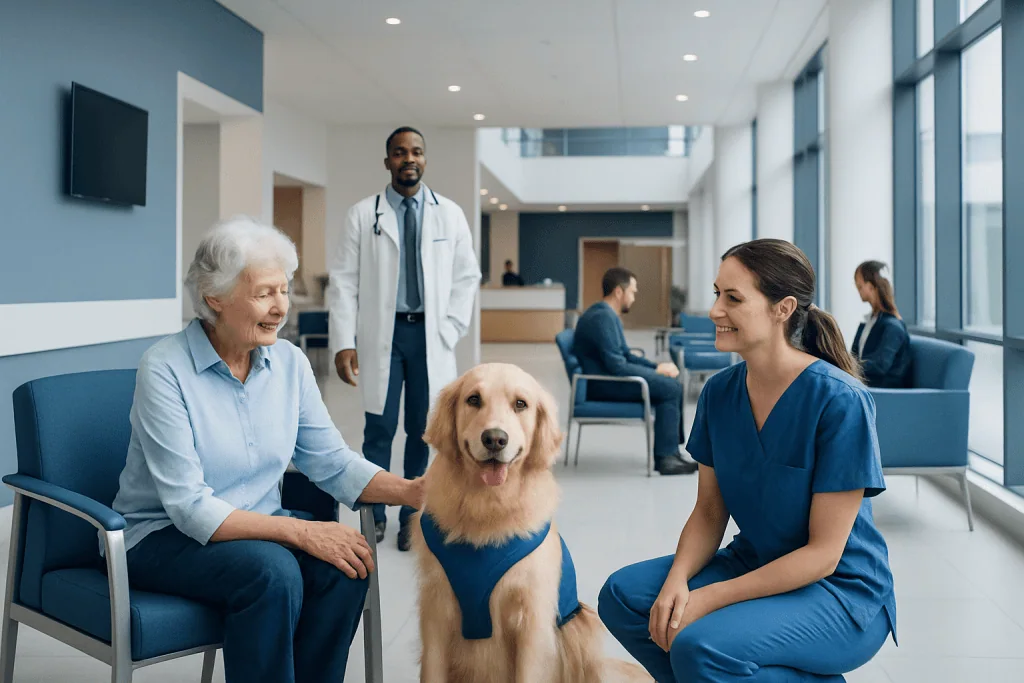
Pet therapy programs involve planned interactions with appropriately screened animals and trained handlers. Sessions may support comfort, motivation, communication, mobility practice and social connection.
Key Takeaways
- Pet therapy programs involve planned interactions with appropriately screened animals and trained handlers.
- Sessions may support comfort, motivation, communication, mobility practice and social connection.
- Not every person or setting is suitable; allergies, fears, infection-control needs and animal welfare must be considered.
- A healthcare team can help decide whether animal-assisted therapy fits an individual care plan.
- Benefits vary from person to person and are usually greatest when sessions have clear, realistic goals.
Pet therapy programs, also called animal-assisted interventions, bring trained animals and qualified handlers into healthcare, rehabilitation, school or community settings to support emotional wellbeing, participation and recovery goals. They are complementary services rather than a replacement for medical or mental health treatment.
Overview: What Are Pet Therapy Programs?
Pet therapy programs are structured activities in which a trained animal and its handler visit or work with people to support health, wellbeing or rehabilitation goals. Dogs are the most common therapy animals, although some programs may include cats, horses or other species when appropriate. The terms animal-assisted therapy and animal-assisted activities are often used, but they are not identical.
Animal-assisted therapy is usually goal-directed and delivered as part of a care plan by a qualified health, rehabilitation or mental health professional. Animal-assisted activities are generally less formal visits intended to provide enjoyment, companionship or comfort. In both situations, the animal’s temperament, health status, training and welfare should be carefully considered.
Pet therapy programs may be offered in hospitals, rehabilitation units, nursing homes, mental health services, schools and community programs. They are designed to complement—not replace—medical treatment, psychotherapy, rehabilitation or prescribed medicines.
How Pet Therapy Programs Work
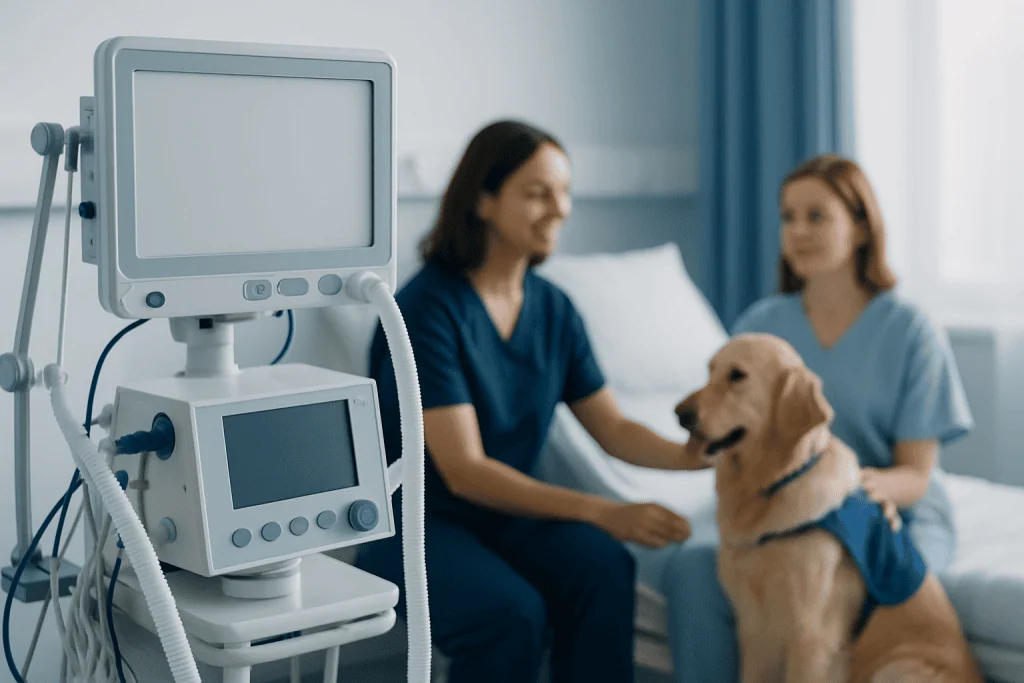
A program starts by identifying a meaningful goal for the participant. In a rehabilitation setting, a person may be encouraged to walk farther while accompanying a therapy dog, practise reaching while grooming an animal, or use conversation to strengthen communication skills. In a hospital or residential setting, the goal may be relaxation, distraction from discomfort, reduced loneliness or greater engagement with care.
The interaction is planned around the individual’s abilities, preferences and clinical needs. It may involve observing the animal, talking with the handler, gentle petting, brushing, playing simple games or participating in supervised mobility exercises. Sessions are typically brief and should stop if the person or animal becomes uncomfortable, tired or distressed.
Programs should have clear hygiene and safety procedures. These commonly include vaccination and veterinary-health requirements for animals, hand hygiene before and after contact, cleaning protocols, handler training and rules about where animals may enter. Settings such as intensive care, areas with strict infection-control requirements or rooms where patients are severely immunocompromised may not be appropriate for visits.
Who May Benefit and Who May Not Be a Candidate
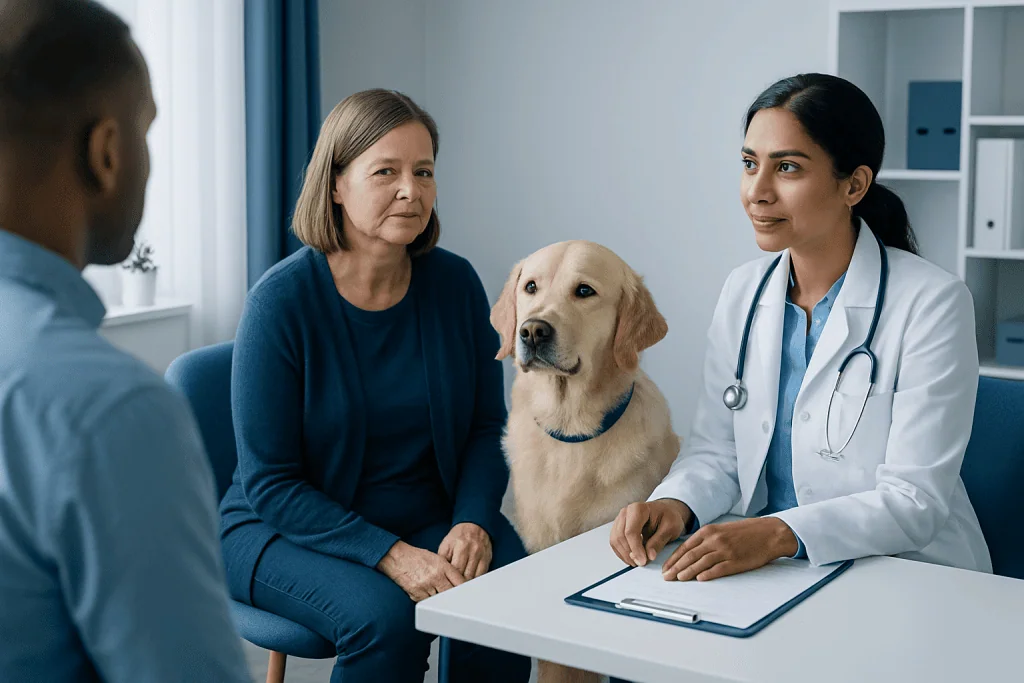
Pet therapy programs may be considered for children, adults and older people who enjoy animals and would like an additional source of motivation or emotional support. They may be used alongside care for anxiety, depression, dementia, stroke recovery, chronic illness, disability, pain management or social isolation. Interest in an animal is important: participation should always be voluntary.
For some people, contact with a calm, trained animal can make a clinical setting feel less intimidating and encourage participation in rehabilitation or conversation. However, individual responses differ. Some people feel little benefit, while others may find animals stressful because of fear, past experiences, cultural preferences or sensory sensitivity.
A clinician should review suitability when a person has significant allergies, asthma triggered by animal exposure, an open wound, a severe fear of animals, behavioral difficulties around animals, or a condition that increases susceptibility to infection. The team should also consider the safety and wellbeing of the animal. A good program does not place either the participant or the animal under pressure.
- Potential goals include comfort, social engagement, motivation and functional practice.
- Sessions should be adapted for mobility, communication, cognition and sensory needs.
- Animal contact should be avoided or modified when infection-control precautions apply.
What to Expect During a Pet Therapy Session
Before a session, staff may ask about animal allergies, fears, preferences, current symptoms and any precautions in place. They may explain the animal’s role, ask permission before entering and help the person choose how much contact they want. A participant can decide simply to watch the animal or speak with the handler rather than touch the animal.
During the visit, the handler remains responsible for the therapy animal while the healthcare or therapy professional focuses on the person’s care goals. In a goal-directed session, activities may be incorporated into physiotherapy, occupational therapy, speech and language therapy, counseling or recreational therapy. For example, a person may practise standing balance while tossing a toy, naming objects while interacting with the animal, or using memory prompts related to the visit.
Afterward, hands should be cleaned and staff may record the person’s response and progress toward the agreed goal. There is usually no physical recovery period after a routine visit. A person may feel calmer, more motivated or emotionally moved, and should let staff know if any symptoms or concerns arise.
Benefits, Limits and Possible Risks
People often value pet therapy programs for companionship, enjoyment and a welcome break from routine care. Research suggests that animal-assisted interventions may help some people feel less stressed, more socially connected or more willing to take part in therapeutic activities. In certain settings, they may support short-term improvements in mood, engagement or perceived comfort.
Results should be viewed realistically. Animal-assisted support does not cure medical conditions, and evidence varies by population, program design and outcome measured. It should be part of an individualized plan, with established medical and psychological care continuing as advised by the treating team.
Possible risks include allergic symptoms, scratches, bites, trips or falls, anxiety, and the small possibility of infection transmission. These risks are reduced through careful participant screening, healthy and well-groomed animals, trained handlers, supervision and hand hygiene. People should not feed the animal, allow licking of the face or wounds, or participate in any activity that feels unsafe or unwanted.
How to Choose a Safe Program and Support Results
Families and care teams can ask whether the program has written infection-prevention policies, animal health standards, handler training requirements and procedures for reporting incidents. It is also reasonable to ask how the program assesses a participant’s needs and whether sessions are supervised by an appropriate professional when therapy goals are involved.
The most helpful approach is to agree on a simple purpose for participation. For one person, this may be increasing willingness to attend rehabilitation; for another, it may be having a positive social interaction during a hospital stay. The care team can review whether the sessions are meeting that purpose and adjust or stop them when needed.
Pet therapy is different from obtaining an emotional support animal, owning a companion animal or using a service animal. Service animals are trained to perform specific tasks for a person with a disability, while therapy animals usually work with many people in organized settings. Families considering pet ownership should discuss practical care needs, mobility, finances, housing and support with their healthcare professional where relevant.
When to Seek Medical Care
Medical care should be sought promptly for wheezing, facial swelling, widespread hives, severe shortness of breath or other signs of a serious allergic reaction after animal exposure. A doctor should also assess a bite, deep scratch, puncture wound, rapidly increasing redness, fever or drainage from a wound. Immediate emergency care is appropriate for severe breathing difficulty or symptoms of anaphylaxis.
People with a weakened immune system, recent transplant, active infection, poorly healing wounds or complex medical needs should ask their treating clinician before participating in a pet therapy program. The clinician can explain whether precautions are needed or whether another form of supportive activity would be safer.
Acibadem International’s multidisciplinary specialists and JCI-accredited hospitals can assess individual health needs and advise on supportive care options for international patients. Any animal-assisted activity should be coordinated with the person’s existing medical team and treatment plan.
Frequently asked questions
What is the meaning of pet in one word?
In one word, a pet is a companion. More specifically, it is a domesticated animal kept primarily for companionship and care rather than for work or food production.
Should a 75 year old get a dog?
A 75-year-old person may enjoy and safely care for a dog if their health, mobility, housing, finances and support network make ownership practical. The dog’s size, energy level, training needs and expected lifespan should be considered carefully. For some people, fostering, dog walking with support, or visiting a therapy animal program may be a more suitable option.
What is the most popular pet in the world?
Dogs and cats are the most commonly kept companion animals worldwide, although their popularity varies between countries and cultures. In many global estimates, dogs are often described as the most popular pet. Reliable comparisons are difficult because pet ownership is measured differently across regions.
What is the 3-3-3 rule for pets?
The 3-3-3 rule is a commonly used informal guide for helping an adopted pet adjust to a new home. It refers broadly to the first three days, three weeks and three months, during which an animal may gradually become more settled, learn routines and show more of its usual personality. It is not a medical rule, and every animal adjusts at its own pace.
Are pet therapy programs safe in hospitals?
They can be safe when programs use strict screening, hygiene and supervision procedures. Not all hospital areas or patients are suitable for animal visits, especially where infection-control precautions are necessary. The healthcare team should decide whether participation is appropriate.
Is pet therapy the same as a service animal?
No. A service animal is trained to perform specific tasks for an individual with a disability. A therapy animal and handler usually visit multiple people in organized programs to provide comfort, motivation or therapeutic support.
References
- Centers for Disease Control and Prevention
- American Veterinary Medical Association
- Pet Partners
- Society for Healthcare Epidemiology of America
- World Health Organization
This article is for general information only and is not a substitute for professional medical advice. Please consult a qualified doctor about your individual situation.
Explore treatments in Turkey — costs, top hospitals & a free quote
JCI-accredited · board-certified surgeons · reply within 24h
Add us as a Preferred Source to see more of our trusted health content across Google Search, AI Overviews and Discover.