

Post-Stroke Spasticity: Treatment Options From Therapy to Neuromodulation

Post-stroke spasticity happens when muscle signals become overactive after stroke damage to the brain. Symptoms can include stiffness, tight muscles, painful spasms, abnormal limb position, and reduced range of motion.
Key Takeaways
- Post-stroke spasticity happens when muscle signals become overactive after stroke damage to the brain.
- Symptoms can include stiffness, tight muscles, painful spasms, abnormal limb position, and reduced range of motion.
- Treatment usually works best with a personalized plan that may include physical therapy, occupational therapy, oral medicines, injections, splints, or neuromodulation.
- Early assessment can help prevent complications such as contractures, skin problems, and loss of function.
- Neuromodulation may be considered in selected people when standard rehabilitation and medication do not provide enough benefit.
Post-stroke spasticity is a common complication of stroke that can cause muscle stiffness, spasms, and difficulty with movement or daily tasks. Treatment often combines rehabilitation, medicines, injections, and selected neuromodulation approaches to improve comfort, function, and quality of life.
Overview of Post-Stroke Spasticity
Post-stroke spasticity is a movement problem that can develop after a stroke damages areas of the brain involved in controlling muscle tone and voluntary movement. Instead of muscles relaxing and tightening in a balanced way, some muscles become overly active. This may lead to stiffness, resistance to movement, involuntary muscle contractions, and awkward postures of the arm, hand, leg, or foot.
Spasticity does not affect everyone after stroke, and it may appear days, weeks, or even months later. In some people, symptoms are mild and mainly cause a feeling of tightness. In others, spasticity can interfere with walking, hand use, personal care, dressing, sleep, or comfort. The severity can also change over time, especially during recovery.
Although spasticity can be frustrating, it is treatable. The goal of care is not only to reduce stiffness but also to improve function, ease pain, support safe positioning, and make daily activities easier. A treatment plan is usually tailored to the person’s symptoms, recovery goals, and general health.
Symptoms and How It Affects Daily Life
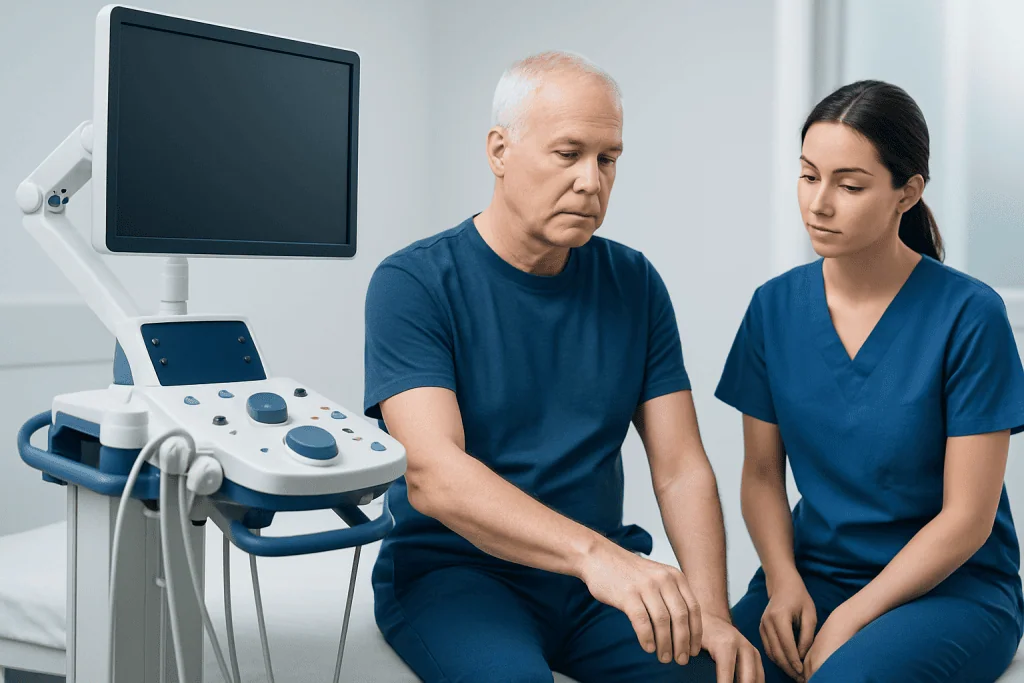
The most common sign of post-stroke spasticity is increased muscle tone, often described as tightness or stiffness. A person may notice that the elbow stays bent, the wrist or fingers curl inward, the knee becomes hard to straighten, or the foot points downward. Muscles may feel resistant when someone tries to move the limb.
Other symptoms can include muscle spasms, clonus, cramps, joint discomfort, or pain caused by prolonged muscle tightening. Fine motor tasks such as opening the hand, holding utensils, or buttoning clothes may become difficult. Walking may also be affected if the calf muscles or thigh muscles are involved.
Spasticity can influence more than movement alone. It may make hygiene, skin care, transfers, sleep, and positioning in bed or a wheelchair more challenging. If left untreated, persistent muscle tightness may shorten muscles and tendons over time, which can limit joint motion and contribute to fixed contractures.
- Stiff or tight muscles
- Involuntary spasms or jerking
- Reduced range of motion
- Pain or discomfort with movement
- Difficulty using the hand, arm, or leg
- Problems with balance, gait, dressing, or hygiene
Causes and Risk Factors

After a stroke, damage to motor pathways in the brain can disrupt the normal signals that help muscles contract and relax. This imbalance may increase reflex activity in the spinal cord, making muscles respond too strongly to stretch. As a result, certain muscle groups become overactive and oppose smooth movement.
Spasticity is more likely when weakness is significant, movement is limited, or rehabilitation is delayed. It may be worsened by triggers such as pain, infection, skin irritation, constipation, poor positioning, or pressure from tight clothing or braces. Fatigue and emotional stress can also increase muscle tightness in some people.
Not every person with stroke develops spasticity in the same pattern. The arm often rests with the elbow bent and the wrist or fingers flexed, while the leg may show a stiff knee or pointed foot. A rehabilitation team may also assess related problems such as weakness, impaired sensation, balance issues, and stroke complications that affect recovery.
Diagnosis and Assessment
Diagnosis begins with a medical history and physical examination. A doctor or rehabilitation specialist will ask when the symptoms started, how they affect daily activities, and whether there is pain, sleep disruption, or trouble with hygiene and mobility. Because symptoms may evolve, repeated assessments are often helpful.
During the examination, the clinician checks muscle tone, reflexes, range of motion, posture, strength, and how the limb moves during functional tasks. Standardized tools such as spasticity rating scales may be used to follow progress over time. The team may also look for contractures, skin problems, joint changes, or shoulder pain.
Assessment usually focuses on practical goals. For one person, the aim may be to open the hand for cleaning and dressing. For another, it may be to improve walking, reduce painful spasms, or make splint use easier. This goal-based approach helps guide treatment choices and measure whether therapy is making a meaningful difference.
Treatment Options: From Therapy to Neuromodulation
Treatment for post-stroke spasticity usually starts with rehabilitation. Physical therapy and occupational therapy can help maintain joint motion, strengthen weaker muscles, improve positioning, and train more efficient movement patterns. Regular stretching, task-specific exercises, gait training, and education for caregivers are often central parts of care. In some cases, splints, casting, or orthoses are used to support alignment and prevent shortening of soft tissues. Many patients benefit from a structured stroke rehabilitation program.
Medicines may also be used, especially when spasticity affects several body regions or causes pain and sleep disturbance. Oral antispastic medications can reduce muscle overactivity in some people, but doctors weigh this benefit against possible side effects such as drowsiness, weakness, or dizziness. When spasticity is more focal, injections into specific muscles may help relax them and improve comfort, positioning, and function. Injection treatment can be particularly useful when combined with therapy and stretching afterward.
For severe or persistent spasticity, more advanced approaches may be considered. Some people may benefit from intrathecal baclofen therapy, in which medication is delivered directly into the spinal fluid through an implanted pump to target muscle overactivity more precisely. This may be discussed when oral medicines are not effective enough or cause limiting side effects, and it is part of selected intrathecal baclofen therapy planning.
Neuromodulation may also have a role in carefully selected cases. Depending on the clinical situation, specialists may consider techniques that influence nerve or brain pathways to improve muscle control, often as part of a broader rehabilitation plan rather than a stand-alone treatment. Approaches such as therapeutic electrical stimulation or other specialist-guided methods may support motor retraining and function in some patients. Because post-stroke spasticity often overlaps with weakness and movement pattern changes, evaluation by a team experienced in neuromodulation and rehabilitation is important.
Prevention, Self-Care, and Rehabilitation at Home
Early movement and consistent rehabilitation can help lower the risk of worsening stiffness after stroke. Once a doctor or therapist approves an activity plan, regular stretching and range-of-motion exercises may help preserve flexibility. Correct positioning of the arm, hand, leg, and foot is also important, especially for people who spend much of the day sitting or lying down.
Home care often includes skin checks, good hygiene, and attention to braces or splints so they do not rub or create pressure points. Caregivers may be taught how to move the limb gently, support transfers, and avoid pulling on a tight arm or shoulder. Comfort measures such as proper seating, supportive cushions, and routine changes in position can also help.
People should also watch for triggers that can worsen spasticity, including urinary infection, constipation, skin irritation, pain, or poorly fitting equipment. Keeping follow-up appointments is important because treatment plans may need adjustment as recovery progresses. In a multidisciplinary setting such as Acibadem International, specialists in neurology, rehabilitation, and neuromodulation assess international patients with complex spasticity and tailor care to individual goals.
When to See a Doctor
A person should speak with a doctor if muscle tightness after stroke begins to limit walking, hand use, self-care, sleep, or comfort. Medical review is also important if the limb becomes increasingly difficult to move, if braces no longer fit properly, or if hygiene becomes harder because the hand stays clenched or the arm or leg cannot be positioned well.
Prompt evaluation is especially helpful when there is new pain, repeated spasms, skin breakdown, or signs that the joints are becoming fixed in one position. These changes may suggest worsening spasticity, contracture development, or another trigger that needs treatment. Early care can help preserve motion and avoid preventable complications.
Urgent medical attention may be needed if there are sudden new neurological symptoms such as worsening weakness, confusion, severe headache, new numbness, or trouble speaking, because these are not typical signs of routine spasticity and may indicate another serious problem. A qualified clinician can decide whether symptoms are part of recovery, a treatment side effect, or a new medical issue.
Frequently asked questions
Can post-stroke spasticity go away on its own?
In some people, mild tightness improves as recovery progresses, but spasticity often needs active treatment and monitoring. Without care, persistent stiffness can sometimes lead to pain, reduced movement, or contractures.
What is the best treatment for post-stroke spasticity?
There is no single best treatment for everyone. The most effective plan is usually personalized and may combine therapy, stretching, splints, oral medicines, injections, and sometimes neuromodulation or pump-based treatment for more severe cases.
Is spasticity the same as muscle weakness after a stroke?
No. Weakness means the muscle has less power, while spasticity means the muscle is overly tight or resistant to movement. Many stroke survivors have both problems at the same time, which is why assessment by a rehabilitation team is helpful.
Can neuromodulation help post-stroke spasticity?
Neuromodulation may help selected patients, especially when spasticity is persistent and part of a broader movement-control problem. It is generally considered within a comprehensive rehabilitation plan and after careful specialist evaluation.
Are injections used for post-stroke spasticity?
Yes, injections may be used to relax specific overactive muscles, especially when spasticity affects one part of the body more than others. They are often combined with therapy afterward to help the person make better use of the increased range of motion.
When should treatment start after a stroke?
Assessment should begin as soon as stiffness or abnormal postures are noticed. Early treatment and follow-up may improve comfort, maintain movement, and reduce the risk of long-term complications.
References
- World Health Organization
- American Stroke Association
- National Institute of Neurological Disorders and Stroke
- National Institute for Health and Care Excellence
- American Academy of Physical Medicine and Rehabilitation
This article is for general information only and is not a substitute for professional medical advice. Please consult a qualified doctor about your individual situation.
Neuromodulation in Turkey — costs, top hospitals & a free quote
JCI-accredited · board-certified surgeons · reply within 24h
Add us as a Preferred Source to see more of our trusted health content across Google Search, AI Overviews and Discover.

More from the Health Library

Related Specialists

Assoc. Prof. Dr. Ürün Özer Ağırbaş
Psychiatry
Dr. Canan Genim Erdem
Gynecology & Obstetrics
Prof. Dr. Ersin Erek
Cardiovascular Surgery
Dr. Tansel Yıldıran
Cardiology