Prostate Surgery for BPH: TURP and Minimally Invasive Options

BPH is a non-cancerous enlargement of the prostate that can block urine flow and affect quality of life. Surgery or a procedure may be considered when symptoms are bothersome, medicines do not help enough, or complications occur.
Key Takeaways
- BPH is a non-cancerous enlargement of the prostate that can block urine flow and affect quality of life.
- Surgery or a procedure may be considered when symptoms are bothersome, medicines do not help enough, or complications occur.
- TURP is a well-established operation that removes obstructing prostate tissue through the urethra.
- Minimally invasive BPH treatments may reduce bleeding risk, hospital stay, or recovery time, but not every method is suitable for every prostate.
- The best choice depends on prostate size, symptom severity, general health, medication use, and personal priorities such as preserving ejaculation.
Prostate surgery for BPH can help men whose urinary symptoms are not controlled well enough with lifestyle measures or medicines. TURP remains a standard option, while newer minimally invasive procedures may offer shorter recovery for carefully selected patients.
Overview
Benign prostatic hyperplasia, often called BPH or enlarged prostate, is a common non-cancerous condition in aging men. The prostate sits below the bladder and surrounds the urethra, the tube that carries urine out of the body. As the prostate grows, it may press on the urethra or affect bladder function, making urination slower, more frequent, or less complete.
Not every man with BPH needs surgery. Many men improve with lifestyle changes, monitoring, or medicines prescribed by a doctor. Prostate surgery for BPH is usually considered when symptoms remain troublesome despite treatment, when medication side effects are difficult, or when BPH leads to problems such as repeated urinary retention, bladder stones, recurrent infections, or kidney strain.
The best-known operation is transurethral resection of the prostate, or TURP. During TURP, a urologist removes the inner part of the prostate that is blocking urine flow, without making a skin incision. In recent years, several minimally invasive BPH treatments have also become available, offering alternatives for selected patients depending on prostate size, anatomy, health status, and treatment goals.
Symptoms That May Lead to Treatment
BPH symptoms are usually related to storage of urine, emptying of the bladder, or both. Some men notice mild changes for years, while others develop symptoms that interfere with sleep, work, travel, and daily activities. Symptom severity does not always match prostate size; a moderately enlarged prostate can cause significant blockage in some men, while a larger prostate may cause fewer symptoms in others.
Common symptoms include a weak urine stream, difficulty starting urination, stopping and starting during urination, straining, and a feeling that the bladder has not emptied completely. Other symptoms include frequent urination, urgent need to urinate, waking at night to pass urine, and occasional leakage related to urgency.
Doctors may recommend a procedure when symptoms are moderate to severe and persistent, or when BPH causes complications. Important warning problems include inability to urinate, repeated urinary tract infections, bladder stones, blood in the urine related to prostate enlargement, or evidence that the bladder or kidneys are being affected. In these situations, timely urology assessment helps protect urinary function and overall health.
How Doctors Decide Whether Surgery Is Needed

The decision to proceed with benign prostatic hyperplasia surgery is individualized. A urologist considers the patient’s symptom score, examination findings, urine tests, prostate size, bladder emptying, and any previous treatments. The person’s age, general health, use of blood-thinning medication, sexual priorities, and expectations for recovery are also important.
Assessment may include a medical history, physical examination, digital rectal examination, urine analysis, blood tests such as prostate-specific antigen when appropriate, and measurement of urine flow. Ultrasound may be used to estimate prostate size and check how much urine remains in the bladder after urination. In some cases, cystoscopy allows the urologist to view the urethra, prostate channel, and bladder directly.
Before surgery, it is also important to rule out other causes of urinary symptoms. Overactive bladder, urinary infection, urethral narrowing, neurological conditions, diabetes-related bladder problems, and prostate cancer can sometimes produce similar complaints. Careful diagnosis helps match the right patient to the right treatment and avoids unnecessary procedures.
TURP: The Traditional Standard Procedure
TURP stands for transurethral resection of the prostate. It is performed through the urethra using a thin surgical instrument called a resectoscope. The surgeon removes small pieces of obstructing prostate tissue from the inner part of the gland, creating a wider channel for urine to pass from the bladder.
TURP is usually performed under spinal or general anesthesia. A catheter is placed after the operation to drain urine and allow the bladder to be gently flushed if needed. Hospital stay varies according to the patient’s health and local practice, but many men go home after a short stay once urine is draining well and recovery is stable.
TURP can provide strong and durable symptom relief for many men, particularly those with moderate prostate enlargement and clear obstruction. It is considered a benchmark treatment because it has been used for many years and is well studied. However, like all procedures, it has possible risks, including bleeding, infection, temporary burning or urgency, urinary retention, scar tissue, and, less commonly, urinary leakage or erectile problems.
A common long-term effect of TURP is retrograde ejaculation, sometimes called dry orgasm. This means semen goes backward into the bladder rather than out through the penis during orgasm. It is usually not harmful, but it can affect fertility and may matter to men who wish to father children, so it should be discussed before treatment.
Minimally Invasive Options for BPH
Minimally invasive BPH treatment aims to improve urine flow with less tissue removal, less bleeding, or faster recovery than traditional surgery. These procedures vary widely in how they work. Some use heat energy to shrink or destroy prostate tissue, some mechanically open the prostate channel, and others reduce blood supply to the prostate.
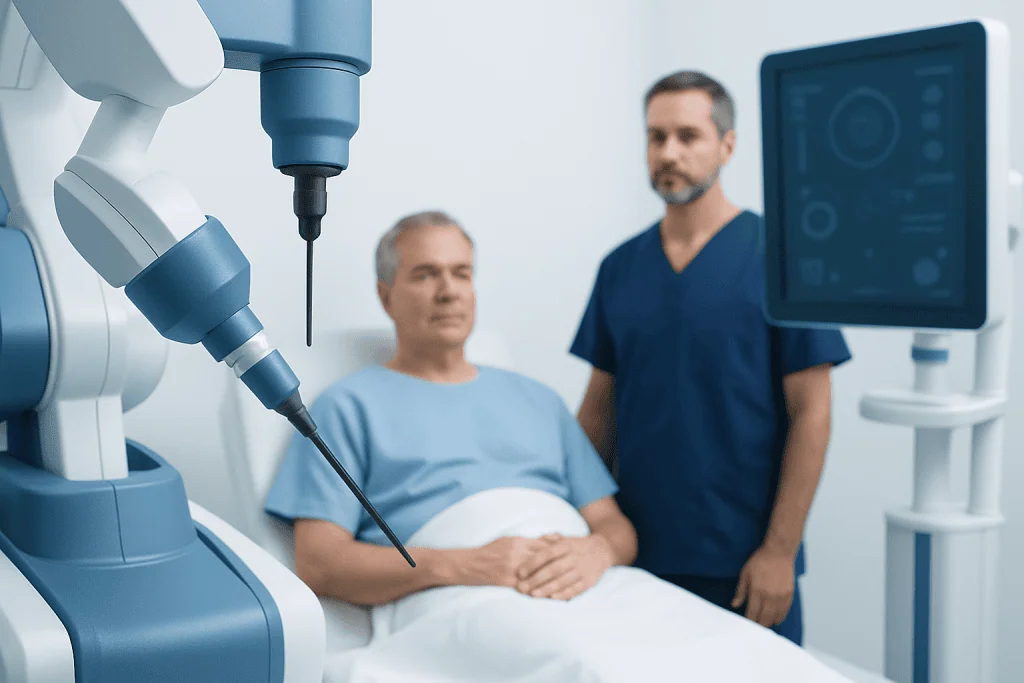
Examples include laser procedures such as holmium laser enucleation of the prostate and photoselective vaporization, which remove or vaporize obstructing tissue. Water vapor therapy uses controlled steam energy to treat prostate tissue. Prostatic urethral lift places small implants to hold prostate lobes away from the urethra. Aquablation uses a high-velocity water jet guided by imaging and robotic planning to remove tissue. Prostate artery embolization is performed by interventional radiologists in selected cases to reduce blood flow to the prostate and gradually shrink it.
Potential advantages may include shorter catheter time, less bleeding, outpatient treatment, or better preservation of ejaculation, depending on the method. However, minimally invasive does not mean risk-free. Some patients may still experience urinary discomfort, infection, temporary retention, bleeding, or the need for retreatment later.
Suitability depends on prostate size and shape, whether a middle lobe is present, the degree of blockage, anesthesia risk, and available expertise. For example, very large prostates may be better treated with laser enucleation, simple prostatectomy, or other specialized approaches rather than a small-office procedure. A urologist can explain which options are realistic for the individual patient.
Recovery and Aftercare
Recovery depends on the type of procedure, the patient’s health, and whether a catheter is needed after treatment. After TURP or many laser operations, urine may be pink or contain small clots for a short time. Burning, urgency, and frequent urination can occur while the urinary tract heals. These symptoms usually improve gradually, although the timeline differs from person to person.
Patients are commonly advised to drink fluids as recommended, avoid heavy lifting for a period specified by the surgeon, and delay strenuous exercise or sexual activity until cleared. Constipation should be avoided because straining may increase discomfort or bleeding risk. If blood-thinning medicines were stopped before the procedure, the doctor will give instructions on when to restart them.
Follow-up is important to check urine flow, bladder emptying, healing, and symptom improvement. Men should contact their healthcare team promptly if they cannot urinate, develop fever, have worsening pain, pass heavy clots, or notice persistent bright red bleeding. These issues can often be managed effectively when addressed early.
Risks, Benefits, and Choosing the Right Procedure
The main benefit of BPH surgery is improved urine flow and reduced urinary symptoms. Many men also sleep better, feel less urgency, and have fewer worries about finding a bathroom. For patients with complications, treatment may help prevent further bladder or kidney problems.
Possible risks vary by technique but may include bleeding, infection, urinary retention, need for a catheter, urethral stricture, bladder neck narrowing, temporary or persistent urinary urgency, and sexual side effects. Erectile function is usually preserved for many men after BPH procedures, but changes can occur, and the risk differs by patient and treatment type. Ejaculation changes are more common with tissue-removing operations than with some minimally invasive approaches.
Choosing a procedure is a shared decision. Patients may wish to ask about expected symptom relief, anesthesia, hospital stay, catheter duration, recovery time, effect on ejaculation, likelihood of retreatment, and the surgeon’s experience with the recommended method. Men who are planning future fertility should mention this before treatment.
For international patients seeking evaluation, Acibadem International’s multidisciplinary specialists and JCI-accredited hospitals provide diagnosis and treatment for BPH and other urological conditions. As with any healthcare decision, patients should review their medical records with a qualified urologist and choose the option that fits their clinical needs and preferences.
When to See a Doctor
A man should seek medical advice if urinary symptoms are bothersome, worsening, or affecting sleep and daily life. Early assessment can identify BPH and also check for other treatable conditions such as urinary infection, bladder disorders, or prostate-related concerns. Men should not assume that all urinary symptoms are simply a normal part of aging.
Urgent care is needed if a man cannot pass urine, has fever with urinary symptoms, has severe lower abdominal pain, or sees heavy blood or large clots in the urine. These symptoms may require prompt treatment to relieve obstruction, treat infection, or prevent complications.
Men already using BPH medication should also follow up if symptoms return or side effects become difficult. Treatment choices continue to evolve, and a urologist can explain whether continued medication, TURP, laser therapy, or another minimally invasive option is most appropriate.
Frequently asked questions
Is BPH the same as prostate cancer?
No. BPH is a benign, non-cancerous enlargement of the prostate. It does not mean a man has prostate cancer, although both conditions can occur in the same age group and may require separate evaluation.
When is TURP recommended for an enlarged prostate?
TURP may be recommended when urinary symptoms are moderate to severe, medicines do not help enough, or BPH causes complications such as retention, infections, stones, or bladder emptying problems. A urologist considers prostate size, urine flow, general health, and patient preferences before advising TURP.
Are minimally invasive BPH procedures better than TURP?
They are not automatically better; they are different options for different patients. Some minimally invasive procedures may offer quicker recovery or a lower risk of ejaculation changes, but they may not provide the same degree or durability of symptom relief for every prostate size and shape.
Will prostate surgery for BPH affect sexual function?
Many men maintain erections after BPH procedures, but sexual side effects can occur. Retrograde ejaculation is common after TURP and some laser procedures, while certain minimally invasive options may have a lower risk. This should be discussed clearly before treatment.
How long does recovery take after BPH surgery?
Recovery varies by procedure. Some office-based treatments allow a relatively quick return to light activities, while TURP or laser surgery may require a longer healing period and temporary activity restrictions. The surgeon will give individualized instructions based on the procedure and recovery progress.
Can BPH come back after surgery?
Symptoms can return in some men over time, either because prostate tissue grows again or because bladder function changes with age. The chance of needing another treatment depends on the procedure, prostate characteristics, and individual health factors.
References
- American Urological Association
- European Association of Urology
- National Institute for Health and Care Excellence
- Urology Care Foundation
- Mayo Clinic
This article is for general information only and is not a substitute for professional medical advice. Please consult a qualified doctor about your individual situation.
Minimally Invasive in Turkey — costs, top hospitals & a free quote
JCI-accredited · board-certified surgeons · reply within 24h