Pseudoseizure Treatment: How It Works, Results and What to Expect
Functional seizures are real, involuntary events; they are not faked or a sign of personal weakness. Video-EEG monitoring is often used to distinguish functional seizures from epileptic seizures.
Key Takeaways
- Functional seizures are real, involuntary events; they are not faked or a sign of personal weakness.
- Video-EEG monitoring is often used to distinguish functional seizures from epileptic seizures.
- Psychological therapies, especially structured approaches such as cognitive behavioural therapy, are central to treatment.
- Recovery varies, but symptom frequency and daily functioning can improve with early diagnosis and consistent support.
- Epilepsy medicines do not treat functional seizures unless epilepsy is also present.
- Urgent assessment is needed for a first seizure-like event, injury, pregnancy, breathing difficulty or symptoms that may suggest a medical emergency.
Pseudoseizure treatment, more accurately called treatment for functional (dissociative) seizures or psychogenic nonepileptic seizures (PNES), focuses on confirming the diagnosis, explaining it clearly and addressing the factors that keep episodes going. Many people improve with tailored psychological therapy, management of related conditions and coordinated neurological care.
Overview: how pseudoseizure treatment works
Pseudoseizure treatment is the older search term for care of functional seizures, also called dissociative seizures or psychogenic nonepileptic seizures (PNES). These episodes can look very similar to epileptic seizures, with shaking, unresponsiveness, falls, altered awareness or unusual movements. However, they are not caused by the abnormal electrical brain activity that defines epilepsy.
The episodes are genuine and involuntary. They are thought to reflect a disruption in how the brain and body process attention, emotion, stress, sensation and movement. Treatment therefore does not involve a single procedure or a quick cure. It combines an accurate diagnosis, a respectful explanation, psychotherapy, rehabilitation where needed, and treatment of related conditions such as anxiety, depression, trauma symptoms, pain or sleep difficulties.
A clear diagnosis itself can be an important first therapeutic step. Understanding that the symptoms are real, common and potentially treatable can reduce uncertainty and help a person engage in a practical recovery plan. Care is usually coordinated between neurology, mental health professionals and primary care.
Diagnosis and candidacy for treatment
Anyone with recurrent seizure-like episodes should have a medical assessment before assuming they are functional seizures. The clinician will review what happens before, during and after events; medical history; medicines; mental health; injuries; sleep; and possible triggers. Witness descriptions or safely recorded videos of an event can sometimes help the assessment.
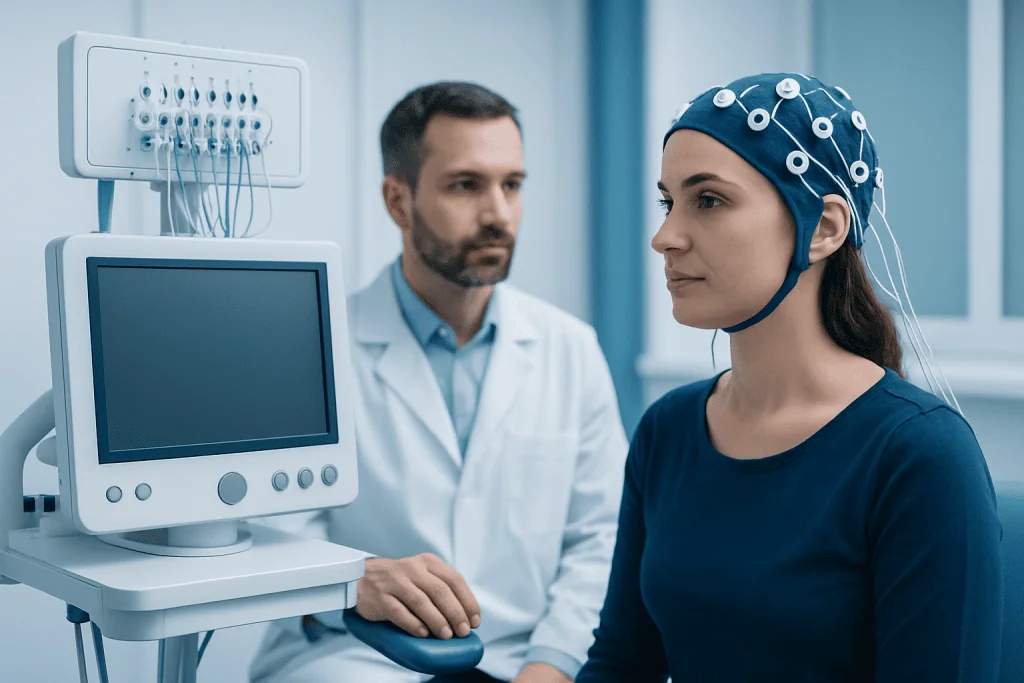
The preferred test for confirming functional seizures is video-electroencephalography (video-EEG) monitoring. This records behaviour and brain electrical activity during a typical event. If a typical episode occurs without the EEG changes expected in an epileptic seizure, the neurological team may diagnose functional seizures. Other tests, including blood tests, brain imaging or heart assessment, may be appropriate depending on the person’s symptoms.
Some people have both epilepsy and functional seizures. This makes careful specialist assessment particularly important, because the two event types may need different management. A diagnosis should not be based solely on a history of stress, mental health symptoms or an event’s appearance.
- Appropriate candidates for treatment are people with a confirmed or strongly suspected functional seizure diagnosis.
- Care plans are individualized for seizure frequency, safety concerns, coexisting epilepsy and personal goals.
- Children and adults may benefit from age-appropriate, family-inclusive support.
What happens during treatment: step by step

There is no surgical or medication-based procedure that directly stops functional seizures. Instead, treatment begins with a clinician explaining the diagnosis in clear, non-judgmental language. The discussion should make clear that the episodes are not deliberate, that epilepsy is not the cause if testing has ruled it out, and that improvement is possible.
Next, the care team develops a shared plan. A neurologist may review antiseizure medicines and, when epilepsy has been excluded, guide any reduction gradually and safely. These medicines should never be stopped suddenly without medical advice. A psychologist, psychiatrist or therapist then assesses factors that may affect symptoms, including persistent stress, trauma, mood symptoms, avoidance, pain, sleep disruption and social pressures.
Psychotherapy is usually the main treatment. Cognitive behavioural therapy and other structured, symptom-focused therapies can help a person recognize early warning signs, regulate physical arousal, respond differently to triggers and gradually return to valued activities. Trauma-focused treatment may be considered when trauma-related symptoms are present, while physiotherapy or occupational therapy may help with mobility, fatigue, confidence and functioning.
Regular follow-up allows the plan to be adjusted. Treatment focuses not only on the number of episodes, but also on safety, school or work participation, relationships, independence and quality of life. For people seeking coordinated international care, Acibadem International’s multidisciplinary specialists and JCI-accredited hospitals can support diagnosis and treatment planning for functional neurological symptoms.
Recovery timeline, benefits and possible challenges
Recovery is individual. Some people notice fewer episodes after receiving and understanding the diagnosis, while others need weeks to months of structured therapy and practice before changes become clear. Progress is rarely judged by a single event-free period; meaningful improvements may include shorter episodes, better recognition of warning signs, fewer emergency visits, greater confidence and return to everyday routines.
The main potential benefit of treatment is improved control over symptoms and their impact on daily life. Treating anxiety, depression, sleep problems, pain or trauma-related symptoms can also support recovery. Family education may be valuable because calm, consistent responses during an episode can improve safety and reduce fear.
Challenges can include uncertainty about the diagnosis, stigma associated with mental health care, limited access to experienced therapists, or coexisting medical conditions. Symptoms may temporarily worsen during stressful periods. These difficulties do not mean treatment has failed; they are useful topics to bring to follow-up appointments so the plan can be adapted.
Potential harms usually arise from misdiagnosis or unnecessary treatment rather than psychotherapy itself. Repeated emergency interventions, unnecessary antiseizure medicines, medication side effects and activity restriction can all affect wellbeing. A careful diagnosis and coordinated care help reduce these risks.
What triggers pseudoseizures?
Functional seizures do not have one universal trigger. For some people, episodes occur during or after emotional stress, conflict, overwhelm, poor sleep, physical illness, pain, fatigue or sensory overload. Others experience episodes without recognizing an obvious trigger, which is also common and does not make the condition less real.
Past trauma, anxiety, depression and difficult life experiences are more frequent in people with functional seizures, but they are not present in every case. The diagnosis should never be used to assume that a person has had trauma or that symptoms are simply caused by stress. Functional seizures can develop through several interacting biological, psychological and social factors.
Keeping a simple symptom diary may help identify patterns. A person can note sleep, meals, medication changes, pain, stress level, early body sensations and the circumstances around episodes. The goal is not to blame the person for their symptoms, but to identify useful opportunities for prevention and early coping strategies.
How do you fix pseudoseizures?
Functional seizures are best managed through a personalized recovery plan rather than a single treatment. The first step is a confident diagnosis from an appropriate clinician, ideally supported by video-EEG when available. The person should receive an explanation that validates the episodes as real and involuntary while clarifying why epilepsy treatment may not be appropriate.
Psychological therapy is usually the most important next step. Therapy may teach grounding techniques, paced breathing, emotion regulation, activity pacing and ways to respond to early warning sensations. If depression, anxiety, post-traumatic stress disorder or another condition is present, it should also be assessed and treated. Medicines may be used for these related conditions when clinically appropriate, but they do not directly treat functional seizures.
Daily routines can support treatment. Consistent sleep, regular meals, gradual physical activity, reduced alcohol or recreational drug use, and a realistic return to work, school or social activities may help reduce vulnerability to episodes. Family members can ask the treating team how to respond safely and calmly during an event.
During an episode, bystanders should protect the person from injury, avoid restraining them or putting anything in their mouth, and stay calm. Emergency services are appropriate when an event is new or unusual, serious injury occurs, breathing remains impaired, recovery is incomplete, the person is pregnant, or there are other reasons to suspect an urgent medical problem.
Do pseudo seizures go away?
Functional seizures can reduce substantially or stop for some people, especially when the diagnosis is made early, explained clearly and followed by appropriate therapy. Others continue to have episodes but learn skills that make them less frequent, shorter, safer or less disruptive. Improvement in daily functioning is an important treatment outcome even if episodes do not disappear immediately.
There is no reliable way to predict an individual outcome. Factors such as access to specialist care, coexisting mental or physical health conditions, ongoing stressors and social support can influence recovery. A recurrence after a period of improvement can happen and should be viewed as a reason to review coping tools and care needs rather than as a personal failure.
Ongoing follow-up with the treating team is helpful, particularly if the character of episodes changes. New symptoms should not automatically be attributed to functional seizures, because people can develop unrelated medical conditions and some may also have epilepsy.
Is pseudoseizure a disability and when to seek medical care?
Functional seizures can be disabling when they affect safety, mobility, work, education, driving, relationships or independence. Whether they meet the legal definition of disability depends on the person’s level of functional limitation and the laws, workplace rules and benefit systems in their country. A treating clinician can document the condition and its practical effects, and may recommend temporary adjustments at work or school.
Medical care should be sought promptly for a first seizure-like event, a significant change in usual episodes, a head injury, prolonged unresponsiveness, ongoing breathing difficulty, chest pain, weakness on one side of the body, pregnancy, diabetes-related concerns or suspected poisoning. Emergency assessment is also appropriate when someone does not recover as expected or cannot be kept safe.
People with confirmed functional seizures should arrange routine follow-up if episodes are becoming more frequent, causing injuries, affecting mental health, or preventing daily activities. Thoughts of self-harm or suicide require urgent support through local emergency services or a crisis service. With compassionate, coordinated care, many people can work toward better safety, confidence and quality of life.
Frequently asked questions
Are pseudoseizures real seizures?
Functional seizures are real, involuntary seizure-like episodes, but they are not epileptic seizures. They do not result from the abnormal electrical brain activity that causes epilepsy. The older term “pseudoseizure” can be misunderstood, so clinicians often use functional seizures, dissociative seizures or PNES instead.
Can a person have epilepsy and functional seizures at the same time?
Yes. Some people have both epilepsy and functional seizures, and the event types may look different or similar. Video-EEG monitoring and specialist review can help identify each type so that treatment is appropriate.
Do antiseizure medicines treat functional seizures?
Antiseizure medicines generally do not treat functional seizures when epilepsy is not present. If a person also has epilepsy, medication may still be necessary for epileptic seizures. Any medication change should be planned with the prescribing clinician and not made suddenly.
What should family members do during a functional seizure?
They should focus on safety by moving hazards away, cushioning the head if possible and avoiding restraint. Nothing should be placed in the person’s mouth. They should seek emergency help if the event is new, differs from usual episodes, causes injury, involves breathing problems or recovery is delayed.
How long does treatment for functional seizures take?
There is no fixed timeline. Some people improve soon after diagnosis, while others benefit from therapy and follow-up over months or longer. Regular review helps the team address barriers, related conditions and progress toward daily-life goals.
Can stress management alone stop pseudoseizures?
Stress management can be helpful, but it is not always enough on its own. Functional seizures may involve multiple factors, including learned body responses, mood symptoms, trauma-related symptoms, pain and sleep difficulties. A structured treatment plan with qualified clinicians offers the most appropriate support.
References
- International League Against Epilepsy
- American Epilepsy Society
- National Institute of Neurological Disorders and Stroke
- Epilepsy Foundation
- NHS
This article is for general information only and is not a substitute for professional medical advice. Please consult a qualified doctor about your individual situation.
Explore treatments in Turkey — costs, top hospitals & a free quote
JCI-accredited · board-certified surgeons · reply within 24h
Add us as a Preferred Source to see more of our trusted health content across Google Search, AI Overviews and Discover.