Reactive Lymph Node: A Complete Medical Overview

A reactive lymph node is often a normal immune response rather than a disease itself. Common triggers include viral infections, bacterial infections, dental problems, and skin or throat inflammation.
Key Takeaways
- A reactive lymph node is often a normal immune response rather than a disease itself.
- Common triggers include viral infections, bacterial infections, dental problems, and skin or throat inflammation.
- Doctors assess lymph nodes by location, size, texture, duration, and associated symptoms.
- Many reactive lymph nodes settle as the underlying cause improves, but some need tests or follow-up.
- Medical review is important if a node is hard, fixed, rapidly enlarging, or present for several weeks.
A reactive lymph node is a lymph node that has become enlarged because the immune system is responding to infection, irritation, or inflammation. In many cases it is benign and temporary, but persistent, growing, or unexplained swelling should be assessed by a doctor.
What is a reactive lymph node?
A reactive lymph node is an enlarged lymph node that is actively responding to a trigger such as an infection or inflammation. Lymph nodes are small immune organs found throughout the body, especially in the neck, armpits, chest, abdomen, and groin. When they filter germs or inflammatory material, the immune cells inside them can multiply, making the node feel larger than usual.
In everyday practice, the term “reactive” usually suggests that the change looks or feels consistent with a benign immune response rather than a cancerous one. However, the term is descriptive, not a final diagnosis on its own. A doctor still considers the person’s symptoms, medical history, examination findings, and sometimes imaging or laboratory tests.
Reactive lymph nodes are common in both children and adults. They often appear during or shortly after a cold, sore throat, ear infection, dental infection, skin irritation, or another short-term illness. Some nodes remain slightly enlarged for weeks even after the original trigger has started to settle.
How lymph nodes react in the body
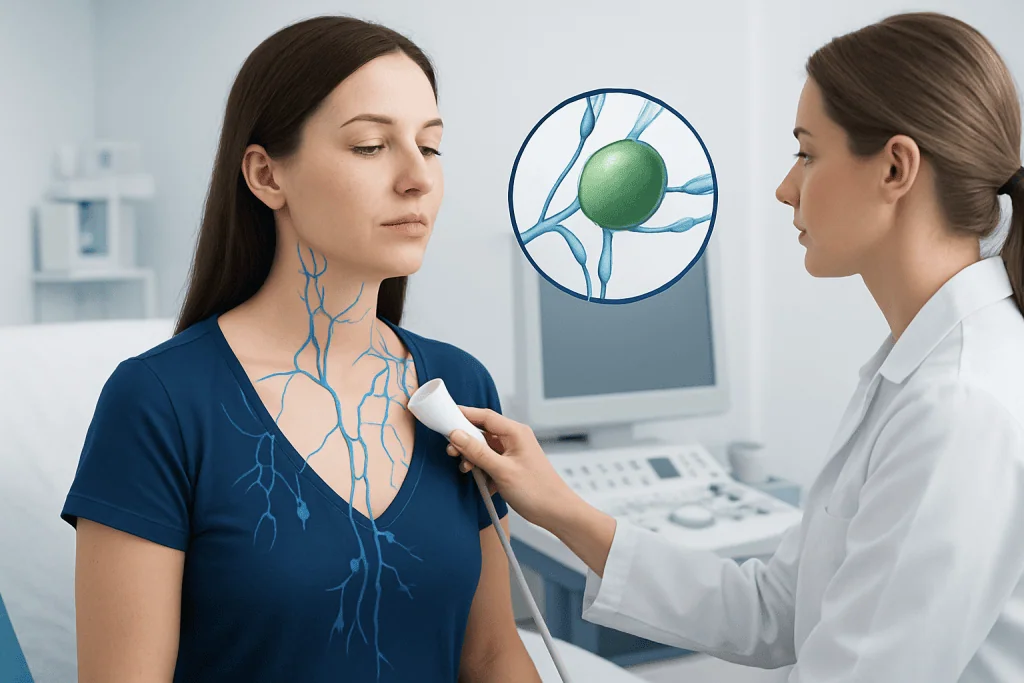
Lymph nodes are part of the lymphatic system, which helps the body fight infection and clear waste products from tissues. They contain white blood cells, including lymphocytes, that recognize foreign material and help organize an immune response. When this system is activated, a node may become swollen, tender, or more noticeable.
The location of the swollen node often provides clues. Nodes in the neck commonly react to throat, sinus, ear, scalp, or dental problems. Armpit nodes may react to skin inflammation, shaving irritation, or arm infections. Groin nodes can enlarge in response to issues affecting the legs, feet, or genital area.
Doctors often use the broader term “lymphadenopathy” to describe enlarged lymph nodes. If several regions are involved, the cause may be a systemic infection, an inflammatory disorder, or another body-wide condition. If swelling is limited to one area, a local source is more likely.
Symptoms and what a reactive lymph node feels like

A reactive lymph node may feel like a small lump under the skin. It can be soft or slightly firm, movable under the fingers, and sometimes tender, especially if the trigger is a recent infection. Some people notice only one node, while others feel a cluster of small enlarged nodes in the same region.
Symptoms often relate more to the underlying cause than to the node itself. For example, a person may also have a sore throat, fever, cough, runny nose, tooth pain, gum swelling, skin redness, or a recent wound. In children, enlarged neck nodes are especially common during frequent viral illnesses.
Not every enlarged node is painful. Some reactive nodes are painless but still benign. Still, certain features deserve closer attention, particularly if the node is hard, fixed in place, continues to enlarge, or does not improve over time.
- Common locations: neck, under the jaw, behind the ears, armpits, and groin
- Possible associated symptoms: fever, fatigue, sore throat, dental pain, skin rash, or recent infection
- Typical course: may appear quickly and improve gradually as the trigger resolves
Common causes and risk factors
The most frequent cause of a reactive lymph node is infection. Viral upper respiratory infections, influenza-like illnesses, tonsillitis, ear infections, dental infections, and infected skin conditions often lead to temporary lymph node enlargement. Bacterial infections can cause more tender or more prominent swelling, especially if the nearby tissues are also inflamed.
Inflammatory and immune-related conditions can also lead to reactive nodes. Examples include autoimmune disorders, scalp inflammation, eczema with skin breakdown, and other sources of chronic irritation. Less commonly, certain medications or vaccinations can cause temporary enlargement of nearby nodes as the immune system responds.
Age, recent illness, oral health, skin injuries, pet scratches, travel history, and exposure to infections all matter during evaluation. Although many swollen nodes are reactive, doctors also consider other explanations when the pattern is unusual. Depending on the symptoms and findings, the differential diagnosis can include lymphoma or leukemia, especially when there are concerning systemic features or persistent unexplained enlargement.
How doctors diagnose a reactive lymph node
Diagnosis starts with a careful history and physical examination. A doctor asks how long the node has been present, whether it is painful, whether it has changed in size, and whether there are symptoms such as fever, night sweats, weight loss, recent infections, or dental problems. The size, consistency, mobility, and location of the node all help guide next steps.
In many straightforward cases, no extensive testing is needed at the first visit. If the enlarged node appears to fit with a recent infection and there are no warning signs, the doctor may recommend observation and treatment of the likely underlying cause. Follow-up is important if the swelling does not improve as expected.
When further evaluation is needed, tests may include blood work, throat or infection-related testing, or imaging such as ultrasound to assess the node’s shape and internal features. In selected cases, cross-sectional imaging may be useful, including MRI or CT scan. If uncertainty remains, especially with persistent or suspicious nodes, a tissue sample may be recommended through biopsy.
Treatment and what usually happens over time
Treatment focuses on the underlying cause rather than the lymph node itself. If a viral infection is responsible, supportive care and time are often all that is needed. If a bacterial infection, dental problem, or skin infection is present, targeted medical or dental treatment may be necessary.
It is generally not helpful to repeatedly press or check the node many times a day, as this can irritate the area and make it seem more noticeable. Many reactive nodes gradually shrink after the trigger improves, although complete return to prior size may take several weeks. In some people, a small residual node remains palpable and is not harmful.
If the node persists, grows, or appears atypical, the doctor may arrange follow-up imaging, laboratory tests, or referral to a specialist such as an ear, nose, and throat doctor, internist, infectious disease specialist, or hematology/oncology team. Near the end of the evaluation pathway, if advanced care is needed, Acibadem International’s multidisciplinary specialists in JCI-accredited hospitals diagnose and treat patients with lymph node disorders and related conditions.
Self-care and prevention
Not all reactive lymph nodes can be prevented, because they are often part of the body’s normal defense response. Still, good infection prevention and prompt attention to common triggers may lower the chance of prolonged swelling. Everyday measures such as hand hygiene, oral care, skin care, and keeping vaccinations up to date can help reduce some causes.
People should avoid self-prescribing antibiotics or assuming every swollen node needs medication. Since many causes are viral, antibiotics may not help and should only be used when recommended by a qualified clinician. Good hydration, rest, and treatment of the underlying illness are often enough while the immune response settles.
- Maintain regular dental checkups and treat tooth or gum problems early
- Clean and monitor cuts, bites, and skin irritation
- Manage chronic inflammatory skin conditions with medical guidance
- Seek medical advice if swelling is persistent or recurrent without a clear cause
When to seek medical care
Medical evaluation is advisable if a lymph node remains enlarged for several weeks, continues to grow, or appears without an obvious recent infection. A doctor should also assess nodes that are hard, fixed, very large, or located in areas that are less commonly reactive, depending on the overall clinical picture.
Prompt review is important if lymph node swelling is accompanied by red-flag symptoms such as ongoing fever, drenching night sweats, unexplained weight loss, persistent fatigue, shortness of breath, or difficulty swallowing. Severe tenderness, overlying redness, or signs of an abscess can also need urgent attention.
It is especially helpful to seek care if there is a personal history of cancer, significant immune suppression, recent high-risk infection exposure, or widespread swelling in multiple lymph node areas. A qualified doctor can determine whether the node is behaving like a simple reactive change or whether more investigation is needed.
Frequently asked questions
Is a reactive lymph node the same as cancer?
No. A reactive lymph node usually means the node has enlarged because the immune system is responding to infection or inflammation. However, if the swelling is persistent, growing, or associated with concerning symptoms, a doctor may recommend further evaluation.
How long can a reactive lymph node stay enlarged?
A reactive lymph node may improve within days, but some remain noticeable for several weeks after the original illness settles. The exact timing depends on the cause, the person’s immune response, and whether the trigger has fully resolved. If it persists or enlarges, medical review is appropriate.
Are reactive lymph nodes painful?
They can be. Tenderness is common when the node is reacting to an infection nearby, especially in the throat, ear, skin, or teeth. Some reactive nodes are painless, which does not automatically mean something serious is present.
Can stress cause a reactive lymph node?
Stress alone is not considered a direct cause of a reactive lymph node. Most enlarged nodes are related to infection, inflammation, or other immune triggers. Stress can affect general wellbeing, but it does not usually explain a persistent swollen node by itself.
Should a reactive lymph node be massaged or checked often?
Frequent pressing or massaging is not recommended. Repeated handling can irritate the tissues and make the area feel more tender or prominent. It is better to monitor the general trend over time and seek medical advice if it does not improve.
What tests are done for an enlarged lymph node?
The first step is usually a history and physical examination. Depending on the findings, a doctor may order blood tests, infection-related tests, ultrasound, CT, MRI, or sometimes a biopsy. The choice depends on the location of the node, how long it has been present, and whether there are other symptoms.
References
- National Health Service
- Mayo Clinic
- Cleveland Clinic
- Merck Manual Consumer Version
- American Academy of Family Physicians
This article is for general information only and is not a substitute for professional medical advice. Please consult a qualified doctor about your individual situation.
Explore treatments in Turkey — costs, top hospitals & a free quote
JCI-accredited · board-certified surgeons · reply within 24h
Add us as a Preferred Source to see more of our trusted health content across Google Search, AI Overviews and Discover.