Regrow Knee Cartilage Without Surgery: Procedure, Recovery and Results

Knee cartilage does not reliably regrow on its own after significant injury or osteoarthritis. Exercise therapy, weight management, activity modification and pain-relief strategies can improve symptoms without surgery.
Key Takeaways
- Knee cartilage does not reliably regrow on its own after significant injury or osteoarthritis.
- Exercise therapy, weight management, activity modification and pain-relief strategies can improve symptoms without surgery.
- Biologic injections may be considered in selected cases, but they do not consistently regenerate normal knee cartilage.
- Cartilage-restoration procedures are surgical and are usually reserved for localized defects in carefully selected patients.
- Recovery and expected results depend on the type, size and location of cartilage damage, knee alignment and overall joint health.
Regrowing knee cartilage without surgery is not currently possible in the same way that skin or bone heals, because cartilage has limited blood supply and repair capacity. Non-surgical care can still reduce pain, improve movement, protect the joint and help some people delay or avoid surgery, depending on the cause and extent of cartilage damage.
Overview: can knee cartilage be regrown without surgery?
Regrow knee cartilage without surgery is a common goal for people with knee pain, stiffness or a diagnosis of cartilage wear. At present, no non-surgical treatment has been proven to reliably rebuild normal, durable knee cartilage across a damaged joint. However, non-surgical treatment can often improve pain, strength, mobility and daily function, and may reduce stress on the affected area.
Articular cartilage is the smooth, firm tissue covering the ends of bones inside a joint. It helps the knee move with low friction and distributes force during walking, climbing stairs and exercise. Because it has no direct blood supply, it has a limited ability to repair itself after injury. Localized cartilage defects and broader cartilage loss from knee osteoarthritis are related problems, but they are not managed in exactly the same way.
The most suitable plan depends on whether symptoms come from a sports injury, an isolated defect, meniscal injury, ligament instability, inflammation, altered leg alignment or osteoarthritis. A clinician can help distinguish these causes and set realistic goals: protecting the joint, restoring function and deciding whether a procedure is needed.
How knee cartilage damage affects the joint
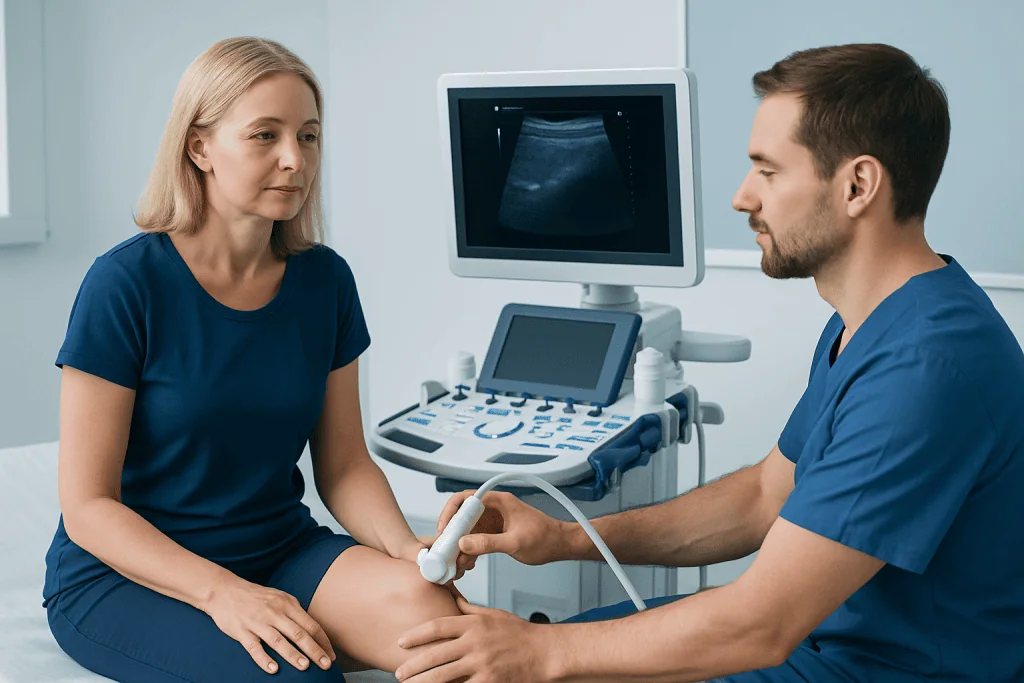
Cartilage damage may develop suddenly after a twist, fall or impact, or gradually through repeated loading and age-related joint changes. Small defects may cause little discomfort. Larger or deeper defects can produce pain with weight-bearing, swelling after activity, catching, reduced range of motion or a sensation that the knee is giving way.
In osteoarthritis, cartilage loss often occurs alongside changes in the bone beneath the cartilage, inflammation of the joint lining and changes to nearby muscles, tendons and ligaments. This is why pain severity does not always match what appears on an X-ray or MRI. The whole knee, rather than cartilage alone, needs to be assessed.
Meniscal tears, anterior cruciate ligament injury, weak hip or thigh muscles and poor knee alignment can increase pressure on particular parts of the joint. Addressing these contributors is an important part of non-surgical care and can also affect the outcome of a cartilage procedure.
Non-surgical approaches: how they work and who may benefit
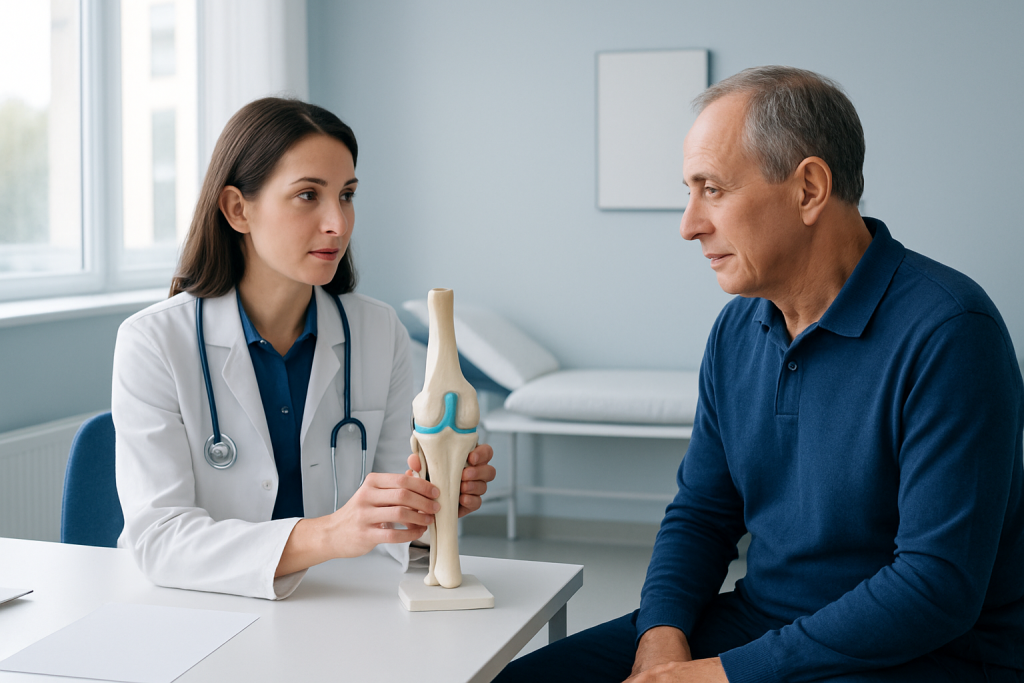
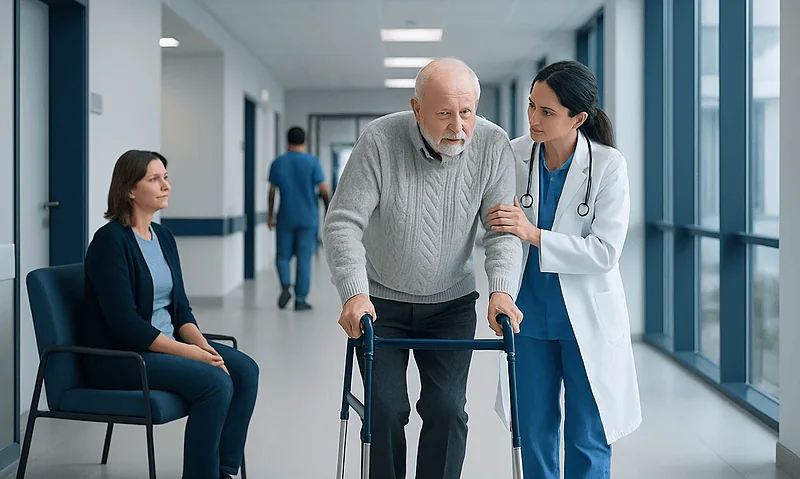
Non-surgical treatment aims to reduce excessive joint load, improve how the knee moves and build the muscles that support it. A structured physiotherapy program commonly includes quadriceps, hamstring, hip and core strengthening; flexibility work; balance training; and a gradual return to preferred activities. Low-impact exercise such as cycling, swimming or water-based exercise may be more comfortable for some people.
For people carrying excess body weight, gradual weight reduction can lower force across the knee during daily activities. Adjusting training volume, avoiding movements that reliably trigger swelling, choosing supportive footwear and using a cane or brace in selected cases may also help. These measures do not regrow cartilage, but they can meaningfully improve symptoms and protect remaining joint tissue.
Doctors may recommend short-term pain-relieving medicines or anti-inflammatory medicines when appropriate, taking account of other health conditions and medications. Injections, including corticosteroid or hyaluronic acid injections, may be considered for selected people. Platelet-rich plasma and cell-based treatments are being studied, but product preparation, regulation and evidence vary; they should not be presented as proven cartilage-regrowth treatments.
People most likely to benefit from conservative care include those with mild-to-moderate symptoms, early degenerative changes, a recent overuse flare, or pain related partly to weakness and altered movement patterns. Persistent locking, major swelling, instability or severe functional limitation requires a more detailed assessment.
If a procedure is needed: cartilage restoration step by step
Cartilage restoration is not a non-surgical treatment. It refers to a group of orthopedic procedures designed for carefully selected patients, most often younger or active people with a single, localized full-thickness cartilage defect and otherwise healthy surrounding joint. Widespread advanced osteoarthritis is usually not suitable for focal cartilage-restoration techniques.
The assessment begins with a history, physical examination and imaging. X-rays can show alignment and arthritis changes, while MRI can help assess cartilage, menisci, ligaments and bone. The orthopedic team also evaluates knee stability, leg alignment, body weight, activity goals and willingness to complete a long rehabilitation program.
Depending on the defect, treatment may include arthroscopic cleaning of unstable cartilage, microfracture to stimulate marrow-based repair, osteochondral grafting that transfers cartilage and supporting bone, or cell-based cartilage implantation. Some approaches involve one operation and others require staged treatment. Related orthopedic options can be explored through cartilage repair treatment.
During the procedure, the surgeon prepares the damaged area and uses the selected technique to encourage repair or restore the joint surface. If alignment, ligament injury or meniscal loss is contributing to overload, these may need to be addressed at the same time or in a planned sequence. The aim is improved symptoms and function, not a guarantee of a completely normal knee.
Recovery timeline, expected benefits and risks
Recovery depends substantially on the treatment used, the location and size of the defect, and whether additional procedures are performed. After cartilage-restoration surgery, many people use crutches and have restricted weight-bearing for a period determined by the surgeon. Early rehabilitation focuses on controlling swelling, safely restoring motion and activating the thigh muscles.
Strengthening and progressive loading are then introduced over the following months. Return to desk-based work may occur earlier than return to physically demanding work, running or pivoting sports. Full recovery can take many months, and return to high-impact sport is not appropriate until strength, movement control, symptoms and clinical review support it.
Potential benefits include less pain, better function and improved ability to participate in chosen activities. Results vary, and the repair tissue produced by some techniques may not have the same structure or durability as original hyaline cartilage. Risks include infection, blood clots, stiffness, persistent pain, swelling, failure of the repair tissue and the possible need for further treatment.
Rehabilitation is essential rather than optional. Following weight-bearing restrictions, attending physiotherapy and reporting worsening pain or swelling promptly can help protect the healing area. Acibadem International’s multidisciplinary orthopedic, rehabilitation and imaging specialists at JCI-accredited hospitals can assess knee cartilage concerns and coordinate care for international patients.
How long does it take to rebuild cartilage in the knee?
There is no predictable timeline for naturally rebuilding lost knee cartilage because significant adult cartilage loss usually does not regenerate on its own. With non-surgical treatment, improvements in pain, strength and confidence with movement may begin over several weeks, but progress is usually gradual and depends on consistent rehabilitation and the underlying diagnosis.
After cartilage-restoration surgery, biological healing and rehabilitation commonly take months. The exact timeframe differs between procedures and individuals, so the treating surgeon and physiotherapist provide the safest individualized plan. Feeling better does not always mean the repair area is ready for high-impact activity.
For osteoarthritis, treatment is generally focused on long-term symptom management and maintaining function rather than expecting cartilage to grow back. Regular review allows the plan to be adjusted as symptoms, activity needs and imaging findings change.
Can you rebuild cartilage in your knee without surgery?
Currently, it is not possible to reliably rebuild substantial knee cartilage loss without surgery. Exercise, physiotherapy, healthy weight management, bracing and selected medications or injections can improve the knee environment and reduce symptoms, but they do not consistently restore a normal cartilage surface.
Some imaging studies and early research suggest that joint tissues can respond favorably to changes in loading and exercise. This does not mean that a damaged joint has regenerated fully. Patients should be cautious about products or programs that promise cartilage regrowth, particularly when they make claims without discussing diagnosis, rehabilitation or the limits of current evidence.
A non-surgical plan can still be very valuable. For many people, it reduces pain enough to support work, exercise and daily life while avoiding unnecessary procedures. If symptoms remain limiting despite appropriate care, an orthopedic specialist can discuss whether further imaging or surgical assessment is reasonable.
What is the success rate of knee cartilage regeneration?
There is no single success rate for knee cartilage regeneration. Outcomes vary by the type of cartilage problem, the procedure used, the definition of success, the duration of follow-up and the individual patient’s age, alignment, activity level and joint condition. For this reason, broad percentages can be misleading.
Cartilage-restoration procedures may improve symptoms and function in appropriately selected patients with localized defects. They are less predictable when there is extensive osteoarthritis, uncorrected malalignment, untreated instability, significant meniscal deficiency or difficulty following rehabilitation restrictions.
Before recommending a procedure, the orthopedic team should explain the likely goals, alternatives, recovery requirements and uncertainties for that person’s knee. It is reasonable to ask what outcome measures the team uses, how they assess healing and what options remain if symptoms do not improve as hoped.
What makes cartilage heal faster?
No food, supplement or exercise can make damaged knee cartilage regenerate quickly. The most helpful steps are those that create safer conditions for recovery: obtaining an accurate diagnosis, following a prescribed rehabilitation plan, protecting the knee from repeated overload and maintaining overall health.
Adequate sleep, a balanced diet that provides sufficient protein and nutrients, not smoking, and managing conditions such as diabetes support general healing. After an injury or procedure, the right level of movement matters. Too little movement can contribute to weakness and stiffness, while too much impact or rapid progression can increase pain and swelling.
Working with a physiotherapist helps ensure exercises are progressed appropriately. A clinician may recommend modified activities, temporary bracing or mobility aids based on symptoms and examination findings. Supplements marketed for cartilage repair should be discussed with a doctor, especially if the person takes regular medication or has other health conditions.
When to seek medical care
Medical assessment is advisable for knee pain that persists beyond a few weeks, repeatedly limits walking or sleep, causes recurrent swelling, or prevents a person from returning to usual activity. Evaluation is also important after a significant injury, especially if the knee feels unstable, locks, cannot fully straighten or cannot bear weight comfortably.
Urgent medical care is appropriate if the knee is very hot, red and swollen, if there is fever or feeling unwell, or if severe pain follows a major injury. These symptoms can have causes that need prompt treatment and should not be managed solely with home measures.
A clinician can identify whether symptoms are likely related to cartilage, arthritis, the meniscus, ligaments or another condition. Early, individualized care may help preserve movement and reduce the risk of prolonged disability.
Frequently asked questions
Can exercise regrow knee cartilage?
Exercise does not reliably regrow lost knee cartilage. However, targeted strengthening and low-impact aerobic activity can reduce pain, improve stability and help the knee tolerate daily activities better. A physiotherapist can tailor exercise to the diagnosis and symptom level.
Are stem cell injections proven to regrow knee cartilage?
Cell-based injections are an active area of research, but they are not established as a reliable way to regenerate normal knee cartilage. Available products, preparation methods and regulations vary considerably. A qualified orthopedic clinician can explain the evidence, limitations and potential risks in an individual case.
Is walking good for knee cartilage damage?
Walking is often helpful when it is comfortable and increased gradually, as it supports general fitness and muscle function. If walking consistently causes swelling or escalating pain, the distance, speed or surface may need adjustment. Low-impact alternatives such as cycling or swimming may be useful during a flare.
Can glucosamine rebuild cartilage in the knee?
Glucosamine has not been shown to rebuild knee cartilage. Some people report symptom relief, but research results are mixed and it should not replace exercise therapy, weight management or medical assessment. A doctor or pharmacist can review whether it is safe alongside other medicines.
When is surgery considered for knee cartilage damage?
Surgery may be considered when a person has persistent, function-limiting symptoms despite appropriate non-surgical treatment, particularly with a localized cartilage defect. The decision also depends on imaging, knee alignment, ligament and meniscus health, activity goals and overall joint condition. Advanced widespread arthritis may require a different treatment approach than focal cartilage injury.
Can knee cartilage damage be prevented from getting worse?
It may be possible to reduce stress on the knee by maintaining healthy body weight, building supporting muscle strength, managing injuries promptly and avoiding sudden increases in high-impact activity. These measures cannot prevent every form of cartilage change, especially osteoarthritis, but they can support joint function. Regular review is useful when symptoms change or activity becomes more limited.
References
- American Academy of Orthopaedic Surgeons
- National Institute of Arthritis and Musculoskeletal and Skin Diseases
- Osteoarthritis Research Society International
- National Institute for Health and Care Excellence
- American College of Rheumatology
This article is for general information only and is not a substitute for professional medical advice. Please consult a qualified doctor about your individual situation.
Joint and spine care in Turkey — expert assessment & treatment
JCI-accredited · board-certified surgeons · reply within 24h
Add us as a Preferred Source to see more of our trusted health content across Google Search, AI Overviews and Discover.