Robotic Heart Bypass Surgery: Candidates, Benefits, and Limits

Robotic heart bypass surgery uses small chest incisions and robotic instruments to help surgeons bypass blocked coronary arteries. The most common use is bypassing the left anterior descending artery, often with the internal mammary artery graft.
Key Takeaways
- Robotic heart bypass surgery uses small chest incisions and robotic instruments to help surgeons bypass blocked coronary arteries.
- The most common use is bypassing the left anterior descending artery, often with the internal mammary artery graft.
- Good candidates usually have suitable coronary anatomy, stable overall health, and disease that can be safely treated with this approach.
- Potential benefits include smaller incisions, less disruption to the breastbone, and a quicker return to daily activities for selected patients.
- Limits include availability, the need for specialized expertise, and the possibility that complex disease may require traditional bypass surgery.
- A heart team evaluation helps match each patient with the safest and most effective treatment plan.
Robotic heart bypass surgery is a minimally invasive approach to coronary artery bypass grafting for carefully selected people with coronary artery disease. It may reduce incision size and recovery time, but it is not the right choice for every patient or every pattern of blocked arteries.
Overview
Robotic heart bypass surgery is a minimally invasive form of coronary artery bypass grafting, also called CABG. It is used to improve blood flow to the heart when one or more coronary arteries are narrowed or blocked by atherosclerosis. Instead of opening the breastbone fully, the surgeon works through small incisions between the ribs, using robotic instruments and a high-definition 3D camera for precision.
The goal is the same as in traditional bypass surgery: to create a new pathway for blood to reach the heart muscle. This is usually done by connecting a healthy blood vessel, often the left internal mammary artery, to a coronary artery beyond the blockage. Robotic techniques are most commonly used for bypassing the left anterior descending artery, an important vessel on the front of the heart.
Robotic bypass may be performed as a totally endoscopic procedure in some centers, or as a robot-assisted minimally invasive direct coronary artery bypass. In some patients, it is also part of a hybrid approach, where surgery treats one key artery and stenting treats other narrowed arteries. The best option depends on the patient’s coronary anatomy, symptoms, medical history, and surgical risk.
How Robotic Heart Bypass Surgery Is Performed
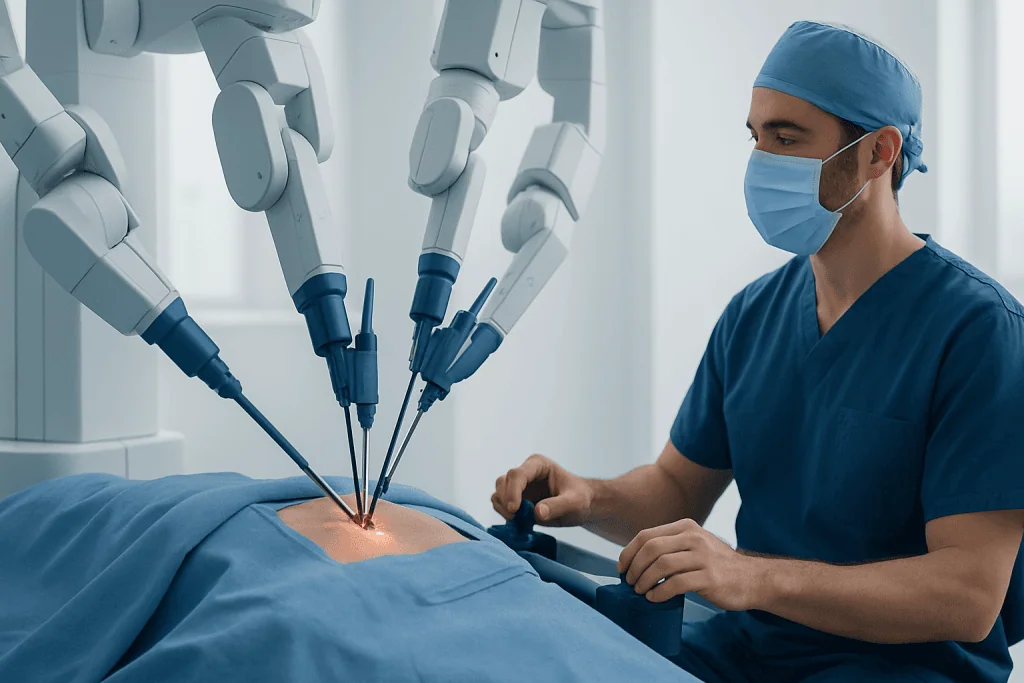
During robotic heart bypass surgery, the patient receives general anesthesia. The surgical team makes several small openings in the chest, usually on the left side. Through these openings, the surgeon controls robotic arms from a console; the robot does not operate independently. The system translates the surgeon’s hand movements into very fine instrument movements inside the chest.
A key step is preparing the graft vessel, commonly the internal mammary artery, which has excellent long-term durability for bypassing the left anterior descending artery. The surgeon then attaches the graft to the coronary artery beyond the narrowed segment, creating a new route for blood flow. Depending on the technique and the patient’s condition, the heart may continue beating during the operation, or heart-lung machine support may be used in selected cases.
Because robotic bypass is technically demanding, it is performed in specialized centers by teams experienced in minimally invasive cardiac surgery. Patients are monitored closely before, during, and after the procedure. If visibility, anatomy, bleeding, or safety concerns arise, the surgical team may extend the incision or convert to a conventional approach; this is a planned safety option, not a complication in itself.
Who May Be a Candidate?

Robotic heart bypass surgery is not chosen simply because it is less invasive. A person must have coronary artery disease that can be treated safely and effectively through small incisions. Candidates are typically evaluated by a heart team that may include a cardiologist, cardiac surgeon, anesthesiologist, and imaging specialists.
Patients who may be considered include those with a significant blockage in the left anterior descending artery, especially when the rest of the coronary circulation is suitable. Some people with multivessel coronary disease may be candidates for a hybrid strategy, combining minimally invasive bypass for one artery with percutaneous coronary intervention, such as angioplasty and stenting, for others.
Factors that support candidacy may include stable heart function, acceptable lung function, suitable chest anatomy, and coronary arteries that can be reached through the minimally invasive approach. The patient must also be able to tolerate general anesthesia and, in some cases, temporary one-lung ventilation during surgery.
- Isolated or dominant left anterior descending artery disease may be suitable.
- Selected multivessel disease may be suitable when a hybrid plan is appropriate.
- Patients who wish to avoid a full sternotomy may benefit if the anatomy is favorable.
- Prior surgeries, severe lung disease, extensive calcification, or emergency presentations may make robotic surgery less suitable.
Benefits for Selected Patients
For the right patient, robotic heart bypass surgery may offer several practical benefits compared with traditional open-chest bypass. Because the breastbone is not divided in many robotic approaches, there may be less bone-related discomfort and a lower need for prolonged lifting restrictions related to sternum healing. Smaller incisions can also be easier to care for during recovery.
Patients may experience less blood loss, reduced pain, shorter hospital stays, and a faster return to routine activities, although individual recovery varies. These benefits depend on the patient’s age, overall health, heart function, procedure complexity, and whether any complications occur. Robotic surgery is still major heart surgery and requires careful postoperative follow-up.
Another potential benefit is the use of the internal mammary artery graft to the left anterior descending artery, which is known for strong long-term performance in conventional bypass surgery as well. In a hybrid plan, the patient may receive the durability of surgical bypass for one key artery while avoiding a larger operation for additional vessels that can be treated effectively with stents.
Limits and Possible Risks
Robotic heart bypass surgery has important limits. It may not be appropriate for people with diffuse coronary artery disease, very small or heavily calcified target vessels, complex multivessel blockages requiring several bypass grafts, or unstable emergency conditions. Some patients are better served by conventional CABG because it gives the surgeon wider access to multiple coronary arteries.
The procedure also requires advanced equipment and a highly trained team, so it is not available in every hospital. Operating times may be longer during complex cases or in programs with less experience. Before recommending robotic bypass, doctors weigh whether the minimally invasive approach offers real benefit without compromising the quality and safety of revascularization.
Risks are similar in principle to other heart procedures and may include bleeding, infection, irregular heart rhythms, stroke, heart attack, graft problems, anesthesia-related issues, or the need for conversion to a larger incision. The overall risk depends on many factors, including diabetes, kidney disease, lung disease, frailty, previous heart procedures, and the severity of coronary artery disease.
Diagnosis and Preoperative Evaluation
Before robotic bypass is considered, doctors confirm the diagnosis and map the coronary arteries. This usually includes a medical history, physical examination, electrocardiogram, blood tests, echocardiography, and coronary angiography. In some patients, CT coronary angiography or other imaging is used to evaluate the chest, aorta, lungs, and blood vessels.
The evaluation focuses on two questions: whether the heart needs revascularization, and which method is most appropriate. Treatment options may include lifestyle and medication therapy, coronary stenting, traditional CABG, minimally invasive bypass, or a hybrid approach. The decision is individualized and should consider both short-term safety and long-term protection of the heart muscle.
Patients should tell their care team about all medicines, allergies, prior surgeries, bleeding problems, kidney disease, lung disease, and any history of stroke. Smoking status, diabetes control, dental infections, and general fitness may also influence planning. Good preparation helps reduce risk and supports smoother recovery.
Recovery, Prevention, and Self-Care
Recovery after robotic heart bypass is often shorter than after traditional sternotomy, but it still requires rest, wound care, gradual activity, and cardiac follow-up. Patients may spend time in an intensive care or monitored cardiac unit after surgery. The hospital team checks heart rhythm, breathing, pain control, incision healing, and overall progress before discharge.
At home, patients are usually advised to increase walking gradually, take prescribed medicines exactly as directed, and attend follow-up appointments. Cardiac rehabilitation may be recommended to improve exercise tolerance, confidence, and long-term heart health. Even after a successful bypass, coronary artery disease can progress if risk factors are not addressed.
Long-term self-care focuses on protecting the bypass graft and the native coronary arteries. This commonly includes not smoking, maintaining healthy blood pressure and cholesterol levels, managing diabetes, following a heart-healthy eating pattern, staying physically active as advised, and maintaining a healthy weight. Medicines such as antiplatelet therapy, cholesterol-lowering treatment, and blood pressure medicines may be part of the plan, depending on the patient’s condition.
International patients considering advanced cardiac care may seek evaluation at centers with coordinated cardiology, cardiac surgery, imaging, and rehabilitation services. Acibadem International’s multidisciplinary specialists and JCI-accredited hospitals diagnose and treat coronary artery disease, including minimally invasive surgical options, when appropriate for the individual patient.
When to See a Doctor
Anyone with chest discomfort, shortness of breath during activity, unexplained fatigue, pain spreading to the arm, jaw, back, or upper abdomen, or reduced exercise tolerance should seek medical assessment. These symptoms do not always mean coronary artery disease, but they deserve careful evaluation, especially in people with risk factors such as diabetes, high blood pressure, high cholesterol, smoking, or a family history of early heart disease.
People already diagnosed with coronary artery disease should discuss treatment choices with a cardiologist if symptoms continue despite medicines, if tests show reduced blood flow to the heart, or if coronary angiography shows significant narrowing. It is reasonable to ask whether stenting, conventional bypass, robotic bypass, or hybrid treatment is most suitable and why.
Urgent medical care is needed for severe, persistent, or worsening chest pain; fainting; sudden shortness of breath; or symptoms that feel like a heart attack. Prompt assessment helps doctors protect the heart muscle and choose the safest treatment pathway.
Frequently asked questions
Is robotic heart bypass surgery the same as traditional CABG?
It has the same main goal as traditional CABG: to bypass a blocked coronary artery and improve blood flow to the heart. The difference is the surgical access and instruments. Robotic bypass uses small chest incisions and robotic assistance, while traditional CABG often involves opening the breastbone.
Who is the best candidate for robotic heart bypass surgery?
The best candidates are usually people with coronary artery disease that can be reached and treated safely through a minimally invasive approach. This often includes selected patients with significant left anterior descending artery disease. A heart team must review angiography, heart function, lung health, and overall surgical risk before deciding.
Can robotic bypass treat all blocked heart arteries?
Not always. Robotic bypass is most commonly used for specific arteries, especially the left anterior descending artery. Patients with complex disease in several vessels may need conventional bypass, stenting, or a hybrid plan.
Is recovery faster after robotic heart bypass?
Many selected patients recover faster because the incisions are smaller and the breastbone is often not divided. However, recovery still varies based on age, general health, heart function, and the complexity of surgery. Patients should follow their surgeon’s instructions and attend cardiac rehabilitation if recommended.
What are the risks of robotic heart bypass surgery?
Risks may include bleeding, infection, irregular heart rhythm, stroke, heart attack, graft problems, anesthesia-related issues, or conversion to a larger incision. These risks are evaluated carefully before surgery. The team recommends robotic bypass only when the expected benefits outweigh the risks for that patient.
How should a patient choose between stents, robotic bypass, and open bypass?
The choice depends on the number, location, and severity of blockages, as well as symptoms, heart function, diabetes status, and overall health. Stents may be best for some blockages, while bypass surgery may offer better long-term revascularization for others. A cardiologist and cardiac surgeon can explain the safest and most durable option.
References
- American Heart Association
- Society of Thoracic Surgeons
- European Society of Cardiology
- American College of Cardiology
- National Heart, Lung, and Blood Institute
This article is for general information only and is not a substitute for professional medical advice. Please consult a qualified doctor about your individual situation.
Heart Bypass Surgery in Turkey — costs, top hospitals & a free quote
JCI-accredited · board-certified surgeons · reply within 24h