Signs and Symptoms of Fmd: Possible Causes and When to Seek Care

FMD, or fibromuscular dysplasia, is a non-atherosclerotic disease that affects medium-sized arteries. Symptoms vary by location and may involve the kidneys, neck, brain, abdomen, or limbs.
Key Takeaways
- FMD, or fibromuscular dysplasia, is a non-atherosclerotic disease that affects medium-sized arteries.
- Symptoms vary by location and may involve the kidneys, neck, brain, abdomen, or limbs.
- Some people are diagnosed only after imaging done for another reason.
- Urgent evaluation is needed for stroke-like symptoms, sudden severe pain, or signs of an arterial dissection.
- Diagnosis usually relies on vascular imaging such as ultrasound, CT angiography, or MR angiography.
Signs and symptoms of FMD depend on which arteries are affected. Many people have no symptoms, while others notice high blood pressure, headaches, neck pain, pulsatile ringing in the ears, dizziness, or symptoms caused by reduced blood flow or an artery tear.
Overview: what the signs and symptoms of FMD can look like
The signs and symptoms of FMD can be subtle, varied, or absent altogether. Fibromuscular dysplasia (FMD) is a condition that causes abnormal cell growth in the wall of certain arteries, most often medium-sized arteries. This can narrow the artery, create areas of enlargement, reduce blood flow, or make the vessel more prone to tearing.
Because arteries carry blood to many organs, symptoms depend mainly on which blood vessel is involved. The renal arteries that supply the kidneys and the carotid or vertebral arteries in the neck are affected most often. Some people first learn they have FMD after testing for high blood pressure, headaches, pulsatile tinnitus, or after imaging done for another health issue.
Unlike artery disease caused by cholesterol plaque, FMD is not the same as atherosclerosis. Its symptoms may come from narrowing of the vessel, decreased blood flow, aneurysm formation, or arterial dissection. Recognizing the pattern can help guide timely evaluation and treatment.
Common symptoms by artery affected
Symptoms often reflect the organ supplied by the affected artery. When the renal arteries are involved, FMD may lead to high blood pressure that is difficult to control, especially in a younger person or someone without typical risk factors. Some people may also have worsening kidney function, though this is less common.
When FMD affects the carotid or vertebral arteries, symptoms can include headaches, neck pain, dizziness, pulsatile tinnitus, and sometimes temporary neurologic symptoms. Pulsatile tinnitus is a rhythmic whooshing or heartbeat-like sound in the ear. This symptom can be especially important because it may be one of the earliest clues to FMD in the neck arteries.
Less commonly, FMD can involve arteries in the abdomen, arms, legs, or heart. Depending on the location, a person may notice abdominal pain after eating, limb fatigue with activity, coldness in an arm or leg, or chest discomfort. In many cases, symptoms are nonspecific, so doctors look at the full clinical picture rather than any single complaint.
- Renal arteries: high blood pressure, sometimes reduced kidney function
- Carotid or vertebral arteries: headache, neck pain, dizziness, pulsatile tinnitus
- Mesenteric arteries: abdominal pain, especially after meals
- Extremity arteries: limb pain, weakness, or fatigue with use
- Coronary arteries: chest pain in selected cases
Important warning signs and possible complications

One of the most important aspects of the signs and symptoms of FMD is that they can sometimes reflect a complication rather than the underlying condition alone. FMD may be associated with aneurysm, which is a bulging or weakened area in an artery, or with arterial dissection, which is a tear in the artery wall. These problems may cause sudden or more severe symptoms and need prompt medical attention.
A cervical artery dissection can cause sudden neck pain, face pain, headache, drooping eyelid, or stroke-like symptoms such as weakness, numbness, trouble speaking, or vision changes. A renal artery dissection may cause sudden flank or abdominal pain and can worsen blood pressure control. These symptoms do not always mean FMD is present, but they should not be ignored.
For this reason, FMD is often evaluated within a broader vascular and neurologic context. In some people, doctors may also assess for related concerns such as stroke risk if neurologic symptoms are present, or investigate persistent high blood pressure through hypertension evaluation when renal artery involvement is suspected.
What causes FMD and who may be at higher risk
The exact cause of FMD is not fully understood. Experts believe several factors may contribute, including genetic influences, hormones, and mechanical stress on the artery wall. FMD is seen more often in women, but it can affect men and can be diagnosed at different ages.
There is no single lifestyle habit known to directly cause FMD. However, smoking is considered harmful to blood vessel health in general and may be associated with a more complicated vascular course. A family history of vascular problems, aneurysm, or unexplained early high blood pressure may also raise clinical suspicion, though FMD itself is not always inherited in a simple way.
It is important for patients to know that having FMD does not mean they did anything wrong. The condition is not caused by poor diet alone, and it is not an infection. Most people need individualized assessment because the pattern and severity can vary significantly from one person to another.
How doctors diagnose FMD
Diagnosis begins with a careful medical history and physical examination. A clinician may ask about difficult-to-control blood pressure, recurring headaches, pulsatile tinnitus, neck pain, prior dissections, or family history of aneurysm or vascular disease. In some cases, a bruit, which is an abnormal sound heard over an artery with a stethoscope, may suggest turbulent blood flow.
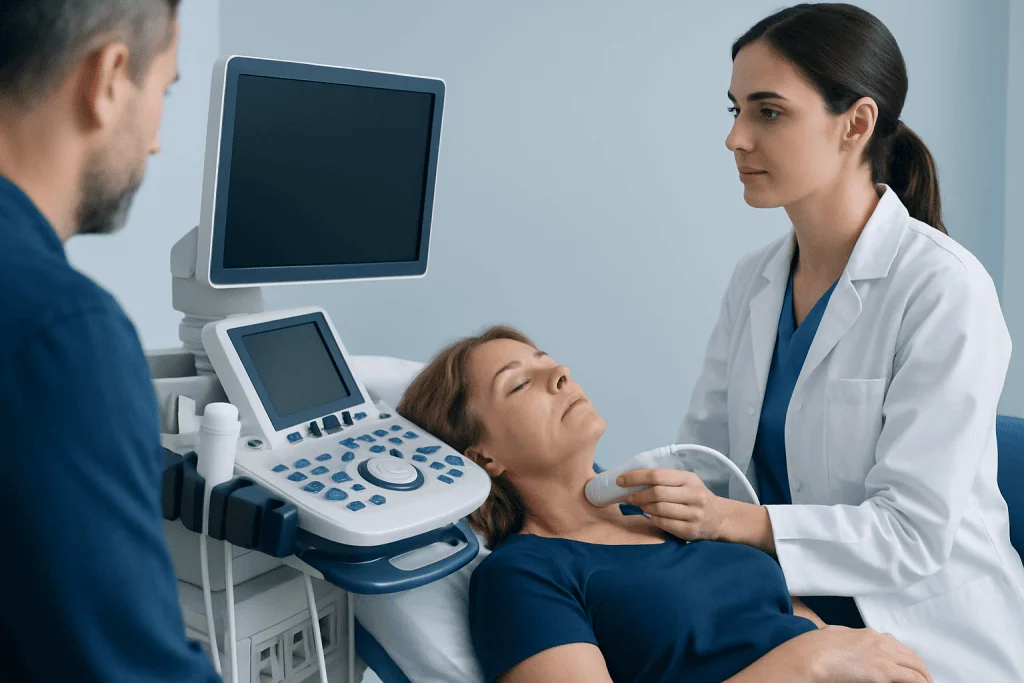
Imaging is central to diagnosis. Depending on the suspected location, doctors may use duplex ultrasound, CT angiography, or MR angiography to look for characteristic arterial changes. On imaging, some forms of FMD can produce a beaded appearance caused by alternating narrowing and enlargement, though not every case looks the same.
Further evaluation may include blood pressure monitoring, kidney function tests, and screening of other arterial beds because FMD can affect more than one location. When intervention is being considered, more detailed vascular imaging may be recommended. Patients undergoing workup for artery-related symptoms may also be referred for interventional radiology assessment or advanced vascular and general diagnostic evaluation depending on their needs.
Treatment options and day-to-day management
Treatment depends on the artery involved, the severity of symptoms, blood pressure control, and whether complications such as dissection or aneurysm are present. Many people are managed with regular monitoring and medicines to control blood pressure and reduce vascular strain. Doctors may also recommend antiplatelet therapy in selected situations, especially when cervical artery involvement is present, though decisions are individualized.
When FMD significantly narrows a renal artery and contributes to difficult hypertension, a procedure to widen the artery may be considered. In carefully selected patients, angioplasty can improve blood flow without the need for a stent in many cases. Surgical treatment is less common but may be needed for complex anatomy or complications.
Follow-up care is important because FMD can involve more than one artery and may change over time. Depending on the findings, care may include specialists in vascular medicine, nephrology, cardiology, radiology, and neurology. Near the end of the care pathway, some international patients choose centers such as Acibadem International, where multidisciplinary specialists in JCI-accredited hospitals evaluate vascular conditions and related neurologic or blood pressure concerns, including access to neurology care when symptoms affect the brain or nerves.
Prevention, self-care, and when to seek medical care
There is no proven way to prevent FMD itself, but good vascular health habits still matter. Patients are usually advised to avoid smoking, take prescribed blood pressure medicines consistently, attend follow-up imaging when recommended, and discuss any new symptoms promptly. Staying physically active is often encouraged, but a doctor may advise caution with activities that involve extreme neck strain or heavy exertion in selected cases.
Self-care also includes learning which symptoms deserve quick action. New pulsatile tinnitus, unusual headaches, unexplained neck pain, or blood pressure that suddenly becomes harder to control should be discussed with a clinician. These symptoms are not always dangerous, but they can help doctors recognize FMD earlier.
Medical care should be sought urgently for stroke-like symptoms, sudden severe headache, sudden vision or speech changes, weakness or numbness on one side, severe chest pain, or sudden intense abdominal, flank, or neck pain. These can be signs of dissection, aneurysm-related problems, or another emergency. For non-urgent but persistent symptoms, scheduling a medical evaluation is the safest next step.
Frequently asked questions
What is FMD?
FMD stands for fibromuscular dysplasia, a condition that affects the walls of certain arteries. It can narrow arteries, reduce blood flow, or increase the chance of aneurysm or dissection.
Can someone have FMD without symptoms?
Yes. Some people have no symptoms and are diagnosed only after imaging is done for another reason or during evaluation for high blood pressure. Even without symptoms, follow-up may still be important.
Is high blood pressure a sign of FMD?
It can be, especially when FMD affects the renal arteries. Blood pressure that starts at a younger age, is difficult to control, or seems out of proportion to usual risk factors may prompt further evaluation.
What does pulsatile tinnitus have to do with FMD?
Pulsatile tinnitus is a rhythmic whooshing or heartbeat-like sound in the ear. It can occur when FMD affects arteries in the neck and changes blood flow patterns, so it may be an important clue during diagnosis.
How is FMD confirmed?
Doctors usually confirm FMD with imaging tests such as duplex ultrasound, CT angiography, or MR angiography. The choice depends on the artery involved and the person’s symptoms, health history, and overall risk profile.
When should a person with possible FMD seek urgent care?
Urgent care is needed for stroke-like symptoms, sudden severe headache, sudden neck pain, chest pain, or intense abdominal or flank pain. These may signal a complication such as arterial dissection or another vascular emergency.
References
- American Heart Association
- National Heart, Lung, and Blood Institute
- National Organization for Rare Disorders
- Mayo Clinic
- National Institute of Neurological Disorders and Stroke
This article is for general information only and is not a substitute for professional medical advice. Please consult a qualified doctor about your individual situation.
Explore treatments in Turkey — costs, top hospitals & a free quote
JCI-accredited · board-certified surgeons · reply within 24h
Check your numbers in seconds
BMI, calories, due date, blood pressure and 30+ more clinical calculators — free, instant, doctor-reviewed ranges.