Skin Clear Skin: A Complete Medical Overview

Clear skin is linked to a healthy skin barrier, not perfection. Common causes of unclear skin include acne, irritation, eczema, rosacea, and pigment changes.
Key Takeaways
- Clear skin is linked to a healthy skin barrier, not perfection.
- Common causes of unclear skin include acne, irritation, eczema, rosacea, and pigment changes.
- A simple routine with gentle cleansing, moisturizing, and daily sunscreen helps many people.
- Persistent, painful, scarring, or changing skin problems should be assessed by a doctor.
- Treatment is tailored to the cause and may include prescription creams, oral medicines, or procedural care.
Skin clear skin usually refers to skin that looks even, calm, and healthy rather than perfectly flawless. In medical terms, clearer skin depends on protecting the skin barrier, choosing suitable daily care, and treating underlying problems such as acne, eczema, pigmentation changes, or irritation.
What “skin clear skin” means medically
Skin clear skin usually means skin that appears smooth, balanced, and comfortable, with minimal inflammation, clogged pores, active rash, or uneven color. From a medical perspective, clear skin is less about achieving a perfectly poreless look and more about maintaining a healthy skin barrier that protects against irritation, infection, water loss, and environmental stress.
Many everyday concerns can affect how clear the skin looks. These include acne, dryness, excess oil, eczema, rosacea, contact irritation, sun damage, and post-inflammatory marks left after breakouts or rashes. Because different skin problems can look similar at first, the most effective path to clearer skin starts with understanding the underlying cause rather than adding many products at once.
Skin also changes over time. Hormones, climate, stress, sleep, cosmetics, shaving, medications, and age can all influence oil production, sensitivity, and healing. For this reason, a routine that works well for one person may not suit another, and skin clear skin is best approached as a long-term health goal rather than a quick cosmetic fix.
Common signs that skin is not as clear as it could be

Unclear skin can show up in different ways. Some people mainly notice clogged pores, whiteheads, blackheads, or inflamed pimples. Others are more affected by redness, dry patches, flaking, itching, a rough texture, or dark marks that linger after inflammation settles.
It can help to pay attention to patterns. Breakouts along the jawline may be linked to hormones, while stinging and redness after a new product may suggest irritation or contact dermatitis. Fine scaling around the nose or eyebrows may point to seborrheic dermatitis, and persistent facial flushing can fit with rosacea. Pigment changes may become more visible after acne, sun exposure, or skin injury.
- Blackheads, whiteheads, papules, pustules, or deeper nodules
- Redness, burning, or visible sensitivity
- Dryness, tightness, peeling, or roughness
- Itching, rash, or recurrent irritation
- Dark spots or uneven skin tone after inflammation
- Scars, pitted marks, or thickened areas after lesions heal
When symptoms persist, spread, or affect self-confidence and daily comfort, medical evaluation can be useful. Conditions such as acne, eczema, or psoriasis may require more than over-the-counter care.
Why skin becomes unclear: causes and risk factors
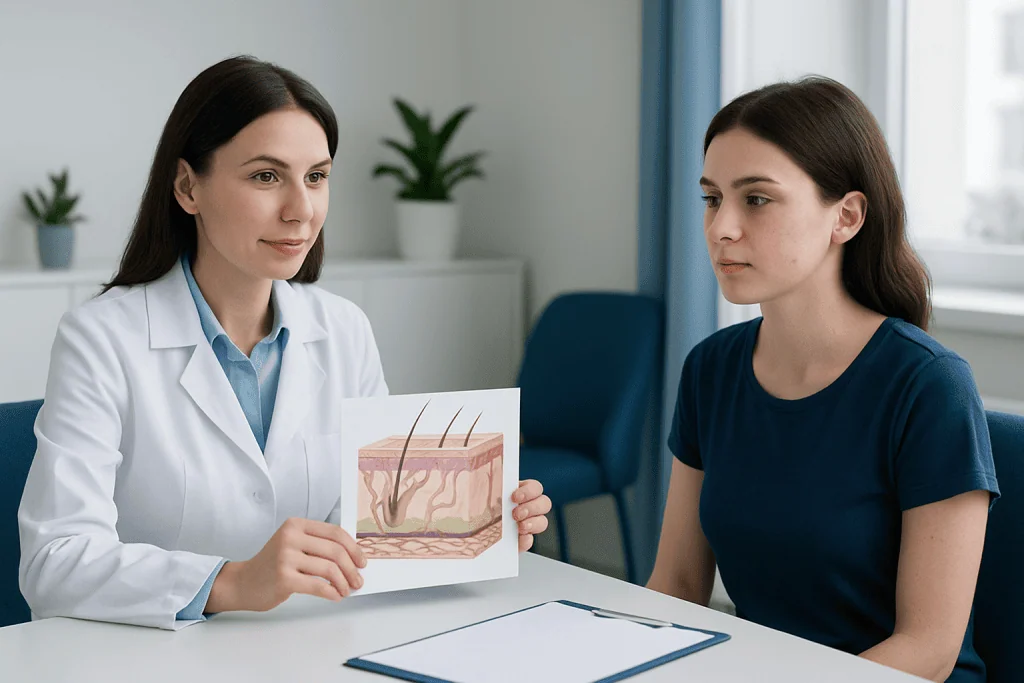
There is no single cause of unclear skin. Acne develops when pores become clogged with oil and dead skin cells, often with inflammation and bacterial overgrowth. Eczema is linked to a weakened skin barrier and immune activity that make skin dry and reactive. Rosacea is associated with inflammation and facial sensitivity, while pigment changes may follow acne, eczema, friction, or ultraviolet exposure.
Genetics can play an important role. A family tendency toward acne, eczema, allergies, or sensitive skin may increase the chance of recurring symptoms. Hormonal shifts during puberty, menstruation, pregnancy, or menopause may also influence oil production and breakouts. Certain medications can contribute to acneiform eruptions, dryness, or sun sensitivity.
Lifestyle and environment matter too. Hot weather, humidity, friction from masks or helmets, harsh cleansers, over-exfoliation, fragranced products, smoking, poor sleep, and emotional stress can all worsen skin clarity. Diet is more complex: while no single food explains all skin problems, some people notice worsening acne with certain high-glycemic foods or dairy products, and an individualized discussion with a clinician may help.
It is also common for people to unintentionally damage their skin barrier while trying to improve it. Frequent washing, using multiple active ingredients together, picking at blemishes, or changing products too often can increase redness, dryness, and post-inflammatory marks.
A skin-focused approach to diagnosis
Doctors diagnose unclear skin by looking at the pattern, location, and timing of symptoms and by asking about products, medications, habits, and medical history. In many cases, a physical examination is enough to identify common conditions such as acne, eczema, rosacea, fungal rashes, or contact dermatitis. Understanding whether the main issue is inflammation, infection, blocked pores, pigment change, or barrier damage guides treatment.
Sometimes additional tests are helpful. Patch testing may be used when allergic contact dermatitis is suspected. Swabs or scrapings can help assess infection or fungal causes, and in selected cases a skin biopsy may be recommended to clarify a diagnosis. If acne is severe or accompanied by menstrual irregularity, excess hair growth, or sudden onset, a doctor may consider hormonal contributors.
A useful diagnosis often depends on avoiding self-treatment immediately before the visit. Bringing a list of skin products, cosmetics, supplements, and medicines can help identify triggers. Photos showing flare-ups over time may also be valuable, especially when symptoms improve and worsen in cycles.
Treatment options for clearer, healthier skin
Treatment depends on the cause. For acne-prone skin, doctors may recommend topical retinoids, benzoyl peroxide, azelaic acid, or prescription anti-inflammatory and antibacterial treatments. More severe acne may need oral medicines. For dryness, eczema, or irritation, barrier repair is central: gentle cleansers, regular moisturizers, trigger avoidance, and anti-inflammatory prescription creams can reduce flares and improve comfort.
Persistent redness and rosacea may improve with targeted creams, oral medicines, and careful trigger management. Post-inflammatory dark marks often fade slowly, but sun protection, azelaic acid, retinoids, and other doctor-guided treatments may help. Scarring, enlarged pores, and textural changes sometimes need procedural care once active inflammation is controlled, such as laser treatment or chemical peel in appropriately selected patients.
People with extensive or recurrent skin disease may benefit from specialist dermatology assessment to avoid long cycles of trial and error. If lesions are unusual, painful, infected, or healing with scars, treatment should be individualized rather than based on social media trends or home remedies alone.
In some cases, a broader evaluation is needed because unclear skin can overlap with systemic factors such as hormonal imbalance, allergies, or chronic inflammatory conditions. Acibadem International’s multidisciplinary specialists in JCI-accredited hospitals diagnose and treat skin concerns for international patients, including evaluation of underlying causes and options such as dermatology care when appropriate.
Daily habits that support skin clear skin
A consistent, simple routine is often more helpful than a complicated one. Most people benefit from washing with a gentle cleanser once or twice daily, applying a moisturizer suited to their skin type, and using broad-spectrum sunscreen every day. Sunscreen is especially important when treating acne marks, pigmentation, rosacea, or sensitivity, because ultraviolet exposure can worsen discoloration and slow recovery.
New products should be introduced one at a time. This makes it easier to identify irritation and reduces the chance of barrier damage. Fragrance-free, non-comedogenic products are often a reasonable starting point for acne-prone or sensitive skin, although the best choice still depends on individual tolerance.
- Avoid scrubbing, picking, or squeezing lesions
- Remove makeup gently and regularly
- Clean items that touch the face, such as phones, helmets, and makeup brushes
- Shave carefully and use products that reduce friction if shaving causes bumps
- Choose breathable clothing and shower after heavy sweating
- Protect the skin from excessive sun and tanning devices
General health habits can also help skin function well. Adequate sleep, stress management, regular physical activity, smoking avoidance, and a balanced eating pattern support overall skin health. These steps may not replace medical treatment, but they often improve how skin responds over time.
When to seek medical care
Many mild skin concerns improve with gentle daily care, but some situations deserve medical attention. A doctor should assess skin problems that are severe, painful, widespread, infected, recurrent, or leaving scars or dark marks. Evaluation is also important if symptoms interfere with sleep, confidence, work, or school, or if over-the-counter products cause burning, swelling, or a worsening rash.
Prompt assessment is especially important for rapidly spreading rashes, blisters, fever with skin symptoms, signs of infection such as increasing warmth or pus, or sudden swelling of the lips or face. Any new or changing mole, lesion that bleeds easily, or sore that does not heal should also be examined.
For children, people with chronic illness, and anyone who is pregnant or taking multiple medications, it is wise to seek advice before starting strong active ingredients. A dermatologist or qualified physician can help create a safe plan that matches the skin type, diagnosis, and long-term goals.
Frequently asked questions
What does skin clear skin actually mean?
It usually means skin that looks calm, even, and healthy, with few active breakouts, rashes, or irritated areas. Medically, it is more about a strong skin barrier and controlled inflammation than about having perfect skin.
Can clear skin be achieved with home care alone?
Mild concerns often improve with a gentle cleanser, moisturizer, sunscreen, and avoiding harsh products. However, ongoing acne, eczema, rosacea, pigment changes, or scarring often need medical guidance to treat the real cause.
Why did my skin get worse after using more products?
Using many active ingredients together can irritate the skin barrier and increase redness, dryness, peeling, or breakouts. Skin often responds better to a simpler routine introduced gradually and adjusted based on tolerance.
How long does it take to see clearer skin?
That depends on the condition being treated. Many acne and barrier-repair treatments need several weeks of regular use before visible improvement appears, while dark marks and texture changes may take longer.
Does diet affect skin clarity?
Diet can influence skin for some people, but it is rarely the only reason skin becomes unclear. If a person notices repeated flare-ups linked to certain foods, it may help to discuss this with a doctor rather than making extreme restrictions alone.
Should adults with acne see a doctor?
Yes, especially if acne is painful, leaves marks, starts suddenly, or does not improve with basic care. Adult acne may have hormonal or treatment-resistant features that benefit from a personalized medical plan.
References
- American Academy of Dermatology
- National Institute of Arthritis and Musculoskeletal and Skin Diseases
- Mayo Clinic
- National Health Service
- World Health Organization
This article is for general information only and is not a substitute for professional medical advice. Please consult a qualified doctor about your individual situation.
Explore treatments in Turkey — costs, top hospitals & a free quote
JCI-accredited · board-certified surgeons · reply within 24h
Add us as a Preferred Source to see more of our trusted health content across Google Search, AI Overviews and Discover.

More from the Health Library



Related Specialists

Dr. Murat İçli
Ear Nose & Throat
Dr. Semra Pehlivan
Acibadem Life Clinical Service
Prof. Dr. Özgür Çetik
Orthopedic Surgery & Traumatology
Dr. Hülya Yolaçan
Pulmonology