

Smart Popcorn: A Complete Medical Overview

Smart popcorn is a non-medical term commonly used for popping or crackling noises in the jaw. Jaw sounds without pain can be benign, but repeated symptoms may point to TMJ dysfunction.
Key Takeaways
- Smart popcorn is a non-medical term commonly used for popping or crackling noises in the jaw.
- Jaw sounds without pain can be benign, but repeated symptoms may point to TMJ dysfunction.
- Stress, teeth grinding, bite problems, injury, and arthritis can contribute to symptoms.
- Diagnosis is based on symptoms, an examination of the jaw, and sometimes imaging.
- Treatment often starts with conservative measures such as jaw rest, soft foods, stress reduction, and guided exercises.
- Medical care is important if the jaw locks, pain worsens, swelling develops, or opening the mouth becomes difficult.
Smart popcorn usually refers to popping, clicking, or crackling sounds in the jaw when a person opens the mouth, chews, or yawns. In many cases it is related to the temporomandibular joint (TMJ) and is not dangerous, but persistent pain, locking, or difficulty chewing should be evaluated by a qualified clinician.
What smart popcorn means
Smart popcorn is not a formal medical diagnosis. It is an informal phrase people may use to describe a popping, clicking, crackling, or snapping sound in the jaw, especially near the ear, when talking, chewing, or opening the mouth wide. These sounds usually come from the temporomandibular joint, often called the TMJ, which connects the lower jaw to the skull.
The TMJ is a complex joint that uses muscles, ligaments, and a small cartilage disc to help the jaw move smoothly. If this movement becomes uneven, the disc shifts, or the surrounding muscles become tense, a person may notice the kind of sound described as smart popcorn. Some people have jaw sounds for years without serious problems, while others develop discomfort or limited jaw movement.
Because the term is informal, the best medical way to think about smart popcorn is as a symptom rather than a disease. It can happen on its own or as part of TMJ disorder, a broader group of conditions affecting the jaw joint and nearby muscles. The main question is not simply whether the jaw makes noise, but whether the noise is accompanied by pain, locking, headaches, or difficulty using the jaw normally.
How the jaw joint works and why it makes noise
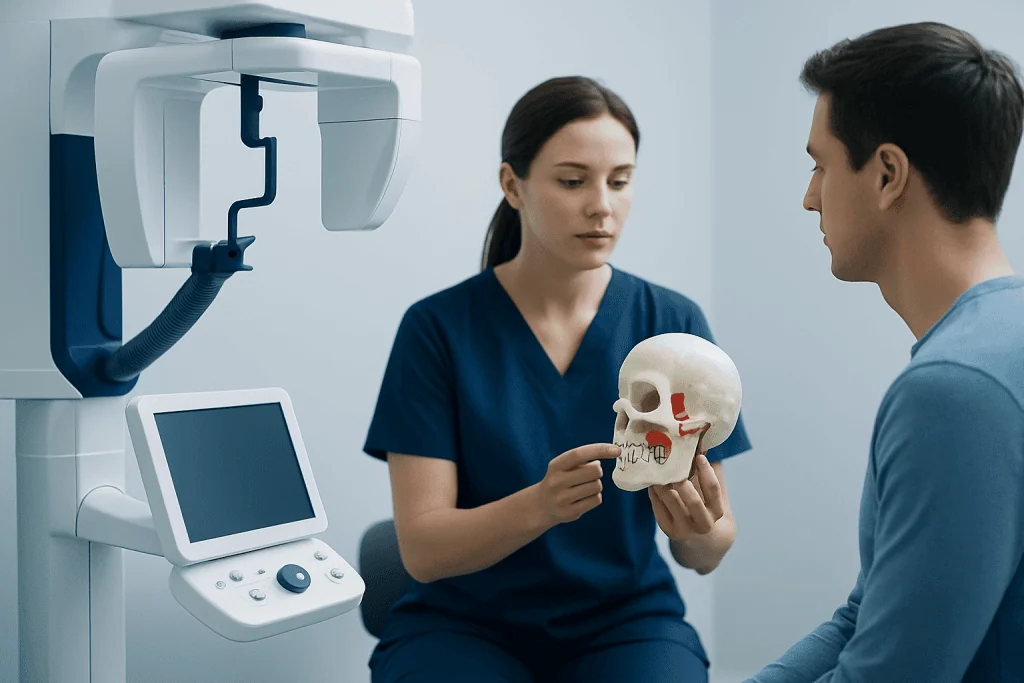
Each person has two temporomandibular joints, one on each side of the face. These joints allow the jaw to move up and down, forward and backward, and side to side. A small cushioning disc sits inside each joint and helps the bones glide without friction during speech and chewing.
Jaw sounds can occur when the disc moves out of its usual position and then slips back into place during opening or closing. This often creates a click or pop. A rougher grating or crackling sound may happen when the joint surfaces are irritated or when the cartilage changes over time. Muscle tension around the jaw can also alter jaw mechanics and make sounds more noticeable.
Not every sound means damage. Some people have occasional clicking with no pain and normal jaw function. However, if the jaw sound becomes frequent, painful, or associated with stiffness, it may signal a problem worth discussing with a dentist, oral and maxillofacial specialist, or physician familiar with jaw disorders.
Common symptoms that may occur with smart popcorn

The most obvious symptom is a popping or crackling sound in one or both jaw joints. This may be heard while chewing, yawning, laughing, brushing the teeth, or taking a large bite. Some people feel the pop more than they hear it, and others describe a sense that the jaw briefly catches before moving again.
Jaw sounds may occur with other symptoms, including:
- Jaw pain or tenderness
- A tired feeling in the face after chewing
- Difficulty opening the mouth wide
- Jaw stiffness, especially in the morning
- Headaches or pain around the temples
- Ear discomfort, fullness, or ringing without an ear infection
- Teeth grinding or clenching, especially during sleep
- Locking of the jaw in an open or closed position
When symptoms are mild, they may come and go depending on stress, chewing habits, or sleep quality. More persistent symptoms can interfere with eating and speaking and should be assessed. Sometimes jaw pain may overlap with other conditions such as bruxism, sinus problems, dental issues, or headache disorders, which is one reason a proper evaluation matters.
Possible causes and risk factors
There is no single cause of smart popcorn. In many people, it results from strain on the jaw joint or surrounding muscles. Teeth grinding and jaw clenching are especially common triggers. These habits may happen during stress, concentration, sleep, or exercise, and over time they can overload the joint.
Other possible causes include a displaced disc within the TMJ, previous injury to the jaw, arthritis affecting the joint, poor posture that strains the neck and jaw muscles, or chewing patterns that place uneven pressure on one side. Very chewy foods, frequent gum chewing, nail biting, and opening the mouth widely on a regular basis can also aggravate symptoms.
Risk factors can include emotional stress, sleep problems, a history of facial trauma, and certain connective tissue or inflammatory conditions. Bite differences may play a role in some people, although jaw sounds are not always caused by the way the teeth meet. A clinician may consider all of these factors rather than focusing on just one possible explanation.
Less commonly, a sound in the jaw area may be mistaken for an ear problem or another nearby structure. This is why a detailed history and physical examination are often more helpful than assumptions based on the sound alone.
How smart popcorn is diagnosed
Diagnosis begins with a careful conversation about symptoms. A clinician will ask when the jaw sound started, whether there is pain, how often it happens, and what makes it better or worse. Chewing habits, dental history, stress, sleep quality, and previous injuries can provide important clues.
During the examination, the clinician may gently feel the jaw joints while the person opens and closes the mouth. They may listen for clicking, measure how wide the mouth opens, check whether the jaw moves smoothly, and look for tenderness in the jaw muscles, neck, and face. The teeth and bite may also be reviewed.
Imaging is not always needed for mild symptoms. If symptoms are persistent, complex, or associated with trauma or significant limitation, tests such as dental X-rays, CT, or MRI may be used to evaluate the joint structures and disc position. In selected cases, clinicians may also assess whether related problems in the teeth, ears, or sinuses are contributing.
When advanced assessment or treatment planning is required, care may involve specialists in maxillofacial surgery or rehabilitation-based therapies. The goal is to identify the true source of symptoms and choose the least invasive effective treatment.
Treatment options and what may help
Treatment depends on the cause, severity, and how much the symptoms affect daily life. Many people improve with conservative care. Short-term jaw rest, avoiding very hard or chewy foods, eating smaller bites, and limiting activities that force the mouth wide open can reduce strain on the joint. Warm compresses and gentle stretching may also help when guided by a qualified clinician.
If grinding or clenching is part of the problem, a dentist may recommend a custom night guard or bite splint. Stress management, relaxation techniques, and improved sleep routines can also be useful because muscle tension often worsens jaw symptoms. Physical therapy may be advised to improve jaw mechanics, posture, and muscle balance, especially when neck tension is involved.
When pain is more significant, doctors may consider medication for short-term symptom relief, depending on the person’s medical history. Some patients benefit from structured physical therapy and rehabilitation programs. Inflammatory or degenerative joint disease may require additional management tailored to the underlying condition.
Surgery is rarely the first step and is usually reserved for select cases with structural problems, severe dysfunction, or failure of conservative treatment. If the jaw problem relates to the teeth or supporting tissues, assessment through dentistry services may also be helpful. Treatment works best when it is individualized rather than based on jaw noises alone.
Self-care, prevention, and daily habits
Many everyday habits can reduce jaw stress and help prevent recurring smart popcorn symptoms. Good self-care starts with awareness. People often do not realize they clench their teeth during work, driving, or stress. Keeping the jaw relaxed, with the lips together and teeth slightly apart, can reduce unnecessary pressure on the joint.
Helpful daily strategies include:
- Choose softer foods during symptom flares
- Avoid chewing gum and very sticky or tough foods
- Do not use the teeth to open packages or bite nails
- Support good posture, especially during screen time
- Use stress-reduction methods such as breathing exercises or mindfulness
- Follow clinician-guided jaw exercises only if recommended
- Seek evaluation for possible nighttime grinding
It is also wise to avoid repeated extreme mouth opening, such as very large yawns when possible. If a person notices symptoms after dental work or long procedures requiring the mouth to stay open, mentioning this to the dental team can help them adjust support and positioning. Self-care is most effective when started early and combined with professional advice for ongoing or painful symptoms.
When to seek medical care
Smart popcorn is often not an emergency, but medical or dental review is important when symptoms do not settle or begin affecting daily life. A person should consider evaluation if jaw sounds are frequent and accompanied by pain, headaches, chewing difficulty, or a feeling that the bite has changed. Early assessment can help prevent chronic muscle tension and identify treatable causes.
Prompt care is especially important if the jaw locks open or closed, the mouth cannot open normally, there is swelling, symptoms begin after an injury, or pain is severe. Fever, facial redness, or sudden major changes should also be assessed because they may point to infection or another condition that needs timely treatment.
For people seeking coordinated specialist care, Acibadem International’s multidisciplinary teams in JCI-accredited hospitals evaluate and treat jaw joint and facial conditions for international patients. A doctor can advise whether the next best step is observation, dental protection, rehabilitation, imaging, or specialist referral.
Frequently asked questions
Is smart popcorn a real medical condition?
Smart popcorn is not a formal medical term. It is a casual way to describe popping or crackling sounds in the jaw, often related to the temporomandibular joint. A clinician will look for the underlying cause rather than treating the sound itself.
Can jaw popping happen without pain?
Yes. Some people have occasional jaw clicking or popping without pain or limited movement, and it may not indicate a serious problem. However, if it becomes frequent or starts to interfere with eating, speaking, or comfort, an evaluation is reasonable.
Does smart popcorn mean TMJ disorder?
Not always, but it can be associated with TMJ disorder. Jaw sounds may happen because of temporary muscle tension, disc movement, or harmless joint variation. TMJ disorder is more likely when the sound comes with pain, locking, stiffness, or reduced mouth opening.
What makes smart popcorn worse?
Common triggers include teeth grinding, jaw clenching, stress, chewing gum, tough foods, poor posture, and opening the mouth very wide. Sleep problems can also contribute because clenching often happens at night. Identifying and reducing triggers is an important part of care.
How is a popping jaw treated at home?
Home care often includes eating softer foods for a short time, avoiding gum and hard chewing, using warm compresses, and trying to keep the jaw relaxed. Stress reduction and better sleep habits may also help. Persistent symptoms should still be discussed with a dentist or doctor.
When should someone worry about jaw popping?
Jaw popping deserves prompt medical or dental attention if it is painful, the jaw locks, swelling appears, or it follows an injury. Care is also important if opening the mouth becomes difficult or symptoms keep returning. These signs may require targeted treatment or imaging.
References
- National Institute of Dental and Craniofacial Research
- American Dental Association
- Mayo Clinic
- National Health Service
- Merck Manual
This article is for general information only and is not a substitute for professional medical advice. Please consult a qualified doctor about your individual situation.
Joint and spine care in Turkey — expert assessment & treatment
JCI-accredited · board-certified surgeons · reply within 24h

More from the Health Library



Related Specialists

Dr. Cansu Yılmaz
Pediatrics
Dr. Özge Özvural
Pediatric Rehabilitation
Dr. Gökçe Kozanoğlu
Functional Medicine
Dr. Veli Çelik
Anesthesiology