Spot Inside Ear — Explained by Medical Evidence, Not Myths

A spot inside ear is usually related to skin conditions, irritation, or minor infection rather than a dangerous disease. Common causes include pimples, folliculitis, eczema, cysts, and irritation from earbuds or cotton swabs.
Key Takeaways
- A spot inside ear is usually related to skin conditions, irritation, or minor infection rather than a dangerous disease.
- Common causes include pimples, folliculitis, eczema, cysts, and irritation from earbuds or cotton swabs.
- Do not squeeze or pick at a spot in the ear, as this can worsen inflammation and raise the risk of infection.
- Medical evaluation is important if the spot is very painful, keeps coming back, drains fluid or blood, or affects hearing.
- Treatment depends on the cause and may include gentle skin care, ear cleaning by a professional, or medication.
A spot inside ear is commonly caused by a pimple, skin irritation, trapped oil, wax buildup, or a mild infection. Most are not serious, but persistent pain, bleeding, discharge, hearing changes, or a spot that does not heal should be assessed by a doctor.
What a Spot Inside Ear Usually Means
A spot inside ear most often means a small area of irritated or inflamed skin rather than something dangerous. In many people, the spot turns out to be a pimple, an inflamed hair follicle, a tiny cyst, dry skin, or irritation caused by earbuds, hearing aids, or frequent cleaning with cotton swabs.
The ear canal and outer ear have delicate skin that can react easily to friction, moisture, trapped oil, and bacteria. Because the space is narrow and sensitive, even a small bump can feel larger than it is and may cause noticeable discomfort, itchiness, or a sense of fullness.
Although many spots settle on their own, location matters. A spot on the outer ear skin may behave like a typical skin blemish, while a deeper spot in the ear canal may be harder to see and may require an ear, nose, and throat specialist if symptoms persist. Medical evaluation is especially important if the area bleeds, drains pus, causes hearing changes, or does not improve.
Common Signs and Symptoms
The symptoms of a spot inside ear depend on the underlying cause. Some people notice only a small bump, while others feel tenderness when touching the ear, lying on that side, or inserting earbuds. Itching, mild redness, or a blocked sensation can also occur.
If the spot is related to inflammation or infection, there may be throbbing pain, warmth, swelling, or drainage. In the ear canal, swelling may partly block sound and create temporary muffled hearing. A person may also notice discomfort when chewing or moving the jaw if the surrounding tissues are irritated.
Symptoms that deserve closer attention include:
- Severe or worsening ear pain
- Pus, blood, or bad-smelling discharge
- Fever or feeling unwell
- Reduced hearing or ringing in the ear
- A spot that crusts, ulcerates, or does not heal
- Repeated episodes in the same place
These symptoms do not automatically mean a serious condition, but they do suggest that the spot may need professional examination rather than home care alone.
Possible Causes: From Pimples to Skin Conditions

One of the most common explanations for a spot inside ear is a pimple or inflamed hair follicle, also called folliculitis. The outer part of the ear and the entrance of the ear canal contain hair follicles and oil glands. When these become blocked by oil, dead skin, sweat, or friction, a tender bump can develop.
Skin conditions are another frequent cause. Eczema, seborrheic dermatitis, psoriasis, and contact dermatitis may all affect the ear. These conditions can cause small red patches, flaky skin, itching, and cracks that become sore. Reactions may be triggered by hair products, earbuds, ear drops, metals in earrings, or hearing devices. Some ear symptoms may occur alongside broader skin problems such as eczema on other parts of the body.
Infections can also create spots or bumps. Bacterial infection of the outer ear canal may produce pain, swelling, and discharge, a problem related to otitis externa. Fungal infections are less common but may cause intense itching and debris. Small cysts, such as epidermoid or sebaceous cysts, may form under the skin and feel like round lumps.
Less commonly, a spot may reflect a benign growth, a wart, a keloid near a piercing site, or a non-healing skin lesion that needs specialist assessment. That is why a spot that changes in shape, color, or texture over time should not be ignored.
Why It Happens: Risk Factors and Triggers
A spot inside ear often develops when the skin barrier is disrupted. Repeated rubbing from earphones, hearing aids, helmets, or frequent touching can irritate the skin and trap moisture. Cotton swabs are a particularly common trigger because they can cause tiny injuries and push wax deeper into the canal.
Oily skin, acne-prone skin, sweating, and humid conditions may increase the chance of blocked pores or folliculitis. Swimming or prolonged moisture exposure can soften the ear canal lining and make infection more likely. Wax buildup may also contribute by trapping debris and making the ear feel blocked or itchy.
People with eczema, psoriasis, diabetes, reduced immune function, or chronic skin sensitivity may be more prone to recurrent ear irritation or infection. Jewelry reactions, fragranced hair products, and harsh cleansers can also play a part. Identifying these patterns can help prevent repeat episodes and guide treatment.
How Doctors Diagnose a Spot Inside Ear
Diagnosis begins with a medical history and careful examination. A doctor will ask when the spot appeared, whether it is painful or itchy, and whether there is drainage, hearing change, fever, recent swimming, or use of earbuds and cotton swabs. Skin history, acne, allergies, and other rashes are also relevant.
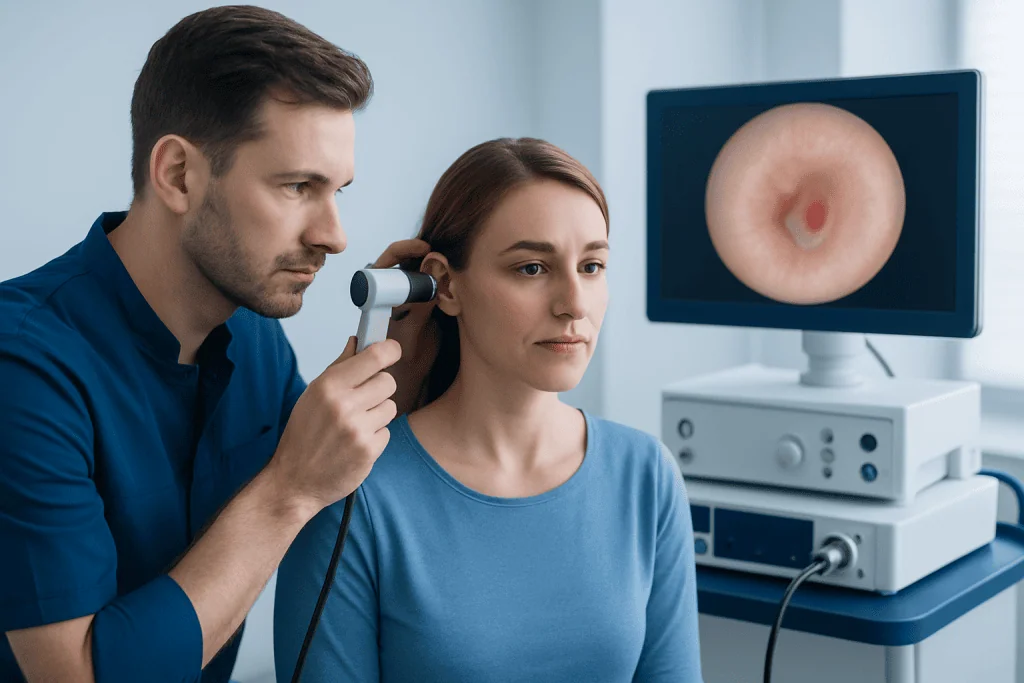
The ear is then examined, often with an otoscope, to look at the outer ear, ear canal, and eardrum. This helps distinguish between a surface pimple, wax-related irritation, infection, dermatitis, or a deeper problem. If the canal is very swollen or blocked, specialist assessment may be needed. In some cases, doctors may recommend ear examination and hearing tests if symptoms include reduced hearing, ringing, or repeated ear disease.
Most spots do not need extensive testing. However, a sample of discharge may occasionally be taken if infection is persistent, and a biopsy may be considered for a lesion that is unusual, recurrent, bleeding, or slow to heal. When diagnosis is uncertain, ENT and dermatology specialists may work together to clarify the cause.
Treatment Options Based on the Cause
Treatment depends on what the spot actually is. A small pimple or mildly irritated area may improve with time, avoiding pressure on the ear, and keeping the area clean and dry. Warm compresses on the outer ear may help some superficial bumps, but anything deeper in the canal should not be manipulated at home.
If the problem is dermatitis or eczema, treatment may focus on avoiding triggers and using doctor-recommended topical therapy. If there is infection, a clinician may prescribe medicated ear drops or other medicines depending on whether the cause is bacterial or fungal. A painful boil, blocked cyst, or collection of pus sometimes needs professional drainage rather than squeezing at home. If wax is contributing to blockage or irritation, doctors may recommend professional ear wax removal instead of self-cleaning.
Some persistent skin lesions may need removal or biopsy, especially if they change over time. Structural problems in the ear can also contribute to repeated symptoms and may be assessed with specialized ENT care. For recurrent or unclear ear canal disease, an ENT team may consider further evaluation and treatment options such as otolaryngology care.
Near the end of the care pathway, some patients benefit from multidisciplinary review, particularly if there are overlapping skin and ear issues. Acibadem International’s multidisciplinary specialists in JCI-accredited hospitals diagnose and treat ear and skin-related conditions for international patients.
Self-Care and Prevention
The safest approach is gentle care. The ear usually cleans itself, so routine probing is not helpful. Avoid cotton swabs, hairpins, or attempts to pop a spot inside the ear. These actions can damage the skin, push debris deeper, and increase the chance of infection.
Helpful preventive steps include keeping the ears dry after bathing or swimming, cleaning earbuds regularly, and limiting prolonged pressure from in-ear devices when the skin is irritated. If certain hair products, shampoos, or metals seem to trigger symptoms, reducing contact may help. People with recurring ear eczema should follow a skin-care plan recommended by their doctor.
General measures may include:
- Avoid picking, squeezing, or scratching the area
- Pause use of earbuds or hearing devices if they worsen irritation
- Use only ear drops recommended by a clinician
- Manage known skin conditions consistently
- Seek professional cleaning if wax buildup is suspected
Home remedies should stay simple and low-risk. Putting oils, creams, or unapproved drops deep into the ear can make some problems worse, especially if the eardrum is not known to be intact.
When to Seek Medical Care
A short period of mild irritation may settle without treatment, but a doctor should assess a spot inside ear if it is very painful, lasts more than a couple of weeks, or keeps returning. Medical advice is also important if there is discharge, bleeding, hearing loss, fever, spreading redness, or marked swelling.
Urgent assessment is sensible if pain becomes severe, the outer ear looks significantly swollen, or symptoms follow trauma. People with diabetes, weakened immunity, or chronic skin disease should seek care earlier because ear infections and inflammation may progress more easily in these settings.
If a lesion appears pearly, crusted, ulcerated, or non-healing, it should be examined rather than assumed to be a simple pimple. Early review helps confirm the cause and makes treatment more targeted and effective.
Frequently asked questions
Is a spot inside ear usually serious?
Most spots inside the ear are not serious and are commonly due to pimples, irritation, eczema, or minor infection. A spot becomes more concerning if it is very painful, does not heal, bleeds, drains pus, or causes hearing changes.
Can a pimple grow inside the ear?
Yes. Pimples can form near the opening of the ear canal or on the outer ear because the area has oil glands and hair follicles. They can feel quite painful because the skin in and around the ear is sensitive and the space is small.
Should a person pop or squeeze a spot inside ear?
No. Squeezing or picking can push infection deeper, injure the skin, and increase swelling or pain. If a bump is very tender or seems filled with pus, it is safer to let a doctor examine it.
Can earwax cause a spot or bump sensation?
Sometimes. Earwax itself does not usually create a true skin spot, but wax buildup can cause pressure, itching, irritation, and a blocked feeling that may be mistaken for a bump. A clinician can tell the difference during an ear exam.
When should someone see a doctor for a spot inside ear?
A doctor should be seen if the spot lasts more than about two weeks, keeps coming back, or is associated with discharge, bleeding, reduced hearing, fever, or significant pain. Earlier review is wise for people with diabetes, immune problems, or known chronic ear disease.
What treatments are used for a spot inside ear?
Treatment depends on the cause. Options may include avoiding irritation, treating eczema or dermatitis, professionally cleaning wax, using prescribed ear drops for infection, or draining a boil or cyst if needed. Persistent or unusual lesions may require biopsy or specialist ENT review.
References
- American Academy of Otolaryngology–Head and Neck Surgery
- National Health Service
- Mayo Clinic
- Merck Manual Consumer Version
- American Academy of Dermatology
This article is for general information only and is not a substitute for professional medical advice. Please consult a qualified doctor about your individual situation.
Hair transplant in Turkey — costs, graft counts & a free assessment
JCI-accredited · board-certified surgeons · reply within 24h

More from the Health Library



Related Specialists

Assoc. Prof. Dr. Bahadir Osman Bozkirli
General Surgery
Dr. Deniz Sebzeçi
Internal Medicine
Dr. Nuri Soysal
Aesthetic Plastic & Reconstructive Surgery
Prof. Dr. Mert Şentürk
Anesthesiology