Sprained Thumb Treatment: How It Works, Results and What to Expect

A thumb sprain is a stretch or tear of a ligament, most often at the thumb’s main knuckle joint. Early protection with a thumb spica splint or brace helps prevent further ligament injury.
Key Takeaways
- A thumb sprain is a stretch or tear of a ligament, most often at the thumb’s main knuckle joint.
- Early protection with a thumb spica splint or brace helps prevent further ligament injury.
- Recovery depends on severity: mild injuries may settle in weeks, while complete tears can take months and may require surgery.
- An X-ray or other imaging may be needed to rule out a fracture or identify a ligament pulled away from bone.
- Urgent assessment is important after major swelling, deformity, numbness, inability to pinch, or ongoing joint instability.
Sprained thumb treatment protects the injured ligament while it heals, usually with a thumb splint or brace, activity changes, cold therapy and gradual rehabilitation. Most mild sprains improve without surgery, but a complete ligament tear or an associated fracture needs timely assessment by a hand or orthopedic specialist.
Overview: How Sprained Thumb Treatment Works
Sprained thumb treatment is designed to protect a stretched or torn ligament, control pain and swelling, and restore stable, comfortable thumb movement. In the first days, this commonly involves limiting motion with a thumb spica splint or brace, using cold packs and elevating the hand. As healing progresses, carefully paced exercises help recover range of motion, grip and pinch strength.
The most common important thumb sprain affects the ulnar collateral ligament (UCL) at the metacarpophalangeal joint, the large knuckle where the thumb meets the hand. This ligament helps the thumb pinch and grasp. A fall onto an outstretched hand, a forceful bend of the thumb away from the hand, or a sports injury can damage it.
Treatment is based on whether the ligament is mildly stretched, partially torn, completely torn, or detached from its attachment. Stable mild and moderate sprains are usually treated without an operation. A complete tear, particularly one in which the ligament cannot heal in its normal position, may need hand surgery to restore stability and function.
Symptoms, Severity and Who May Need Specialist Care
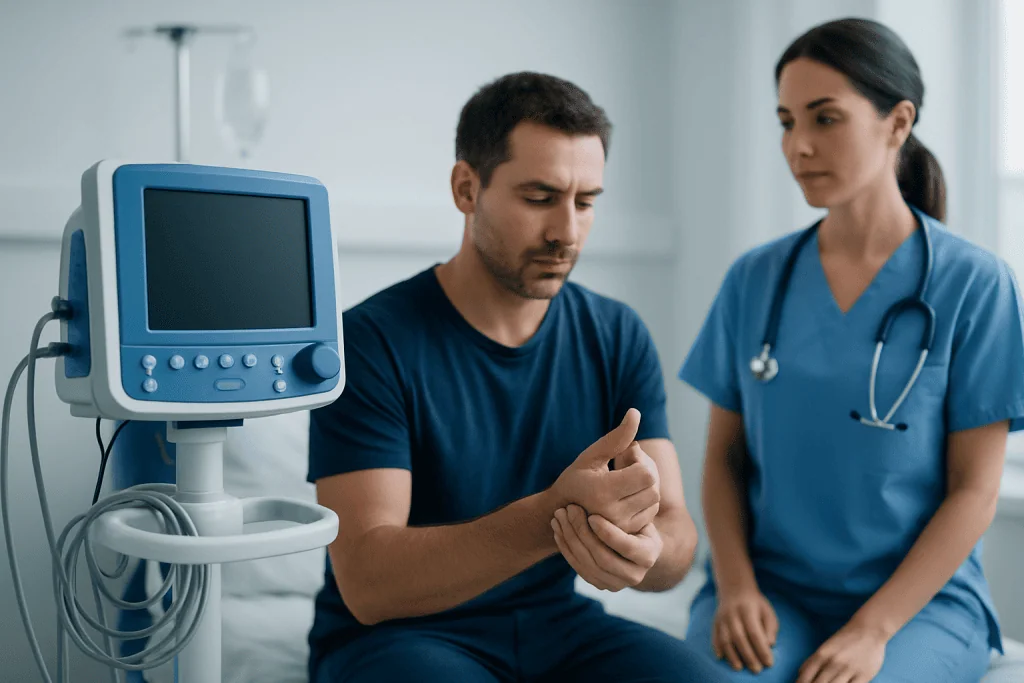
A sprained thumb can cause pain at the base of the thumb, swelling, bruising and tenderness around the knuckle. Pinching, opening jars, holding a key, turning a handle or gripping objects may be painful or weak. Some people describe a feeling that the thumb is loose, unstable or likely to give way.
Clinicians often describe ligament injuries as grades. A grade 1 sprain involves stretching with no major loss of stability. A grade 2 sprain is a partial tear, which may cause more swelling and weakness. A grade 3 sprain is a complete tear and can leave the joint unstable. The amount of pain alone does not reliably show the severity, because swelling and discomfort vary between people.
People with a suspected complete tear, persistent loss of pinch strength, recurrent instability, a high-demand job or sport, or a previous thumb injury may benefit from early review by an orthopedic or hand specialist. Children and adolescents should also be assessed carefully, as an injury near a growth area can sometimes involve bone rather than only ligament.
What Do Doctors Do for a Sprained Thumb?

Doctors begin by asking how the injury occurred and examining the thumb for swelling, tenderness, movement and stability. They may gently test the joint while supporting the hand to assess the collateral ligaments. This examination is performed cautiously, especially when an acute injury is painful.
An X-ray is often used to check for a fracture or a small piece of bone pulled off by the ligament. Ultrasound or magnetic resonance imaging (MRI) can be helpful when the diagnosis is uncertain or a complete UCL tear is suspected. Imaging can also identify a displaced ligament tear, sometimes called a Stener lesion, which generally cannot heal properly with a splint alone.
For a stable injury, a doctor may recommend a thumb spica splint or brace, appropriate pain relief and a review after swelling settles. For an unstable complete tear, surgery may be advised to repair or reattach the ligament. The exact approach depends on the injury pattern, time since injury and the person’s hand function needs.
Sprained Thumb Treatment Step by Step
Initial protection: The thumb is supported in a splint or brace that limits stressful side-to-side movement while allowing the injury to settle. The duration varies by severity, but it is important to wear the device as instructed rather than removing it repeatedly for activities that stress the thumb. Cold packs wrapped in a cloth can be used for short intervals, and hand elevation may reduce early swelling.
Comfort and inflammation control: A clinician may recommend simple pain-relief medicines when they are safe for the individual. Rest from painful gripping and sports is important. Anti-inflammatory medicines may not be suitable for everyone, including people with certain kidney, stomach, heart or bleeding conditions, so advice from a clinician or pharmacist is useful.
Rehabilitation: Once the ligament has enough protection and healing, gentle thumb movement is introduced to reduce stiffness. Hand therapy may include range-of-motion work, gradual strengthening and practical exercises for pinch and grip. Returning too quickly to forceful pinching or twisting can prolong symptoms or lead to persistent instability.
Surgical care when needed: During ligament repair, a surgeon reattaches or reconstructs the torn structure and stabilizes the joint. The thumb is then protected in a cast or splint before a structured rehabilitation program begins. Surgery is not routine for a minor sprain, but it can be important for restoring stability after selected complete tears.
Recovery Timeline, Benefits and Possible Risks
Recovery varies with the grade of injury, treatment adherence, age, general health and hand demands. A mild sprain may start feeling substantially better within one to several weeks, though tenderness with pressure or heavy use can last longer. Partial tears commonly need several weeks of bracing and rehabilitation. Complete tears, especially those treated surgically, can require a longer period before unrestricted activities and sport are appropriate.
The benefit of timely treatment is that it gives the ligament the best opportunity to heal in a stable position and helps preserve pinch strength. Gradual rehabilitation can also lower the chance of stiffness and help a person regain confidence using the hand. Full recovery is not always measured only by the absence of pain; stability, motion and functional strength are also important.
Possible problems after a significant thumb sprain include stiffness, ongoing swelling, reduced grip strength, chronic looseness of the joint and pain during pinch activities. Untreated complete UCL tears may contribute to longer-term weakness and joint wear. Surgical treatment has its own potential risks, such as infection, scarring, stiffness, numbness, repair failure or the need for further treatment, although the care team discusses individual risks before any procedure.
How Long Does a Sprained Thumb Take to Stop Hurting?
Many mild thumb sprains become noticeably less painful within one to two weeks when they are protected properly, but complete comfort can take several weeks. A moderate or severe sprain may remain sore with gripping, twisting or pinching for longer, even as resting pain improves. Healing ligaments need time, and symptoms should generally improve gradually rather than suddenly worsening.
Pain that remains severe, fails to improve after several days of careful protection, or returns whenever the thumb is used may indicate that the injury needs reassessment. Pain accompanied by instability, a weak pinch, locking, numbness or visible deformity should not be managed with home care alone.
A clinician can advise when it is safe to resume work tasks, exercise and sport. Returning to contact sport or activities with a risk of falling may require protective bracing for a period after symptoms have improved.
What's the Quickest Way to Heal a Sprained Thumb?
The quickest safe approach is early, accurate assessment and consistent protection of the ligament. This means avoiding painful movements, using a properly fitted thumb splint or brace if recommended, controlling swelling, and following the advised schedule for reassessment and exercises. Trying to “work through” the injury may delay recovery.
Once a clinician says it is safe, progressive hand therapy is valuable because it restores motion and strength without overloading the healing ligament. Good sleep, balanced nutrition and avoiding tobacco products also support general tissue healing. There is no reliable shortcut that can make a torn ligament heal immediately.
People should avoid relying on tight taping alone when a significant tear is possible. Taping may be useful in selected later-stage sports settings, but it should not replace an examination and appropriate immobilization after an acute thumb injury.
What Not to Do With a Sprained Thumb and When to Seek Medical Care
Do not keep playing sports, lifting heavily, forcefully stretching the thumb, or repeatedly testing whether the joint still hurts. Avoid massage directly over a fresh, swollen injury and do not use heat in the first phase if it noticeably increases swelling. A thumb should not be forced back into position if it appears deformed or dislocated.
Medical assessment is recommended promptly if the thumb looks crooked, is numb, cold or pale, cannot move normally, has marked swelling or bruising, or cannot pinch between the thumb and index finger. Care is also important after a high-force injury, when pain is directly over bone, or when symptoms are not clearly improving with initial protection. Emergency care is appropriate for an open wound, uncontrolled bleeding, major deformity or circulation changes in the thumb.
Acibadem International’s multidisciplinary specialists and JCI-accredited hospitals evaluate hand and thumb injuries for international patients, including imaging, orthopedic assessment and rehabilitation planning. A qualified clinician can determine whether non-surgical care is appropriate or whether a ligament repair should be considered.
Frequently asked questions
Can a sprained thumb heal without a splint?
A very mild sprain may improve with careful activity modification, but a splint or brace is often recommended because it protects the ligament from side-to-side stress. A clinician should determine whether the injury is stable before deciding that immobilization is unnecessary. Complete tears should not be treated as minor sprains.
Can a thumb sprain be fractured?
A sprain refers to a ligament injury, but the same accident can also cause a fracture or pull a small fragment of bone away from the ligament attachment. This is why doctors often use X-rays after significant thumb trauma. The treatment plan can change if a fracture is present.
Should a sprained thumb be moved?
In the early stage, the injured thumb should be protected from painful or unstable movement. After an appropriate period of immobilization, gradual movement is usually introduced to prevent stiffness. The timing should follow advice from the treating clinician or hand therapist.
Is it safe to exercise with a sprained thumb?
Lower-body or cardiovascular exercise may be possible if it does not risk a fall or require gripping, but the thumb should be protected. Activities involving weights, bars, racquets, contact, throwing or strong pinching should wait until recovery is sufficiently advanced. A clinician can provide activity-specific guidance.
Why does my thumb sprain still hurt when gripping?
Grip and pinch place force through the thumb collateral ligaments, so these actions may remain uncomfortable while healing continues. Persistent pain can also result from stiffness, incomplete rehabilitation, a more significant tear or an associated injury. Ongoing weakness or instability should be assessed.
Will I need surgery for a sprained thumb?
Most mild and many partial thumb sprains do not need surgery. Surgery is more likely when there is a complete, unstable or displaced ligament tear, or when non-surgical treatment has not restored stable thumb function. A hand or orthopedic specialist can explain the options after examination and imaging.
References
- American Academy of Orthopaedic Surgeons
- American Society for Surgery of the Hand
- National Institute of Arthritis and Musculoskeletal and Skin Diseases
- NHS
This article is for general information only and is not a substitute for professional medical advice. Please consult a qualified doctor about your individual situation.
Joint and spine care in Turkey — expert assessment & treatment
JCI-accredited · board-certified surgeons · reply within 24h