Tfcc Tear: An Evidence-Based Guide for Patients

A TFCC tear affects cartilage and ligaments that stabilize the wrist on the little-finger side. Common symptoms include wrist pain with rotation, clicking, reduced grip strength, and tenderness.
Key Takeaways
- A TFCC tear affects cartilage and ligaments that stabilize the wrist on the little-finger side.
- Common symptoms include wrist pain with rotation, clicking, reduced grip strength, and tenderness.
- Diagnosis is based on history, examination, and sometimes imaging such as X-rays or MRI.
- Treatment depends on the tear type, severity, and wrist stability, ranging from bracing and therapy to surgery.
- Early evaluation is helpful if pain follows an injury or interferes with work, sports, or daily tasks.
A TFCC tear is an injury to the triangular fibrocartilage complex, a structure on the little-finger side of the wrist that helps cushion and stabilize the joint. It can cause ulnar-sided wrist pain, clicking, and weakness, but many cases improve with rest, splinting, therapy, or other targeted treatment after a careful diagnosis.
What Is a TFCC Tear?
A TFCC tear is an injury to the triangular fibrocartilage complex, a group of cartilage and ligament-like tissues on the ulnar side of the wrist, near the little finger. This complex helps stabilize the joint between the forearm bones and supports smooth wrist motion during twisting, gripping, lifting, and weight-bearing through the hand.
Patients often hear the term when they have pain on the outer side of the wrist, especially after a fall, sports injury, or repetitive strain. Not every painful wrist problem is a TFCC tear, but it is an important cause of ongoing ulnar-sided wrist pain, particularly when symptoms worsen with forearm rotation such as turning a doorknob, using tools, or pushing up from a chair.
TFCC tears are usually described as either traumatic or degenerative. A traumatic tear happens after a specific injury, while a degenerative tear develops gradually over time from wear, repeated loading, or age-related changes. The best treatment depends not just on the tear itself, but also on wrist stability, symptom severity, activity level, and whether other injuries are present.
How the TFCC Works in the Wrist
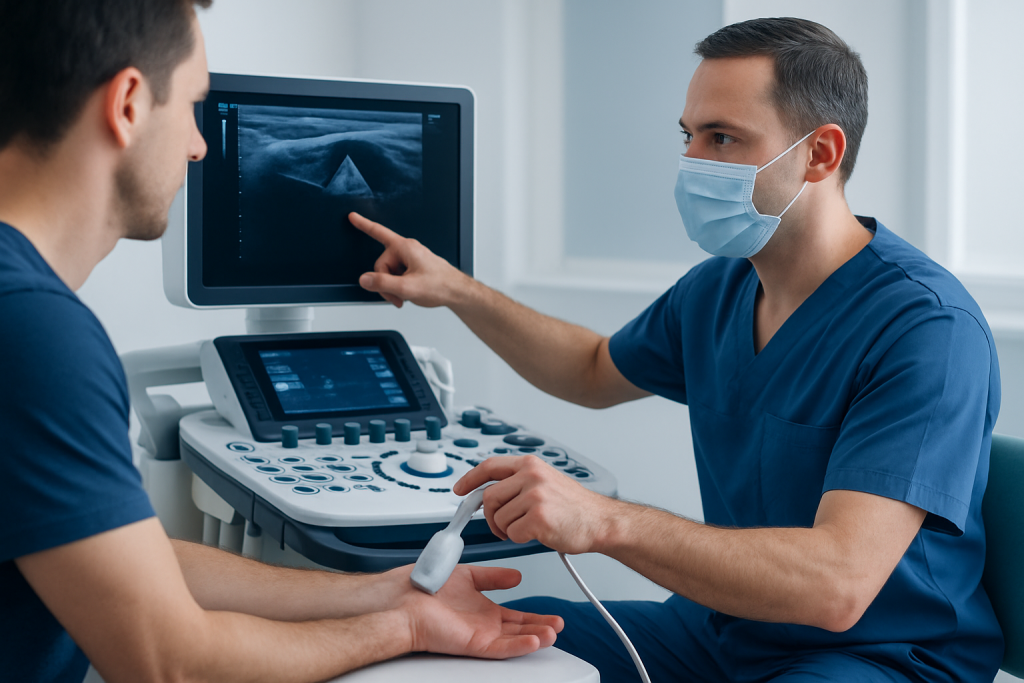
The triangular fibrocartilage complex acts as both a cushion and a stabilizer. It sits between the end of the ulna and the small bones of the wrist, helping distribute force across the joint. It also supports the distal radioulnar joint, which allows the forearm to rotate so the palm can turn up and down.
Because the TFCC has several parts working together, a tear can affect more than comfort alone. It may change how the wrist handles load, how securely the forearm rotates, and how well a person can grip or bear weight through the hand. This is why some patients notice pain only during certain motions, while others feel clicking, catching, or a sense that the wrist is weak or unstable.
Blood supply to the TFCC is uneven. The outer area generally has better healing potential than the central area, which has less blood flow. This detail matters because it helps explain why some tears may recover with non-surgical care, while others remain painful or may be better treated with a procedure such as wrist arthroscopy when symptoms do not improve.
Symptoms of a TFCC Tear

The most common symptom is pain on the little-finger side of the wrist. Some people feel it sharply after an injury, while others notice a more gradual ache that becomes worse with twisting, gripping, lifting, or pushing on the hand. Pain may be mild at rest but more noticeable during work, sports, or household activities.
Other symptoms can include clicking, popping, or a catching sensation during wrist movement. Grip strength may feel reduced, and the wrist may become tender to touch in a small area near the ulnar side. Some patients also describe a sense of instability, especially when turning a key, opening jars, using a racket, or doing push-up-like movements.
Symptoms vary depending on the location and size of the tear and whether nearby structures are also injured. A TFCC tear can sometimes occur along with a sprain, fracture, or another wrist problem such as carpal tunnel syndrome, which can add numbness or tingling that is not typical of the TFCC itself.
- Ulnar-sided wrist pain
- Clicking or popping with movement
- Weak grip or difficulty lifting objects
- Pain with turning the forearm palm up or down
- Tenderness near the outer wrist
- Occasional swelling or a feeling of instability
Causes and Risk Factors
A traumatic TFCC tear often happens when a person falls onto an outstretched hand. It can also occur during sports, especially those involving twisting and loading of the wrist, such as tennis, golf, gymnastics, martial arts, or racket sports. Sudden traction, forceful rotation, or a direct blow may also injure the complex.
Degenerative tears tend to develop over time. Repetitive wrist use, age-related tissue wear, and jobs or hobbies that require frequent gripping, twisting, or weight-bearing through the wrist can contribute. Some people naturally have an ulna that is slightly longer relative to the radius, a variation called positive ulnar variance, which may place more stress on the TFCC over time.
Risk can also rise when there are other wrist problems, inflammatory joint conditions, or a prior injury that changed wrist mechanics. In certain cases, a TFCC tear may be seen alongside broader disorders of the wrist joint, including wear-related changes such as osteoarthritis, although the symptoms and treatment plan may differ from person to person.
How a TFCC Tear Is Diagnosed
Diagnosis begins with a detailed history and physical examination. A clinician usually asks when symptoms started, whether there was a fall or twisting injury, what movements make the pain worse, and whether there is clicking, weakness, or loss of function. During the exam, the wrist is checked for tenderness, range of motion, strength, and signs of instability.
Imaging may help confirm the diagnosis or rule out other causes of wrist pain. Standard X-rays cannot directly show the TFCC well, but they are useful for checking fractures, alignment, and anatomical factors such as ulnar variance. MRI may provide more detail about soft tissue structures, though its findings need to be interpreted together with symptoms and examination results.
In some cases, diagnosis remains uncertain even after examination and imaging. Then a specialist may recommend diagnostic arthroscopy, a minimally invasive procedure that allows direct visualization of the inside of the wrist. This can both confirm the tear pattern and guide treatment planning. When the wrist pain could be related to bone alignment or a structural issue, a broader orthopedic assessment may be needed, including discussion of options such as hand surgery for selected patients.
Treatment Options for a TFCC Tear
Treatment depends on the cause of the tear, the severity of symptoms, the patient’s daily demands, and whether the wrist is stable. Many people start with non-surgical treatment, especially if the tear is small, the joint is stable, or symptoms are improving. Early care often includes activity modification, a splint or brace, ice, and short-term pain relief measures as advised by a doctor.
Hand therapy or physical therapy is often an important part of recovery. Therapy may focus on restoring motion, improving forearm and wrist strength, and reducing stress on the joint during work or sports. Some patients also benefit from guided ergonomic changes, taping, or exercises that improve control of the wrist and forearm muscles.
If symptoms continue despite appropriate conservative care, or if the wrist is mechanically unstable, a procedure may be considered. Arthroscopic debridement or repair may be used depending on the tear pattern and location. In selected cases, especially when anatomy contributes to overload, other operations may be discussed. A surgeon may also coordinate follow-up care with rehabilitation specialists, and in more complex wrist conditions, treatments such as orthopedic rehabilitation can support recovery after a procedure.
- Rest and temporary activity modification
- Wrist splinting or bracing
- Pain-relief medicines when appropriate
- Hand therapy or physical therapy
- Corticosteroid injection in selected cases
- Arthroscopic debridement or repair for persistent or unstable tears
Recovery, Prevention, and Self-Care
Recovery time varies. A mild TFCC tear treated conservatively may improve over several weeks, while more significant injuries or post-surgical recovery can take longer. The goal is not only pain relief but also restoration of stable, functional movement so the wrist can tolerate normal daily activities again.
Patients can support healing by avoiding movements that reproduce pain, using a brace as instructed, and following a structured therapy plan. Returning too quickly to heavy lifting, racket sports, or repetitive twisting may prolong symptoms. It is usually helpful to reintroduce activity gradually and only when the wrist tolerates load without increased pain or swelling.
Prevention focuses on reducing avoidable strain and improving mechanics. Warming up before sports, strengthening the forearm and hand, using proper technique, and taking breaks during repetitive tasks may lower risk. For people with ongoing or recurrent wrist complaints, a specialist review can help identify whether symptoms truly come from a TFCC tear or another condition affecting the wrist.
When to Seek Medical Care
Medical evaluation is appropriate if wrist pain follows a fall or direct injury, if pain lasts more than a few days, or if the wrist feels weak, unstable, or difficult to use. Prompt assessment is especially important when there is marked swelling, loss of motion, visible deformity, numbness, or pain severe enough to limit normal tasks.
A person should also seek care if symptoms keep returning during sports or work, or if rest and simple home measures have not helped. Ulnar-sided wrist pain can have several causes, and a proper diagnosis can prevent unnecessary delay or ongoing irritation of the joint.
For patients who need specialist assessment, Acibadem International’s multidisciplinary teams in JCI-accredited hospitals evaluate wrist conditions and plan treatment for international patients using orthopedic, imaging, and rehabilitation expertise.
Frequently asked questions
Can a TFCC tear heal on its own?
Some TFCC tears can improve with time and conservative treatment, especially if the wrist is stable and the tear is in an area with better blood supply. Rest, bracing, and therapy may allow symptoms to settle and function to return. However, persistent pain or instability should be assessed by a specialist.
What does TFCC tear pain feel like?
Pain is usually felt on the little-finger side of the wrist. It often becomes worse with twisting motions, gripping, lifting, or pushing through the hand. Some people also notice clicking, catching, or weakness.
Is an MRI always needed for a TFCC tear?
Not always. A doctor may suspect a TFCC tear based on the history and physical examination, while X-rays help rule out fractures and assess wrist alignment. MRI can be useful, but the results are most meaningful when combined with symptoms and examination findings.
When is surgery considered for a TFCC tear?
Surgery may be considered when symptoms continue despite appropriate non-surgical treatment or when the wrist is unstable. The type of procedure depends on where the tear is located, how large it is, and whether there are other wrist problems. A hand or orthopedic specialist can explain the expected benefits and recovery plan.
How long does recovery from a TFCC tear take?
Recovery can range from several weeks to several months, depending on the severity of the tear and the treatment used. Mild injuries may improve with splinting and therapy, while post-surgical recovery usually takes longer. Following activity restrictions and rehabilitation advice is important for the best functional outcome.
Can a TFCC tear be mistaken for another wrist problem?
Yes. Ulnar-sided wrist pain can result from several conditions, including sprains, tendon problems, fractures, and joint degeneration. That is why a careful examination and, when needed, imaging are important to identify the actual cause.
References
- American Academy of Orthopaedic Surgeons
- American Society for Surgery of the Hand
- National Institute of Arthritis and Musculoskeletal and Skin Diseases
- MedlinePlus
- Radiological Society of North America
This article is for general information only and is not a substitute for professional medical advice. Please consult a qualified doctor about your individual situation.
Joint and spine care in Turkey — expert assessment & treatment
JCI-accredited · board-certified surgeons · reply within 24h

More from the Health Library


Related Specialists

Dt. İdil Bavbek Karakaya
Dentistry
Dr. Levent Konur
Gynecology & Obstetrics
Assoc. Prof. Dr. Mehmet Barburoğlu
Interventional Neuroradiology
Dr. Belgin Utku
Pulmonology