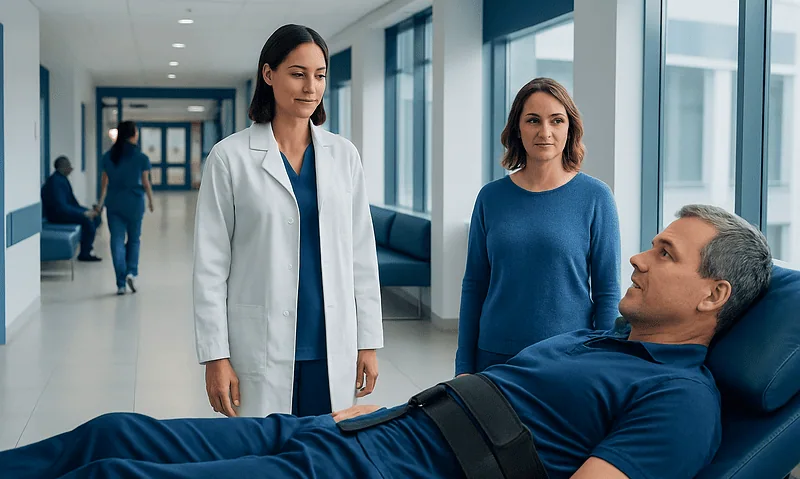
Music Therapy: Diagnosis, Outlook, and Modern Treatment Approaches

Music therapy is a professional clinical service, not just recreational music listening. It may support people with anxiety, depression, neurological conditions, chronic pain, cancer, and rehabilitation needs.
Key Takeaways
- Music therapy is a professional clinical service, not just recreational music listening.
- It may support people with anxiety, depression, neurological conditions, chronic pain, cancer, and rehabilitation needs.
- Sessions are individualized and can include listening, singing, songwriting, movement, or playing simple instruments.
- Music therapy is usually part of a broader treatment plan rather than a replacement for standard medical care.
- A qualified music therapist assesses goals, tracks progress, and adapts techniques to age, health status, and personal preferences.
Music therapy is an evidence-based clinical approach in which a trained therapist uses music to help improve emotional well-being, communication, movement, coping, and quality of life. It is not simply listening to music for relaxation; it is a structured treatment used alongside medical, psychological, or rehabilitation care.
Overview: what music therapy is and how it helps
Music therapy is a structured, evidence-based healthcare service delivered by a trained music therapist to support physical, emotional, cognitive, social, or communication goals. In practice, it may involve listening to music, singing, rhythm exercises, improvisation, songwriting, guided relaxation, or movement with music. The aim is not musical performance, but therapeutic change that is meaningful for the individual.
This approach can be used across the lifespan, from children with developmental needs to adults recovering from illness and older adults living with neurological or memory-related conditions. It is commonly integrated into mental health care, rehabilitation, palliative care, pain management, and supportive cancer care. The therapist tailors the session to the person’s needs, symptoms, culture, energy level, and treatment goals.
Research suggests that music can influence attention, mood, memory, movement, stress responses, and the perception of pain. Because music engages many areas of the brain at once, it can offer a practical way to support rehabilitation and coping. Still, music therapy is best understood as part of a wider care plan rather than a stand-alone cure.
Who may benefit from music therapy

Music therapy can be helpful for many different health situations. It is often used for people experiencing stress, anxiety, low mood, trauma-related symptoms, sleep difficulties, chronic pain, or challenges with communication and social interaction. It may also support people during hospital stays, after surgery, or while adjusting to a serious diagnosis.
In rehabilitation settings, music therapy may be included for people recovering from stroke, brain injury, or other neurological conditions that affect speech, movement, attention, or memory. Rhythm-based techniques can support gait training and coordinated movement, while singing or melodic speech techniques may help some people work on language and voice. In these settings, music therapy may complement programs such as neurological rehabilitation.
It is also used in supportive care for people with cancer, dementia, autism spectrum disorder, developmental conditions, and advanced illness. Depending on the person’s needs, sessions may focus on relaxation, emotional expression, symptom management, social engagement, or improving daily function. Related medical conditions may include stroke or Parkinson’s disease, where rehabilitation goals are often part of ongoing care.
How music therapy works in the body and brain
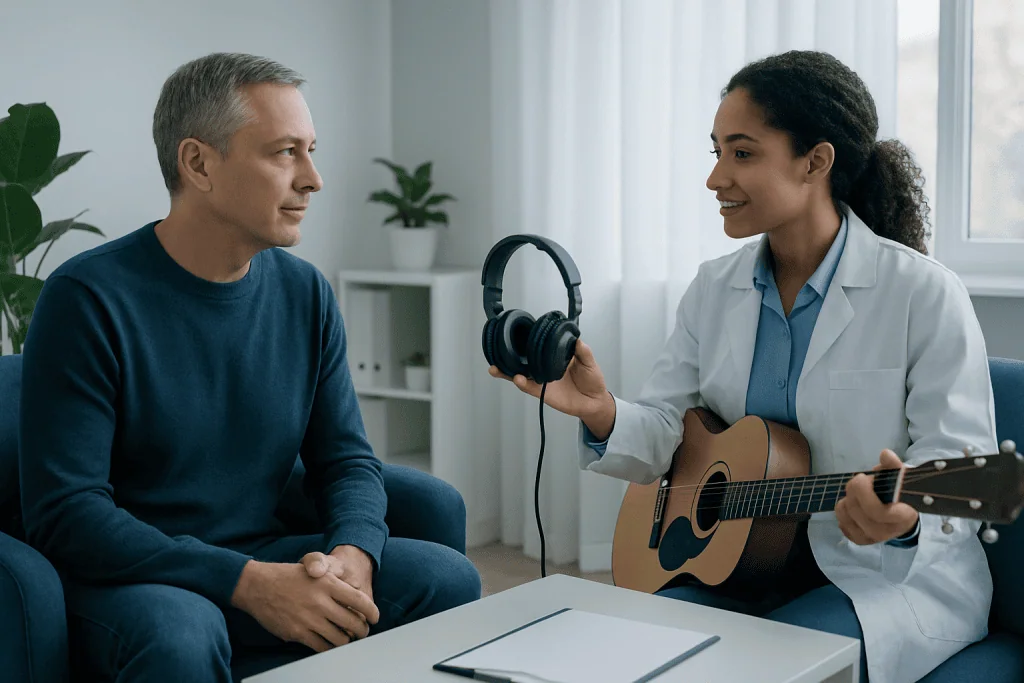
Music is processed through multiple brain networks involved in emotion, hearing, movement, attention, memory, and reward. This broad activation is one reason music therapy can be useful in so many clinical settings. A steady beat can help organize movement, melody may support memory cues, and preferred music may make difficult exercises feel more engaging and manageable.
Music can also influence the body’s stress response. Calm, carefully selected music and therapist-guided breathing may help reduce tension and support relaxation. For some people, music provides a safe nonverbal way to express feelings that are hard to describe in words, which can be especially helpful during illness, grief, or psychological distress.
The therapist does more than choose pleasant songs. Clinical music therapy involves assessment, goal setting, and therapeutic techniques matched to the person’s condition. For example, one person may use rhythm to improve walking patterns, while another may use lyric analysis or songwriting to process emotions during counseling or recovery.
Assessment and what happens during a session
Music therapy begins with an assessment. The therapist reviews the person’s health history, symptoms, communication style, sensory preferences, cultural background, and treatment goals. They may also ask about musical interests, because familiar or meaningful music can improve engagement. The first sessions help determine which methods are most appropriate and how progress will be measured.
Sessions can be individual or group-based and may take place in a hospital, outpatient clinic, rehabilitation center, school, mental health program, or palliative care setting. Activities vary widely and can include receptive listening, guided imagery with music, singing, vocal exercises, instrument playing, movement to rhythm, relaxation training, or collaborative songwriting. No prior musical skill is required.
The therapist monitors responses during the session and adapts the plan over time. Goals may include reducing anxiety before a procedure, improving mood during treatment, increasing communication, supporting speech recovery, enhancing attention, or helping manage discomfort. In multidisciplinary care, the music therapist may work alongside specialists in physical therapy and rehabilitation or psychological support, depending on the person’s needs.
Modern treatment approaches and clinical uses
Modern music therapy is highly personalized and often integrated with standard medical treatment. In mental health care, it may support psychotherapy by helping people regulate emotions, explore experiences, and build coping skills. In medical settings, it can be used to reduce distress around procedures, improve comfort during treatment, or help patients and families communicate during serious illness.
In neurological and rehabilitation care, current approaches may include rhythmic auditory stimulation for walking and timing, melodic techniques for speech recovery, and structured musical tasks to support attention and memory. For people with voice or swallowing-related concerns linked to neurological disease or rehabilitation, care may also involve other specialists and treatments such as speech and language therapy when appropriate.
Technology has expanded access as well. Some programs use telehealth for counseling-based music therapy, while rehabilitation teams may combine live sessions with home exercises, recorded cues, or digital tools. Even with newer formats, the core principle remains the same: a qualified therapist uses music intentionally to meet clearly defined clinical goals.
Music therapy can also be part of supportive cancer care, intensive care recovery, pediatrics, and end-of-life care. In these situations, the focus may be comfort, emotional support, family connection, symptom relief, or preserving quality of life. It is chosen based on individual preference, medical stability, and realistic therapeutic goals.
Benefits, limits, and outlook
Potential benefits of music therapy include reduced stress, better emotional expression, improved engagement in treatment, support for communication, and greater comfort during illness or recovery. Some people also experience improvements in motivation, mood, social interaction, movement, or coping with pain. These outcomes can be especially meaningful when a person feels overwhelmed, fatigued, or disconnected from usual activities.
At the same time, results vary. Music therapy does not work in exactly the same way for everyone, and it should not be seen as a replacement for medical treatment, medication, psychotherapy, or rehabilitation when those are needed. Its role is usually supportive and complementary, with benefits depending on the condition being treated, the person’s goals, and how regularly therapy is used.
The outlook is often most favorable when music therapy is built into a coordinated care plan. Clear goals, regular review, and communication between the music therapist and the broader healthcare team can make treatment more effective. For many patients, the value of music therapy lies in helping them function better, feel more in control, and stay connected to meaningful experiences during treatment or recovery.
Self-care, choosing a therapist, and when to seek medical care
Listening to personally meaningful music at home may support relaxation, sleep routines, or stress management, but home listening is not the same as clinical music therapy. People interested in treatment should look for a qualified music therapist with training in healthcare, assessment, and therapeutic techniques. It is also helpful to ask whether the therapist has experience with the person’s age group or medical condition.
Music therapy is generally safe, but sessions should be adapted for hearing sensitivity, cognitive impairment, trauma history, severe fatigue, or medical instability. In some situations, overstimulating sound or emotionally triggering music may worsen distress, so professional guidance matters. The therapist can help choose appropriate methods, volume, pace, and goals.
Medical care should be sought if symptoms such as depression, anxiety, confusion, memory decline, pain, sleep problems, or movement changes are persistent, worsening, or affecting daily life. Urgent medical attention is important for severe mood symptoms, thoughts of self-harm, sudden weakness, new speech problems, seizures, or sudden confusion. Music therapy may be useful as part of care, but these symptoms need proper medical evaluation.
For people who need coordinated assessment and rehabilitation support, Acibadem International’s multidisciplinary specialists and JCI-accredited hospitals provide diagnosis and treatment for international patients, including integrative rehabilitation planning when clinically appropriate.
Frequently asked questions
Is music therapy the same as listening to relaxing music?
No. Listening to music for relaxation can be helpful, but music therapy is a clinical service provided by a trained therapist with specific treatment goals. Sessions are planned, individualized, and monitored as part of a therapeutic process.
What conditions can music therapy support?
Music therapy may support people with anxiety, depression, chronic pain, neurological conditions, rehabilitation needs, cancer-related distress, dementia, and developmental or communication challenges. It is used as a supportive treatment, usually alongside standard medical or psychological care.
Do patients need musical talent to benefit from music therapy?
No musical skill is needed. The therapist adapts activities to the person’s abilities, comfort, and goals. The focus is on health outcomes, not performance or technical ability.
Can music therapy help after a stroke or neurological illness?
In some cases, yes. Rhythm, singing, and structured musical exercises may support movement, speech, attention, or motivation during rehabilitation. The exact benefit depends on the individual’s condition and should be guided by a qualified rehabilitation team.
Is music therapy safe for children and older adults?
It is generally safe when provided by a trained professional who adjusts the session to the person’s age, hearing, energy level, and health status. Extra care may be needed for people with sensory sensitivity, confusion, fatigue, or trauma-related triggers.
How many music therapy sessions are usually needed?
There is no single standard number. Some people benefit from a short series of sessions around a hospital stay or rehabilitation goal, while others use it over a longer period for ongoing support. The therapist usually reviews progress and adjusts the plan over time.
References
- World Health Organization
- National Center for Complementary and Integrative Health
- American Music Therapy Association
- National Institute of Mental Health
- American Stroke Association
This article is for general information only and is not a substitute for professional medical advice. Please consult a qualified doctor about your individual situation.
Explore treatments in Turkey — costs, top hospitals & a free quote
JCI-accredited · board-certified surgeons · reply within 24h