Tracheostomy vs Cricothyrotomy: Key Differences and How Doctors Tell Them Apart

Cricothyrotomy is typically used in a life-threatening emergency when a person cannot be intubated or ventilated quickly enough. Tracheostomy is usually placed lower in the neck, directly into the trachea, and is more often intended for prolonged airway access.
Key Takeaways
- Cricothyrotomy is typically used in a life-threatening emergency when a person cannot be intubated or ventilated quickly enough.
- Tracheostomy is usually placed lower in the neck, directly into the trachea, and is more often intended for prolonged airway access.
- Doctors tell them apart by the exact neck landmark used, the urgency of the situation, the expected duration, and the equipment and setting involved.
- Both procedures are performed by trained clinicians, but their aftercare, risks, and long-term roles are different.
- Anyone with severe breathing trouble, major facial or throat trauma, or a blocked airway needs urgent medical evaluation.
Tracheostomy and cricothyrotomy both create a breathing opening in the neck, but they are not the same procedure. In most cases, cricothyrotomy is a fast emergency airway through the cricothyroid membrane, while tracheostomy is a more controlled opening into the trachea for ongoing airway support or long-term breathing needs.
Side-by-side comparison: tracheostomy vs cricothyrotomy
When people search for tracheostomy vs cricothyrotomy, the quickest answer is this: both are surgical airways made through the front of the neck, but they serve different purposes. A cricothyrotomy is most often a rapid, emergency airway used when oxygen cannot be delivered by usual methods. A tracheostomy is commonly a planned or semi-urgent procedure used when someone needs ongoing airway support, prolonged ventilation, or help clearing secretions.
They also differ in exactly where the opening is made. Cricothyrotomy passes through the cricothyroid membrane, which lies between the thyroid cartilage and cricoid cartilage. Tracheostomy is made lower down, into the trachea itself, usually below the voice box.
The table below highlights the main differences clinicians use in real practice.
- Purpose: Cricothyrotomy for immediate rescue airway; tracheostomy for longer-term airway access.
- Location: Cricothyrotomy through the cricothyroid membrane; tracheostomy through the tracheal rings.
- Timing: Cricothyrotomy is usually performed in a “cannot intubate, cannot oxygenate” emergency; tracheostomy may be planned, urgent, or done after stabilization.
- Typical setting: Cricothyrotomy may be done in the emergency department, prehospital setting, or operating room; tracheostomy is often done in the operating room or intensive care setting.
- Duration: Cricothyrotomy is generally temporary; tracheostomy may remain in place for days, weeks, months, or longer.
- Tube and aftercare: Tracheostomy usually involves more structured long-term tube care, humidification, suctioning, and stoma management.
- Common users: Emergency physicians, trauma surgeons, anesthesiologists, and ENT specialists may perform cricothyrotomy; tracheostomy is commonly performed by ENT, head and neck, thoracic, or critical care teams.
How doctors tell them apart in a clinical setting
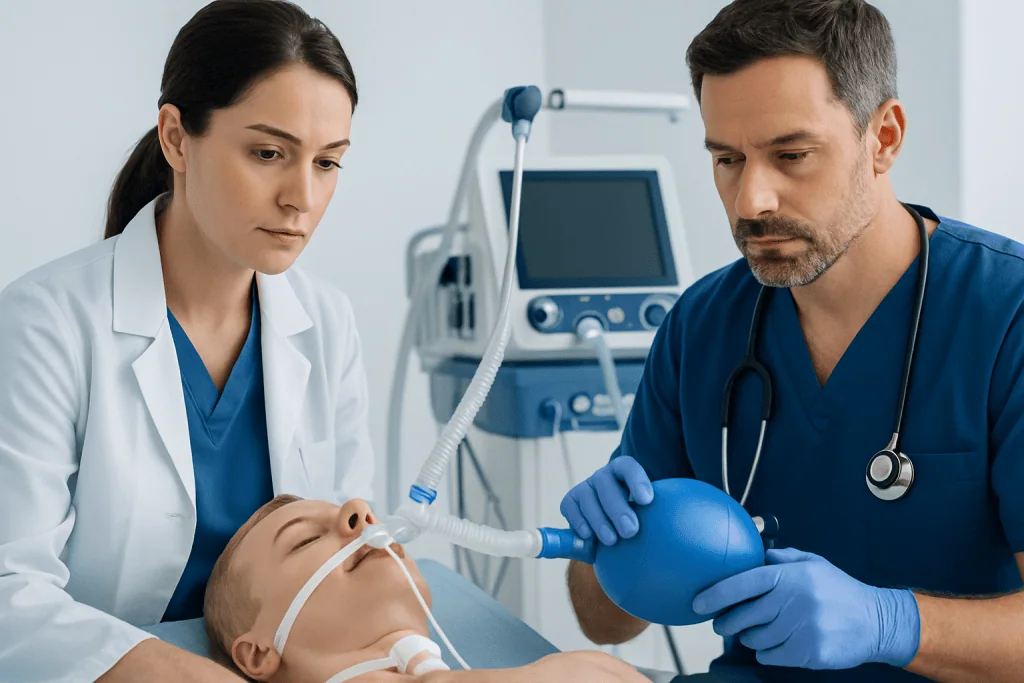
Clinicians do not rely on the name alone; they identify the procedure by anatomy, context, and intended use. The first clue is the neck landmark. In cricothyrotomy, the opening goes through the cricothyroid membrane, a relatively accessible space just below the thyroid cartilage. In tracheostomy, the opening is lower, entering the trachea below the larynx.
The second clue is urgency. If a person has a rapidly blocked airway from trauma, swelling, bleeding, or severe difficulty with intubation, a doctor may need to create an airway within minutes. That situation strongly points to cricothyrotomy. If the person is already stabilized but is expected to need ventilation for a prolonged period, repeated suctioning, or a safer long-term airway, tracheostomy is more likely.
Doctors also consider the patient’s age, anatomy, and the reason for airway compromise. In children, emergency front-of-neck airway decisions can be more complex because the structures are smaller and the risks differ. In adults, visible landmarks, neck injury, prior surgery, obesity, infection, or a neck mass may influence which procedure is possible and how it is approached.
Finally, the team looks at what happens next. Cricothyrotomy is usually regarded as a bridge to a more definitive airway once the emergency has passed. Tracheostomy, by contrast, can be the definitive airway itself. In some patients with airway narrowing, head and neck disorders, or prolonged ventilator dependence, doctors may discuss procedures within a broader ENT or critical care plan, including evaluation for throat cancer or other structural airway conditions when clinically appropriate.
Why and when each procedure is used

Cricothyrotomy is reserved for rare but critical situations. The classic indication is a life-threatening failure of oxygenation or ventilation when a breathing tube cannot be placed through the mouth or nose and bag-mask ventilation is not working well enough. Examples include severe facial trauma, massive bleeding in the upper airway, severe swelling, or an obstructing injury that makes standard access impossible.
Tracheostomy has a broader range of uses and is often not an emergency. It may be recommended for people who need prolonged mechanical ventilation, have repeated problems clearing secretions, have upper airway obstruction, or need a more comfortable and stable airway than an oral endotracheal tube can provide. It may also be considered after certain neurologic illnesses, major surgeries, or conditions affecting swallowing and airway protection.
Another practical difference is the treatment goal. Cricothyrotomy is designed to restore oxygen delivery fast. Tracheostomy is designed to support breathing over time, improve secretion management, and sometimes assist communication and rehabilitation after critical illness.
In patients with a known upper airway disorder, the choice may fit into a wider treatment pathway. For example, someone with a structural narrowing of the voice box or upper airway may need ENT evaluation and procedures related to laryngeal cancer or other diseases, while others may need intensive respiratory support and later transition to tracheostomy as part of recovery.
What the procedures involve
In simple terms, both procedures create a direct route for air to enter the airway through the neck. During cricothyrotomy, a clinician identifies the cricothyroid membrane, makes a small opening, and inserts an airway tube so oxygen can reach the lungs. Because it is usually performed under extreme time pressure, the priority is speed and safe restoration of airflow.
Tracheostomy is generally more controlled. The clinician makes an opening lower in the neck into the trachea and places a tracheostomy tube. This may be done surgically in an operating room or percutaneously in selected intensive care patients, depending on anatomy, clinical status, and local expertise. Broader planning includes tube size, cuff use, humidification, suctioning, skin care, and communication support.
Patients and families often worry about pain, speech, and appearance. Comfort is managed by the clinical team, and when a tracheostomy remains in place, patients may work with respiratory therapists, nurses, and speech-language specialists. Some people can speak with specific valves or once their condition improves, but this depends on the tube, swelling, airflow, and overall health status.
When tracheostomy is part of a larger airway or critical care strategy, related procedures may be discussed, such as bronchoscopy to inspect the airways or guide management. In selected patients, specialty teams at Acibadem International’s JCI-accredited hospitals diagnose and treat airway conditions for international patients using a multidisciplinary approach.
Risks, recovery, and what happens after
Both procedures carry risks because they involve the airway and major structures in the neck. Possible complications can include bleeding, infection, incorrect tube placement, damage to nearby tissues, and problems with oxygenation during or after the procedure. These risks are balanced against the immediate need to secure breathing, especially in an emergency.
Cricothyrotomy is often temporary. Once the patient is stabilized, doctors may convert to another airway approach, frequently a tracheostomy or an endotracheal tube if that becomes possible. Follow-up focuses on breathing stability, wound care, and treating the cause of the airway emergency, such as trauma, swelling, or obstruction.
Recovery after tracheostomy depends on why it was needed and how long it remains in place. The care plan may include humidified air, suctioning, cleaning around the opening, tube changes, and gradual assessment for weaning or decannulation if the patient no longer needs it. Some patients recover quickly, while others require longer rehabilitation, especially after intensive care stays.
If the original problem involves the lungs or chest, doctors may also investigate related breathing conditions and consider therapies such as lung surgery when appropriate to the underlying disease rather than to the airway opening itself. The exact path varies from person to person, which is why specialist follow-up matters.
What to do in each situation
If someone appears to need a cricothyrotomy, it is already a medical emergency. This is not a home procedure and should only be performed by trained clinicians with emergency airway skills. Bystanders should call emergency services immediately, begin basic first aid if trained, and follow dispatcher guidance while avoiding delays in professional care.
If a person has a tracheostomy and develops difficulty breathing, thick secretions, a blocked tube, new bleeding, fever, worsening redness, or accidental tube displacement, urgent medical assessment is also important. Caregivers are usually taught basic tracheostomy care, including how to recognize blockage or distress and when to seek immediate help.
For people preparing for a planned tracheostomy, the best next step is discussion with the treating team. Questions often include why it is needed, whether it is expected to be temporary, how communication and eating may be affected, what home care involves, and what support services will be needed after discharge.
It can also help to understand the larger condition behind the airway decision. Some patients need treatment for trauma, some for prolonged ventilation, and others for narrowing, infection, or cancer affecting the airway. Clear explanations from ENT, anesthesia, emergency, and critical care teams can make the process less confusing and more manageable.
When to seek medical care
Immediate emergency care is needed for severe shortness of breath, noisy breathing with distress, blue or gray lips, inability to speak full sentences, choking, major facial or neck trauma, or sudden swelling of the mouth or throat. These signs may point to a blocked airway, which can become critical very quickly.
People who already have a tracheostomy should seek urgent help if the tube comes out unexpectedly, breathing becomes harder than usual, secretions suddenly increase, there is significant bleeding, or the skin around the opening becomes increasingly red, swollen, or painful. New confusion, fainting, or a sharp drop in oxygen levels also requires prompt evaluation.
Non-emergency medical review is appropriate for ongoing questions about tracheostomy care, voice changes, swallowing concerns, mucus management, skin irritation, or plans for tube removal. A qualified doctor can assess whether healing is progressing well and whether changes in equipment or care technique are needed.
Because airway decisions can be complex, people should not try to identify the need for tracheostomy or cricothyrotomy on their own based only on symptoms or internet reading. Professional assessment is the safest way to decide which airway approach, if any, is appropriate.
Frequently asked questions
Is a cricothyrotomy the same as a tracheostomy?
No. Both create an airway through the neck, but a cricothyrotomy is usually a rapid emergency opening through the cricothyroid membrane, while a tracheostomy is made lower in the trachea and is often used for longer-term airway support.
Why would a doctor choose cricothyrotomy instead of tracheostomy?
A doctor may choose cricothyrotomy when there is an immediate, life-threatening airway emergency and there is not enough time or access for standard intubation. It is designed for speed when oxygen delivery is failing.
Can a cricothyrotomy become a tracheostomy later?
Yes, that can happen. Because cricothyrotomy is often temporary, the team may later place a tracheostomy if the patient still needs a secure airway after the emergency has been stabilized.
Which procedure is more permanent?
Tracheostomy is generally the more durable and longer-term option. However, it is not always permanent, because some people have the tube removed once breathing and airway protection improve.
Do people with a tracheostomy always lose the ability to speak?
Not always. Speech depends on the person’s condition, the type of tracheostomy tube, whether airflow can pass through the voice box, and the stage of recovery. Some patients can speak with specialized valves or after adjustments by their care team.
Who performs these airway procedures?
Depending on the situation, these procedures may be performed by emergency physicians, anesthesiologists, ENT surgeons, trauma surgeons, thoracic surgeons, or critical care specialists. The choice depends on urgency, anatomy, and local expertise.
References
- American Academy of Otolaryngology–Head and Neck Surgery
- American College of Surgeons
- National Institutes of Health
- Merck Manual Professional Edition
- StatPearls
This article is for general information only and is not a substitute for professional medical advice. Please consult a qualified doctor about your individual situation.
Explore treatments in Turkey — costs, top hospitals & a free quote
JCI-accredited · board-certified surgeons · reply within 24h