Treatment of Trismus: How It Works, Results and What to Expect

Trismus is restricted mouth opening caused by jaw-muscle spasm, joint problems, infection, injury, scarring, or other conditions. The most effective treatment of trismus depends on identifying and treating its underlying cause.
Key Takeaways
- Trismus is restricted mouth opening caused by jaw-muscle spasm, joint problems, infection, injury, scarring, or other conditions.
- The most effective treatment of trismus depends on identifying and treating its underlying cause.
- Gentle, clinician-guided jaw movement is often important; forceful stretching can worsen pain or injury.
- Sudden trismus with fever, facial swelling, trouble swallowing, breathing difficulty, or drooling needs urgent medical assessment.
- Recovery may take days to weeks for temporary muscle spasm, while scar-related or complex cases can require longer specialist care.
Treatment of trismus aims to restore comfortable jaw movement while treating the problem causing limited mouth opening. Depending on the cause, care may include pain control, gentle stretching, dental treatment, physical therapy, medicines, or urgent treatment for infection or injury.
Overview: How Treatment of Trismus Works
Treatment of trismus works by addressing both the restricted jaw movement and the reason it developed. Trismus is sometimes called “lockjaw,” although the term does not always mean tetanus. It describes difficulty opening the mouth normally because the jaw muscles, temporomandibular joints (TMJs), teeth, surrounding tissues, or nerves are affected.
For a short-lived jaw muscle spasm, treatment may focus on rest, pain relief, warmth, and gradual movement. If trismus is related to a dental infection, impacted tooth, injury, TMJ disorder, cancer treatment, surgery, or scarring, the underlying issue needs targeted care. A dentist, oral and maxillofacial surgeon, ear, nose and throat specialist, physiotherapist, or other clinician may be involved.
The aim is not simply to force the mouth open. Clinicians first assess whether restricted opening is protective because of inflammation or injury, then create a plan to improve function safely. This can help a person eat, speak, maintain oral hygiene, and receive needed dental care more comfortably.
Causes, Candidacy and Assessment Before Treatment
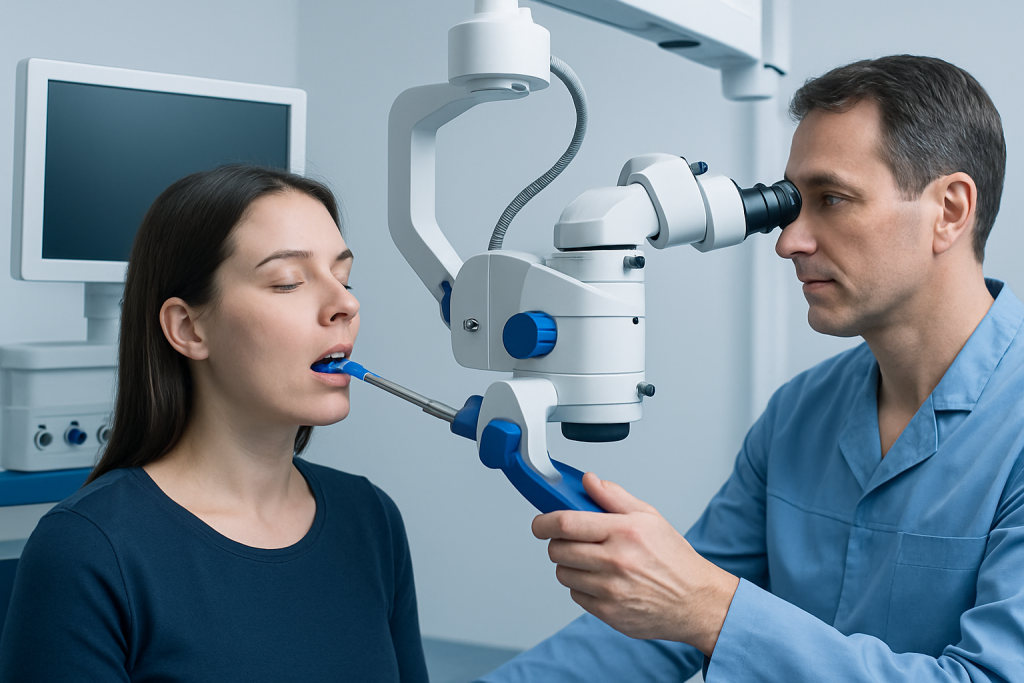
Almost anyone with persistent or troublesome limited mouth opening may benefit from an assessment, but the appropriate treatment varies considerably. Common causes include jaw-muscle overuse or spasm, temporomandibular disorders, dental infections, wisdom-tooth problems, facial trauma, arthritis affecting the jaw joint, and inflammation after dental procedures.
Trismus can also occur after head and neck surgery or radiotherapy, where tissue tightening and scarring may gradually limit movement. Less commonly, it may be associated with a deep infection, neurologic condition, medication effect, or tetanus. These causes require timely medical evaluation rather than self-treatment alone.
During assessment, the clinician asks when symptoms began, whether there has been recent dental work, trauma, infection, radiotherapy, or jaw clicking, and whether swallowing or breathing is affected. They may measure mouth opening, examine the teeth, gums, face, neck, jaw muscles, and joints, and arrange dental X-rays, CT, MRI, or blood tests when indicated.
- Short-term, mild symptoms after chewing or dental work may be managed conservatively after professional advice.
- Persistent, recurrent, or worsening trismus should be assessed to identify its cause.
- People with a history of head and neck cancer treatment may need early rehabilitation to prevent progressive stiffness.
Treatment of Trismus Step by Step
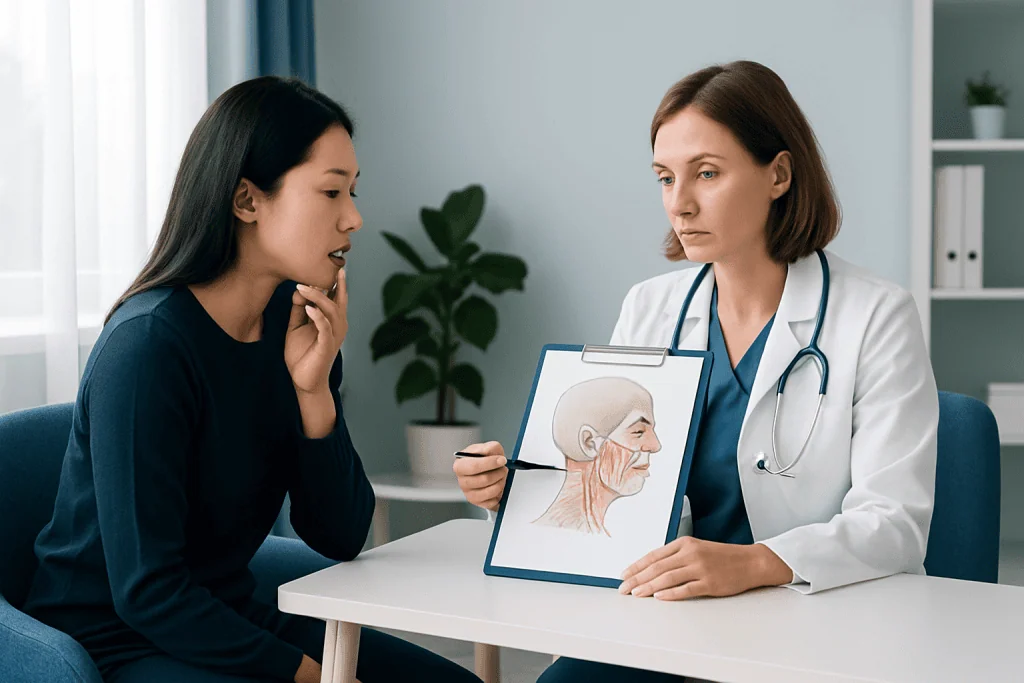
Care usually begins with treating pain and inflammation, protecting the jaw from further strain, and managing the cause. A clinician may recommend soft foods for a short period, avoiding gum chewing and wide yawning, warm or cold compresses depending on the situation, and appropriate pain-relieving or anti-inflammatory medicines. Antibiotics are used only when a bacterial infection is suspected or confirmed.
Next, gradual jaw-mobility work may be introduced. This can include controlled opening and closing, side-to-side movements, massage of tense jaw muscles, posture work, and structured stretching. A dentist, physiotherapist, speech and language therapist, or rehabilitation professional may tailor the program. Jaw-motion devices are sometimes used for selected people, especially when scarring follows cancer treatment.
If an underlying dental problem is present, treatment may involve drainage of an abscess, care for an affected tooth, or management of gum disease. Joint-related cases may need a bite guard, rehabilitation, or specialist TMJ care. Injury, jaw dislocation, severe scarring, or structural joint disease may require oral and maxillofacial surgical assessment. Oral and maxillofacial surgery may be considered when conservative measures do not address the cause.
Follow-up is important because mouth opening often improves gradually. The care team can remeasure movement, adjust exercises, ensure pain is controlled, and look for complications or a different diagnosis if recovery is slower than expected.
Benefits, Risks and Recovery Timeline
The main benefits of appropriate treatment are improved ability to open the mouth, less jaw pain or muscle tightness, easier eating and speaking, better oral hygiene, and safer access for dental or medical procedures. Treating the root cause can also prevent problems such as worsening infection, poor nutrition, tooth decay, or long-term loss of jaw mobility.
Recovery depends on the cause and severity. Minor muscle spasm or inflammation may improve over several days to a few weeks. Recovery after dental infection, injury, surgery, radiotherapy, or established scar tissue may take weeks to months and often requires regular rehabilitation. Some chronic TMJ or scar-related cases need ongoing self-management to preserve gains in mouth opening.
Risks are linked mainly to the cause and treatment used. Stretching too aggressively can increase pain, irritate an inflamed joint, or cause muscle strain. Medicines can have side effects and should be selected with a clinician’s guidance, particularly for people who are pregnant, have stomach, kidney, liver, or heart conditions, or take other medicines. Procedures carry their own risks, which the treating specialist should explain in advance.
At Acibadem International, multidisciplinary specialists and JCI-accredited hospitals can assess and treat trismus for international patients when dental, surgical, rehabilitation, or head and neck expertise is needed.
How Long Does It Take to Fix Trismus?
There is no single recovery time because trismus is a symptom rather than one disease. When it is caused by temporary muscle strain, mild inflammation, or a recent procedure, comfortable jaw opening may return within days or a few weeks with appropriate care. Improvement is often gradual rather than immediate.
When trismus results from infection, recovery depends on how quickly the infection is controlled and whether drainage or dental treatment is needed. After trauma, major surgery, radiotherapy, or longstanding joint and scar changes, recovery can take weeks to months. Consistent, clinician-guided rehabilitation is often more useful than trying to achieve rapid forceful opening.
If mouth opening does not improve, becomes more limited, or returns repeatedly, a clinician should reassess the diagnosis and treatment plan. Early review is particularly important after head and neck cancer treatment, where fibrosis can progress over time.
How to Quickly Heal Trismus?
The safest way to improve trismus quickly is to identify its cause rather than relying on a single home remedy. A person can generally reduce strain by choosing soft, easy-to-chew foods, avoiding very wide mouth opening, and following clinician-approved pain-relief and warm-compress advice. Adequate hydration and oral hygiene are also important, particularly when chewing is uncomfortable.
Gentle mobility exercises can support recovery when recommended by a clinician. They should be slow, regular, and within a tolerable range. Forcing the jaw open, repeatedly testing the maximum opening, or using unapproved devices can aggravate an injury or delay healing.
Prompt dental or medical care is the quickest route to recovery when there is a tooth infection, facial swelling, injury, or an issue involving the jaw joint. Temporomandibular joint disorders may also need individualized management, especially if pain, clicking, locking, or recurrent limitation is present.
How Serious Is Trismus? What Does Trismus Pain Feel Like?
Trismus can be mild and temporary, but it can also signal a condition requiring urgent care. It is more concerning when it develops rapidly, follows facial trauma, occurs with fever or swelling, or makes eating, swallowing, speaking, or oral hygiene difficult. Severe limitation can affect nutrition and dental health, while infections in the mouth or neck can sometimes spread and become serious.
Trismus pain may feel like tightness, cramping, aching, tenderness, or pulling in the cheek, temple, jaw angle, or in front of the ear. Some people notice pain when trying to yawn, chew, brush their teeth, or open their mouth for a bite. TMJ-related symptoms may include joint tenderness, clicking, popping, or a feeling that the jaw catches.
Medical care should be sought urgently for difficulty breathing or swallowing, drooling, fever, increasing facial or neck swelling, confusion, severe pain, inability to drink enough fluids, or trismus after a penetrating injury. A person should also seek prompt assessment if symptoms follow a wound and tetanus vaccination may not be up to date.
Frequently asked questions
Can trismus go away on its own?
Mild trismus caused by temporary jaw-muscle irritation may settle with rest and appropriate self-care. However, persistent, worsening, or recurrent symptoms should be assessed because dental infection, joint problems, injury, or scarring may require specific treatment.
Should a person stretch a jaw that is locked or painful?
Gentle, prescribed exercises can be helpful for many causes of trismus. Forceful stretching or trying to pry the mouth open can worsen pain or damage inflamed tissues, so a clinician should advise on the right approach.
Can a tooth infection cause trismus?
Yes. Infection around a tooth, especially in the back of the mouth, can inflame nearby muscles and tissues and make opening the mouth painful or difficult. Dental assessment is important because an abscess may require drainage or other dental treatment.
What foods are easier to eat with trismus?
Soft foods that need minimal chewing, such as soups, yogurt, mashed foods, eggs, soft fish, and blended meals, may be more comfortable for a short time. People should maintain fluids and seek advice if restricted opening prevents adequate eating or drinking.
Is trismus the same as tetanus?
No. Trismus is a symptom of limited mouth opening and has many possible causes. Tetanus can cause jaw stiffness or lockjaw, but it is a rare and serious cause that needs urgent medical treatment.
Which specialist treats trismus?
The appropriate specialist depends on the cause. A dentist or oral and maxillofacial surgeon often evaluates dental and jaw-related causes, while ENT specialists, physiotherapists, oncology rehabilitation teams, or neurologists may be involved in other situations.
References
- American Dental Association
- National Institute of Dental and Craniofacial Research
- Merck Manual Professional Edition
- World Health Organization
- National Cancer Institute
This article is for general information only and is not a substitute for professional medical advice. Please consult a qualified doctor about your individual situation.
Joint and spine care in Turkey — expert assessment & treatment
JCI-accredited · board-certified surgeons · reply within 24h
Add us as a Preferred Source to see more of our trusted health content across Google Search, AI Overviews and Discover.

More from the Health Library



Related Specialists

Dt. Ridvan Bayri
Oral & Dental Health
Dr. Cem Öz
Aesthetic Plastic & Reconstructive Surgery
Dyt. Elif Derya Cinisli
Nutrition and Diet
Dr. Haluk Mumcuoğlu
Internal Medicine