Types of Squats — Explained by Medical Evidence, Not Myths
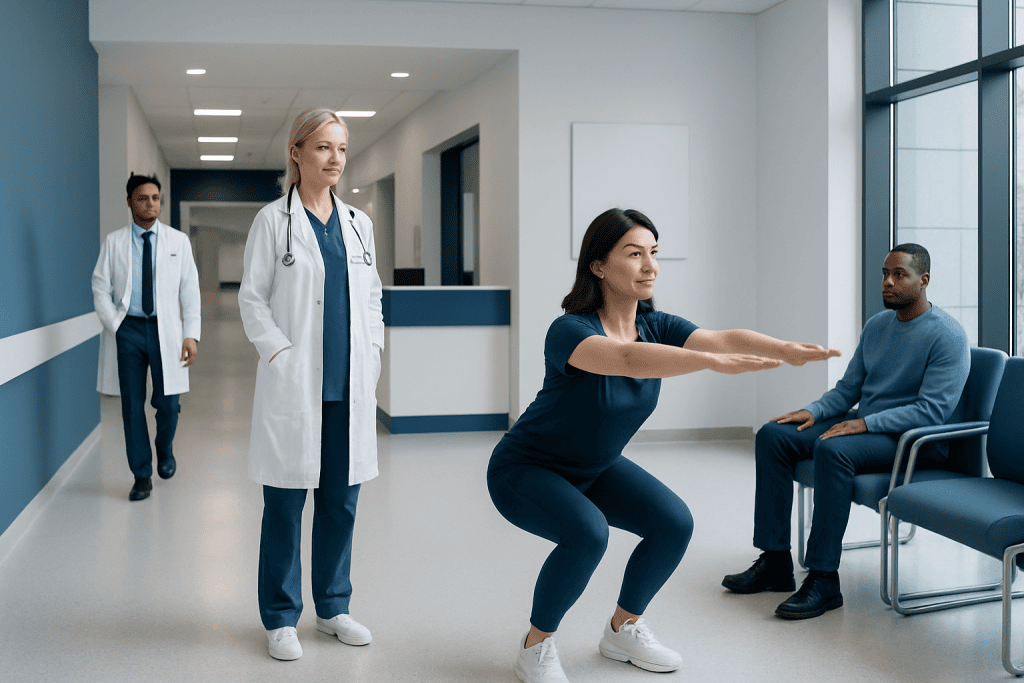
Different squat types shift emphasis between the hips, knees, core, and balance demands. No single squat is best for everyone; the right variation depends on goals, mobility, symptoms, and experience.
Key Takeaways
- Different squat types shift emphasis between the hips, knees, core, and balance demands.
- No single squat is best for everyone; the right variation depends on goals, mobility, symptoms, and experience.
- Good squat form generally includes controlled depth, stable feet, and a neutral spine adjusted to individual anatomy.
- Pain during or after squats may signal technique issues, overuse, or an underlying joint or spine condition.
- Medical assessment is appropriate for persistent pain, swelling, locking, weakness, or pain after injury.
Types of squats are best understood by how they change movement, muscle demand, balance, and joint loading rather than by fitness trends. Common squat variations can be useful when matched to a person’s goals, mobility, training level, and any hip, knee, or back concerns.
Overview: what the main types of squats actually are
The main types of squats include bodyweight squats, goblet squats, front squats, back squats, sumo squats, split squats, Bulgarian split squats, and box squats. Each variation changes how much work is done by the hips, knees, trunk, and stabilizing muscles. In practical terms, that means different squat types may feel easier or harder depending on a person’s anatomy, mobility, balance, training history, and any pain issues.
Medical evidence does not support the idea that one squat style is universally “best” or that all knees must stay behind the toes. In healthy movement, the knees often move forward to some degree, especially in deeper squats, while the hips and ankles also contribute. The safer and more effective choice is usually the variation that a person can perform with control, without sharp pain, and with a load and depth appropriate for their body.
Squats are not only strength exercises. They are also movement patterns used in daily life, such as sitting down, standing up, lifting objects, and getting up from low surfaces. For that reason, clinicians and rehabilitation professionals often look at squat patterns when assessing lower-limb function, balance, and recovery after injury.
How squat variations differ biomechanically
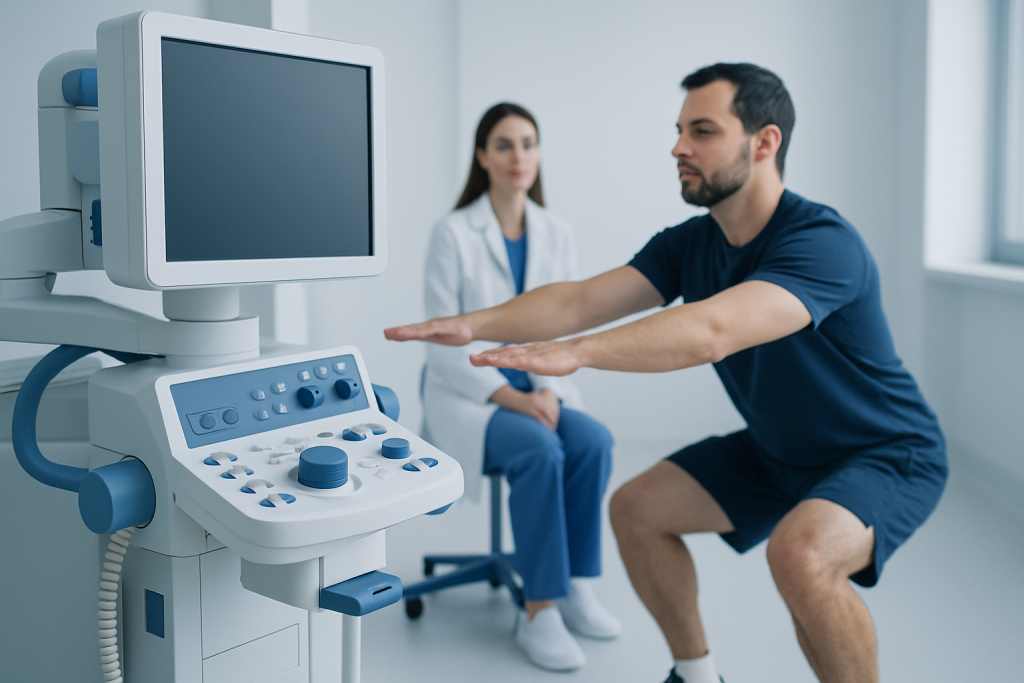
Squat variations differ because they change body position, stance width, where the weight is held, and whether one or both legs carry most of the load. These factors influence joint angles and muscle recruitment. A narrower stance may increase ankle mobility demand, while a wider stance may feel more comfortable for some hips. Holding weight in front of the body often encourages a more upright trunk, whereas loading on the back can increase trunk lean depending on the style used.
Bodyweight squats are often the simplest starting point because they allow a person to learn coordination and depth without external load. Goblet squats, performed while holding a weight at the chest, can improve balance and torso position and are often easier to learn than barbell variations. Front squats also place weight in front of the body and commonly increase quadriceps demand while requiring good shoulder, wrist, and ankle mobility.
Back squats usually allow heavier loading but may place greater technical demands on trunk control and hip mobility. Sumo squats use a wider stance and can change the contribution of hip muscles, although exact muscle emphasis still varies between individuals. Split squats and Bulgarian split squats increase single-leg demand and may help expose side-to-side strength or balance differences. Box squats use a box or bench to guide depth and can be helpful when learning control or returning to exercise gradually.
- Front-loaded squats: often promote a more upright torso.
- Back-loaded squats: often permit heavier strength training.
- Single-leg or split variations: increase balance and side-to-side control demands.
- Box-assisted variations: may improve confidence, consistency, and depth awareness.
Common squat types and who may benefit from them
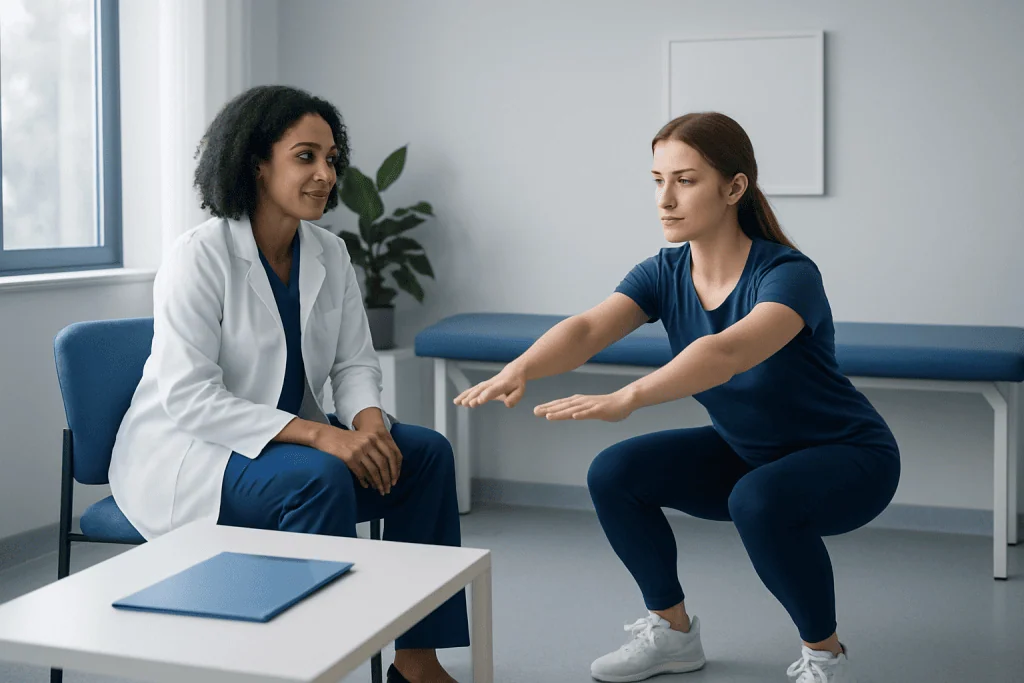
Bodyweight squats are often suitable for beginners, older adults, and people returning to exercise, as long as they can be done without worsening pain. Goblet squats may be a good next step for those learning bracing and lower-body control. Because the weight is held close to the center of mass, many people find goblet squats easier to perform with a controlled trunk and stable foot position.
Front squats may suit people who want to build leg strength while limiting excessive forward lean, but they can be uncomfortable for those with limited wrist, shoulder, or ankle mobility. Back squats are widely used for strength development, yet they are not necessary for everyone. Someone with back discomfort, difficulty bracing, or limited access to coaching may do better with a simpler variation first.
Split squats and Bulgarian split squats can be useful for runners, field-sport athletes, and people working on one-leg stability. They may also be included in rehabilitation programs when appropriate, especially if a clinician is addressing asymmetry after injury. People with ongoing knee symptoms, however, may need a personalized approach because the front leg can experience substantial load. If knee pain is a concern, medical assessment may help rule out underlying causes of knee pain.
Sumo and box squats may help those who are more comfortable with a wider stance or need a clear depth target. Box squats can also reduce uncertainty for people rebuilding confidence after pain episodes. In some cases of persistent mobility limitation, guidance from physical therapy and rehabilitation can help determine the safest and most effective squat progression.
What proper squat form looks like in real life
Proper squat form is not a single rigid template. Instead, it is a controlled pattern that respects individual differences in limb length, hip shape, ankle mobility, and training goals. In general, the feet stay planted, the knees track in line with the toes, and the spine remains neutral or comfortably braced rather than excessively rounded. The movement should be smooth on the way down and up, without sudden shifting, collapsing inward at the knees, or lifting the heels.
Depth should be based on comfort, control, and purpose. A deeper squat is not automatically better if it causes pain, loss of balance, or spinal rounding that cannot be controlled. For some people, squatting to a chair or box is a practical and evidence-informed way to build strength and confidence before progressing. Controlled breathing and abdominal bracing can also support the trunk, especially when load increases.
Several myths can be misleading. Knees moving forward over the toes is not inherently dangerous, particularly if the movement is controlled and tolerated. Likewise, muscle soreness after squats does not necessarily indicate a better workout, and “no pain, no gain” is not a safe rule. Pain, especially sharp or persistent pain, should be treated as useful information rather than ignored.
- Choose a stance that feels stable and natural.
- Keep weight distributed across the whole foot, not only the toes.
- Use a depth that can be controlled without pain.
- Progress load gradually rather than chasing heavy weight too soon.
Benefits of squats and possible risks
Squats can support lower-body strength, balance, coordination, and function in daily life. They train the quadriceps, gluteal muscles, and other stabilizers around the hips and trunk. Depending on the variation and resistance used, they may also contribute to bone and connective-tissue loading, which is important for long-term musculoskeletal health when performed appropriately.
Risks are usually related to technique errors, training too much too soon, poor recovery, or exercising through pain. Common problem areas include the knees, hips, lower back, and occasionally the ankles. A person who suddenly increases volume or load may develop overuse symptoms even if the movement itself is generally sound. Fatigue can also reduce coordination and increase the chance of compensatory movement patterns.
People with existing joint disease, recent injury, balance impairment, or spine problems may need modifications. For example, symptoms related to lumbar disc herniation or hip disorders can make certain squat styles uncomfortable. In these situations, an individualized plan may be more appropriate than general online advice. Some people also benefit from medical evaluation and supervised orthopedic rehabilitation before returning to heavier squatting.
How pain during squats is assessed
Pain during squats does not always mean tissue damage, but it should not be dismissed if it keeps recurring. Clinicians usually assess where the pain is felt, whether it occurs during descent or ascent, how long it lasts afterward, and whether there is swelling, catching, giving way, numbness, or weakness. They also ask about recent training changes, previous injuries, footwear, and daily activities.
A physical examination often includes observation of squat mechanics, hip and ankle mobility, muscle strength, balance, and joint tenderness. Depending on the symptoms, a doctor may evaluate the knees, hips, feet, or lower back rather than assuming the problem comes from only one area. If there has been trauma or symptoms are severe, imaging may be considered to look for structural injury. MRI can be useful in selected cases when soft tissue, cartilage, or spine-related causes are suspected.
Many people improve with activity modification, a temporary reduction in load, and a structured strengthening or mobility program. However, locking, significant swelling, persistent instability, or pain that limits walking may require more urgent assessment. A qualified healthcare professional can help distinguish normal training discomfort from signs of injury.
Self-care, progression, and prevention
For most people, safer squat training begins with selecting a variation they can control well. That may mean starting with bodyweight or box squats, using a smaller range of motion, or reducing the number of sets and repetitions. Warm-up activities that prepare the ankles, hips, and trunk can improve comfort, although warm-up routines do not need to be complicated. Consistency and gradual progression are usually more important than performing many advanced drills.
Recovery also matters. Muscles and connective tissues adapt best when training stress is balanced with rest, sleep, and adequate nutrition. If a person notices pain building over days or weeks, it may help to reduce training volume temporarily, check technique, and vary exercises rather than repeating the same heavy pattern too often. Rotating between squat types can sometimes lower repetitive strain while still supporting strength goals.
People with chronic joint pain, previous surgery, arthritis, or recurrent sports injuries should be especially careful with progression. Individualized guidance may be useful when symptoms interfere with training. Near the end of a care pathway, some international patients choose specialist evaluation at centers such as Acibadem International, where multidisciplinary teams in JCI-accredited hospitals assess musculoskeletal complaints and plan treatment when needed.
When to seek medical care
Medical care should be considered if squat-related pain is severe, does not improve with rest and activity modification, or repeatedly returns despite correcting form. Prompt assessment is also important after a fall, twist, or direct injury, especially if there is swelling, bruising, inability to bear weight, joint locking, or a feeling that the knee or hip may give way.
A doctor should also evaluate symptoms such as numbness, tingling, pain radiating down the leg, marked weakness, fever, or unexplained night pain. These features may point to a problem beyond simple exercise overload. Early assessment can help identify whether the issue is mechanical, inflammatory, or related to the spine or another structure.
Many cases are manageable with conservative care, but persistent or worsening symptoms deserve professional attention. Seeking timely advice can make it easier to return to exercise safely and avoid long periods of unnecessary discomfort.
Frequently asked questions
Which type of squat is best for beginners?
Bodyweight squats and box squats are often good starting points because they help build control and confidence without heavy external load. Goblet squats are also commonly used once basic mechanics are comfortable. The best choice depends on balance, mobility, and whether any pain is present.
Are squats bad for the knees?
Squats are not automatically bad for the knees. When performed with appropriate technique, depth, and loading, they can be part of healthy strength training and rehabilitation. Knee pain during squats may reflect overload, poor control, or an underlying condition that needs assessment.
Do the knees have to stay behind the toes during a squat?
No. In many normal squats, the knees move forward to some degree, especially as depth increases. What matters more is whether the movement is controlled, pain-free, and appropriate for the person’s anatomy and goals.
What is the difference between a goblet squat and a front squat?
Both place the load in front of the body, which often encourages a more upright torso. A goblet squat usually uses a single weight held at the chest and is often easier to learn. A front squat typically uses a barbell and may allow heavier loading but requires more mobility and technical skill.
Can squats help with everyday function?
Yes. Squats train a movement pattern used in sitting, standing, lifting, and climbing. Better squat strength and control can support balance, independence, and lower-body function in daily life when training is appropriate for the individual.
When should someone stop squatting and talk to a doctor?
A person should stop and seek medical advice if squats cause sharp pain, significant swelling, locking, giving way, numbness, or pain after an injury. Medical review is also sensible if symptoms continue despite rest, reduced load, and attention to form. Persistent pain should not be ignored.
References
- American Academy of Orthopaedic Surgeons
- American College of Sports Medicine
- National Institute of Arthritis and Musculoskeletal and Skin Diseases
- National Strength and Conditioning Association
- World Health Organization
This article is for general information only and is not a substitute for professional medical advice. Please consult a qualified doctor about your individual situation.
Joint and spine care in Turkey — expert assessment & treatment
JCI-accredited · board-certified surgeons · reply within 24h