Unicornuate Uterus Explained: Causes, Management, and When to See a Doctor

A unicornuate uterus is present from birth and happens during fetal development. Some people have no symptoms, but others may have period pain, pelvic pain, infertility, or pregnancy complications.
Key Takeaways
- A unicornuate uterus is present from birth and happens during fetal development.
- Some people have no symptoms, but others may have period pain, pelvic pain, infertility, or pregnancy complications.
- Diagnosis often involves pelvic ultrasound, 3D ultrasound, or MRI to define the shape of the uterus.
- Treatment depends on symptoms, the presence of a rudimentary horn, and reproductive goals.
- Pregnancy with a unicornuate uterus is possible, but it usually needs closer monitoring.
A unicornuate uterus is a congenital difference in which only one side of the uterus fully develops, creating a smaller, often curved uterus. Some people have no symptoms, while others may have pelvic pain, fertility challenges, or a higher-risk pregnancy that benefits from specialist care.
What is a unicornuate uterus?
A unicornuate uterus is a type of congenital uterine anomaly, meaning it develops before birth. Instead of forming as a typical uterus with two sides that fully join together, only one side develops normally. This creates a uterus that is smaller than usual and often somewhat banana-shaped or one-sided in appearance.
This condition forms from incomplete development of one of the paired Müllerian ducts, the structures that normally form the uterus, cervix, fallopian tubes, and upper vagina. In some people, a small remnant of the underdeveloped side remains. This is called a rudimentary horn, and it may or may not contain functioning uterine lining.
A unicornuate uterus can be discovered in different ways. Some people learn about it during an evaluation for painful periods or pelvic pain. Others only find out during fertility testing, pregnancy imaging, or investigation of recurrent miscarriage or preterm birth. Some never have symptoms and are diagnosed incidentally.
It is part of a broader group of uterine anomalies that vary in shape and severity. Understanding the exact anatomy matters because symptoms, fertility effects, and treatment decisions can differ from person to person.
Signs, symptoms, and possible effects
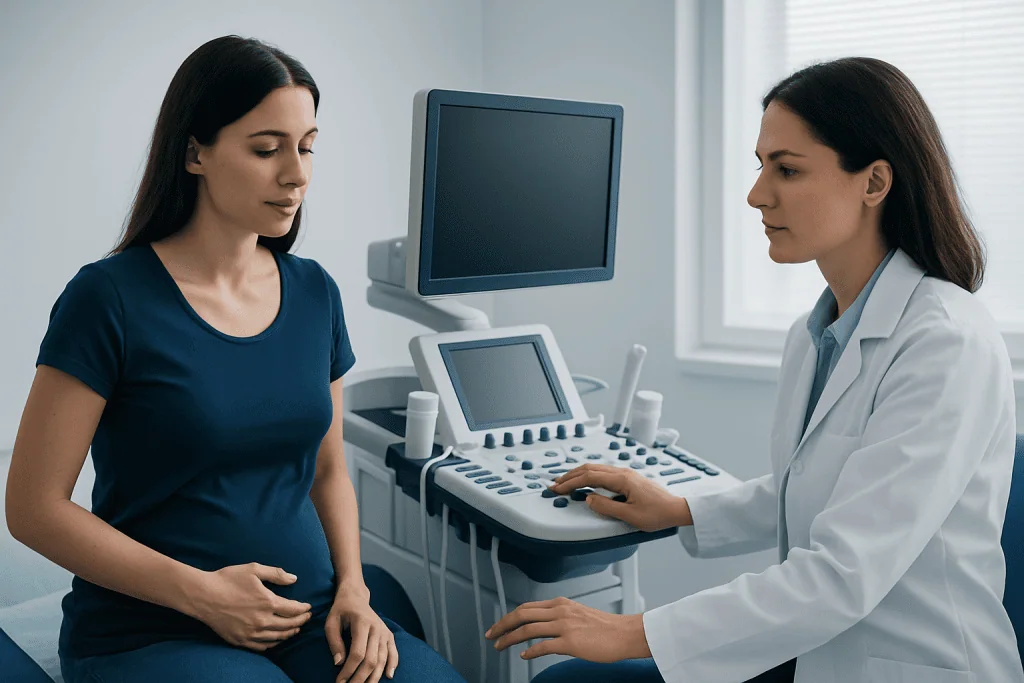
Many people with a unicornuate uterus feel well and have regular menstrual cycles. When symptoms do occur, they may include painful periods, chronic pelvic pain, pain during intercourse, or unexplained pelvic discomfort. Symptoms are more likely if there is a noncommunicating rudimentary horn, especially one with functioning endometrial tissue that cannot drain normally.
Reproductive concerns are another reason the condition may come to medical attention. A unicornuate uterus can be associated with difficulty conceiving, although many people do become pregnant naturally. It is also linked to a higher risk of miscarriage, ectopic pregnancy, fetal growth restriction, malpresentation such as breech, cervical insufficiency, and preterm birth.
The impact varies widely. One person may have no difficulties at all, while another may experience repeated pregnancy loss or complications that require careful obstetric monitoring. The presence or absence of a rudimentary horn, associated kidney anomalies, and the overall size and shape of the uterine cavity can all influence the clinical picture.
- Possible pelvic symptoms: painful periods, pelvic pain, pain with sex
- Possible fertility effects: trouble conceiving, recurrent pregnancy loss
- Possible pregnancy effects: preterm labor, breech position, cesarean delivery, growth concerns
Why it happens and who is at risk

A unicornuate uterus is not caused by anything a person did or did not do. It happens during fetal development when one Müllerian duct does not fully develop or does not connect as expected. Because it is congenital, it is present from birth even if it is not recognized until adolescence or adulthood.
In most cases, there is no single identifiable external cause. Researchers believe these anomalies arise from complex developmental factors, and they are usually sporadic. People often wonder whether lifestyle, exercise, diet, or contraception caused it; these factors do not create a unicornuate uterus.
Another important point is that uterine anomalies can occur alongside abnormalities in the urinary tract, especially the kidneys. For that reason, a clinician may recommend kidney imaging if a unicornuate uterus is diagnosed. Looking for associated differences helps make care more complete and supports pregnancy planning.
Although it cannot be prevented, early recognition can reduce complications. Identifying a painful rudimentary horn or understanding pregnancy risk ahead of time may guide safer treatment and follow-up.
How doctors diagnose a unicornuate uterus
Diagnosis begins with a medical history and pelvic evaluation, but imaging is usually what confirms the condition. Standard pelvic ultrasound may suggest a one-sided or small uterus. However, advanced imaging is often needed to define the anatomy accurately and to see whether a rudimentary horn is present.
Three-dimensional ultrasound is especially useful because it can show the outer contour and the shape of the uterine cavity. MRI may also be recommended when ultrasound findings are unclear or when surgical planning is needed. These tests help distinguish a unicornuate uterus from other uterine shape differences.
In some situations, additional testing may be used during a fertility evaluation, such as hysterosalpingography to assess the uterine cavity and fallopian tubes. If there is a history suggesting recurrent pregnancy loss or complex pelvic pain, a gynecologist may also look for related conditions such as endometriosis or ovarian cysts.
Because associated urinary tract anomalies are possible, kidney ultrasound or other renal imaging may be advised. A complete diagnosis does not only name the uterine shape; it also checks for related findings that may affect treatment, fertility planning, or pregnancy care.
Treatment and management options
Treatment for a unicornuate uterus depends on symptoms, anatomy, and reproductive goals. If a person has no pain, no obstructed menstrual flow, and no fertility or pregnancy issues, no procedure may be needed. In those cases, management often focuses on education and follow-up.
If a rudimentary horn is present and contains functioning endometrial tissue, surgery may be recommended, especially when it causes pain or has a risk of complications. Removing a noncommunicating rudimentary horn can relieve symptoms and lower the risk of dangerous pregnancy implantation in that horn. This may be done using minimally invasive techniques such as laparoscopic surgery in appropriate cases.
For people trying to conceive, treatment is individualized. There is no operation that reliably turns a unicornuate uterus into a typical uterus, so care often centers on fertility assessment, ovulation evaluation, tubal status, and pregnancy planning. Some patients may benefit from specialist support through IVF or other fertility treatment depending on age, ovarian reserve, sperm factors, and prior pregnancy history.
During pregnancy, management is based on closer surveillance rather than routine surgery. Obstetricians may monitor cervical length, fetal growth, and baby position more carefully. Delivery planning depends on the course of the pregnancy, the baby’s presentation, and the mother’s overall health.
Living with a unicornuate uterus: fertility, pregnancy, and self-care
Learning about a uterine difference can feel overwhelming, especially for someone who hopes to become pregnant. It can help to know that many people with a unicornuate uterus do conceive and have healthy babies. The key is individualized counseling and care based on the exact anatomy and any prior reproductive history.
Before pregnancy, a preconception visit with a gynecologist or reproductive specialist can be useful. This appointment may review imaging, discuss whether a rudimentary horn should be removed, check for associated kidney anomalies, and plan early prenatal monitoring. For those with prior miscarriage or preterm birth, referral to a maternal-fetal medicine specialist may be advised.
Self-care mainly involves symptom awareness and routine gynecologic follow-up. Persistent pelvic pain, severe period pain, or unusual bleeding should be evaluated rather than ignored. General healthy habits such as not smoking, managing chronic conditions, and starting prenatal vitamins before conception support reproductive health, even though they do not change the shape of the uterus.
Near the end of a care journey, some people seek coordinated expertise across gynecology, reproductive medicine, radiology, and high-risk obstetrics. Acibadem International’s multidisciplinary specialists and JCI-accredited hospitals diagnose and treat conditions such as unicornuate uterus for international patients when advanced assessment and pregnancy planning are needed.
When to seek medical care
Medical care is important if there are symptoms such as severe period pain, chronic pelvic pain, repeated pregnancy loss, difficulty conceiving, or unusual findings on pelvic imaging. These issues do not always mean a unicornuate uterus is present, but they deserve evaluation by a qualified gynecologist.
Urgent medical attention is needed for sudden severe pelvic pain, fainting, heavy bleeding, or pain during pregnancy. These symptoms can have several causes, including ectopic pregnancy or complications involving a rudimentary horn, and they should not be managed at home.
Pregnant patients with a known unicornuate uterus should keep all prenatal visits and follow the monitoring plan recommended by their obstetric team. Early and regular care helps identify concerns such as cervical shortening, fetal growth issues, or breech presentation as soon as possible.
It is also reasonable to seek specialist advice before trying to conceive. An early consultation can clarify the diagnosis, answer questions about risks, and help create a safer, more confident plan for fertility treatment or pregnancy.
Frequently asked questions
Can someone with a unicornuate uterus get pregnant naturally?
Yes, natural pregnancy is possible with a unicornuate uterus. Fertility varies from person to person, and some may conceive without difficulty while others benefit from specialist evaluation or assisted reproductive treatment.
Is a unicornuate uterus dangerous?
The condition itself is not always dangerous, and many people have no symptoms. However, certain forms, especially those with a functioning rudimentary horn, can lead to pain or pregnancy complications and should be assessed by a doctor.
Does a unicornuate uterus always cause miscarriage?
No, it does not always cause miscarriage. It is associated with a higher risk of miscarriage and preterm birth than usual, but many pregnancies progress successfully with careful prenatal monitoring.
How is a unicornuate uterus different from a bicornuate uterus?
A unicornuate uterus develops mainly from one side of the uterus, making it smaller and one-sided. A bicornuate uterus has two upper cavities or horn-like sections because fusion of the uterine structures is incomplete in a different way.
Can surgery fix a unicornuate uterus?
There is no standard surgery that reliably reshapes a unicornuate uterus into a typical uterus. Surgery may still be helpful in selected cases, especially to remove a symptomatic or high-risk rudimentary horn.
Should kidney problems be checked if a unicornuate uterus is diagnosed?
Yes, doctors often consider kidney imaging because urinary tract anomalies can occur alongside certain uterine anomalies. Checking for associated differences helps guide complete care and future planning.
References
- American College of Obstetricians and Gynecologists
- American Society for Reproductive Medicine
- European Society of Human Reproduction and Embryology
- National Institute for Health and Care Excellence
- Mayo Clinic
This article is for general information only and is not a substitute for professional medical advice. Please consult a qualified doctor about your individual situation.
IVF & fertility treatment in Turkey — success rates and costs
JCI-accredited · board-certified surgeons · reply within 24h