Weight Chart for Seniors Female: An Evidence-Based Guide for Patients

There is no single ideal weight for all older women; height, muscle mass, and health conditions matter. BMI can be useful as a screening tool, but it may miss low muscle mass or excess abdominal fat in seniors.
Key Takeaways
- There is no single ideal weight for all older women; height, muscle mass, and health conditions matter.
- BMI can be useful as a screening tool, but it may miss low muscle mass or excess abdominal fat in seniors.
- Unplanned weight loss in an older adult should be discussed with a doctor, especially if it is ongoing or paired with fatigue, poor appetite, or weakness.
- Healthy weight goals for seniors focus on strength, function, nutrition, and stable health rather than appearance alone.
- Waist size, eating habits, medications, and medical conditions are often as important as the number on the scale.
A weight chart for seniors female can help estimate a healthy range, but it does not tell the whole story. In older women, the most useful assessment also considers height, body composition, waist size, nutrition, mobility, and whether weight is changing without trying.
Overview: how to use a weight chart for senior women
A weight chart for seniors female offers a rough reference for weight based on height, often using body mass index (BMI) ranges. For many older women, a BMI in the general adult “healthy” range may be acceptable, but age-related changes such as lower muscle mass, changes in fat distribution, and chronic illness can make the chart less precise than it seems.
That is why clinicians usually treat a weight chart as a starting point rather than a diagnosis. A woman in her 60s, 70s, or 80s may have a weight that looks “normal” on paper but still have low muscle mass, poor nutrition, or central weight gain around the abdomen. Another may be slightly above a standard chart range yet remain active, well nourished, and metabolically healthy.
In practical terms, the healthiest weight for an older woman is one that supports energy, strength, balance, bone health, and independence. Trends over time matter too. A stable weight with good appetite and function is often more reassuring than a sudden change up or down.
A simple height and weight reference chart
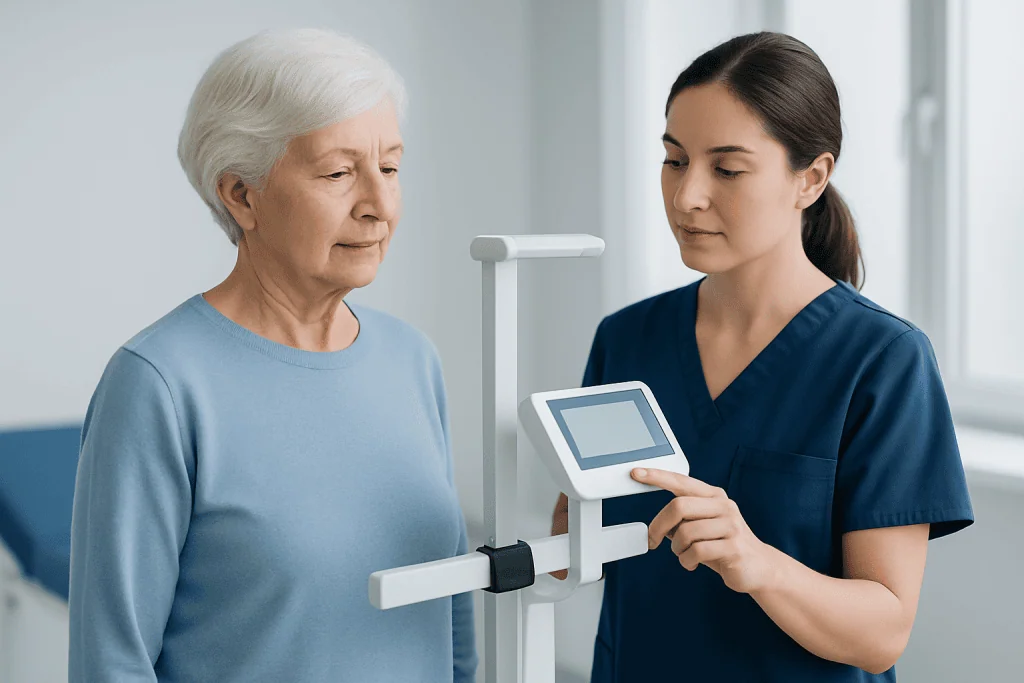
The table below gives an approximate “healthy weight” range using a BMI of 18.5 to 24.9. It can be a useful general guide, but it should not replace individualized medical advice for older adults.
- 4 ft 10 in: about 89 to 119 lb
- 4 ft 11 in: about 92 to 123 lb
- 5 ft 0 in: about 95 to 127 lb
- 5 ft 1 in: about 98 to 132 lb
- 5 ft 2 in: about 101 to 136 lb
- 5 ft 3 in: about 104 to 141 lb
- 5 ft 4 in: about 108 to 145 lb
- 5 ft 5 in: about 111 to 150 lb
- 5 ft 6 in: about 115 to 154 lb
- 5 ft 7 in: about 118 to 159 lb
- 5 ft 8 in: about 122 to 164 lb
- 5 ft 9 in: about 125 to 169 lb
- 5 ft 10 in: about 129 to 174 lb
These figures should be read with caution in older age. Height may decrease over time because of posture changes, spinal curvature, or bone loss, which can affect BMI calculations. In addition, BMI does not show how much of body weight comes from muscle, bone, or fat.
Some doctors are especially cautious about interpreting low-normal BMI in seniors, because being too thin may raise concerns about malnutrition, frailty, or underlying illness. For that reason, an older woman should not try to match a chart range without considering her overall health, mobility, and nutritional status.
Why weight charts can be misleading in older adults

As women age, body composition changes naturally. Muscle mass tends to decline, particularly after menopause and with lower activity levels. At the same time, body fat may increase or shift toward the abdomen even if body weight stays the same. This means two women with the same height and weight can have very different health profiles.
BMI-based charts also do not measure strength or physical function. An older woman may fall within a “healthy” BMI range yet have sarcopenia, a condition marked by loss of muscle mass and strength. Others may have a higher BMI but good muscle reserves and physical function. That is one reason doctors may assess mobility, grip strength, balance, and daily activity in addition to weight.
Waist size can add useful information because excess abdominal fat is linked with cardiometabolic risk. Doctors may also look for related concerns such as obesity, high blood pressure, diabetes, sleep problems, and cholesterol changes. In some patients, body composition testing or nutritional assessment may be more informative than a chart alone.
Medications and medical conditions can further affect weight. Fluid retention, thyroid disorders, depression, dental problems, swallowing difficulty, digestive illness, and reduced appetite can all change body weight in ways that a standard chart cannot explain.
What doctors look at besides weight
When assessing healthy weight in an older woman, clinicians usually combine several measures rather than relying on one number. They often review current weight, past weight, appetite, mobility, medications, and chronic conditions. A recent change in weight is often more important than a long-standing stable weight.
Common factors a doctor may consider include:
- Height and BMI
- Waist circumference and body fat distribution
- Muscle strength and physical performance
- Diet quality, protein intake, and hydration
- Bone health and fall risk
- Medical conditions such as heart disease, thyroid disease, diabetes, or cancer
- Side effects of medicines that affect appetite or fluid balance
If weight is low or dropping, a clinician may assess for poor nutrition, swallowing problems, medication effects, depression, memory changes, or illness. If weight is high or rising, the evaluation may focus on activity level, sleep, insulin resistance, joint pain, and cardiovascular risk.
For some women, referral for diet and nutrition support is appropriate, especially if there are concerns about protein intake, unintentional weight change, or a medical diet. A tailored plan is usually safer and more realistic than following generic internet charts or restrictive diets.
Healthy weight goals for women over 65
In older age, the main goal is usually not reaching the lowest possible weight. Instead, the aim is to maintain enough muscle, energy, and nourishment to support daily life. A healthy plan helps preserve mobility, supports immunity and bone health, and lowers the risk of frailty.
For women who are above their healthiest range, even modest and gradual weight loss may improve blood sugar control, blood pressure, joint comfort, and sleep. However, weight loss should be approached carefully in seniors so that muscle and bone are not lost along with body fat. Doctors often recommend combining nutrition changes with resistance exercise and adequate protein intake.
For women who are underweight or losing weight without trying, the priority may be preventing further loss and finding the cause. This can include reviewing medical conditions, mood, chewing or swallowing difficulties, digestive symptoms, and social factors such as living alone or difficulty preparing meals. If there is concern about endocrine causes such as thyroid disease, testing may be needed.
In selected patients with significant excess weight and obesity-related complications, doctors may discuss structured medical weight management. This can include supervised lifestyle treatment and, in some cases, obesity surgery or other evidence-based options, depending on overall health and goals.
How to support a healthy weight safely
Healthy weight management in seniors should be gradual, balanced, and realistic. Crash diets, severe calorie restriction, and unsupervised supplements can increase the risk of dehydration, dizziness, muscle loss, and nutrient deficiencies. A safer approach emphasizes steady habits that protect strength and function.
Helpful self-care measures often include:
- Eating regular meals with enough protein from appropriate sources
- Choosing vegetables, fruit, whole grains, and fiber-rich foods
- Limiting highly processed foods and excess added sugar
- Staying hydrated throughout the day
- Doing strength-building activity, if medically appropriate
- Adding walking, balance work, or other movement most days
- Monitoring weight trends rather than reacting to day-to-day fluctuation
Joint pain, limited mobility, or shortness of breath can make exercise harder, so plans may need to be adapted. A doctor or physiotherapist can suggest safer options. For women with severe obesity-related health risks, specialized care such as weight loss surgery may be discussed only after careful assessment and when the potential benefits outweigh the risks.
At the same time, healthy weight is not only about eating less. Good sleep, medication review, treatment of pain, dental care, and support for mood or memory can all make it easier for an older adult to eat well and stay active.
When to seek medical care
An older woman should consider medical advice if her weight changes noticeably without trying, especially over weeks to months. This is particularly important if the change comes with fatigue, weakness, poor appetite, trouble swallowing, swelling, abdominal symptoms, breathlessness, or a decline in mobility.
Medical assessment is also appropriate if BMI suggests underweight, if there are signs of malnutrition, or if excess weight is contributing to diabetes, high blood pressure, sleep apnea, or joint strain. In some cases, related evaluations may involve internal medicine, endocrinology, geriatrics, nutrition, or imaging.
If care is needed, Acibadem International’s multidisciplinary specialists in JCI-accredited hospitals evaluate weight-related health concerns for international patients and provide individualized treatment plans when appropriate. The focus is on identifying causes, protecting strength and nutrition, and supporting safe long-term health.
Frequently asked questions
What is a healthy weight chart for seniors female?
A healthy weight chart for seniors female usually lists an estimated weight range for each height, often based on BMI. It can be helpful as a quick screening tool, but it does not account for muscle mass, bone density, body fat distribution, or overall health. In older women, those factors are very important.
Is BMI accurate for women over 65?
BMI can still be useful, but it has limits in older adults. It does not distinguish fat from muscle and may miss age-related muscle loss or abdominal fat gain. Doctors often interpret BMI together with waist size, function, medical history, and weight changes over time.
Should older women try to lose weight if they are above the chart range?
Not always. The decision depends on symptoms, mobility, blood pressure, diabetes risk, joint pain, and overall function. If weight loss is recommended, it is usually gradual and combined with adequate protein and strength-building activity to protect muscle.
Is being underweight more concerning in seniors?
It can be. Low body weight in an older adult may raise concerns about malnutrition, frailty, weak bones, or an underlying illness. Unintentional weight loss deserves medical attention, especially if it continues or is accompanied by reduced appetite or fatigue.
How often should seniors check their weight?
Many older adults can check their weight periodically rather than every day, unless a doctor recommends closer monitoring. The main goal is to notice trends, such as ongoing loss or gain over time. Sudden changes should be discussed with a healthcare professional.
What matters more than the number on the scale?
For seniors, strength, balance, mobility, diet quality, waist size, and stable health often matter more than a single weight value. A woman who is active, eating well, and maintaining muscle may be healthier than a chart alone suggests. That is why personalized assessment is important.
References
- Centers for Disease Control and Prevention
- National Institute on Aging
- National Heart, Lung, and Blood Institute
- World Health Organization
- Academy of Nutrition and Dietetics
This article is for general information only and is not a substitute for professional medical advice. Please consult a qualified doctor about your individual situation.
Medical weight-loss options in Turkey — costs & eligibility
JCI-accredited · board-certified surgeons · reply within 24h
Add us as a Preferred Source to see more of our trusted health content across Google Search, AI Overviews and Discover.
Check your numbers in seconds
BMI, calories, due date, blood pressure and 30+ more clinical calculators — free, instant, doctor-reviewed ranges.