Where Can I Get a Free Cancer Screening: How It Works, Results and What to Expect

Free or low-cost cancer screening may be available through public health services, community clinics and charitable programs. Screening is intended for people without symptoms and differs from diagnostic testing for a possible cancer symptom.
Key Takeaways
- Free or low-cost cancer screening may be available through public health services, community clinics and charitable programs.
- Screening is intended for people without symptoms and differs from diagnostic testing for a possible cancer symptom.
- There is no single proven test that reliably screens every person for every type of cancer.
- Recommended screening depends on age, sex at birth, family history, lifestyle factors and previous test results.
- An abnormal screening result does not confirm cancer but may require further testing.
People may be able to access free cancer screening through national or local public health programs, community clinics, charities, employers, or research studies, depending on their country, age, risk factors and insurance status. The right screening test is not the same for everyone, so a qualified clinician can help identify which evidence-based options are appropriate.
Where can I get a free cancer screening?
Free cancer screening may be available through government-funded prevention programs, public hospitals, primary care centers, community health clinics, cancer charities, mobile screening units, workplace health services or research studies. Availability varies by country and region, and eligibility may depend on age, income, insurance coverage, sex, health history or a recognized risk factor.
A practical first step is to contact a primary care clinician, local public health authority, community clinic or reputable cancer organization. They can explain which programs operate locally, whether a referral is needed and which screening tests are supported by evidence for a person’s circumstances. Screening is designed for people who feel well and have no warning symptoms; symptoms need medical assessment rather than routine screening.
Common population screening programs focus on cancers for which early detection has been shown to improve outcomes, such as cervical, breast, colorectal and lung cancer in eligible higher-risk groups. Some regions also offer screening for other cancers to selected people. A clinician can help put screening in context alongside personal prevention measures and an individual risk assessment.
How cancer screening works
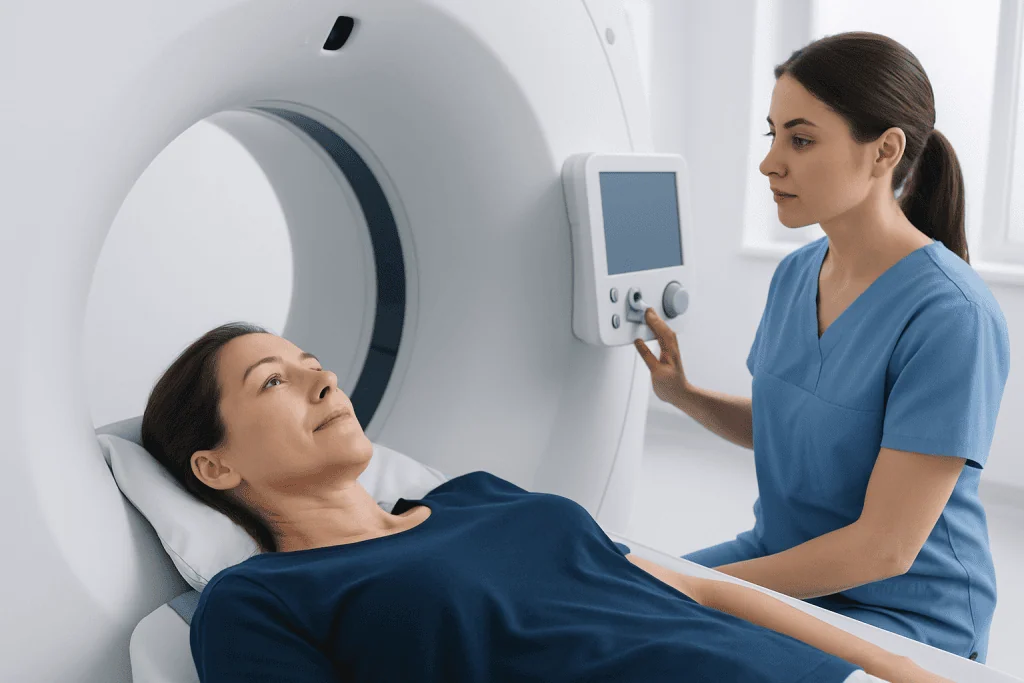
Cancer screening looks for early signs of cancer, or occasionally for changes that could develop into cancer, before symptoms appear. The aim is to find disease at a stage when monitoring, treatment or removal of abnormal tissue may be simpler and more effective. Screening does not prevent every cancer and cannot detect every cancer.
Different tests are used for different organs. Examples include cervical cell testing or human papillomavirus (HPV) testing, mammography for breast cancer, stool-based tests or colonoscopy for colorectal cancer, and low-dose computed tomography (CT) for people at high risk of lung cancer. A health professional selects a test based on the cancer being considered and the person’s health profile.
Before testing, the clinician or screening service should explain the potential benefits, limitations and possible next steps. An abnormal result may reflect a benign change, inflammation or a technical finding rather than cancer. It is important to complete any recommended follow-up promptly, because screening only works well when results are reviewed and acted on appropriately.
Who may be eligible for screening?

Eligibility commonly reflects a balance between the likelihood of developing a particular cancer and the possible downsides of testing. Age is important because the benefits of some screening tests are clearer within certain age groups. Personal history, close family history, inherited cancer syndromes, smoking exposure and previous abnormal results may also change when screening should begin or how often it is repeated.
People at increased risk may need a personalized plan rather than standard population screening. For example, a strong family history of breast, ovarian, colorectal or prostate cancer may lead to genetic counseling or earlier and more tailored surveillance. Not all family histories indicate an inherited condition, but discussing them accurately can help a clinician decide whether further evaluation is useful.
Screening recommendations can differ between countries and professional organizations. A person should not assume that a test recommended to a friend, family member or online audience is right for them. A clinician can review medical history, medicines, pregnancy status where relevant, previous procedures and any factors that could affect test selection or safety.
- Ask whether local programs have age or risk-based eligibility criteria.
- Bring information about relatives with cancer and the age at which they were diagnosed.
- Report previous screening dates and results, including any biopsies or polyp removal.
- Discuss tobacco exposure and other relevant occupational or environmental exposures.
What happens during a cancer screening appointment?
The process usually begins with registration, a health questionnaire and a review of eligibility. The clinician or trained screening professional may ask about symptoms, family history, menstrual or reproductive history, smoking, prior cancer and past test results. If symptoms are present, the appointment may be redirected toward diagnostic evaluation rather than screening.
The test itself depends on the screening type. Mammography involves brief breast compression to obtain X-ray images. Cervical screening involves collecting cells or a sample from the cervix. Stool tests are completed at home using a kit and returned as instructed. Colonoscopy involves bowel preparation and typically sedation, while low-dose CT involves lying still for a short scan.
Many screening tests take only a short time, although preparation and check-in can take longer. Some tests require advance instructions, such as avoiding certain products before cervical screening or following dietary and bowel-preparation guidance before colonoscopy. Following the instructions carefully helps reduce the chance of an inconclusive result or repeat procedure.
Results, follow-up and recovery timeline
Results may be available on the same day for some assessments, but imaging and laboratory-based tests often require several days or longer to be reviewed. Screening services generally communicate results by secure message, letter, telephone call or follow-up appointment. People should ask when and how they will receive their results, and whom to contact if they do not hear back.
A normal result means no concerning finding was identified by that particular test at that time. It does not guarantee that cancer is absent or that a person will not develop cancer later. Continuing recommended screening and seeking assessment for new symptoms remain important.
An abnormal, unclear or positive result does not mean cancer is confirmed. Further imaging, repeat sampling, endoscopy or biopsy may be needed to clarify the finding. Recovery is immediate after many tests, such as mammography, cervical screening, stool testing and low-dose CT. After colonoscopy or a procedure involving sedation, temporary tiredness and restrictions on driving or important decisions may apply, so arrangements for transport home are usually needed.
Benefits, limitations and possible risks
The main benefit of appropriate screening is the opportunity to identify certain cancers or pre-cancerous changes early, before symptoms develop. In some settings, screening can also identify abnormalities that can be treated or monitored before they become more serious. It is most beneficial when the right test is offered to the right person at the right interval.
However, screening has limitations. A false-positive result can cause worry and lead to extra tests, while a false-negative result can miss a cancer that is present. Some findings may represent slow-growing abnormalities that would never have caused harm, yet their discovery can lead to further testing or treatment. These possibilities should be part of an informed discussion.
Physical risks depend on the test. Mammography and CT use low doses of radiation. Cervical sampling may cause brief discomfort or light spotting. Colonoscopy has uncommon but more significant risks, including bleeding or perforation, especially if tissue is removed. A clinical team can explain the risks and expected benefits for an individual before any procedure.
How much does it cost for a full cancer screening?
There is no standard “full cancer screening” package that is appropriate for every person, so there is no single universal cost. The cost depends on the country, health system, tests included, personal risk profile, whether insurance or public funding applies, and whether follow-up tests are needed. Some evidence-based screening tests may be offered without charge to eligible groups through public programs.
Commercial packages sometimes combine many blood tests, scans or imaging studies, but more testing is not always better. Tests that are not recommended for a person’s risk profile can lead to incidental findings, unnecessary concern and additional procedures. It is sensible to ask exactly which tests are proposed, why they are included and what follow-up could be required.
A clinician can help create a screening plan based on established guidelines rather than a one-size-fits-all package. This approach helps focus on tests with a clearer potential benefit while avoiding procedures that may be unlikely to help.
Is there a test that screens for all cancers?
No single test can reliably screen all people for all cancers. Different cancers begin in different organs, behave differently and may not release detectable signals into the blood or appear on one imaging study. Established screening programs therefore use specific tests for specific cancer types and defined risk groups.
Multi-cancer early detection blood tests are being studied and may identify signals associated with several cancers. They are not a replacement for recommended breast, cervical, colorectal or lung screening, and a positive result requires further testing to locate and confirm any cancer. Their role in routine care remains an area of active research and may vary by location.
People considering broad screening packages should speak with an experienced clinician about likely benefits, possible false-positive results and the practical consequences of an unexpected finding. A personalized, guideline-informed plan remains the most reliable approach.
Can you get tested for cancer for free?
Yes, some people can receive cancer screening at no direct charge through publicly funded programs, nonprofit organizations, community services, university research studies or employer initiatives. Programs typically focus on eligible populations and may cover the screening test itself, while policies for appointments, transport, follow-up imaging or treatment can differ. It is helpful to ask what is included before booking.
Free screening opportunities should still meet clinical quality standards. A reputable service should explain who is eligible, what the test can and cannot show, how results are handled and how abnormal findings will be followed up. People should be cautious about services that promise to detect every cancer or guarantee a diagnosis from a single test.
For anyone without access to a regular doctor, local public health departments and community health centers can often provide information about available services. Cancer charities may also maintain local directories or help people understand eligibility and referral requirements.
What is the best way to get screened for cancer?
The best way to get screened for cancer is to discuss personal risk with a qualified clinician and follow evidence-based recommendations that match age, anatomy, health history and local guidance. This usually means using proven tests at recommended intervals, rather than seeking every possible scan or blood test. The plan should be reviewed as circumstances change.
Healthy habits complement screening but do not replace it. Avoiding tobacco, limiting alcohol, maintaining a healthy weight, being physically active, protecting skin from excessive ultraviolet exposure and receiving recommended vaccines can reduce the risk of some cancers. Vaccination against HPV and hepatitis B can help prevent cancers linked to these infections.
Specialist services may be needed when screening identifies an abnormality or when an individual has a complex family history. Acibadem International’s multidisciplinary specialists and JCI-accredited hospitals diagnose and treat cancer-related conditions for international patients, with care plans based on clinical assessment and appropriate testing.
When to seek medical care
A screening appointment should not delay medical attention for symptoms that are new, persistent or worsening. A person should contact a doctor if they notice an unexplained lump, unusual bleeding, blood in urine or stool, ongoing changes in bowel habits, persistent cough, unexplained weight loss, difficulty swallowing, a changing mole or a symptom that does not improve as expected.
These symptoms are common and often have causes other than cancer, but they deserve assessment when they persist or are concerning. A clinician can decide whether examination, imaging, laboratory testing or referral is needed. Prompt evaluation is particularly important for people with a previous cancer diagnosis or a strong family history.
Anyone who receives an abnormal screening result should follow the recommended next step and ask questions if the plan is unclear. Timely follow-up helps clarify the result and supports appropriate care if treatment or monitoring is needed.
Frequently asked questions
Where can I find free cancer screening near me?
Local public health departments, primary care centers, community clinics and cancer charities are useful places to start. They may know about national screening programs, mobile units, eligibility criteria and referral pathways in the local area. Availability differs by region and by the type of cancer screening needed.
Do I need symptoms to qualify for cancer screening?
No. Screening is specifically intended for people without symptoms who may benefit from testing based on age or risk factors. If a person has symptoms, they should arrange a medical assessment, as diagnostic testing may be more appropriate than a routine screening test.
Does a normal screening result mean I do not have cancer?
A normal result means the test did not identify a concerning finding at that time. No screening test is perfect, so it cannot completely rule out cancer. New or persistent symptoms should still be discussed with a doctor, even after a normal result.
What happens if a cancer screening test is positive?
A positive or abnormal screening result usually means that more tests are needed, not that cancer has been diagnosed. Follow-up may include repeat testing, imaging, endoscopy or a biopsy, depending on the original test and finding. The screening team or clinician should explain the next step and its timeframe.
Can I arrange cancer screening without a doctor’s referral?
This depends on the local health system and the type of screening. Some public programs allow eligible people to self-refer, while others require an invitation or clinician referral. A primary care clinician can help determine which route is appropriate.
Should people with a family history of cancer have more screening?
Possibly, but the right plan depends on which relatives were affected, their ages at diagnosis and the types of cancer involved. A doctor may recommend earlier screening, different tests or genetic counseling for some families. It is useful to collect accurate family health information before the appointment.
References
- World Health Organization
- American Cancer Society
- National Cancer Institute
- U.S. Preventive Services Task Force
- International Agency for Research on Cancer
This article is for general information only and is not a substitute for professional medical advice. Please consult a qualified doctor about your individual situation.
Oncology care in Turkey — second opinion and treatment plan
JCI-accredited · board-certified surgeons · reply within 24h
Add us as a Preferred Source to see more of our trusted health content across Google Search, AI Overviews and Discover.