

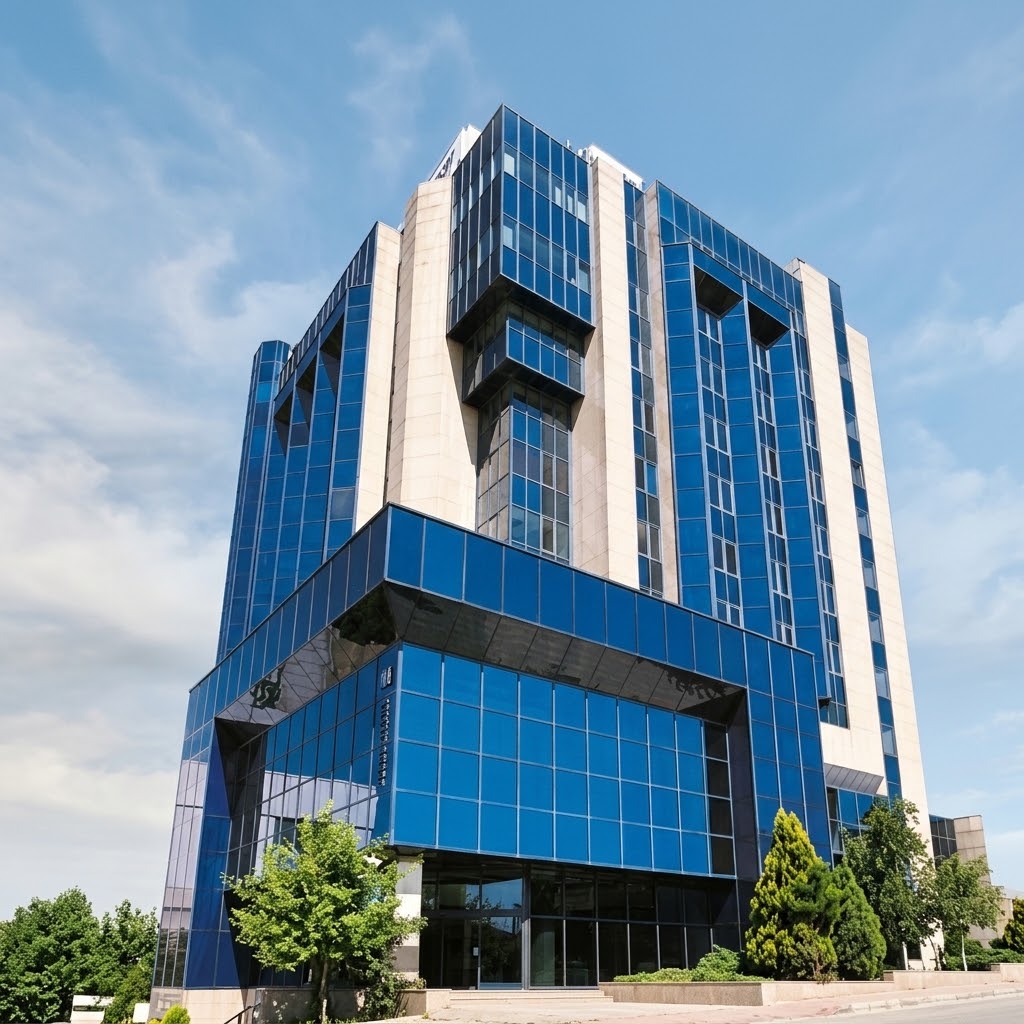
Acibadem Bayındır Söğütözü Hospital
Learn about Acibadem Bayındır Söğütözü Hospital in Ankara, part of the Acibadem healthcare network serving local and international patients.
Get directions →
Acibadem Bayındır Söğütözü Hospital at a Glance
Acibadem Bayındır Söğütözü Hospital is the group's second campus in the capital and its newest chapter: a hospital serving Ankara to a high standard since 1992, joining the Acıbadem group in August 2025 and continuing under the Acıbadem name as one of the city's reference centres. The Söğütözü campus in Çankaya spans 15,724 m² with 158 patient beds, 7 fully equipped operating theatres and 27 intensive-care beds split into specialised units: 11 general, 7…
The Hospital in Numbers
Rooms & Suites
Choose a room type to see it, every room shares the same clinical infrastructure; suites add space and comfort for companions.
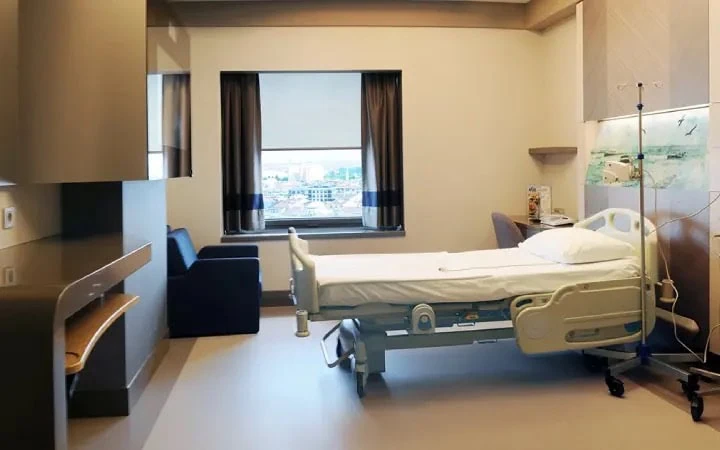 Standard Room
In-Room Features
- Electronic patient-controlled bed
- Smart toilet system
- Spacious bathroom with seat
- Individually adjustable climate control
- Smart TV
- Integrated nurse call system
- Scene lighting and room automation
- Personal safe
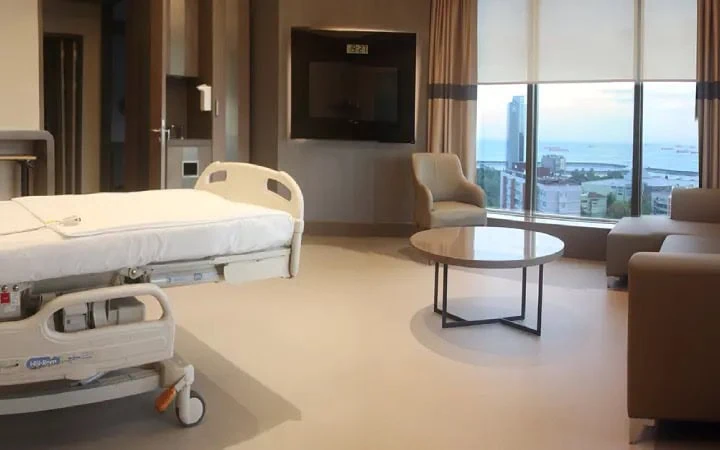 Suite A
In-Room Features
- Electronic patient-controlled bed
- Smart toilet system
- Spacious bathroom with seat
- Individually adjustable climate control
- Smart TV
- Digital assistant service
- Integrated nurse call system
- Scene lighting and room automation
- Personal safe
- Minibar
- Sofa bed for companion
Facility Highlights
Ministry of Health registered Heart Unit: coronary interventions, electrophysiology and ablation, pacemaker, ICD and CRT implants, TAVI, MitraClip and TriClip; bypass, valve and EVAR/TEVAR surgery.
27 beds: 11 general, 7 cardiovascular surgery, 4 cardiology and 5 neonatal intensive care.
Certified Chemosaturation Unit; radioembolisation, chemoembolisation, IRE and hydatid cyst treatment planned in a multidisciplinary council.
Artificial intelligence support for mammography, stroke CT and MRI, prostate MRI and chest X-ray reading.
Mako robotic-arm knee and hip replacement; endoscopic lumbar disc surgery.
Endoscopy, colonoscopy, EUS, ERCP, capsule endoscopy, PEG/PEG-J and endoscopic obesity treatments.
Cochlear implants, hearing surgery and advanced head and neck surgery; balance and sleep units.
Pediatric allergy, neurology, cardiology, psychiatry, development and neonatal intensive care; Baby-Friendly Hospital breastfeeding support.
Acibadem Bayındır Söğütözü Hospital, in depth
Acibadem Bayındır Söğütözü Hospital is the group’s second campus in the capital and its newest chapter: a hospital serving Ankara to a high standard since 1992, joining the Acıbadem group in August 2025 and continuing under the Acıbadem name as one of the city’s reference centres. The Söğütözü campus in Çankaya spans 15,724 m² with 158 patient beds, 7 fully equipped operating theatres and 27 intensive-care beds split into specialised units: 11 general, 7 cardiovascular-surgery, 4 cardiology and 5 neonatal. Its named weights carry official certificates: a Ministry of Health–certified Heart Centre, a certified Chemotherapy Centre with an Interventional Oncology Centre beside it, and Mako robotic knee and hip replacement on the orthopaedic floors.
What this building is organised around
Söğütözü’s three decades built a hospital around the capital’s heaviest recurring questions, hearts and cancer, and the intensive-care arithmetic shows it: of 27 critical beds, eleven belong to cardiovascular surgery and cardiology alone. The 2025 partnership brought that accumulated depth into the Acıbadem system: the group’s records, laboratory network, referral honesty and international patient standards now run through a building that already knew how to do serious medicine. For Ankara the division of labour is clean: this is the group’s certified heart and oncology campus in the capital, with Acibadem Ankara in Oran carrying the general-purpose role, and this page routes between the two honestly.
Quality and safety: the honest frame
The hospital runs on the Acıbadem group’s single quality system, surgical checklists, medication-safety routines, infection control and credentialing audited across the group, with diagnostics through the group’s ISO-accredited laboratory network. Five Acıbadem hospitals in Türkiye hold JCI accreditation (Maslak, Altunizade, Atakent, Kent and Adana); Söğütözü’s own external credentials are national and specific: the Ministry of Health’s Heart Centre and Chemotherapy Centre certifications, and this page states exactly that rather than borrowing anything broader. Certificates that name the floors they audit are the honest kind.
The certified Heart Centre
The Ministry of Health certifies this campus as a Heart Centre, and the infrastructure carries the title’s whole range: cardiovascular surgerybypass, valve and varicose vein operations, with a seven-bed intensive care unit of its own, and cardiology with its four-bed critical unit running the diagnostic and interventional load upstream. For the capital the meaning is practical: a bypass decision, a valve plan or a coronary event is handled start to finish in a certified building, with the group’s flagships behind the rare case, complex congenital work above all, that belongs at Atakent, said aloud.
Chemotherapy, interventional oncology and cancer surgery
The campus holds Chemotherapy Centre certification with an Interventional Oncology Centre beside itmedical oncology’s systemic treatment planned through tumour boards and delivered on certified floors, with the interventional side adding the image-guided treatments that shrink, embolise or ablate where a scalpel is the wrong tool. Surgical oncology carries the operative share, including laparoscopic cancer surgery the building’s theatres are explicitly equipped for, and imaging answers the capital’s diagnostic questions, rapid CT/MRI stroke evaluation and prostate MRI among the named strengths. The honest boundary: radiotherapy courses and the group’s heaviest machines are routed within the system, and the reason is stated.
Mako robotic joint replacement
The orthopaedic floors perform robotic knee and hip replacement with the Mako system, planning each implant on the patient’s own CT and executing with robotic-arm precision, which the evidence links to preserved tissue and faster early recovery. The unit guide’s honesty applies in full: the robot does not decide whether you need a new joint, the scan and the examination do, and the operation not needed is the one not performed. For the capital and the region, this floor puts a technology the group values behind Ankara addresses rather than Istanbul ones.
Balance, sleep and the specialist clinics
The campus keeps the focused clinics a reference centre accumulates: a Balance Centre for the diagnosis and treatment of vertigo and balance disorders, a Sleep Centre for the monitored studies behind the night’s diagnoses, and the specialist outpatient range of a full hospital, internal medicine, neurology with rapid stroke imaging behind it, general surgery, urology, gynaecology, paediatrics with the neonatal unit’s five beds behind the newborn floor, and same-visit diagnostics through the group’s laboratory network.
Technology, honestly framed
The installation matches the certificates: seven theatres equipped for advanced and laparoscopic surgery, the Mako robotic arm, interventional oncology’s image-guided suite, rapid CT/MRI protocols, and 27 intensive-care beds in four specialised units. The standing rule needs stating in one direction: when a plan genuinely needs an installation this campus does not house, radiotherapy machines, radiosurgery at Altunizade, MR-Linac at Maslak, transplant floors: the coordinators route you within the group and say why, your file travelling ahead.
International patients at the capital’s heart campus
The group’s records-first process now runs here exactly as at the flagships: reports and imaging reviewed before travel, a written plan and cost estimate, interpreter support (English routinely, other languages arranged), and discharge notes written for the doctor continuing care at home. Söğütözü’s international profile is the capital’s own, diplomatic and expatriate families, international professionals, and regional patients for whom Ankara is nearer than Istanbul, now able to take a certified heart or oncology pathway, or a robotic joint, without leaving the city.
Getting here
The hospital stands in Söğütözü, Çankaya, Kızılırmak district, central to the capital’s business and diplomatic quarters, with the full address, map link and phone in the identity card at the top of this page. Esenboğa Airport connects Ankara internationally, high-speed rail links the city to Istanbul, and the coordinators arrange transfers for planned visits as standard.
How to decide whether Söğütözü is your hospital
Choose Söğütözü when your case matches its certificates: a heart operation or coronary pathway in the Ministry-certified centre, a chemotherapy course or interventional oncology treatment on certified floors, a Mako robotic knee or hip, a balance or sleep diagnosis, or specialist medicine backed by four kinds of intensive care. Choose Acibadem Ankara in Oran for the general-purpose everyday role, and an Istanbul flagship when a programme needs installations only they house, radiosurgery, MR-Linac, transplant and congenital-heart floors. One records system routes between all of them, file included, which is what joining a group is for.
Frequently asked questions
Is Acibadem Bayındır Söğütözü a new hospital?
No: it has served Ankara since 1992; it joined the Acıbadem group in August 2025 and continues as one of the capital’s reference centres under the Acıbadem name.
How big is the hospital?
15,724 m² with 158 patient beds, 7 fully equipped operating theatres and 27 intensive-care beds in four specialised units: 11 general, 7 cardiovascular-surgery, 4 cardiology and 5 neonatal.
What certificates does the hospital hold?
Ministry of Health Heart Centre certification and Chemotherapy Centre certification, with an Interventional Oncology Centre, certificates that name the exact floors they audit.
What heart operations are performed here?
Bypass surgery, valve surgery and varicose vein surgery within the certified Heart Centre, with a dedicated cardiovascular-surgery intensive care unit behind the theatres.
Is chemotherapy delivered on site?
Yes, on certified floors, planned through the group’s tumour-board method, with interventional oncology adding image-guided treatments beside it.
What is interventional oncology?
Image-guided cancer treatment, embolisation, ablation and targeted delivery where a scalpel is the wrong tool, run as its own named centre on this campus.
What is Mako robotic joint replacement?
Knee and hip replacement planned on your own CT and executed with a robotic arm, linked to preserved tissue, less pain and faster early recovery; the scan, not the robot, decides whether you need it.
Is the hospital JCI-accredited?
Honestly: the JCI-accredited Acıbadem hospitals in Türkiye are Maslak, Altunizade, Atakent, Kent and Adana; Söğütözü’s external credentials are the Ministry’s Heart Centre and Chemotherapy Centre certifications, and it runs on the group’s audited protocols.
What is the difference between the two Acıbadem hospitals in Ankara?
Söğütözü (this campus) carries the certified heart and oncology floors and robotic joints; Acibadem Ankara in Oran is the general-purpose campus, one records system routes between them.
Is there a 24-hour emergency service?
Yes, around the clock, with four kinds of intensive care and fully equipped theatres in the same building.
Can stroke be assessed here?
Rapid CT/MRI stroke evaluation is a named strength, with neurology carrying the pathway that follows those first critical images.
What is the Balance Centre?
A dedicated clinic for vertigo and balance disorders, diagnosis and treatment for one of medicine’s most disruptive and most treatable complaint families.
What does the Sleep Centre do?
Monitored sleep studies behind the night’s diagnoses, apnoea above all, with treatment carried onward by the relevant specialties.
Are births attended at this hospital?
Yes, with five neonatal intensive-care beds behind the newborn floor, which is the fact that matters when a birth stops being routine.
Which languages are supported?
English routinely, with other languages arranged through the international office.
Do embassies and expatriates use this hospital?
The capital’s diplomatic and international community is part of the campus’s daily work, with interpreter support, insurer paperwork handled, and records written for continuity anywhere.
How does the records-first process work?
Reports and imaging reviewed remotely, a written plan and cost estimate, and scheduling coordinated so the visit is as short as the medicine allows.
Can my insurance be used here?
The hospital works with private insurers and the international office handles guarantee-letter paperwork; confirm coverage in writing before planned treatment.
How does payment work?
A written estimate precedes planned care; for emergencies, treatment comes first and paperwork is sorted with you or your insurer after stabilisation.
Can my companion stay with me?
Yes, rooms accommodate companions, and the intensive-care units have their own explained visiting protocols.
Which airport serves the hospital?
Esenboğa Airport connects the capital internationally; transfers for planned visits are arranged by the coordinators as standard.
Is laparoscopic cancer surgery really performed here?
Yes: the theatres are explicitly equipped for advanced laparoscopic procedures, cancer surgery among them, with tumour-board planning behind every case.
Can I get laboratory tests and imaging done quickly?
Yes, same-visit diagnostics through the group’s ISO-accredited laboratory network and on-site imaging including prostate MRI protocols.
Do you repeat tests I already had?
Only for a stated reason, existing studies are integrated wherever usable, exactly as across the group.
Can I get a second opinion here?
Yes, including written records-based opinions without a visit; for heart-surgery and oncology questions that is precisely the right first step.
What changed when the hospital joined Acıbadem?
The system behind it: the group’s records, laboratory network, referral honesty and international patient standards now run through a building whose clinical depth was three decades in the making.
What happens if my case needs a machine Söğütözü does not house?
The coordinators route you within the group, radiotherapy and radiosurgery installations, MR-Linac at Maslak, transplant floors at the flagships, with transport coordinated and the reason stated.
Will my doctor at home receive a handover?
Always, discharge notes and planned-care summaries are written for the clinician continuing your care, with imaging and laboratory data included.
What should I bring to a planned visit?
Reports and scans in any language, a complete medication list including supplements, and your written questions: the records-first rule.
Why choose Söğütözü?
For certificates that name their floors: the Ministry’s Heart Centre and Chemotherapy Centre, plus Mako robotic joints and four specialised intensive-care units, now carrying the Acıbadem system’s standards and honest routing in the heart of the capital.
Send your reports: a physician-reviewed plan comes back before you travel.
Free · No obligation · Reply within 24 hours