

Acibadem Maslak Hospital: Location, Services, and How to Plan Your Visit

Acibadem Maslak Hospital is in the Maslak area of Sarıyer, on the European side of Istanbul. International patients typically plan around three things: airport transfer time, sharing medical records before travel, and arranging interpreter support in advance. Allow generous time for Istanbul traffic, keep documents organised in one folder, and confirm your next steps before leaving the hospital each day.
Wondering how your first day in Istanbul will actually go? That is usually the real question before a visit to Acibadem Maslak Hospital: where the building is, how long the transfer takes, what to carry, and who helps when something is unclear.
This guide covers the practical side of a visit: the hospital’s location, the support available to international patients, and the preparation that makes the trip feel organised rather than improvised. It deals with logistics, not medical decisions. Your treatment plan, including anything to do with medicines or test preparation, belongs to your treating doctor.
At a glance
- Location: Maslak, in the Sarıyer district, on the European side of Istanbul
- Best for: International patients planning consultations, diagnostic tests, treatment, or follow-up visits
- Support available: International patient coordination, interpreter arrangements, appointment scheduling, and practical travel guidance
- Hospital type: Part of Acibadem Healthcare Group
- What to prepare: Passport, medical records, medication list, insurance paperwork if relevant, and a realistic travel schedule
Where Acibadem Maslak Hospital is and why the location shapes your plan
Acibadem Maslak Hospital sits in Maslak, a well-known district within the Sarıyer area on the European side of Istanbul. Maslak is one of the city’s main business quarters, which has a practical consequence for you: the roads leading to the Maslak hospital connect well with major routes and hotel areas, but they also carry heavy commuter traffic at predictable times of day.
That single fact should shape most of your logistics. Morning and evening rush hours in Istanbul can double a journey time. If your appointment is early, leave earlier than the map app suggests. If your appointment is mid-afternoon, the same route may be far quicker. Patients who plan around traffic, rather than around a fixed assumption about distance, tend to have calmer days.
Location matters for more than the transfer, though. It affects how tiring a testing day feels, whether a companion can move around independently while you are in appointments, and how realistic it is to fit two hospital visits into one day. If you expect several consecutive visits to the Maslak hospital, the case for staying nearby grows stronger with each one.
If you are arriving from abroad, your route will usually run from one of Istanbul’s international airports and then continue by private transfer, taxi, or another arranged option. Istanbul Airport is on the European side, the same side as Maslak; Sabiha Gökçen Airport is on the Asian side, which means crossing the Bosphorus and usually a longer, less predictable journey. Neither option is wrong, but the difference is worth knowing before you book flights, because it changes how much buffer you need between landing and your first appointment.
A sensible rule for a first visit: do not schedule anything important within a few hours of your planned landing time. Flights slip, immigration queues vary, and luggage takes time. A relaxed arrival evening followed by a fresh morning appointment is almost always the better sequence.
What services you can expect as an international patient
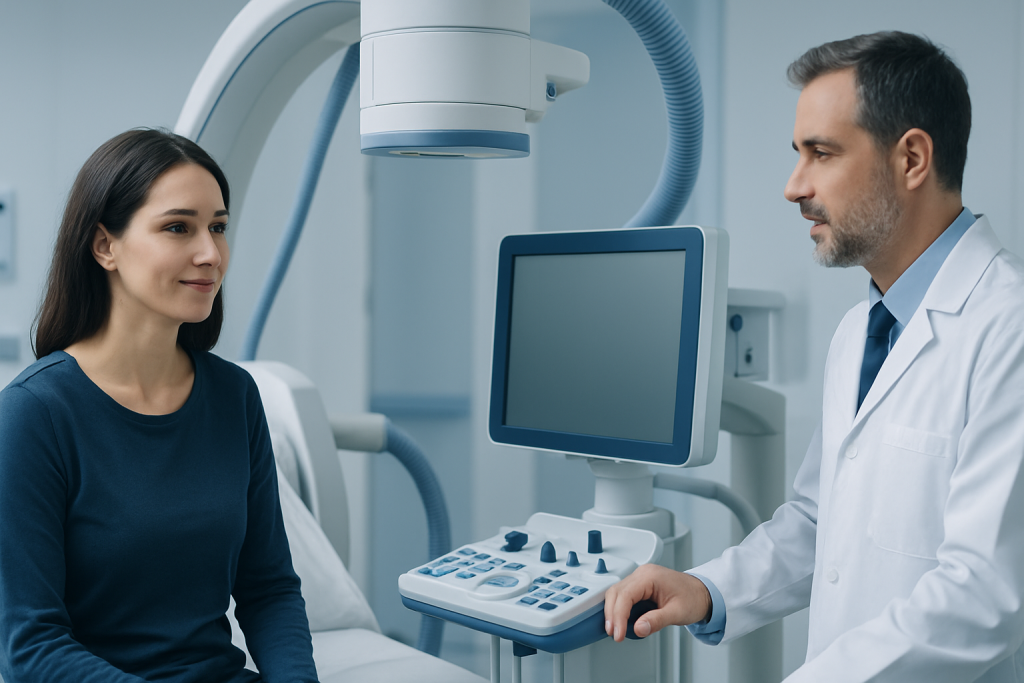
Acibadem Maslak Hospital serves both local and international patients, so a visit is normally supported by systems built for people arriving from abroad. Depending on your situation, a journey may include an initial specialist consultation, diagnostic tests, a second-opinion review of existing records, treatment planning, a procedure, inpatient care, or follow-up assessments, sometimes several of these across one trip.
For international patients, the practical layer of care matters almost as much as the clinical one. International patient services typically cover appointment scheduling, document sharing before travel, interpreter arrangements, and guidance through admission and discharge paperwork. If you have never navigated a hospital in another country, this coordination is the difference between a structured day and a confusing one.
Language support deserves its own planning step. Interpreter arrangements work best when requested before arrival rather than on the day, particularly for consultations where consent, test explanations, or discharge instructions will be discussed. Our guide to interpreter services during hospital visits in Turkey explains how this support usually works and what to ask for.
If your care involves more than one department, expect a multidisciplinary approach: different specialists and support teams organising your evaluation together. For a patient who has travelled a long way, this coordination matters: it reduces the risk of a wasted day where one department waits on another. As part of Acibadem Healthcare Group, the Maslak hospital sits within a broader network, which is relevant if your pathway ever involves services delivered at more than one site.
How much coordination you need depends on what you are travelling for. A shorter planned procedure, for example, a hair transplantusually means a compact schedule with a small number of visits. Complex pathways such as organ transplantation or a bone marrow transplant involve extensive evaluation, longer stays, and follow-up over time, so travel and accommodation planning becomes a bigger part of the picture. Knowing which category your visit falls into helps you plan flights, hotels, and companions realistically.
How to prepare before you travel to Istanbul

Good visits start weeks before the flight. Begin with your medical documents. Gather recent reports, imaging results, pathology reports if relevant, blood test results, a current medication list with doses, allergy information, and a short written summary of your medical history. If documents are not in English or Turkish, ask in advance which ones need translation, translating everything is rarely necessary, and translating nothing usually causes delays.
Records shared in advance make a difference. When your information is reviewed before you travel, the appointment schedule can be built around what your case actually needs, and you get a clearer sense of what the first day will involve, which tests, which departments, roughly how long. It also reduces the chance of arriving to discover a key report is missing.
Then handle the non-medical paperwork. Check your passport validity, six months beyond your travel dates is a safe working standard. Confirm whether your nationality needs a visa or e-visa for Türkiye; your own government’s travel pages are the reliable place to check requirements and current advice. Keep copies of booking confirmations, transfer details, and travel insurance documents. Save digital copies on your phone and carry printed versions as backup, because a dead battery on registration day is a small disaster that costs nothing to prevent.
Pack for the reality of hospital days: comfortable clothing that is easy to change in and out of, chargers and a plug adapter (Türkiye uses European two-pin plugs), regular medicines in their original packaging, and something for waiting periods: a book, a notebook for questions, water. Keep medicines and key reports in your hand luggage, never in a checked bag. If you may need mobility assistance or language support, raise it before arrival rather than at the desk.
One thing you should not do before travel: change anything about your medicines on your own. Whether a medicine should be paused, continued, or adjusted before a test or procedure is a decision for your treating doctor, and it should be settled explicitly before you fly rather than assumed.
What happens on arrival at the hospital
First hospital days follow a predictable sequence, and knowing it in advance removes most of the anxiety. Expect registration, identity checks, document review, and then direction to the relevant clinic, imaging area, or admissions desk. Arriving early helps, particularly if you are a new patient or need language assistance, thirty extra minutes absorbs most surprises.
Bring your passport or official identification, your appointment confirmation, and any requested medical records. If your visit relates to a diagnosis or treatment received elsewhere, organised paperwork saves genuine time: a coordinator can process a labelled folder in minutes, while a bag of loose papers slows everyone down. Keep medications and key reports accessible rather than buried in luggage.
If communication worries you, that is the single most useful thing to have arranged in advance. Interpreter support matters most at exactly the moments that matter most, consent discussions, test explanations, instructions for the next step. It is completely reasonable to ask for something to be repeated or written down if it is not clear the first time. No good clinician minds.
Once you are through registration, take the day one step at a time. A hospital in another country feels overwhelming mainly in the abstract; in practice, each individual step, a desk, a corridor, a waiting area, a consultation, is manageable. Patient coordinators can walk you through the day’s schedule so you always know what comes next and where.
Planning your stay, companions, and local logistics
If your visit involves more than a same-day consultation, plan your stay around convenience, not sightseeing. Accommodation with a short, predictable journey to the hospital makes mornings calmer, and it matters more the more constraints you have: fasting before tests, limited mobility, back-to-back appointments, or fatigue after a long day of imaging and consultations. Istanbul rewards visitors with time and energy; save the exploring for days when the hospital does not need you.
If someone is travelling with you, decide their role in advance. A good companion keeps the folder of documents, listens during consultations, takes notes, and handles transport and pharmacy runs. After a long day, two memories of the same instructions are better than one. Make sure your companion carries the practical essentials independently, the hospital address, your accommodation details, and relevant phone numbers, so they can function if you are occupied or unwell.
Think ahead about the unglamorous basics: food, rest, connectivity. Keep your phone charged, arrange local data or roaming, and know how you will hear about any schedule changes. If your pathway may extend over multiple visits, ask early about the likely rhythm, how often you will be needed at the hospital and for how long, so hotel bookings and return flights are decisions, not guesses.
Even where coordination support is available, you will feel more in control with your own written schedule, copies of every reservation, and a short checklist for each hospital day. The goal is simple: no morning should start with the question “where am I supposed to be, and do I have what I need?”
Questions to ask so you can plan confidently
Prepared questions are the cheapest improvement you can make to any hospital visit. Write them down before you travel, and add to the list as things occur to you. Useful starting points: what will happen on the first day, whether any tests require fasting or other preparation, how long each day at the hospital is likely to run, and where a companion can and cannot accompany you.
If your trip depends on tight travel dates, ask early whether your pathway is likely to involve same-day testing, additional consultations, or recovery time before flying. It is far better to learn on day one that your return flight needs flexibility than to discover it at the airport. Ask, too, which documents you should keep for follow-up care with your own doctor at home, discharge summaries, imaging on disc or by secure transfer, and medication documentation are the usual set.
Practical questions carry as much weight as medical ones. Ask who your main point of contact is during the visit, how and when results will be communicated, what language support is available at each stage, and how questions that come up between appointments are handled. Clear answers to these four questions remove most of the uncertainty from a medical trip.
Finally, ask for important instructions in a format you can review later, written notes, a printed summary, or both. At the end of a long day, tired and processing a great deal, nobody retains spoken instructions reliably. There is no prize for pretending otherwise.
Step by step
- Share your medical information early. Before booking final travel, have your recent reports, scans, and medication list ready for review if requested. Advance review makes the appointment schedule more efficient and tells you what to bring.
- Confirm appointments and pre-visit instructions. Check the date, time, and department, and ask your treating doctor whether any preparation applies to you, including anything concerning your regular medicines, which should never be changed on your own. Resolve unclear points before you travel, not on the day.
- Plan flights and accommodation around the hospital schedule. Leave a buffer between landing in Istanbul and your first visit. If care may extend over several days, choose accommodation that keeps daily travel short and predictable.
- Prepare a hospital-day folder. Passport, appointment confirmation, reports, insurance papers if relevant, and key contact details in one place. Registration goes faster when nothing has to be hunted for.
- Arrange language and companion support in advance. Interpreter arrangements work best when requested before arrival. Decide what role your companion will play and give them their own copies of the essentials.
- Arrive early and expect administrative steps. Registration, identity checks, and document review are normal parts of a first visit. Extra time on the front end keeps the whole day calm.
- Review your next steps before leaving each day. Confirm whether you need further tests, another appointment, or discharge paperwork, and get instructions in writing. Clarifying immediately is easier than reconstructing later.
Your checklist
- Valid passport and any visa or e-visa documents needed for Türkiye
- Appointment confirmations and hospital address details
- Recent medical reports, scans, and test results, with translations where needed
- Current medication list, including doses and allergies
- Travel insurance or funding paperwork, if applicable
- Comfortable clothing and essential personal items
- Phone charger, plug adapter, and an internet access plan
- Written list of questions for your doctor or coordinator
Key takeaways
- Acibadem Maslak Hospital is in Maslak, Sarıyer, on Istanbul’s European side, plan journeys around traffic patterns, not just distance.
- Istanbul Airport is on the same side of the city as the Maslak hospital; Sabiha Gökçen means crossing the Bosphorus and needs more buffer time.
- Share records early, arrange interpreter support before arrival, and keep documents in one organised folder.
- Match your accommodation and travel dates to the type of visit: a short planned procedure and a long treatment pathway need very different plans.
- Before leaving the hospital each day, confirm your results process, next appointment, and written instructions.
Frequently asked questions
Where is Acibadem Maslak Hospital located?
Acibadem Maslak Hospital is in the Maslak area of the Sarıyer district, on the European side of Istanbul. Maslak is a major business quarter with good road connections, so allow extra travel time during morning and evening rush hours, when traffic can lengthen journeys considerably.
Which airport is more convenient for the Maslak hospital?
Istanbul Airport is on the European side, the same side as Maslak, which usually makes for a more direct transfer. Sabiha Gökçen Airport is on the Asian side, so reaching Maslak means crossing the Bosphorus and generally a longer, less predictable journey. Either works if you plan enough buffer time.
Can international patients get help with appointments and communication?
Yes. International patient services commonly cover appointment coordination, document sharing before travel, and interpreter arrangements. Interpreter support is most useful when requested in advance, particularly for consultations involving consent discussions, test explanations, or discharge instructions.
What documents should I bring to Acibadem Maslak Hospital?
Bring your passport or official ID, appointment details, recent medical records, imaging reports, pathology results if relevant, and a current medication list with doses and allergies. Carry insurance or payment-related paperwork if it applies to your case, and keep everything in your hand luggage rather than a checked bag.
Should I stay near the hospital?
If you have several appointments, mobility limitations, fasting requirements, or possible treatment over more than one day, staying near the hospital makes the experience noticeably easier. Short, predictable journeys reduce stress and leave you more energy for the parts of the day that matter.
Can a family member or companion come with me?
In many situations a companion is genuinely helpful, for note-taking, keeping documents, and handling transport. Access to some clinical areas depends on hospital rules and the type of visit, so ask in advance what is possible and make sure your companion carries their own copies of key practical information.
How early should I arrive for my appointment?
Arrive early, especially for a first visit, because registration, identity checks, and document review take time. An extra thirty minutes also absorbs heavier-than-expected traffic and gives you time to find the right department without rushing.
What if I do not speak Turkish?
Ask about interpreter support before your appointment so that important discussions are easy to follow. Clear communication matters most when reviewing test plans, consent-related information, medication instructions from your treating doctor, and follow-up arrangements, and it is always reasonable to ask for information in writing.
Add us as a Preferred Source to see more of our trusted health content across Google Search, AI Overviews and Discover.

Update history
- PublishedJune 22, 2026
- Medical review approvedSeptember 13, 2026
- Last content updateSeptember 12, 2026
References2
- CDC Travelers' Health: Türkiye (Turkey) wwwnc.cdc.gov
- UK Government Foreign Travel Advice: Turkey gov.uk
More Patient Guides

At Acibadem, How We Explain Expected Clinical Outcomes and Treatment Success Information
Expected clinical outcomes at Acibadem are explained in clear, realistic terms so you understand likely benefits, limits, risks, and next steps in…

At Acibadem, How Families and Companions Are Supported During Treatment Travel
At Acibadem, family support during treatment travel in Turkey includes interpreters, planning help, visitor guidance, and practical support for companions.

At Acibadem, How Our JCI-Accredited Hospitals Support Safe International Care
JCI-accredited hospitals at Acibadem support safe international care in Turkey with standardized quality, interpreters, coordination and follow-up.

At Acibadem, What Our International Patient Package May Include Before You Travel
International patient package at Acibadem may include medical planning, travel help, interpreters, and stay support in Turkey before you travel.