

At Acibadem, How We Explain Package Prices Before You Commit

Before you commit, Acibadem prepares a written package estimate based on the medical records you share. The explanation covers what the package includes, what usually sits outside it, how many hospital nights are assumed, and which factors could change the total after in-person assessment. The aim is a quote you can read, question and compare — not a headline number.
You have a price in front of you, and the real question is simple: what does that number actually buy? A package price only becomes useful when you can see what sits inside it, what sits outside it, and what could move it. This guide sets out, plainly, how we explain package prices before you commit — so you can compare options and plan your budget with fewer assumptions.
At Acibadem, an estimate is meant to be read, questioned and understood. It is a working document tied to your medical information, not a promise printed on a brochure. Understanding how it is built is the best protection you have against surprises later.
At a glance
- Best for: International patients who want package pricing explained clearly before booking treatment or travel
- What you receive: A written estimate showing inclusions, likely exclusions, assumed hospital nights and its validity period
- What can affect the total: Diagnosis details, additional tests, length of stay, implants or devices, medications and recovery needs
- Who is involved: International patient coordinators, financial counsellors and the clinical team reviewing your records
- Worth clarifying: Accommodation, companions, transfers, follow-up care and the conditions under which the estimate may change
How we explain package prices before you commit — and why detail matters
When you travel for treatment, a single figure is not enough. You need to know what assumptions were used to prepare it, which parts are firm, and which parts depend on findings your doctors can only confirm in person. That is the core of how we explain package prices before you commit: the number is always presented together with its scope and its conditions.
The process usually begins with the medical information you share — reports, imaging, diagnosis details and any treatment recommendation you already have. The relevant clinical team reviews this material and a coordinator prepares an estimate that reflects your current needs as accurately as the records allow. If something is still provisional, the estimate says so, and you are told why. A quote that hides its own uncertainty is not a better quote; it is simply a less honest one.
For international patients, the explanation covers more than the medical side. It also takes in the planning side: how many hospital nights the package assumes, which tests are built in, whether interpreter support is available, and how travel logistics sit alongside the hospital plan. The broader picture of what a package can cover is set out in what our international patient package may include before you travel.
What a package price usually includes
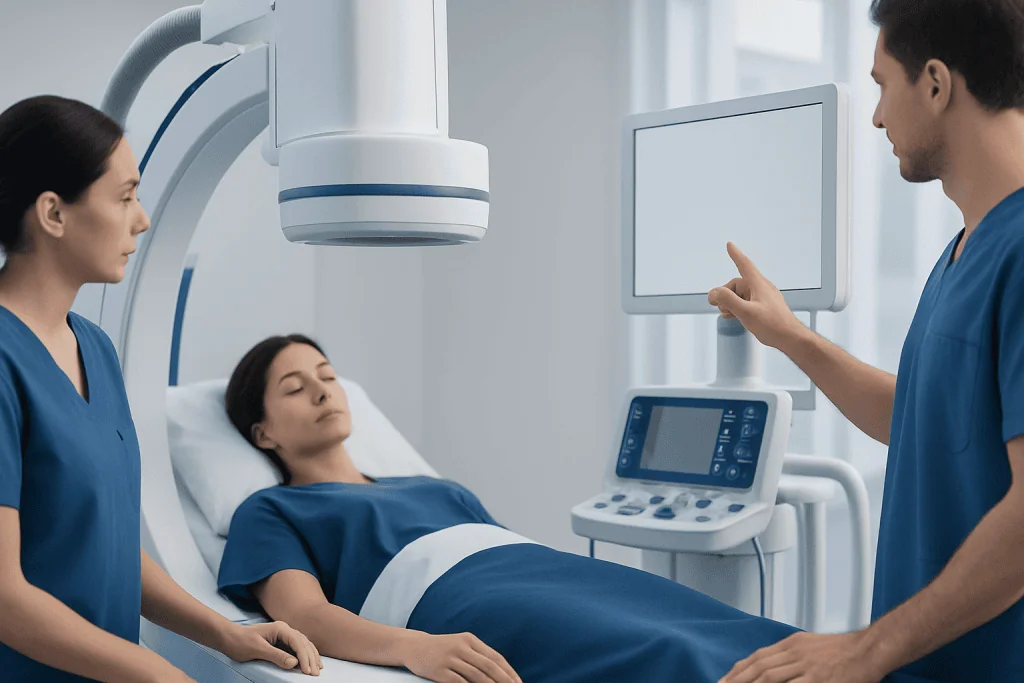
A package price is designed to gather the core parts of a planned treatment into one understandable estimate. Depending on your procedure and care plan, this generally means the main hospital services tied to the agreed treatment: operating theatre use where relevant, standard inpatient care, routine nursing, and the professional fees directly connected to the plan.
Pre-planned items are usually built in as well. These can include standard laboratory work, imaging linked to the treatment, anaesthesia support where it applies, and a defined number of hospital nights. Many packages also account for the medications and consumables routinely used in hospital for that treatment. If your case requires a device, an implant or a prosthetic component, the estimate should name it as clearly as possible, because these items carry their own specifications and can differ from case to case.
Around the medical package, coordinators can also explain the non-clinical support available to international patients — interpreter assistance, appointment coordination, and general guidance on travel and accommodation. These services matter when you are planning treatment in Turkey, but they are not automatically part of the medical package itself, so the distinction is worth drawing early.
- The main planned treatment or procedure
- A standard hospital stay for a stated number of nights
- Routine tests and imaging linked to the treatment plan
- Doctor, anaesthesia and nursing services as applicable
- Defined consumables, in-hospital medications or implants where stated
A useful habit when reading any estimate: check that each of these categories is either explicitly included or explicitly excluded. Silence on a category is the most common source of confusion between hospitals, and it is exactly what a good explanation removes.
What may not be included automatically

The most useful part of any pricing conversation is often the list of things the package does not automatically cover. Patients differ. Not everyone needs the same follow-up tests, additional consultations, extra hospital nights or discharge medications, so items that cannot be predicted in advance usually sit outside the initial package.
For example, if additional findings appear during evaluation, you may need extra imaging, pathology, laboratory work or a consultation with another specialist team. If recovery takes longer than expected, added inpatient days, closer monitoring or extended medications can affect the total. None of this is unusual in medicine, and a straightforward explanation names these possibilities up front rather than leaving them to be discovered on the final bill. How these scenarios are handled is covered in more depth in how we explain possible extra costs before treatment starts.
Non-medical items deserve the same scrutiny. Flights are usually separate. Hotel stays for you or a companion are typically separate unless the quote states otherwise. Airport transfers, local transport, private nursing outside the hospital, home equipment, longer-term rehabilitation, and medicines you continue after discharge may all be quoted separately.
| Usually inside the package | Often quoted separately |
|---|---|
| Planned procedure and directly related professional fees | Flights and travel to Turkey |
| Stated number of hospital nights and routine nursing | Hotel nights for you or a companion |
| Routine pre-planned tests and imaging | Additional tests prompted by new findings |
| In-hospital medications and consumables routinely used | Discharge medications and home equipment |
| Named implants or devices, where stated | Extended stay, rehabilitation or private nursing after discharge |
Treat this table as a checklist of questions rather than a universal rule. Individual packages differ, and the only version that counts is the written one prepared for your case.
Why your estimate can change
An estimate is built from the information available at the time. If new test results, scans or specialist opinions change the treatment plan, the estimate may need revision. This does not necessarily mean something has gone wrong; it usually means your team now has a more complete picture of what you need. Part of how we explain package prices before you commit is naming these variables in advance, so a revision — if it comes — is something you were prepared for.
Changes are most commonly linked to complexity. A patient with additional medical conditions may need closer monitoring. A surgical case may call for a different implant than first assumed. A stay may be extended for clinical reasons. Equally, doctors sometimes recommend a less extensive plan than the original assumption, which changes the package in the other direction. Additional tests are a frequent trigger, and the reasoning behind any new test should be set out for you before it happens, together with what it means for the plan.
Estimates also carry a validity period, because clinical plans and operational costs are reviewed over time. Check the date and the stated validity on any written quote you receive, and if you are comparing offers gathered weeks apart, confirm each one is still current. The practical detail is covered in how long a medical quote is valid before prices or plans change.
The single most effective thing you can do for accuracy is completeness: the more complete and recent your records are before travel, the fewer assumptions the estimate has to rest on, and the less room there is for revision after arrival.
How the quote review works before you decide
Before you commit, you should have the chance to go through the estimate line by line and ask direct questions. Acibadem’s international patient services are structured around this stage. Coordinators walk through the document with you, and if English is not your preferred language, interpreter support can be arranged so that nothing important is lost in translation.
A thorough review conversation usually covers what the package includes, what it excludes, whether the figure is tied to a specific diagnosis or treatment scenario, and which items are conditional on in-person assessment. It also covers the practical assumptions: how many hospital nights are built in, whether any accommodation is part of the quote, and how follow-up is handled after discharge or after you return home. If the expected stay matters for your flight bookings, the reasoning behind it is set out in how we explain expected length of stay before you book travel.
The same conversation should address the money mechanics: payment timing, any deposit requirement, accepted payment methods, and what happens administratively if the plan changes after arrival in Istanbul or elsewhere in Turkey. How the estimate connects to the final invoice — including what a billing document should show — is explained separately in how we explain estimated costs, package scope and final billing.
A good quote discussion leaves you informed, not pressured. If anything remains vague, asking for a written breakdown or a plain-language restatement is a normal part of the process, not an imposition.
Questions that make pricing clearer and more comparable
If you want to compare hospitals or countries fairly, put the same practical questions to each one. Two package prices are only comparable when they cover the same scope. A lower headline figure may include fewer services, fewer hospital nights, or none of the support that matters most on a treatment trip abroad.
Useful questions include whether the package was prepared from your actual records or from a general assumption, whether doctor fees and anaesthesia are included, and what happens if tests after arrival point to a different treatment need. Ask which medications are covered during the hospital stay, and whether discharge medications, follow-up visits or remote check-ins are separate. Ask, too, for the quote in writing with its date, validity period and conditions clearly noted — that written version is what lets you discuss options with family or your local doctor from a shared set of facts.
- What exactly does the package price include, item by item?
- What is not included unless it becomes necessary later?
- How many hospital nights are covered, and what happens if more are needed?
- Are implants, devices and pathology fees included where relevant?
- What specific findings or events could change the estimate after assessment?
- What support exists for interpreters, accommodation or transfers, and is it inside or outside the quote?
This is deliberately the same discipline you would apply anywhere. How we explain package prices before you commit is designed to survive exactly this kind of questioning — and any provider’s quote should be able to do the same.
How to prepare so your first quote is as accurate as possible
The accuracy of a first estimate depends heavily on the quality of the information behind it. Recent medical reports, imaging results, pathology reports where relevant, a list of current medications, and a short summary of your symptoms or diagnosis all sharpen the picture. If a specific treatment has already been recommended to you, that recommendation belongs in the file too.
Be equally open about previous surgeries, allergies, chronic conditions and any mobility or recovery needs. These details can affect the treatment plan, the expected length of stay and the support you need after discharge — which means they can affect the estimate. Raising them early prevents late changes after you have already travelled. Recovery planning has its own knock-on effects on budget and timing, covered in how we explain recovery needs before you book travel.
Finally, think beyond the hospital bill. Budget for a companion if one is travelling with you, allow for extra nights in Turkey in case your schedule shifts, and think through how you will manage in the first days after discharge. Coordinators can guide you on the practical arrangements, but building some flexibility into your own trip and budget is always sensible.
Step by step
- Your records are reviewed. The process starts from the recent reports, scan results, diagnosis details and treatment recommendations you provide. The more complete and current the information, the more specific the package estimate can be.
- You receive a preliminary estimate. Once the records are reviewed, an initial package price is prepared for the planned treatment scenario. Read it as a working estimate tied to the information currently available, with its conditions stated, not as a one-line figure.
- You review inclusions and exclusions. Go through the estimate with your coordinator item by item. This is where hospital nights, tests, professional fees, implants, medications and any services outside the package get clarified.
- You ask what could change the cost. A clear explanation of the common reasons an estimate may be revised — new findings, added complexity, an adjusted plan — lets you prepare both practically and financially.
- You confirm the travel-related picture. Before booking flights, check whether accommodation, airport transfers, interpreter services or companion arrangements are inside or outside the quote, so your total trip budget is realistic.
- You get the quote in writing. A written version with dates, validity period and conditions is the document to review calmly with family or your local doctor, and the fair basis for comparing options.
- You decide when you feel clear. Commit when you understand both the package and the possible extras, not when you feel rushed. If something remains vague, keep asking until the plan makes practical sense in your own words.
Your checklist
- Recent medical reports and a diagnosis summary
- Latest imaging, lab results or pathology reports where relevant
- List of current medications and allergies
- Prepared questions on what the package includes and excludes
- Confirmation of assumed hospital nights and the follow-up plan
- Clarity on implants, devices or special materials if applicable
- A separate travel, hotel and companion budget outside the hospital cost
- A copy of the written estimate with its date and validity period
Key takeaways
- Package prices at Acibadem are explained before you commit — the figure always comes with its scope, assumptions and conditions.
- A package typically covers the core planned treatment and hospital stay, while unpredictable tests, extra nights, travel items and follow-up needs often sit outside it.
- Estimates can change when new findings, added complexity or recovery needs alter the plan; the useful part is knowing the possible variables in advance.
- Quotes carry a validity period — check dates when comparing offers gathered at different times.
- Complete, recent medical records and a written quote are the two strongest tools you have for an accurate estimate and a fair comparison.
Frequently asked questions
Are package prices at Acibadem fixed?
They are prepared as structured estimates based on the information available at the time. If in-person assessment, new test results or a revised treatment plan change what you need, the final total may change too — and the possible reasons should be explained to you in advance.
What is usually included in a treatment package?
It depends on the procedure, but packages generally cover the planned treatment and its core hospital services: a defined hospital stay, routine pre-planned tests, doctor, anaesthesia and nursing services as applicable, and the medications or consumables routinely used in hospital for that treatment.
Are flights and hotel stays included in the package price?
Flights are usually separate. Hotel accommodation for you or a companion is also typically separate unless the written quote states otherwise, so it is worth confirming exactly what travel or lodging support is inside the package and what is not.
Why might my quote change after I arrive in Turkey?
Doctors may need to confirm the diagnosis, repeat or add tests, or refine the treatment plan after examining you in person. If your needs turn out to be more complex — or simpler — than first assumed, the estimate is updated to match the actual plan.
Can the quote be explained in English or another language?
Yes. International patient services explain the estimate and the practical details in clear language for patients from abroad, and interpreter support can be arranged when needed, which makes cost discussions considerably easier to follow.
Should I ask for a written breakdown before booking?
Yes. A written estimate with its date, validity period and conditions helps you compare providers fairly, discuss the plan with family or your local doctor, and avoid misunderstandings about what is included, excluded or still conditional.
What can I do to make my first estimate more accurate?
Provide complete and recent medical records — imaging, lab results, pathology where relevant, diagnosis details and any prior treatment recommendations. Mention chronic conditions, past surgeries, allergies and current medications, because these can affect both the care plan and the estimate built on it.
Add us as a Preferred Source to see more of our trusted health content across Google Search, AI Overviews and Discover.

Update history
- PublishedJune 22, 2026
- Medical review approvedAugust 31, 2026
- Last content updateAugust 31, 2026
More Patient Guides

Private MRI, CT and Check-Up Costs in Turkey: How Scans Are Priced
How private MRI, CT, PET-CT and full check-up packages are priced in Turkey — modality, region, contrast, reporting — and what a…

Cataract Surgery Cost in Turkey: Per-Eye Prices and Lens Options
Cataract surgery in Turkey is priced per eye and the lens decides the quote. Biometry, both eyes on one trip, and what…

Lip Filler Cost in Turkey: Per-ml Prices Explained
Lip filler in Turkey is priced per millilitre with licensed hyaluronic acid brands and physician injectors. Volume, product, dissolving, safety and what…

Botox Cost in Turkey: Per-Area and Per-Unit Prices
How Botox is priced in Turkey — per area or per unit, brand, physician injectors, medical indications — and what a serious…