

At Acibadem, What International Patients Should Know About Acibadem University and Medical Training

Acibadem University reflects the academic side of the Acibadem healthcare group: medical education, clinical training and professional development connected to hospital practice. For international patients, this usually shows up as structured supervision, team-based case review and consistent processes. It does not mean students make treatment decisions, and it does not mean your care is experimental. Qualified clinicians remain responsible for your treatment throughout.
Will a student be involved in my treatment? Who actually makes the decisions? If you are considering care with Acibadem and you keep seeing the name Acibadem University, these are reasonable questions to settle before you book a flight. This guide covers what international patients should know about university and medical training links: what an academic environment means in practice, how supervision works, and what it changes, and does not change, about your care.
At a glance
- Best for: International patients who want to understand the academic and training side of the Acibadem healthcare group before travelling
- What it explains: How university links, medical education and clinical training shape supervision, teamwork and communication in the hospitals
- What it does not mean: A university connection does not make your treatment experimental, and learners do not act without supervision or make treatment decisions
- Who stays responsible: Qualified clinicians carry responsibility for your diagnosis, treatment plan and procedures at all times
- Practical support: International patient coordinators and interpreters handle logistics, so the academic structure is background, not something you manage yourself
Why the university name appears alongside the hospitals
When you research treatment in Turkey, the name Acibadem University appears alongside the hospital group, and it is worth understanding why. In plain terms, it points to an ecosystem where medical education, clinical training and hospital practice are connected. Doctors, nurses and allied health staff work within an environment built around teaching, case review and continuing professional development.
This is one of the first things international patients should know about university and medical training in a hospital group: the connection is about culture and process, not about your appointment turning into a classroom. You will not be asked to participate in lectures, and the academic structure is not something you need to navigate. It sits behind the scenes, shaping how teams work.
The practical relevance is this. Hospitals connected to medical education tend to place weight on documented protocols, structured handovers between shifts and departments, regular case discussion, and clear lines of supervision. Those habits exist because teaching requires them: you cannot train the next generation of clinicians without explaining, recording and reviewing what you do. Patients benefit from the same discipline, particularly patients who arrive from abroad and depend on the system working smoothly within a short visit.
None of this replaces the questions you should still ask about your own case. It simply explains why the university name keeps appearing, and why it is relevant rather than decorative.
What medical training can mean for your care
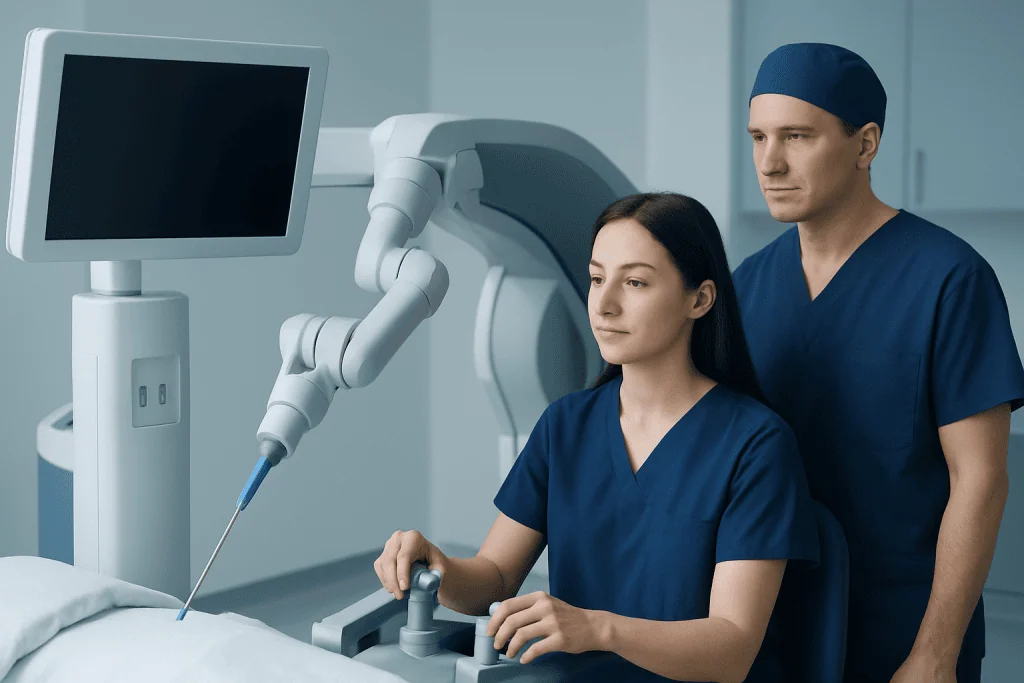
Medical training affects your experience most visibly through organisation. In a training-oriented environment, you are more likely to notice structured appointments, careful documentation, pre-procedure checks and detailed explanations before tests or treatment. These are not courtesies added for international visitors; they are how teaching hospitals routinely operate, because every step needs to be explainable to someone learning it.
A second effect is currency. Clinicians in academic settings are expected to engage with updated guidelines, peer discussion and structured review of their own practice. That does not guarantee any particular result, no honest hospital would claim it does, but it does mean your care is planned in a setting that values review, second opinions where useful, and coordinated decision-making rather than a single doctor working in isolation.
For international patients, the coordination point matters most. If your visit compresses consultations, imaging, laboratory work, surgery planning and follow-up into a short window, a multidisciplinary and training-focused culture helps those pieces connect. In practice, this can look like:
- Clearer care pathways, so you know which appointment comes next and why
- Team-based review of complex cases before a plan is confirmed
- Consistent documentation, which matters when several departments contribute to one plan
- Ongoing professional education for nursing and technical staff, not only doctors
- Attention to safety checks and structured communication at each stage
What international patients should know about university and medical training, then, is less about the academic label and more about these downstream habits. The label is shorthand for a way of working.
Will students or trainees be involved in your treatment?

This is the most common concern, and it deserves a direct answer. In academic healthcare settings, learners may be present in some parts of the environment, observing rounds, for example, or assisting with non-invasive tasks under direct oversight. What does not happen is unsupervised decision-making. Your diagnosis, your treatment plan and your procedures remain the responsibility of qualified clinicians, and hospital policy on supervision, consent and privacy applies throughout.
How supervision actually works
Supervision in a teaching environment is layered rather than casual. A trainee does not simply shadow a senior colleague; their involvement is defined by their stage of training, the setting, and the responsible clinician’s judgement. Complex decisions are discussed, not delegated. In many respects this creates more oversight around your case, not less, because the reasoning behind each step is made explicit and open to question within the team.
Your consent and your right to know
Trainee presence is a matter of consent, not assumption. You are entitled to ask whether any observer or trainee involvement is expected in your consultations or care, and to understand who holds clinical responsibility at each point. How consent is documented in Turkey, what you sign, in which language, and what it covers, is explained in our guide to medical consent forms in Turkey. The same principle applies to your records: who can see them, and under what rules, is covered in our guide to medical records privacy and consent at Acibadem.
One more reassurance worth stating plainly: teaching does not mean reduced standards. Environments that train clinicians tend to be strict about doing things by the defined process, precisely because someone is learning that process. If language is a barrier to asking about any of this, interpreter support exists so the conversation can happen properly rather than approximately.
How the university connection supports quality culture
Words like education, research and accreditation appear often in hospital marketing. What matters is how such ideas show up in daily practice. A university-linked medical environment typically supports a quality culture in which teams review cases, learn from what happened, update their practice patterns and keep safety processes consistent across departments and sites.
For international patients, dependable systems matter as much as clinical expertise. You may be managing flights, visas, accommodation, a companion’s schedule, time off work and recovery planning all at once. A hospital group with strong institutional processes makes that load lighter: pre-arrival document review, coordinated specialist appointments, clear written discharge instructions and an organised follow-up plan for when you return home.
The group operates across multiple hospitals and campuses, and a shared quality culture is part of what keeps the experience consistent between them. If you are still deciding where your treatment would take place, our guide to Acibadem hospital locations in Turkey explains how the network is organised. Complex conditions in particular, where oncology, surgery, radiology and rehabilitation may all contribute to one plan, benefit from a culture where multidisciplinary review is routine rather than exceptional. Departments such as medical oncology illustrate this well, because treatment planning there is inherently a team exercise.
What an academic setting does not mean
It helps to clear up two misunderstandings directly, because they cause unnecessary worry.
It does not mean your treatment is experimental. A university connection refers to education, professional training, research awareness and institutional learning. Standard care remains standard care. If any element of a proposed plan sat outside routine practice, that would be a separate conversation with its own explicit consent process, clearly explained, clearly documented, and entirely your decision.
It does not mean you are a teaching case first and a patient second. Your treatment is planned around your condition, your history and your goals. Teaching adapts to patients; patients are not adapted to teaching. Where trainee presence is possible, it is governed by policy and by your consent, and declining does not change the care you receive.
It is also worth being realistic about what the academic environment cannot do. It cannot promise a specific outcome, shorten biology’s timelines, or remove the normal uncertainties of medicine. What it can do is make the process around your care more structured, more reviewed and more clearly communicated. Those are meaningful advantages, and they are the honest extent of the claim.
Practical questions worth settling before you travel
If the university and training environment is part of why you are weighing up Acibadem, the useful questions are practical rather than abstract. Broad questions about academic structure produce broad answers; specific questions about your own pathway produce information you can plan around. Questions many international patients find worth settling in advance include:
- Who will coordinate my case before I arrive, and who is my main point of contact?
- Will my existing records and imaging be reviewed in advance of travel?
- Is my case likely to involve more than one specialty, and how is that review organised?
- How are interpreters arranged, and for which appointments?
- How many visits or days should I realistically plan for, including buffer time?
- Is any trainee or observer presence expected in my consultations, and how is consent handled?
- What follow-up will I need after returning home, and how is it delivered?
The financial side follows the same logic: rather than looking for a single figure, it helps to understand what a quote depends on and how the quoting process works, which is covered in our guide on whether medical quotes cost money. Structural understanding beats guesswork on both the clinical and the practical side.
How to use this information as an international patient
The simplest framing is this: Acibadem University and medical training are part of the ecosystem behind your care, not a separate service you need to manage. You do not need to become an expert in medical education. You need to know that the environment supports supervision, team-based review and organised communication, and then focus your own energy on the practical steps of your journey.
As you compare providers in Turkey, look at the whole experience: international patient support, interpreter access, aftercare planning, and whether your condition would benefit from multidisciplinary review. Academic links matter most when they translate into smoother logistics and clearer answers. That is the standard to hold any hospital to, including this one.
Step by step
- Clarify what you actually want to know. Before any detailed conversation with a hospital, write down your real questions about the training environment. For most patients these come down to supervision, who holds responsibility, whether trainees may be present, and how the treatment plan will be organised.
- Gather your medical documents early. Recent reports, imaging, laboratory results and a current medication list are the raw material of any pre-travel review. Collecting them early means specialists can assess whether one department or several will need to be involved before you commit to dates.
- Establish who coordinates your journey. International care works best when you know your main contact. A named coordinator typically manages appointments, interpreter arrangements and travel timing, which keeps the academic and hospital structure from ever becoming your problem to navigate.
- Understand how decisions on your case will be made. If your condition is complex, find out whether a multidisciplinary team will review it and roughly how that process runs. This is where the training culture becomes concrete: structured discussion between specialties before a plan is confirmed.
- Settle consent, privacy and communication preferences. Confirm how consent forms work in your language, how your records are protected, and whether any trainee or observer presence is relevant to your visits. Written summaries of key conversations are reasonable to request.
- Plan the trip around care milestones, not the other way round. Once a likely timeline exists, arrange flights, accommodation, companion support and time off work around the key appointments, with some flexibility in case tests or recovery needs shift the schedule. Checking your cover before booking is sensible; our guide to travel insurance for treatment in Turkey explains what to look for.
- Prepare for follow-up after you return home. Confirm what discharge documents, imaging copies, medication instructions and remote follow-up arrangements you will take with you. Part of your recovery will happen outside Turkey, so the handover to your home doctor deserves as much planning as the trip itself.
Your checklist
- Passport and travel documents are valid for your trip dates
- Recent medical reports, scans and a medication list are collected in one place
- You know who your main patient coordinator will be
- Interpreter needs have been discussed in advance
- You understand whether more than one specialty may review your case
- Any questions about trainee presence and supervision have been answered
- You know the likely number of hospital visits or days needed
- Discharge paperwork and follow-up arrangements have been explained
- Accommodation and transfer options have been reviewed
- Your companion, if any, knows the expected schedule
Key takeaways
- Acibadem University reflects an environment where medical education, clinical training and hospital practice are connected, culture and process, not a classroom experience for patients.
- The practical benefits are coordination, multidisciplinary review, layered supervision and consistent documentation rather than the academic label itself.
- Learners may be present in some settings, but qualified clinicians remain responsible for your treatment, and trainee involvement is governed by policy and consent.
- A university connection does not make treatment experimental; anything outside routine practice would require its own separate, explicit consent.
- The most useful questions before travel are practical ones about your pathway, timeline, interpreters, consent and follow-up.
Frequently asked questions
What is Acibadem University in relation to the Acibadem hospitals?
Acibadem University is part of the academic and educational environment connected to the Acibadem healthcare ecosystem. For international patients, the relevance is that medical education, professional training and hospital practice are linked, which supports structured supervision, teamwork and consistent clinical processes within the care setting.
Does medical training mean students will treat me?
Not in the sense of making decisions about your care. In academic environments, learners may be present in some settings, but their involvement is defined by supervision rules, consent and hospital policy. Qualified clinicians remain responsible for your diagnosis, treatment plan and procedures throughout.
Can I decline trainee or observer presence during my care?
Trainee presence is a matter of consent, and you are entitled to ask about it and to state your preference. Declining observer presence does not change the standard of care you receive; the responsible clinicians and the treatment plan remain the same.
Does a university connection mean my treatment is experimental?
No. A university connection refers to education, professional training, research awareness and institutional learning. Routine care remains routine care. If any element of a proposed plan sat outside standard practice, it would be explained separately with its own explicit consent process.
Why does this matter if I am travelling to Turkey for treatment?
Because international patients rely on systems, not just individual appointments. A training-linked environment tends to produce clearer care pathways, better coordination between departments and more consistent communication, all of which matter when your consultations, tests and treatment are compressed into a short visit.
Can my case be reviewed by more than one specialist?
Multidisciplinary review is common in academic environments, particularly for complex conditions where several departments contribute to diagnosis, planning and recovery support. It is a reasonable question to raise for any complex case, and the answer will tell you a lot about how a hospital organises decisions.
What should I settle before confirming my trip?
Who will coordinate your care, whether your records will be reviewed in advance, how long you should plan to stay, how interpreters are arranged, and what follow-up you will need after returning home. If the academic setting concerns you, also confirm how supervision, privacy and consent are handled.
Does teaching slow appointments down or reduce quality?
Teaching environments tend to be strict about process precisely because clinicians are being trained within it. Case discussion happens within the team rather than at your expense, and the documentation and safety habits that teaching requires generally work in patients’ favour rather than against them.
Add us as a Preferred Source to see more of our trusted health content across Google Search, AI Overviews and Discover.

Update history
- PublishedJune 25, 2026
- Medical review approvedSeptember 13, 2026
- Last content updateSeptember 12, 2026
References1
- CDC Travelers' Health: Medical Tourism wwwnc.cdc.gov
More Patient Guides

At Acibadem, How We Explain Expected Clinical Outcomes and Treatment Success Information
Expected clinical outcomes at Acibadem are explained in clear, realistic terms so you understand likely benefits, limits, risks, and next steps in…

At Acibadem, How Families and Companions Are Supported During Treatment Travel
At Acibadem, family support during treatment travel in Turkey includes interpreters, planning help, visitor guidance, and practical support for companions.

At Acibadem, How Our JCI-Accredited Hospitals Support Safe International Care
JCI-accredited hospitals at Acibadem support safe international care in Turkey with standardized quality, interpreters, coordination and follow-up.

At Acibadem, What Our International Patient Package May Include Before You Travel
International patient package at Acibadem may include medical planning, travel help, interpreters, and stay support in Turkey before you travel.