

At Acibadem, What to Expect from Our Pre-Travel Medical Record Review

A pre-travel medical record review at Acibadem means specialists look at your existing reports, imaging and medication list before you book flights. You receive feedback on whether in-person evaluation looks appropriate, which department should see you, and what extra information or tests may be needed. It is a planning tool, not a final diagnosis, and it never replaces an in-person examination.
Should you book the flight now, or wait until someone has actually looked at your reports? It is one of the first questions international patients ask, and it is a fair one.
Before you travel, Acibadem International can review your medical records so the right specialty team has a clear picture of your situation. This guide explains what to expect from our pre-travel medical record review: what you may be asked to send, who looks at it, what the feedback can and cannot tell you, and how it fits into your travel planning.
At a glance
- Best for: International patients planning treatment or a specialist opinion before travelling to Turkey
- What you send: Recent reports, imaging and image files where available, a medication and allergy list, and a short medical history
- Who reviews it: Specialists in the relevant department, supported by international patient coordinators
- Main output: Feedback on suitability for in-person evaluation, the likely sequence of appointments, and any missing information
- What it is not: Not a final diagnosis, not a guarantee, and not a replacement for an in-person examination
What to expect from our pre-travel medical record review
A pre-travel medical record review is exactly what it sounds like: before you commit to travel, doctors at Acibadem look at the medical information you already have. The purpose is practical. It helps you understand whether further evaluation or treatment in Turkey appears appropriate, which specialty should see you, and what still needs to be clarified before anyone can make sensible recommendations.
If you are wondering what to expect from our pre-travel medical record review in concrete terms, it usually comes down to three things: a request for specific documents, an initial assessment by the relevant specialist or team, and written feedback that helps you decide whether and how to plan a trip. Instead of arriving with unanswered questions, you arrive knowing which documents mattered, what additional tests may be requested, and roughly how your first days at the hospital are likely to be structured.
Just as importantly, the review reduces avoidable delays. If a key report is missing, if imaging needs to be resent in a usable format, or if a test is likely to need repeating, it is far easier to address that from home than after you have landed in Istanbul.
What you will usually be asked to send
The most useful records are the ones that explain your diagnosis, your symptoms, the treatment you have had so far, and your current condition. In most cases that means clinic letters, discharge summaries, pathology reports, laboratory results, imaging reports, and a list of the medications you take now.
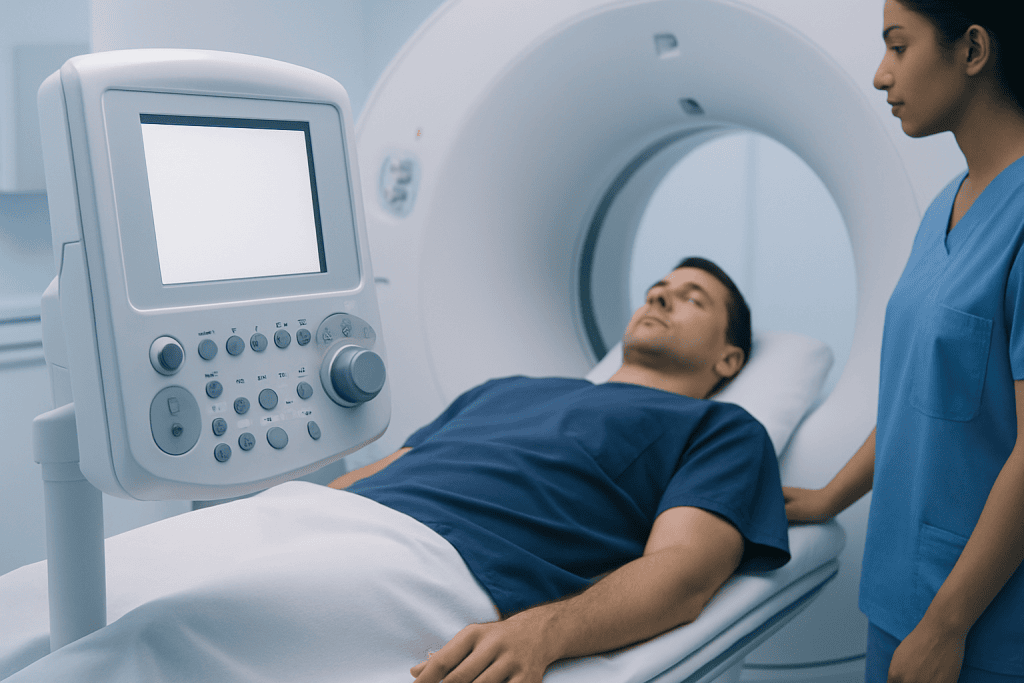
If you have scans, MRI, CT, PET-CT, ultrasound, mammography or X-rays, the written report matters, and the original digital image files may also be requested. Specialists can often assess a case more accurately from the images themselves than from a short written summary, particularly where surgical planning or staging is involved.
Send the most recent and relevant material rather than every document you have ever received. A focused file is reviewed faster and more reliably than a scattered one. A separate guide explains how to organise your medical records for a faster review, but the core list is short:
- Passport identification page or basic patient details
- Recent consultation notes or a diagnosis summary
- Laboratory tests and pathology reports, where relevant
- Imaging reports and, when possible, the original image files
- Current medication and allergy list
- Past treatment history, including surgeries and hospital stays
How you send these matters too. Records contain sensitive personal data, so it is worth reading how to send medical records securely before you travel rather than attaching everything to an ordinary email without thinking about it.
How the review process typically works at Acibadem

Once your records are received, the international patient team organises them and directs the case to the appropriate department. Depending on the question, this may involve a single specialist or a multidisciplinary review, common where a condition spans more than one area of care, such as oncology cases that involve surgery, imaging and systemic treatment.
The reviewing doctors look at two things. The first is the medical question itself: what the records show, what they suggest about next steps, and whether the picture is consistent. The second is completeness: whether the information provided is sufficient to make responsible recommendations at all. A review that ends with “we need the pathology report before saying more” is not a failure: it is the process working as intended.
After the review, you usually receive feedback covering what could be assessed from the records, whether in-person evaluation looks appropriate, and what additional information is still needed. If a preliminary treatment plan and estimate follow, be aware that these can change once doctors examine you and see fresh test results: a separate guide explains why a medical quote can change after record review. In short: an estimate reflects what was known when it was written, and record reviews exist precisely to narrow that gap before you travel.
What the review can tell you, and what it cannot
Handled well, a pre-travel medical record review can clarify whether your case appears suitable for assessment or treatment at Acibadem, which specialty should see you first, and whether tests are likely to be repeated or updated after arrival. It can also sketch the probable sequence of consultations and examinations, which is genuinely useful when you are deciding how much time to take away from home and work.
What it cannot do is replace an in-person examination. Doctors may need to assess you directly, repeat blood work, review original pathology slides, or obtain new imaging before confirming a diagnosis or treatment plan. Records age; bodies change; imaging from eight months ago may no longer describe the situation accurately. Re-testing is not bureaucracy: it protects the accuracy of the decisions made about you.
Treat the review as guidance rather than a promise. Your current health status, findings during the face-to-face consultation, and results of any fresh testing can all change what happens next. Knowing this in advance is part of what to expect from our pre-travel medical record review: honest feedback with stated limits, not a script that cannot bend.
What shows up on a medical record, and what makes a good one
Patients often ask what actually appears on a medical record. Broadly: your identifying details, diagnoses, consultation and progress notes, laboratory and pathology results, imaging reports, records of procedures and operations, current and past medications, allergies, vaccinations, and referral letters. Not all of it lives in one place, hospital records, GP or family-doctor records, and private clinic files are often separate, which is one reason gathering documents takes longer than people expect.
Clinicians sometimes summarise good record-keeping with the “five C’s”: entries should be clear (legible and unambiguous), concise, complete, correct, and contemporaneouswritten close to the time of the event, in order. You cannot control how your past doctors wrote their notes, but the same principles apply when you assemble your own file. A clear, dated, chronological set of documents with nothing important missing is reviewed faster and misread less often than a pile of undated phone photos.
If your records are not in English, translation follows the same logic: key summaries, pathology reports and major imaging reports usually come first. The guide on what needs translating before you travel covers which documents to prioritise and which can wait.
How this differs from a travel-medicine consultation
The phrase “pre-travel review” covers two different things, and it helps to keep them apart. What Acibadem performs is a review of your medical records to plan hospital treatment abroad. A travel-medicine consultationthe kind described in the CDC Yellow Book, is something else: a visit with a clinician at home, usually four to six weeks before departure, focused on destination-related health risks, vaccinations and prevention.
In a travel-medicine consultation, a yellow fever risk assessment typically weighs your full itinerary and the risk at each destination, the season and duration of travel, planned activities, your vaccination history, your age and health conditions that may affect vaccine eligibility, and any country entry requirements along your route. Those judgements depend on your itinerary and your health, so they belong with a travel-medicine clinician, not a hospital records review. If your treatment plan involves onward or connecting travel through other regions, it is reasonable to arrange that consultation separately.
Travel insurance screening is a third, related process. Insurers typically ask about pre-existing conditions and when they were diagnosed, current medications, hospital admissions or surgery within a defined look-back period, pending tests or referrals, and whether you are travelling specifically for treatment. Answer accurately: standard holiday policies often exclude planned treatment abroad, so cover for medical travel needs specific attention. The guide on what travel insurance for medical treatment in Turkey should cover goes through this in detail.
How to prepare your records so the review goes smoothly
You can make the process considerably easier by organising your file before sending it. Start with a short timeline in your own words: when symptoms began, what diagnosis you were given, what treatment you have had, and what your current concern is. Half a page is enough. This summary lets the reviewing team orient themselves in minutes rather than reconstructing your history from fragments.
Make sure names and dates are visible on every report, and prefer proper scans over blurry phone photos where you have the choice. Keep file names informative, “MRI-report-March-2025” beats “IMG_4club7”. For imaging, ask early whether written reports are enough or whether original image files are needed, because obtaining discs or download links from a previous hospital can take time.
Include practical details alongside the medical ones: mobility needs, a preferred travel window, recent changes in symptoms, and who, if anyone, is helping you coordinate. Naming the family member or companion who should receive scheduling updates avoids messages going astray later.
What happens after the review and before you travel
The outcome usually follows one of three paths: you are invited for in-person evaluation, asked to provide further records, or advised that certain testing could reasonably be updated locally first. Each path turns the review into a realistic plan rather than an open question.
If you decide to travel, international patient services can help coordinate your schedule so consultations, imaging and other appointments are arranged as efficiently as possible, with interpreter support and general guidance on travel and accommodation where needed. It also pays to think about the documents themselves: even after a digital review, carrying key records with you matters, and the guide on what medical records to bring to Turkey covers what to print, what to keep on your phone, and why originals sometimes matter.
Keep your expectations flexible. Even with careful pre-travel planning, an exact schedule can shift with doctor availability, the need for additional tests, or findings that emerge during on-site assessment. Building a little slack into your itinerary is almost always wiser than booking the tightest possible trip.
Questions worth asking during the process
A good record review is also your chance to ask practical questions. Which documents are essential and which are optional? Are original scan files needed, or are reports enough? How recent should blood tests be? Should a companion travel with you? How many days should you tentatively reserve for evaluation before booking flights?
You can also ask about the likely order of appointments, how interpreters are arranged, and any accessibility considerations during your stay. Not every answer can be final before you arrive, that is a limit worth stating plainly, but by the end of the process you should have a clearer, more practical picture of the visit than you started with.
Step by step
- 1. The process begins with your basic details. The international patient team learns your main concern, your diagnosis if known, and the kind of help you are seeking, then explains which records are most relevant and how to transfer them securely.
- 2. You gather your key medical documents. Recent reports, scan results, medication lists and major treatment summaries come first. If you have many files, prioritise the most current and clinically important material.
- 3. Records are sent in clear, usable formats. Documents are uploaded or transferred as instructed, with patient details and dates visible. For imaging, clarify whether written reports suffice or original image files are needed.
- 4. Specialist review takes place. Your case goes to the appropriate specialist or team for an initial assessment. Complex cases may involve more than one department to plan the most suitable next step.
- 5. You receive feedback and any follow-up requests. This may confirm suitability for in-person evaluation, ask for more information, or suggest updating certain tests. The feedback is what lets you decide whether and how to plan the trip.
- 6. Travel and appointments are coordinated. If you go ahead, coordinators help organise consultations, tests and practical support such as interpretation. This is the stage to discuss likely visit length, companion needs and preferred dates.
Your checklist
- A brief medical timeline in your own words
- Recent doctor reports or discharge summaries
- Pathology and laboratory reports, if relevant
- Imaging reports and original scan files when available
- Current medication list and known allergies
- Passport details or full patient identification information
- Questions about timing, documents and travel planning
- Contact details for the family member or companion involved
Key takeaways
- A pre-travel medical record review helps you plan more confidently before coming to Turkey.
- The most useful records are recent, relevant, clearly dated and well organised.
- The review can suggest next steps, but it does not replace an in-person examination, and estimates can change with new findings.
- A records review is not a travel-medicine consultation; vaccination and destination-risk questions belong with a travel-medicine clinician.
- Keeping extra time in your travel plans helps if additional tests are needed after arrival.
Frequently asked questions
Is a pre-travel medical record review the same as a confirmed treatment plan?
No. It is an initial assessment based on the records you provide. Doctors may still need to examine you in person, repeat tests, or review new findings before confirming a diagnosis or treatment recommendation.
What shows up on my medical record?
Typically your identifying details, diagnoses, consultation notes, laboratory and pathology results, imaging reports, procedures and operations, medications, allergies, vaccinations and referral letters. These are often spread across different hospitals and clinics, which is why gathering them takes time.
What are the 5 C’s of medical record entries?
A common version is: clear, concise, complete, correct and contemporaneous, meaning entries are legible, to the point, missing nothing important, accurate, and written close to the time of the event. The same principles make your own assembled file easier to review.
What medical questions are typically asked during a travel insurance screening?
Insurers usually ask about pre-existing conditions, current medications, hospital admissions or surgery within a defined look-back period, pending tests or referrals, and whether you are travelling specifically for treatment. Answer accurately, because standard holiday policies often exclude planned treatment abroad.
What if my records are not in English?
Key summaries, pathology reports and major imaging reports are usually the translation priority, rather than every page. Which documents matter most depends on your case, so it is sensible to clarify the priority before commissioning translations.
Can scans be reviewed from written reports alone?
Sometimes a written report is enough for an initial impression, but specialists may request the original image files, especially in complex cases where details on the images affect planning. Obtaining discs or download links from a previous hospital can take time, so it helps to ask early.
How long before travel should the review start?
Earlier is generally better, especially if translations, image transfers or updated local testing may be involved. Starting well in advance also gives you more flexibility when arranging appointments, flights and accommodation.
Will the review tell me exactly how many days to stay in Istanbul?
It can provide an estimate based on the likely consultations and tests, but exact timing is rarely final before arrival. Schedules can change if additional examinations are needed or unexpected findings arise, so building in spare days is sensible.
Add us as a Preferred Source to see more of our trusted health content across Google Search, AI Overviews and Discover.

Update history
- PublishedJune 25, 2026
- Medical review approvedSeptember 13, 2026
- Last content updateSeptember 12, 2026
References3
- CDC Yellow Book: The Pretravel Consultation wwwnc.cdc.gov
- CDC Travelers' Health: Yellow Fever wwwnc.cdc.gov
- MedlinePlus: Personal Health Records medlineplus.gov
More Patient Guides

At Acibadem, How We Explain Expected Clinical Outcomes and Treatment Success Information
Expected clinical outcomes at Acibadem are explained in clear, realistic terms so you understand likely benefits, limits, risks, and next steps in…

At Acibadem, How Families and Companions Are Supported During Treatment Travel
At Acibadem, family support during treatment travel in Turkey includes interpreters, planning help, visitor guidance, and practical support for companions.

At Acibadem, How Our JCI-Accredited Hospitals Support Safe International Care
JCI-accredited hospitals at Acibadem support safe international care in Turkey with standardized quality, interpreters, coordination and follow-up.

At Acibadem, What Our International Patient Package May Include Before You Travel
International patient package at Acibadem may include medical planning, travel help, interpreters, and stay support in Turkey before you travel.