

Can You Get a Remote Quote Before Traveling to Turkey?

Yes, in most cases you can get a remote quote before traveling to Turkey. Hospitals review the medical records you send, reports, imaging, test results, medication lists, and provide a written preliminary estimate. Treat it as a planning tool: the final plan and figure can change after in-person examination, so ask what is included, what is excluded, and what could alter the estimate.
Before you book a flight, you probably want to know one thing: is this trip realistic for me, medically and financially? In most cases, yes: you can get a remote quote before traveling to Turkey, provided you can share recent medical records and a clear description of what you need.
This guide explains how remote quoting works in practice: what you will be asked to send, what the estimate usually covers, why the figure can change after you arrive, and how to prepare your documents so the answer you receive is as realistic as possible. It also covers how to compare quotes from different hospitals fairly, which is often where planning goes wrong.
At a glance
- Short answer: Yes, in most planned-care situations you can receive a preliminary remote quote before you travel.
- Usually needed: Recent medical reports, imaging (files as well as written reports where possible), laboratory results, medication list, and a short case summary.
- Important to know: A remote quote is an informed estimate, not a final figure. It can change after in-person examination or updated tests.
- Best for: Budgeting, comparing hospitals, deciding whether travel makes sense, and planning dates.
- Support available: International patient teams typically help with record organization, interpreters, and travel logistics.
Can you get a remote quote before traveling to Turkey?
In most situations, yes. If you are considering planned treatment, Turkish hospitals can usually review the information you send and return a preliminary quote before you commit to flights or accommodation. This works best when your diagnosis, recent test results, and treatment goals are already reasonably clear: a review team can only estimate what it can see.
The purpose of a remote quote is practical. It tells you the likely scope of care, the main services the hospital expects to provide, and roughly how the pathway would run. That is enough to compare options, discuss the trip with your family, work out time off, and decide whether the journey fits your budget and timeline. Many international patients get a remote quote before traveling to Turkey precisely because it turns a vague idea into a concrete plan they can examine.
What a remote quote is not: a final, fixed figure. Your treatment plan may be adjusted once a specialist examines you in person, reviews your imaging directly, or orders additional tests. That is a normal part of safe medical planning, not a sign that the original estimate was careless. A well-prepared quote narrows the uncertainty; it does not remove it entirely.
At Acibadem, international patient coordinators commonly help people organize their records in advance so the medical review is based on complete, current information. The clearer the picture the reviewing doctor has before you travel, the closer the remote estimate is likely to sit to the final plan. If you want to understand what a quote covers in detail, the guide on what your treatment quote includes before you travel walks through the components line by line.
What information you usually need to send
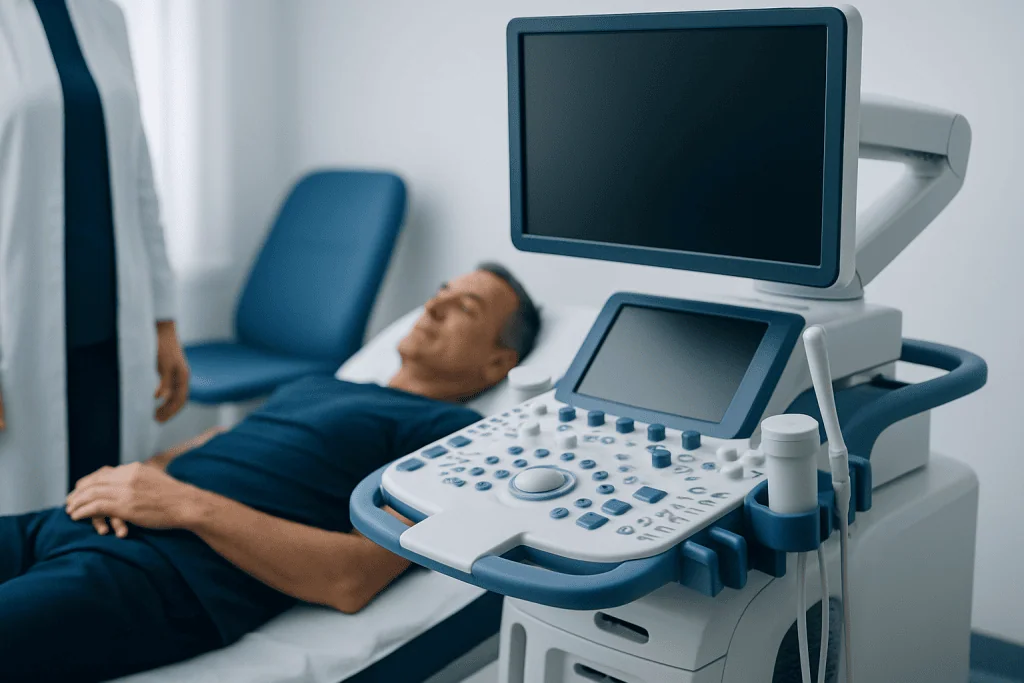
The accuracy of a remote quote depends almost entirely on the quality of what you send. Complete, recent, legible records let the medical team understand your case properly and estimate the likely pathway. Incomplete screenshots, undated documents, or reports that are several years old tend to produce broad, hedged estimates, or a request to repeat everything on arrival.
In most cases you will be asked for recent consultation notes, laboratory results, imaging reports, pathology results if relevant, a list of your current medications, and a short medical history. If you have had previous surgery or treatment, include the dates, any complications, and the follow-up recommendations you were given. These details often change the plan more than patients expect.
For some specialties, the actual image files matter as much as the written reports. A surgeon assessing a joint, a spine, or a tumour may need the MRI, CT, ultrasound, mammography, or X-ray files themselves, usually in DICOM format on a disc or via a secure transfer link, in addition to the radiologist’s summary. If your records are not in English, the international patient team can usually tell you whether translation is needed before review or whether the clinical team can work from the originals.
- Your main diagnosis or suspected diagnosis
- Recent medical reports and clinic letters
- Imaging reports and, where possible, the image files themselves
- Laboratory and pathology results
- Current medications, allergies, and chronic conditions
- Previous operations, with dates and operative or discharge notes if you have them
- Your symptoms, goals, and preferred travel timeframe
A practical way to avoid delays is to assemble everything before your first enquiry. The guide on how to organize your test results before traveling to Turkey covers file formats, naming, and the order in which reviewers usually want to see documents.
What a remote quote usually includes, and what it may not

A remote quote typically describes the likely treatment or consultation pathway based on the records reviewed. Depending on your case, it may cover specialist consultations, the tests commonly linked to that pathway, operating theatre and anaesthesia services where surgery is expected, inpatient or day-case accommodation, and medications used during your admission.
Formats vary. Some quotes are package-based: a single figure covering a defined bundle of services. Others are itemised, listing consultation, imaging, admission, theatre time, and materials separately. Neither format is inherently better, but they answer different questions. A package tells you the total for a defined scenario; an itemised quote shows you what drives the figure and what would change it. If your diagnosis is well established, the estimate can be quite specific. If your case is still being worked up, expect a range or a two-stage quote, first for diagnostics, then for treatment once the picture is clear.
Common exclusions deserve equal attention. Flights, hotel stays, meals outside the hospital, visa-related expenses, companion costs, and treatment of unrelated findings are usually not part of the medical quote unless the document says so explicitly. Medications after discharge and unexpected additional tests are also often billed separately. None of this is unusual; the problem arises only when a patient assumes something is included and discovers otherwise on arrival.
When you receive a quote, read the inclusions and exclusions as carefully as the headline figure. A useful reference here is the guide on questions to ask before accepting a treatment quote in Turkey, which lists the points most patients wish they had raised earlier.
Why the final plan or figure can change after you arrive
The most common reason a quote changes is that the in-person assessment reveals something your records did not show. A doctor may identify the need for additional imaging, blood tests, an anaesthesia review, or a different procedural approach once you have been examined directly. Remote review is a strong starting point, but it works from documents; examination works from you.
Timing matters too. If the records you sent are old, incomplete, or were produced at a centre with limited technical detail, the treating team may need to repeat certain studies for safety and consistency. This is routine in international care: decisions about surgery or other significant treatment need to rest on current, reliable information, not on a scan from eighteen months ago. If some time has passed between your quote and your travel date, it is sensible to check whether the estimate still reflects your situation: the guide on when to ask for an updated quote before traveling to Turkey explains the triggers that usually justify a refresh.
Changes do not always mean more treatment. Sometimes the in-person review concludes that you need less than the records suggested, or that a non-surgical option is more appropriate. Either direction is the system working as intended: the point of the assessment is to confirm that the recommended care is right for you before anything irreversible happens.
Where a case crosses more than one specialty, multidisciplinary review after arrival can refine the plan further. That is valuable clinically, but it is also one of the situations in which the final scope may differ from the remote estimate. A transparent quote will flag this possibility in advance rather than leave you to discover it.
Fixed package, range, or preliminary estimate: know which one you are holding
Not every document labelled a quote carries the same weight, and this is where international patients most often compare the wrong things. Before you plan around a figure, establish which of three types you have received.
A fixed package commits to a defined bundle of services at a stated figure, usually with clearly listed conditions under which the package no longer applies. A range reflects genuine clinical uncertainty, for instance, when the extent of surgery depends on findings during the operation. A preliminary estimate is a first pass based on partial information, given so you can decide whether to proceed with a fuller review. All three are legitimate; the mistake is treating one as another.
It is also worth asking who produced the figure. An estimate based on a specialist’s review of your imaging carries more weight than one assembled by a coordinator from a summary you wrote yourself. Both have a place, but they are not interchangeable. And every quote has a shelf life: plans, availability, and pricing structures move over time, so ask how long the document remains valid before you build a travel schedule around it.
How to compare remote quotes fairly
If you request quotes from more than one hospital, compare like with like. The lowest figure is not the most useful one if it omits pre-operative tests, the inpatient stay, pathology, implants or materials, interpreter support, or follow-up visits. A higher quote may simply be more complete and more honest about what the pathway involves.
Put the same questions to every provider. Is the quote based on a specialist’s review of my records, or on a coordinator’s summary? Does it include the hospital stay, and how many nights? What happens if additional tests are needed? How many follow-up visits are covered? Is airport transfer, accommodation guidance, or interpretation included or separate? Identical questions produce comparable answers; different questions produce noise. The guide on how to spot a reliable hospital quote in Turkey sets out the markers that distinguish a well-constructed estimate from a headline number.
Look at the care environment as well as the figure. International patients consistently report that coordination matters as much as cost: timely replies, precise document requests, realistic timelines, and clarity about what happens after discharge. These things reduce stress during treatment and help you avoid surprise expenses afterwards. A quote that arrives quickly with vague contents is worth less than one that takes a little longer and answers your questions before you ask them.
Acibadem’s international patient services include coordinators, interpreters, and guidance on travel and accommodation, which can be useful if you are planning care in Istanbul or another Turkish city for the first time. Practical support of this kind does not replace medical decision-making, but it does make the overall process easier to manage, and it is a legitimate factor when you weigh quotes against each other.
How to make your remote quote more accurate
You can meaningfully improve the quality of the estimate you receive by preparing your case before you make contact. Gather your most recent reports, check that your name and the document dates are visible on every file, and confirm that scans and photographs of paper documents are actually readable. A reviewer who has to guess will estimate broadly.
Write a short summary in plain language describing what brings you to treatment now: your symptoms, when they started, what has already been tried, and any deadlines that shape your travel window. This context helps the team understand not just the diagnosis but your practical situation, and it often determines whether you are quoted for treatment directly or for a diagnostic work-up first.
Be complete about your history. Previous operations, chronic conditions, smoking status, allergies, and anything that could affect anaesthesia or recovery all belong in your summary. These details can feel minor, but they influence both the plan and the estimate, and they are far better raised before travel than discovered after it. Do not adjust any medication in preparation for a quote or a trip; decisions about medicines belong with your treating doctor. If a companion will travel with you, mention it when discussing logistics, and if you have accessibility needs, raise them early so they can be planned for rather than improvised on arrival.
Finally, keep everything in writing and in one place. A written estimate, a clear list of included services, and a note of the stated variables give you a solid basis for planning. If anything in the plan itself is unclear, ask for a plain-language explanation before you commit: a good team will provide one without hesitation.
Step by step
- Gather your records. Collect recent reports, imaging files and reports, laboratory results, medication lists, and any operative notes or discharge summaries. Check that every document is legible, dated, and clearly yours.
- Prepare a clear case summary. Alongside the records, write a short explanation of your diagnosis, your symptoms, and the care you believe you may need. Include your age, relevant history, and preferred travel dates if you have them.
- Request the quote in writing. A written estimate should show the likely treatment pathway and the main included services. Ask whether the figure is a fixed package, a range, or a preliminary estimate subject to specialist review.
- Check inclusions and exclusions. Confirm whether the quote covers consultations, tests, the hospital stay, implants or materials where relevant, medications during admission, and follow-up. Ask specifically about common exclusions: extra tests, companion costs, accommodation, and post-discharge medication.
- Ask what could change after arrival. Establish the circumstances under which the plan or figure might be revised, so you can budget for common variables such as additional imaging, anaesthesia assessment, or a longer stay.
- Plan logistics around the estimate. Once the quote is realistic and understood, use it to arrange flights, accommodation, time off work, and companion support. What follows acceptance is covered in the guide on what happens after you accept a quote and before you arrive in Turkey.
Your checklist
- Recent medical reports in readable digital format
- Imaging reports and image files where available
- List of current medications, allergies, and chronic conditions
- Short written summary of symptoms and treatment history
- Written quote stating what is included and excluded
- Clarity on whether the figure is a package, a range, or a preliminary estimate
- Budget headroom for possible extra tests or plan changes after arrival
- Passport and tentative travel dates
- Plan for companion support if you may need help after treatment
Key takeaways
- You can usually get a remote quote before traveling to Turkey if you provide complete, recent medical information.
- Most remote quotes are preliminary estimates and may change after in-person assessment or updated tests, in either direction.
- Always establish what is included, what is excluded, and which circumstances could alter the final figure.
- Know whether you are holding a fixed package, a range, or a preliminary estimate before you compare it with anything else.
- Comparing quotes fairly means comparing scope, transparency, and coordination support, not only the headline number.
- International patient teams can help with records, communication, interpreters, and trip logistics, but the clinical decisions rest with the treating doctors.
Frequently asked questions
Is a remote quote from Turkey final?
Usually not. It is a preliminary estimate based on the records you send, and the final plan may change after an in-person examination or updated tests. That does not make the quote unreliable; it reflects the fact that safe treatment decisions sometimes require direct evaluation before they can be confirmed.
How long does it take to receive a remote quote?
It varies with the specialty, the complexity of your case, and how complete your records are. Straightforward cases with clear documentation can be reviewed relatively quickly. Complex cases take longer, particularly if a specialist needs to review detailed imaging or if key documents are missing and have to be requested.
Do I need to send actual scans or only the written reports?
Often both. Written reports are enough for some requests, but many specialists prefer to review the image files themselves, especially for surgical, orthopaedic, neurological, or cancer-related decisions. If you are unsure, send the reports first and ask whether the image files are also needed.
Can I get a quote without a confirmed diagnosis?
Sometimes, but the estimate will be broader. If your diagnosis is still uncertain, the hospital may quote for an initial consultation and diagnostic work-up first, rather than for a full treatment pathway. This two-stage approach is common and can still give you enough structure to plan the trip.
Do my records need to be translated into English first?
Not always. Some clinical teams can work from originals in certain languages, while others need a translation before review. Ask before you arrange anything: translating documents that were not required wastes time, and missing a translation that was required delays the review.
Will the quote include hotel and airport transfer?
Not necessarily. Medical quotes usually cover healthcare services unless travel-related support is explicitly listed. International patient departments can often guide you on accommodation and transport arrangements, but you should confirm separately whether those items are inside or outside the quoted figure.
What if the doctor recommends a different treatment after I arrive?
That can happen, and it is one reason remote quotes are treated as preliminary. If the examination or new test results point to a different approach, the team should explain the reason for the change, the updated plan, and any effect on timing or cost before you decide how to proceed. You always retain the choice of whether to go ahead.
Add us as a Preferred Source to see more of our trusted health content across Google Search, AI Overviews and Discover.

Update history
- PublishedJuly 8, 2026
- Medical review approvedSeptember 13, 2026
- Last content updateSeptember 12, 2026
References1
- Medical Tourism: CDC Travelers' Health wwwnc.cdc.gov
More Patient Guides

Private MRI, CT and Check-Up Costs in Turkey: How Scans Are Priced
How private MRI, CT, PET-CT and full check-up packages are priced in Turkey, modality, region, contrast, reporting, and what a…

Cataract Surgery Cost in Turkey: Per-Eye Prices and Lens Options
Cataract surgery in Turkey is priced per eye and the lens decides the quote. Biometry, both eyes on one trip, and what…

Lip Filler Cost in Turkey: Per-ml Prices Explained
Lip filler in Turkey is priced per millilitre with licensed hyaluronic acid brands and physician injectors. Volume, product, dissolving, safety and what…

Botox Cost in Turkey: Per-Area and Per-Unit Prices
How Botox is priced in Turkey, per area or per unit, brand, physician injectors, medical indications, and what a serious…