

How to Budget for Extras Not Always Shown in a Turkey Treatment Quote

A treatment quote usually covers the planned medical care, not the whole trip. To budget for extras not always shown in a Turkey treatment quote, list what is included, excluded, and conditionally chargeable, then add separate lines for flights, accommodation, meals, companion costs, medication after discharge, and a contingency fund for changed dates or a longer stay.
You have a price in front of you, and one question in your head: is this what the trip will actually cost? It is the right question to ask. A treatment quote is a genuinely useful document, but it describes the planned medical care — not necessarily the flights, the hotel nights, the companion’s meals, or the test your doctor may add after seeing you in person.
This guide shows you how to budget for extras not always shown in a Turkey treatment quote. It explains why quotes are structured the way they are, which costs most often sit outside them, what to ask before you confirm anything, and how to build a total budget that survives contact with reality.
At a glance
- Best for: International patients reviewing treatment quotes for Turkey
- Main goal: Identify likely extras beyond the quoted medical price and plan for them
- Core method: Sort every item into included, excluded, or conditional
- Common extras: Flights, hotels, extra tests, discharge medication, companion costs
- Budget tip: Keep hospital costs and trip costs in separate columns, plus a contingency fund
Why you need to budget for extras not always shown in a Turkey treatment quote
A quote reflects the expected medical plan at the moment it is written, based on the records and information available then. That is its job. It is not a travel budget, and it rarely claims to be one. Understanding that distinction is the single most useful step you can take before you spend anything.
Some costs in international care are fixed and easy to state in advance: a defined procedure, a planned number of hospital nights, a standard set of consultations. Others depend on things that cannot be known until later — your in-person examination, fresh imaging or blood work, how quickly you recover, and whether your doctors adjust the plan once they have seen you. The more complex the treatment, the wider that second category tends to be. None of this means a quote is misleading. It means a quote has a defined scope, and your budget needs a wider one.
The most reliable way to read any quote is to sort every element into three buckets: definitely included, definitely excluded, and conditionally chargeable — added only if clinically or practically needed. Ask the provider to walk you through those three buckets in plain language. At Acibadem, international patient coordinators can explain how a quote is structured, which items are hospital charges, and which parts of the journey — hotels, flights, everyday spending — sit outside the hospital estimate altogether. If you want to go deeper on the document itself, see the guide on how to read an itemized medical quote in Turkey.
A simple way to picture the three buckets:
| Bucket | Typical examples | How to budget for it |
|---|---|---|
| Included | The procedure, planned hospital nights, standard in-hospital medication, planned follow-up visits | Treat as a confirmed figure; ask for it in writing |
| Excluded | Flights, hotels, meals, local transport, visas, travel insurance, most companion costs | Build a separate travel-and-stay budget with its own lines |
| Conditional | Extra imaging, additional specialist reviews, longer hospitalisation, changed treatment plan, discharge medication | Cover with a contingency fund you hope not to use |
It also helps to check how long the estimate remains usable, since plans made months in advance may need a refreshed quote before you commit to travel dates.
The most common extras patients forget to budget for
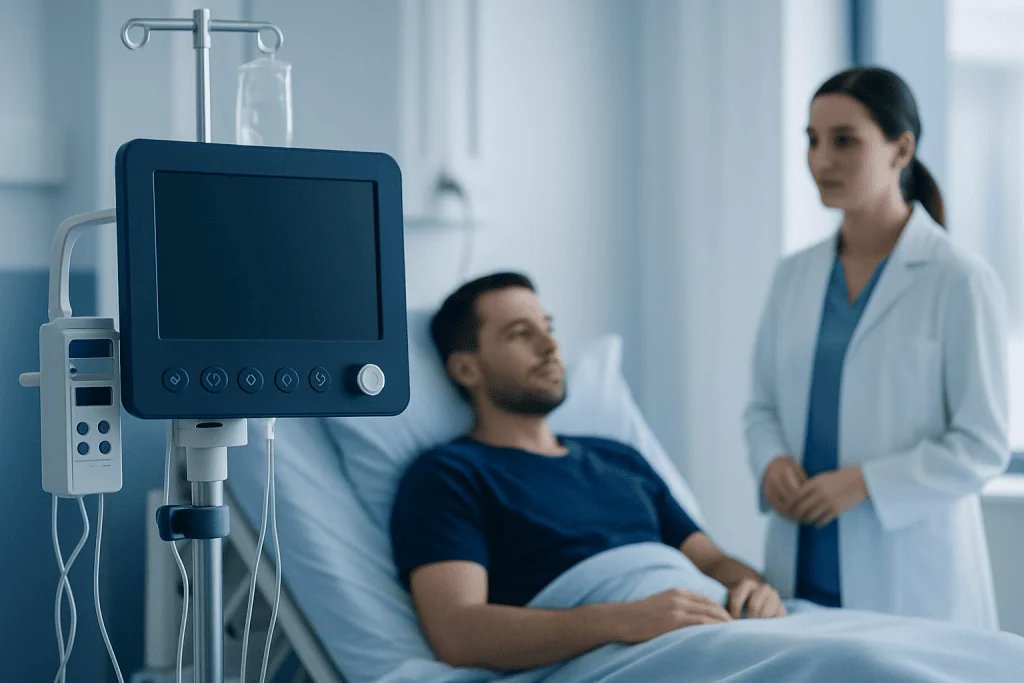
The costs patients miss are rarely the treatment itself. They are the surrounding expenses that make the trip possible and the recovery comfortable. Start with travel. Flight prices move with dates, and medical trips are exactly the kind of travel where dates shift — an earlier arrival for pre-operative tests, a later departure if your doctor prefers you not to fly yet. Date-change fees and fare differences deserve their own line in your plan. Hotel costs behave the same way: extra nights before admission, extra nights after discharge, and a room suitable for someone recovering rather than simply the cheapest available.
Then come the conditional medical items. Depending on your case, these can include pre-treatment blood tests, additional imaging, a consultation with a second specialty, pathology review, prescriptions to take home, compression garments, wound-care supplies, or a follow-up check that was not part of the standard plan. These are not padding — they are the normal way a care team responds to what an in-person assessment shows. A standard quote cannot always predict them, which is precisely why they so often surprise people. There is a separate guide on budgeting for tests not included in your first quote if this is your main concern.
Third, everyday living costs. Meals for you and anyone travelling with you, taxis or local transport, a Turkish SIM card or roaming plan, travel insurance, laundry during a longer stay, childcare or pet care at home, unpaid leave from work, and card or currency-conversion fees. Individually these are small. Together, over a ten-day trip for two people, they are not.
Finally, the companion. A family member or friend travelling with you effectively doubles the flights, the meals, and often the transfers, and may change the room type you need. Companion spending is one of the most consistently underestimated parts of a medical trip; the guide on companion costs in Turkey breaks it down line by line.
- Flights, fare differences, and date-change fees
- Hotel nights before admission and after discharge
- Companion travel, food, and accommodation
- Additional tests, imaging, or specialist reviews
- Post-treatment medication, garments, and wound-care supplies
- Local transport, mobile data, insurance, and incidental spending
Questions to ask before you accept a quote

Specific questions get specific answers. Vague questions get reassurance, which is pleasant but does not help you budget for extras not always shown in a Turkey treatment quote. Start with the medical scope. Ask whether the quote covers consultations, anaesthesia, operating or procedure room fees, the hospital stay, routine nursing care, standard medication during admission, and planned follow-up visits. Then ask the harder question: in which situations would an extra charge arise? Common honest answers include longer hospitalisation, additional imaging, a change to the treatment plan, or the treatment of an unrelated finding discovered during evaluation.
Move on to logistics. Does the arrangement include airport transfers, and for which journeys — just arrival and departure, or hospital appointments too? Is interpreter support provided, and in which languages? Is accommodation arranged, recommended, or entirely your own responsibility? If you are travelling with a companion, ask whether they can stay in your hospital room, whether that carries a charge, and which of their costs you should plan separately.
Finally, ask for everything in a form you can compare. A clear written estimate states inclusions, exclusions, the assumptions behind the plan, and when payments fall due. Written answers protect both sides: they prevent misunderstandings later and make it far easier to compare providers fairly. At Acibadem, the international patient services team can explain practical items such as translation support, appointment scheduling, and accommodation coordination, so you can see clearly which costs are hospital charges and which belong to your trip budget. For a fuller question list, see questions to ask before accepting a treatment quote in Turkey.
How to build a realistic total budget
A workable budget starts with the quote and then adds separate lines for everything the quote does not claim to cover. Do it in this order. First, record the confirmed treatment cost as your medical baseline. Second, build a travel column: flights, transfers, hotel nights, meals, local transport, mobile data, insurance, documents. Third, build a recovery column: discharge medication, supplies, extra rest days, transport that suits your comfort after the procedure. Fourth, if someone is travelling with you, duplicate the travel column for them.
Then add a contingency fund. This is money you plan not to spend but keep accessible — for extra nights in Istanbul or another Turkish city, repeat tests, a new prescription, a changed return flight, or a doctor’s preference that you delay flying. How large it should be depends on the complexity of your treatment and how flexible your bookings are. A complex operation with fixed, non-refundable travel needs a bigger buffer than a short procedure with flexible tickets. Whatever the amount, having a buffer is wiser than planning to the last unit of currency. If a longer stay is a realistic possibility for your procedure, the guide on budgeting for extra nights in Turkey after treatment is worth reading before you book anything non-refundable.
One more distinction sharpens the whole exercise: fixed versus variable. Fixed items are confirmed — a written treatment estimate, a booked refundable hotel. Variable items can move — taxis, meals out, extra nights, exchange rates. Seeing your budget through that lens shows you where you can economise safely and where you should deliberately leave room. It also explains, in advance, why the final total can differ from the first estimate — a topic covered fully in why your final hospital bill may differ from the quote.
Special situations that change what you should set aside
Some travellers need a more flexible budget than others. If you have a complex medical history, several conditions being managed at once, or previous surgeries in the same area, your care team may recommend extra consultations or tests after reviewing you in person. This is a normal part of careful planning, not a sign that something has gone wrong — but it can affect both cost and length of stay, so it belongs in your budget as a conditional line rather than a shock.
Recovery styles differ too. Some people are comfortable back at their hotel quickly; others benefit from a slower timeline, longer observation, or practical help with daily tasks. If your procedure involves restricted movement, dressing changes, or mobility aids, plan for the accommodation, transport, and companion support that make those manageable — from the start, not as an afterthought at discharge.
Travel factors matter as well. Holiday periods push up airfares and hotel rates. Weather and airline disruption can generate change fees or unplanned nights. Visas, certified translations of medical records, notarised documents, and courier fees all typically sit outside a treatment quote. And a treatment quote prepared months in advance may need refreshing before you travel, since the plan it describes was built on the information available at the time.
Keeping costs manageable without cutting corners
The goal is not the lowest headline number. It is a full journey you understand and can afford, including the parts that might change. Sometimes a quote that looks higher at first is easier to plan around because it already includes more of the essentials — hospital stay, standard tests, transfers, interpreter support. A leaner quote can be perfectly appropriate too, provided you know exactly what you must arrange and pay for separately, and you price those items honestly rather than hoping they will be small.
A few practical habits help. Book flexible travel where you can, especially the return flight, because the return date is the one most likely to move. Choose accommodation for its suitability during recovery — close to the hospital, easy to rest in — rather than purely on price. When comparing providers, compare the support structure alongside the line items: interpreter availability, coordination between departments, help with scheduling. These do not appear as numbers on a quote, yet they shape how smoothly your money is spent.
Keep your paperwork in order as well. Save the quote, payment receipts, passport copies, insurance documents, prescription list, and key contacts in one folder on your phone and in print. Organisation does not remove extra costs, but it prevents rushed, expensive decisions when plans shift at short notice.
Step by step
- Review the quote line by line. Highlight everything explicitly included, then list everything not mentioned. Items the quote is silent about are where extras most often appear.
- Ask for written inclusions, exclusions, and conditions. Request a plain breakdown covering medical services, hospital stay, medication, transfers, and follow-up — plus the scenarios that would create an extra charge.
- Map the full trip cost. Build a travel budget for flights, hotel, food, local transport, transfers, phone data, and documents. Keep hospital costs and trip costs in separate columns so the true total is visible.
- Budget the companion separately. Duplicate the travel lines for anyone coming with you, including their meals, transport, and any room or transfer arrangements they need.
- Add a contingency buffer. Set aside accessible funds for extra nights, repeat tests, medication changes, or a moved return flight — larger for complex treatment or inflexible bookings.
- Confirm payment timing and method. Ask when payments are due, which currencies and cards are accepted, and whether bank or conversion fees apply, so nothing stalls at a stressful moment.
- Plan for recovery, not just treatment day. Budget for aftercare supplies, rest days, and comfortable transport after discharge — the stage where practical costs most often surface.
Your checklist
- Written quote with clear inclusions, exclusions, and conditional items
- Travel budget for flights, accommodation, meals, and local transport
- Companion costs calculated on their own lines
- Allowance for extra tests, consultations, or discharge medication
- Flexible funds for a longer stay or changed return flight
- Payment timing, currency, and bank fees confirmed in advance
- Travel insurance, visa, and document costs checked
- Medical records, prescriptions, receipts, and contacts organised in one place
Key takeaways
- A treatment quote describes the planned medical care; travel, recovery, and conditional medical costs usually sit outside it.
- The most common extras are flights, accommodation, companion expenses, additional tests, discharge medication, and longer stays.
- Sort every item into included, excluded, or conditional — and get the answers in writing.
- Keep hospital costs and trip costs in separate columns so the real total is always visible.
- A contingency buffer turns a changed plan from a crisis into an inconvenience.
Frequently asked questions
Are treatment quotes in Turkey usually all-inclusive?
Not always. Some quotes are comprehensive, while others focus on the treatment itself and leave travel, accommodation, certain tests, or aftercare items outside the estimate. Neither approach is wrong — what matters is knowing which one you are looking at. Ask what is included, excluded, and chargeable only if clinically needed, and get the answer in writing.
What are the most commonly overlooked extra costs?
Flights and date-change fees, hotel nights before admission and after discharge, companion expenses, discharge medication, and additional tests or specialist reviews. Smaller items add up too: transfers, meals, mobile data, travel insurance, and card or currency-conversion fees.
Should I budget extra for unexpected medical needs?
Yes. Even with careful pre-planning, doctors may recommend further tests or adjust the approach after examining you in person, and recovery can take longer than the standard timeline. A contingency fund lets you absorb these changes calmly instead of making rushed decisions abroad.
Does a companion significantly increase the total cost?
Often more than expected. A companion adds flights, meals, transport, and sometimes a different room type or extra transfer arrangements. Budget their trip on separate lines rather than folding it into yours, so nothing is silently underestimated.
How do I compare two quotes fairly?
Item by item, not headline against headline. Check consultations, tests, hospital stay, medication, transfers, interpreter support, and follow-up in each. Then apply the same travel assumptions — the same flights, nights, and companion plan — to both, so you are comparing like with like.
Why might the final bill differ from the quote?
Because a quote is built on the information available before you arrive. In-person assessment can add tests, extend a hospital stay, or change the plan, and travel factors can extend your trip. Quotes that clearly separate confirmed from conditional items make these differences predictable rather than surprising.
Is it better to choose the cheapest quote?
Not necessarily. The best choice is the one you understand clearly and can plan around, with appropriate medical standards and reliable support. A higher quote that includes stay, tests, transfers, or interpreter support can be easier to budget than a lower one that leaves those to you.
Can the hospital explain non-medical costs too?
International patient teams can usually clarify the practical side of the journey even where costs are paid outside the hospital. At Acibadem, coordinators can explain hospital logistics, interpreter arrangements, and accommodation or transfer planning, which helps you see where trip costs sit relative to the medical estimate.
Add us as a Preferred Source to see more of our trusted health content across Google Search, AI Overviews and Discover.

Update history
- PublishedJuly 8, 2026
- Medical review approvedSeptember 1, 2026
- Last content updateSeptember 1, 2026
References1
- Medical Tourism — CDC Travelers' Health — wwwnc.cdc.gov
More Patient Guides

Private MRI, CT and Check-Up Costs in Turkey: How Scans Are Priced
How private MRI, CT, PET-CT and full check-up packages are priced in Turkey — modality, region, contrast, reporting — and what a…

Cataract Surgery Cost in Turkey: Per-Eye Prices and Lens Options
Cataract surgery in Turkey is priced per eye and the lens decides the quote. Biometry, both eyes on one trip, and what…

Lip Filler Cost in Turkey: Per-ml Prices Explained
Lip filler in Turkey is priced per millilitre with licensed hyaluronic acid brands and physician injectors. Volume, product, dissolving, safety and what…

Botox Cost in Turkey: Per-Area and Per-Unit Prices
How Botox is priced in Turkey — per area or per unit, brand, physician injectors, medical indications — and what a serious…