

How to Confirm a Hospital Payment Is Secure
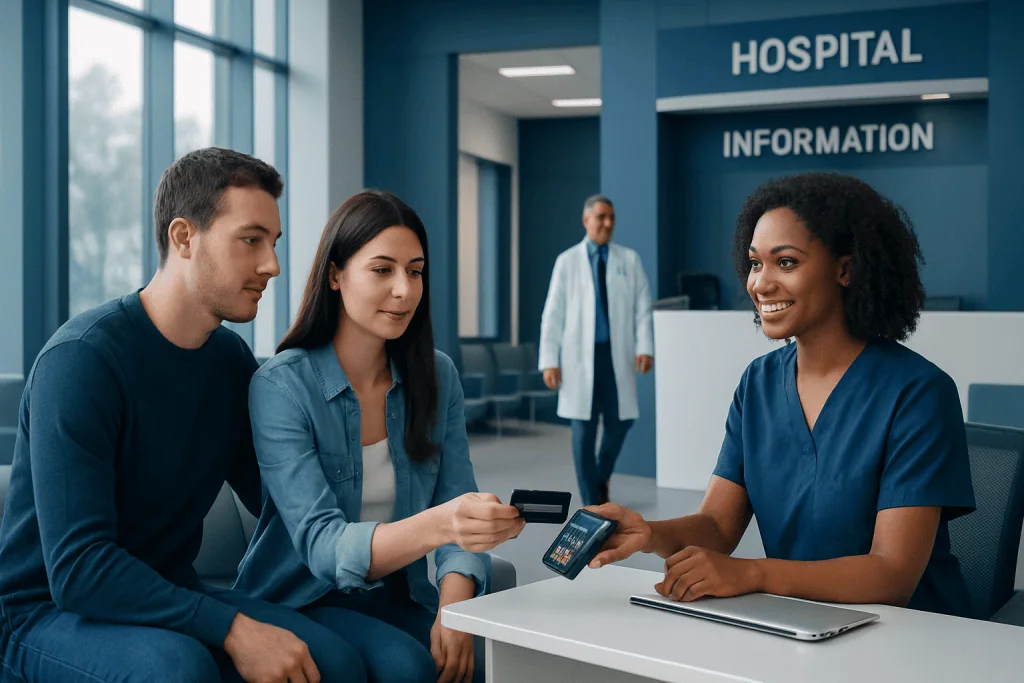
To confirm a hospital payment is secure, verify the request through a contact you already know, ask for a formal invoice that carries your name and patient reference, and check the beneficiary name, IBAN, SWIFT code and currency against that document. Pay only through channels the hospital has confirmed in writing, keep every receipt, and ask for written confirmation that the payment has reached your patient file.
You have a quote in your inbox, a bank transfer form open, and a quiet question at the back of your mind: is this really the hospital asking? That hesitation is healthy. When you send money to a hospital in another country, a few careful checks before you press send are worth far more than any check you can make afterwards.
This guide explains how to confirm a hospital payment is secure: how to verify who is asking, what a proper invoice looks like, how to check bank and card details, and what records to keep so your payment reaches your patient file without confusion.
At a glance
- Best first check: Verify the payment request through your assigned hospital contact, using a channel you already trust
- Safest documentation: A formal proforma invoice or payment request that carries your name, patient reference and the quoted currency
- Before a bank transfer: Confirm the beneficiary name, IBAN or account number, SWIFT/BIC code and bank details against the invoice
- Red flags: Urgent pressure, a personal account, cryptocurrency, a sudden change of bank details, or a request to keep the arrangement quiet
- After payment: Save the receipt, share the transaction reference, and ask the hospital to confirm allocation to your file in writing
Why you should confirm a hospital payment is secure before international care
Arranging treatment abroad usually means paying a deposit or a confirmed invoice before you travel. That can feel unfamiliar. You are dealing with currency exchange, international transfer forms, and documents issued in another country, often on a deadline linked to your treatment date. A secure payment process is clear, traceable and connected to your patient file. It is never rushed, and it never depends on informal instructions passed along by someone you cannot verify.
Your goal is not to become a banking expert. It is to answer three questions with evidence rather than assumption: does the request genuinely come from the hospital or its international patient office, do the amount and currency match your written quotation, and will you receive written confirmation once the money arrives? If you can confirm a hospital payment is secure on those three points, you have removed most of the practical risk of misdirected funds, avoidable delays and fraud attempts.
At Acibadem, payment guidance for international patients is coordinated through international patient services and official hospital channels. If any message, link or invoice looks unfamiliar, you can pause and ask your assigned contact to verify it before you proceed. A legitimate care team will never object to that. The people who object to verification are, almost by definition, the people you should be verifying. For a fuller picture of how the documents themselves work, see our guide to how we explain deposits, payment steps and billing documents.
Start with the official source, not the payment method
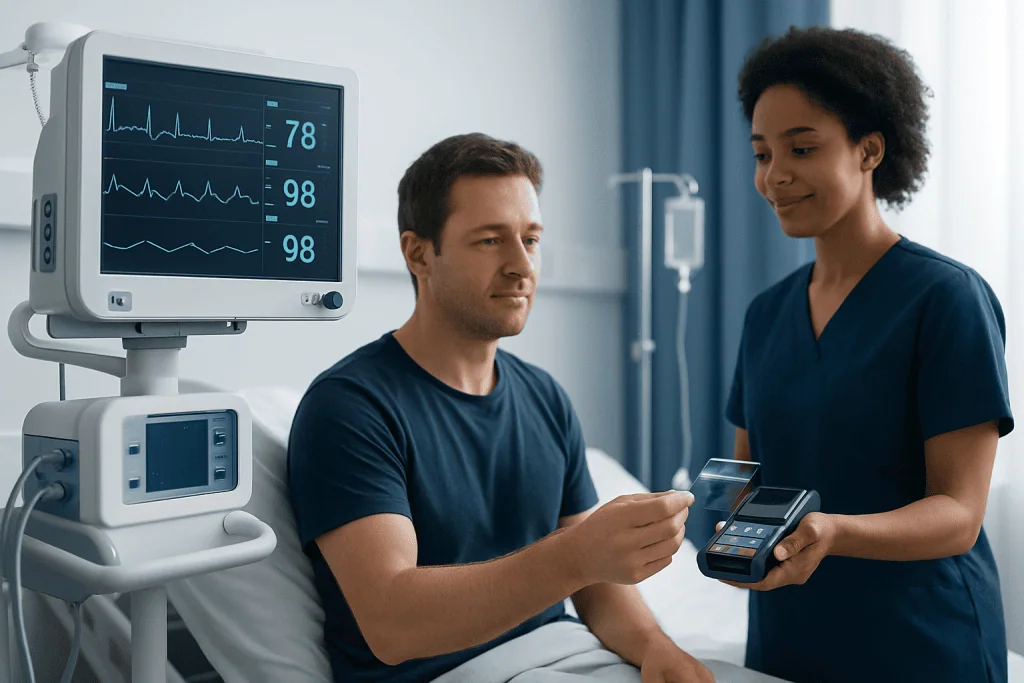
Most patients start by asking whether a bank transfer or a card is safer. That is the wrong first question. The safest payment begins with the source of the request, because a perfectly executed transfer to the wrong account is still money lost. Before you compare payment methods, confirm who sent the request and whether it matches the channel you have already been using with the hospital.
Look for consistency. Names, email domains, phone numbers and patient reference details should all line up with your earlier correspondence. A genuine payment request usually connects to your full name, date of birth or patient ID, the planned hospital, the treatment department, the estimated service and the quoted currency. If the request is vague, or simply tells you to send money quickly, stop and ask for a formal invoice.
Be cautious when anything changes without explanation. A new person suddenly handling your file, revised bank details sent by message, or an invitation to continue the conversation on a personal messaging account are all reasons to slow down. None of these is proof of fraud on its own, staff do change, and banks do update details, but each one deserves independent verification before you act.
Verify through a route you already trust, not through the message you are trying to check. Reply to the coordinator you know from earlier emails, call the published hospital number, or use the contact form on the official website. Never rely solely on a phone number or link inside a suspicious message, because those details may have been placed there precisely so you would use them. Our guide on how to confirm official hospital messages before travelling covers this verification habit in more detail.
What a trustworthy hospital invoice should include

A hospital invoice or proforma invoice exists to tell you exactly what you are paying for. It does not need to list every clinical detail, but it should be specific enough for you to match it against the treatment plan or quote you already hold. If something is missing or unclear, ask before paying, never guess your way through an international payment document.
A well-prepared payment document usually includes the hospital or healthcare group name, its official address, tax or registration details where applicable, your name and file or reference number, a description of the planned service, the amount, the currency, payment instructions and the validity period of the quote. Where several departments are involved, the document may also state that the final amount can change after medical evaluation, tests, length of stay or additional services. That kind of honesty is a good sign, not a bad one: reputable hospitals state their limits rather than promising certainty they cannot deliver.
- Check that your name is spelled exactly as it appears in your passport.
- Compare the amount and currency against the latest written quote you received.
- Confirm whether the figure is a deposit, a package estimate, a full prepayment or a balance payment.
- Ask who carries bank charges, exchange rate differences and any intermediary fees.
- Keep every version of the quote if it is updated, so you can trace how the figure changed.
Understanding what stage of payment you are at also matters. A deposit request early in planning is handled differently from a final balance settled around admission. If you are unsure which one you are looking at, our deposit payments guide and the payment timeline for international patients explain how the stages usually fit together.
How to verify bank transfer details
International bank transfers are the most common route for larger hospital payments, and they demand the most care, because funds are difficult to recall once sent. The single most important check is the beneficiary name. It should match the official hospital or healthcare group name printed on the invoice. A request to pay an individual person, a private account or an unrelated company should always be questioned, in writing, before anything else happens.
Then verify the technical details: the IBAN or account number, the SWIFT or BIC code, the beneficiary bank name, the bank address and the currency. Read them from the official invoice, not from a chat message. If your own bank shows a warning that the account name does not match the account number, treat that warning seriously. Do not override it. Contact your hospital coordinator through a verified channel and ask them to reconfirm the details in writing before you authorise anything.
Some patients ask about sending a small test transfer first. This is only worth doing if the hospital confirms it is acceptable and practical, and international fees often make it a poor option. A more useful step is to sit with your own bank, in a branch, by phone or through its verified support channel, and review the beneficiary details together before authorising the full amount. Ask your bank about sender fees, intermediary bank charges, exchange rate handling and how many business days the transfer is likely to take, because that timing affects when the hospital can confirm your treatment arrangements.
After sending, keep the transfer confirmation, SWIFT receipt or transaction reference. The hospital finance team may need it to locate your payment among many international transactions, particularly if the payer name differs from the patient name. Our bank transfer guide for hospital payments walks through the transfer form field by field.
Using card payments and online payment links safely
Card payments and secure online links are convenient for deposits and smaller balances, but the same rule applies: verify the source before you enter anything. A genuine hospital payment link arrives through an official channel and leads to a secure page. Check that the address begins with https, that the domain is spelled correctly, and that the checkout does not ask for information a payment page has no reason to need.
Many banks add a second authentication step, such as 3D Secure, an approval in your banking app or a one-time password. This step helps confirm that you are the one authorising the payment, but it does not tell you the link itself is legitimate: those are two separate checks, and you need both. Never share your full card number, CVV, online banking password or a one-time password by email, messaging app or phone call, no matter who appears to be asking. No genuine hospital finance process requires those details outside a secure payment page.
If a link expires, fails or displays a different amount from your invoice, do not attempt repeated payments on your own. Contact your coordinator, ask whether the first attempt was captured, and request a fresh official link if one is needed. After a successful payment, download or screenshot the receipt and ask the hospital to confirm the payment has been matched to your file. Repeated unguided attempts are one of the most common causes of duplicated payments and slow reconciliations, and one of the easiest to avoid.
Keep records and know when to pause
Good record-keeping protects you and helps the hospital finance team trace your payment quickly. Keep one folder, digital, physical or both, containing your quote, invoice, payment instructions, transfer or card receipts, email confirmations and any fee or exchange rate information from your bank. If a family member is paying on your behalf, include their name in the correspondence and ask whether the hospital needs any extra reference information to match the payment to your file.
It is always acceptable to pause when something feels inconsistent. The clearest warning signs are pressure to pay immediately without an invoice, instructions to pay a personal account or a cryptocurrency wallet, spelling mistakes in the hospital name, a sudden change of bank details, and any request to keep the arrangement quiet. To confirm a hospital payment is secure in these moments, do less, not more: stop, go back to your verified contact, and ask them to reconfirm the correct route in writing. A professional hospital team will help you do exactly that.
Payment safety is one part of a calm, well-documented care journey, and the same discipline of verified channels and clear records applies to your clinical paperwork too. Because a confirmed payment often unlocks the next planning step, checking it early also helps you avoid payment delays before surgery.
Step by step
- Confirm the sender. Check that the payment request came from your assigned coordinator, the official international patient office or a verified hospital contact. If the message arrives from a new email address, phone number or social media account, verify it through a channel you already trust before responding.
- Request a formal invoice or payment request. Ask for a document that includes your name, patient reference where available, the hospital name, the amount, the currency and the payment purpose. Never send an international payment on the strength of a short text message or a verbal instruction alone.
- Match the amount to your quote. Compare the invoice with the latest written quotation or treatment estimate. If the figures differ, ask whether the invoice reflects a deposit, an updated medical plan, additional services, currency conversion or a remaining balance, and get the answer in writing.
- Verify bank or link details independently. For a transfer, check the beneficiary name, IBAN or account number, SWIFT code and bank name against the official invoice. For a card payment, check the payment link, the website domain and the security prompts before entering any card details.
- Ask your bank about fees and timing. International transfers can involve sender fees, intermediary bank charges, exchange rate differences and several business days of processing. Ask your bank what reference to include so the hospital can identify the payment quickly.
- Send the payment with the correct reference. Use the patient name, invoice number or reference code exactly as instructed. If someone else is paying for you, tell the hospital in advance so the payer name does not cause a matching delay.
- Share the receipt securely. Send the transaction receipt or confirmation number to your verified hospital contact. Share only what is needed to trace the payment, never full card details, banking screenshots with sensitive data, or passwords.
- Get written confirmation of allocation. Ask the hospital to confirm when the payment is received and applied to your patient file. Keep this confirmation with your travel documents, especially when the payment is tied to an appointment, admission or planned treatment date.
Your checklist
- I have verified the payment request through an official hospital contact I already know.
- The invoice carries my name, spelled as in my passport, and matches my planned care or quote.
- The beneficiary name matches the hospital name and is not a personal account.
- The amount, currency and purpose of the payment are clear to me.
- I know whether this is a deposit, a full prepayment or a balance payment.
- I have asked my bank about fees, transfer timing and exchange rate handling.
- I am using a secure connection and I have not shared passwords, CVV codes or one-time passwords.
- I have saved the invoice, the payment receipt and every written confirmation.
- I have asked the hospital to confirm receipt and allocation to my patient file.
Key takeaways
- A secure hospital payment is linked to an official invoice, your patient details and a contact you have independently verified.
- Never send money to a personal account or an unfamiliar third party without written confirmation through an official channel.
- For bank transfers, confirm the beneficiary name, IBAN or account number, SWIFT code, currency and payment reference against the invoice itself.
- For card payments, use only verified links, and never share card security codes, banking passwords or one-time passwords by message or phone.
- Keep receipts and ask for written confirmation that your payment has been received and applied to your patient file.
- If anything feels inconsistent, pause and ask your international patient coordinator to verify the payment route before you proceed.
Frequently asked questions
How do I know a hospital payment request is genuine?
Start by checking whether the request came from your known hospital coordinator or another official channel. The payment document should include your name, the hospital name, the amount, the currency and a clear purpose. If you receive new bank details or a message from an unfamiliar sender, verify it through a published hospital contact, not through the message itself, before paying anything.
Is a bank transfer safe for hospital payments abroad?
A bank transfer can be a sound choice when the beneficiary details are official and independently verified, but it demands care because international transfers can be difficult to reverse. Confirm the beneficiary name, IBAN or account number, SWIFT code and currency against the invoice before sending funds, then keep your receipt and share the transaction reference with the hospital so the payment can be traced.
What should I do if the hospital invoice amount is different from my quote?
Do not pay until you understand the difference. Ask whether the invoice represents a deposit, an updated estimate after medical review, a package component, an additional service or a remaining balance. Estimates can change after clinical evaluation, but the hospital should explain the reason in writing before you send money.
Can a family member pay the hospital on my behalf?
In many cases yes, but tell the hospital in advance. Ask what payment reference should be used and whether the payer’s name needs to be recorded for finance or receipt purposes. This lets the finance team match the payment to your patient file without delay, even though the payer name differs from yours.
What are the warning signs of a payment scam?
Be cautious if you are asked to pay a personal account, a cryptocurrency wallet, an unknown third party or a newly introduced account with no explanation. Other warning signs include urgent pressure, spelling mistakes in the hospital name, refusal to provide an invoice, and requests for your CVV, banking password or one-time password by message or phone. If you see any of these, stop and verify through an official contact before doing anything else.
How long does it take for a hospital to confirm payment?
Card payments are often confirmed quickly, while international bank transfers can take several business days depending on the banks, currencies and intermediaries involved. Your own bank receipt does not always mean the hospital has received the funds yet. Send the transaction reference to your coordinator and ask for written confirmation once the finance team has allocated the payment to your file.
Should I ignore a bank warning that the account name does not match?
No. If your bank flags a mismatch between the beneficiary name and the account number, treat it as a signal to stop. Contact your hospital coordinator through a channel you have already verified and ask them to reconfirm the payment details in writing. Only proceed once the details on the official invoice and the details in your bank’s transfer form agree.
Can Acibadem help me check payment details?
Yes. Your Acibadem international patient contact can confirm the official payment instructions, explain which reference to use and tell you what information the finance team needs for your file. The team also coordinates practical matters such as interpreters and appointment planning. If you are uncertain about any payment message, ask for verification before you send money.
Add us as a Preferred Source to see more of our trusted health content across Google Search, AI Overviews and Discover.

Update history
- PublishedJune 8, 2026
- Medical review approvedSeptember 13, 2026
- Last content updateSeptember 12, 2026
References1
More Patient Guides

Private MRI, CT and Check-Up Costs in Turkey: How Scans Are Priced
How private MRI, CT, PET-CT and full check-up packages are priced in Turkey, modality, region, contrast, reporting, and what a…

Cataract Surgery Cost in Turkey: Per-Eye Prices and Lens Options
Cataract surgery in Turkey is priced per eye and the lens decides the quote. Biometry, both eyes on one trip, and what…

Lip Filler Cost in Turkey: Per-ml Prices Explained
Lip filler in Turkey is priced per millilitre with licensed hyaluronic acid brands and physician injectors. Volume, product, dissolving, safety and what…

Botox Cost in Turkey: Per-Area and Per-Unit Prices
How Botox is priced in Turkey, per area or per unit, brand, physician injectors, medical indications, and what a serious…