

Swimming, Spa, and Hammam After Surgery in Turkey

There is no fixed date that suits every patient. Swimming, spa, and hammam after surgery in Turkey should wait until your surgeon confirms your wound is fully closed, dry, and strong enough for water, heat, steam or friction. Showering clearance does not mean soaking is safe. Ask about each activity separately, pool, sea, hot tub, sauna, hammam and massage may each get a different answer.
You have booked a few extra days by the sea, or your hotel has a hammam downstairs, and you are wondering when you can actually use them. It is a fair question. Turkey’s hotel pools, coastal resorts, spas and hammams are part of why many people extend their stay after treatment, but water, heat, steam and massage all place demands on a healing body, and each one needs its own timing.
This guide explains how surgeons think about swimming, spa, and hammam after surgery in Turkey: why the timing varies, how the different water and heat environments compare, and how to plan your itinerary so that relaxation supports your recovery instead of interrupting it.
At a glance
- The deciding voice: Your surgeon’s clearance, not a hotel spa menu, sets the timing for water and heat.
- Main safety rule: Healing incisions, drains, dressings and irritated skin should not be submerged or soaked.
- Heat and steam: Hot rooms, hot tubs and hammams can increase swelling and light-headedness during early recovery.
- Showering is not soaking: Being allowed a brief shower does not mean pools, jacuzzis or steam rooms are safe yet.
- Ask activity by activity: Pool, sea, hot tub, sauna, hammam scrub and massage may each get a different answer.
- Discharge planning: Acibadem’s patient coordinators and interpreters explain written aftercare instructions before you leave hospital, so you know what your plans allow.
Why swimming, spa, and hammam after surgery in Turkey need careful timing
After an operation, your body is repairing skin, deeper tissue and sometimes internal structures you cannot see or feel. You may walk comfortably around Istanbul within days and still have an incision that is not ready for moisture, bacteria, friction or stretching. That gap, between feeling well and being healed, is exactly where water and heat cause problems. Swimming, spa, and hammam after surgery in Turkey are therefore not comfort questions; they are wound-safety questions.
Each environment carries a different practical concern. Chlorinated pool water reduces germs but is not sterile. Seawater can irritate healing skin and carries sand, debris and microorganisms. Warm, shared water in hot tubs can encourage bacterial growth when maintenance is imperfect. Steam softens dressings and scabs. A traditional hammam adds heat, prolonged sweating, rubbing, exfoliation and sometimes firm massage: a combination that can be too much for tissue that is still knitting together.
The surrounding circumstances matter too. In the first days after surgery you may still be taking pain medication that dulls your reactions or makes you drowsy, which changes how safely you can manage wet marble floors, pool edges and waves. Our guide to pain control after surgery in Turkey explains how those medicines are typically used and tapered, which is worth understanding before you plan any physically active day.
The safest mental model is simple: treat water and heat as activities that require clearance, exactly like flying home, exercising or returning to work. Your surgeon’s advice outranks hotel staff suggestions, generic online timelines and your own sense of feeling fine, because the right timing depends on your specific procedure, your wound, your general health and how your recovery has actually gone.
When you may be able to swim again
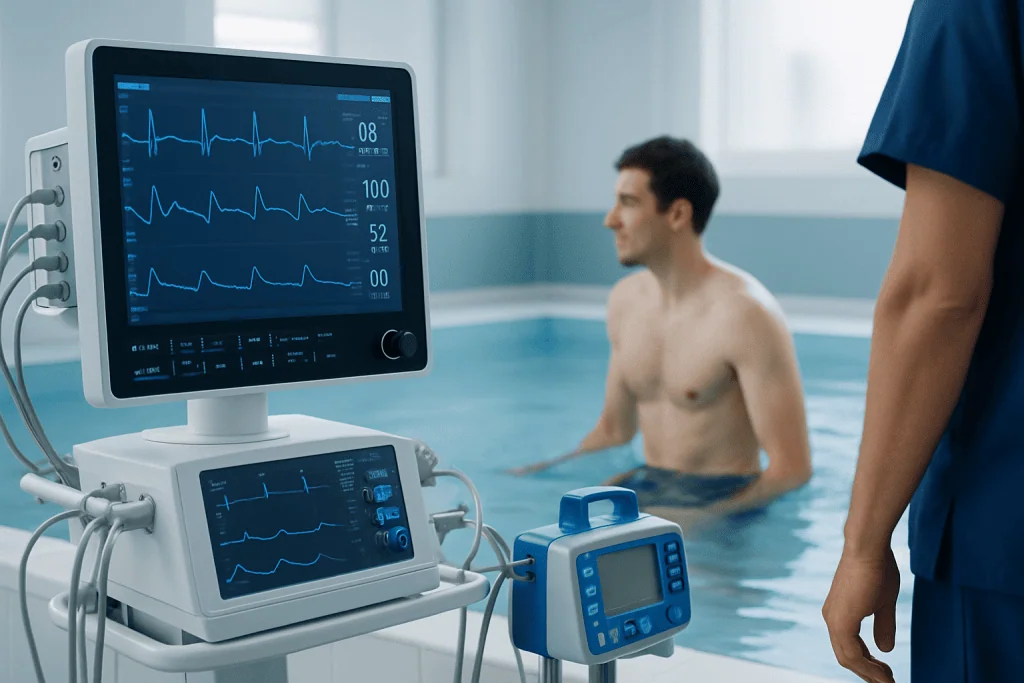
There is no single number of days that is safe for every patient, and any website that gives you one is guessing. As a general principle, surgeons want incisions to be completely closed, dry, and free of scabs, drainage, redness and tenderness before submersion, and they want stitches, staples, drains and specialised dressings dealt with first. For some procedures that point arrives within a few weeks; for others it takes longer, particularly where healing is slower or the operation was extensive. The reliable answer for your body comes from the team that operated on you.
Showering is not the same as soaking
It is common to be cleared for gentle showering well before you are cleared for swimming or bathing. The distinction is not bureaucratic. A shower lets clean water run briefly over the skin and then the area dries. Swimming, bathing or sitting in a jacuzzi keeps tissue wet for a prolonged period, softens the skin barrier, and exposes the wound to water shared with other people. If your discharge instructions say you may shower, do not read that as permission for a pool, a sea swim, a hot tub or a hammam basin. They are separate questions with separate answers.
Ask about each activity separately
Before you make plans, ask specific questions rather than a single “Can I swim?” Useful versions include: Can I enter a pool? Can I swim in the sea? Can I sit in a hot tub? Can I use a sauna or steam room? Can I have a hammam scrub? Can I have a massage, and over which areas? Each answer may differ, especially if you have swelling, bruising, implants, drains, delicate suture lines or any factor that slows wound healing. If your procedure was a short one, the timeline may be quicker: our guide on what to expect after day surgery in Turkey covers how recovery after minor procedures typically unfolds, but even small wounds need to close before they are soaked.
Pools, sea, hot tubs and spa baths: how the risks differ

A hotel pool may look immaculate, but shared water can still carry bacteria, and pool chemicals can irritate healing tissue in their own right. Chlorine reduces germs; it does not eliminate them. Pool edges, ladders, towels, loungers and changing rooms are additional contact points. If you are not yet cleared to swim, sitting at the poolside in the shade is a reasonable way to enjoy the setting without entering the water.
The sea along Turkey’s Aegean and Mediterranean coasts is a large part of the country’s appeal, but seawater contains microorganisms, salt, sand and debris, and none of it is filtered. Waves pull on the body in ways a pool does not, and walking on wet stones or shifting sand tests balance and stamina that may not have returned to normal, particularly if you are still taking pain medication.
Hot tubs, jacuzzis and spa baths deserve the most caution of the group. Warm, recirculated water is a friendlier environment for bacteria than a cool pool, and heat itself can increase swelling in a recovering area, lower blood pressure and cause dizziness. Even once your incision has healed, a sensible first return is short and gentle, and you should leave immediately if you feel faint, flushed, short of breath or simply unwell.
| Environment | Main concern for a healing wound | Sensible approach |
|---|---|---|
| Hotel pool | Shared, non-sterile water; chemical irritation; slippery surrounds | Wait for explicit swimming clearance; enjoy the poolside meanwhile |
| Sea | Unfiltered water, sand and debris; waves and unstable footing | Treat as needing the same clearance as a pool, not less |
| Hot tub / jacuzzi | Warm shared water favours bacteria; heat increases swelling and dizziness | Usually the last water activity to return to; keep first sessions brief |
| Sauna / steam room | Heat, sweating and softened dressings even without submersion | Ask separately; avoid entirely while dressings or scabs remain |
| Hammam | Heat plus scrubbing, washing and pressure on healing tissue | Postpone until cleared; then request a gentle, shortened visit |
Hammam after surgery: what to consider before you book
A Turkish hammam is a cultural experience many visitors look forward to, and it is worth understanding what it actually involves before assuming it is a soft option. A traditional visit typically includes time in a heated marble room, prolonged sweating, washing with warm water, a vigorous exfoliating scrub with a coarse mitt, and often soap massage with real pressure and stretching. Individually, each element can irritate healing skin, raise swelling, disturb dressings or load areas that should still be protected. Combined, they make the hammam one of the later activities to return to, usually after ordinary swimming, not before.
When your doctor does clear you for a hammam, choose a gentle version and tell the staff clearly that you have recently had surgery. Reasonable requests include: no exfoliation over scars or treated areas, no deep massage, a lower heat level, a shorter stay in the hot room, and a hand for support on wet marble. Attendants are used to accommodating guests; they cannot accommodate what they do not know about. Skin over a scar remains more fragile than the surrounding skin for months, and scrubbing directly over it should wait until your clinical team confirms it is strong enough.
A hammam is not appropriate while you still have open wounds, scabs, drainage, dressings or drains, or while you have fever, unexplained pain, increasing swelling or redness, or feel weak or dizzy. Heat should also not be combined with alcohol or with strong pain medication. If any doubt remains on the day, the answer is to postpone. A hammam booked for next month is a far better outcome than a wound complication acquired this week: this applies whether your operation was a plastic or aesthetic procedure with visible incisions or an abdominal operation with wounds you rarely think about.
Heat, medication and how your body responds
It helps to understand why heat gets its own set of rules even when no water touches the wound. Heat widens blood vessels, which can increase swelling in a recovering area and lower blood pressure elsewhere. In a person who is also mildly dehydrated, tired from surgery, or taking pain medication, that combination shows up as light-headedness: an unhelpful state on a wet marble floor. Prolonged sweating also keeps dressings and healing skin damp, much like soaking does.
None of this means heat is forbidden forever. It means heat exposure is a staged return, like exercise: later than showering, usually later than calm swimming, in short sessions at first, with plenty of water to drink and an easy exit available. If your surgical team has told you to avoid overheating for a period, common advice after certain cardiac, vascular and larger abdominal operations, take that instruction at face value and plan around it rather than negotiating with it.
Practical planning for hotels, resorts and travel days
Before you arrive, it can help to tell your hotel that you are recovering from treatment and may want quiet access to your room, working lifts, extra towels or a non-slip bath mat. Hotel teams are usually accommodating, but they are not a source of medical advice: a spa menu offering “post-treatment relaxation” or a “gentle recovery massage” is a marketing description, not a clinical clearance. The suitability of any spa treatment for your recovery stage is a question for your surgeon.
Pack with wound protection and comfort in mind: loose clothing that does not rub incision lines, slip-resistant sandals for pool and hammam areas, a hat and sunscreen for skin away from the treated area, and any dressings or compression garments your team has approved. One caution deserves emphasis: do not cover an unhealed incision with a waterproof patch so that you can swim, unless your doctor has specifically told you to. “Waterproof” on the packet does not mean the dressing withstands submersion, pressure and prolonged moisture, and trapped water against a wound can be worse than a brief splash.
Sequence your itinerary sensibly. Water and heat plans belong after your follow-up appointments, not squeezed in before them, and they should not crowd your departure. If you are weighing up how long to stay in Turkey overall, our guide on when it is safe to fly home after surgery covers that separate but related timing question. During discharge planning at Acibadem, patient coordinators and interpreters go through your written aftercare instructions with you; if a coastal stay, hotel spa or hammam is part of your plans, mentioning it at that point means the instructions you leave with actually answer the questions your itinerary will raise. It is easier to adjust plans early than to cancel a prepaid spa day at the last minute.
Signs that mean water and heat should wait
Even after clearance, the return to water and heat is gradual, and your body gives useful feedback. Increased pain, a pulling sensation at the incision, new bleeding or fluid leakage, spreading redness, warmth over the wound, foul odour, fever, chills, dizziness or shortness of breath are all signs that surgical teams take seriously, because they can indicate irritation, delayed healing or infection. Any of them is a reason to stop the activity, leave the water, leave the hot room, end the massage, and to let the area rest and dry rather than pushing on so a holiday plan survives intact.
These signs are also worth recording plainly: when they started, whether you had been in water or heat, your temperature if you can measure it, and what medication you have taken. Clear notes make any subsequent medical assessment quicker and more accurate. For a fuller picture of how post-operative pain, swelling and fever are interpreted, see our guide on pain, swelling or fever after surgery in Turkey.
Step by step
- Read your discharge instructions first. Before considering any pool, spa or hammam, go through your written aftercare instructions for guidance on showering, dressings, stitches, drains, bathing, heat exposure and follow-up appointments.
- Ask specific water and heat questions. At discharge or follow-up, ask separately about pools, the sea, hot tubs, saunas, steam rooms, hammam scrubs and massage. A general “you can relax” does not cover all of them.
- Wait for the wound to be fully ready. Do not submerge any area with open skin, drainage, scabbing, redness, swelling or a dressing, even if you feel entirely well. The skin barrier needs to be strong enough for water and friction, not just closed to the eye.
- Start with low-risk relaxation. While waiting for clearance, choose gentler options: sitting by the pool, short shaded walks, quiet meals, breathing exercises, rest with your legs supported if advised. Recovery time is part of the treatment, not wasted holiday.
- Avoid heat if you feel weak, swollen or dehydrated. Hot baths, steam rooms and hammams can cause dizziness and increase swelling, particularly alongside pain medication or low blood pressure. Postpone heat rather than testing it.
- Keep your first return short and gentle. Once cleared, begin with a brief, calm session rather than a full spa day or long swim. Rinse afterwards if advised, dry the skin gently, and check the treated area later for irritation.
- Stop if your body objects. New pain, pulling, leakage, redness, dizziness or fever during or after water and heat means the activity ends there. Note what happened and when, clear information makes any medical review easier.
Your checklist
- Written discharge instructions read and understood
- Surgeon has cleared each activity you plan: swimming, soaking, heat, hammam, massage
- No open wound, drainage, scab, bleeding or irritated skin
- No drains, wet dressings or unprotected stitches unless your doctor says otherwise
- No fever, chills, increasing pain, redness or swelling
- Pain medication and alcohol discussed in relation to heat and water plans
- Non-slip footwear packed for pool, spa and hammam areas
- Hotel or spa told about your recovery, without treating them as a medical source
- Spa and seaside bookings scheduled after follow-up appointments, not before
Key takeaways
- Swimming, spa, and hammam after surgery in Turkey wait for your surgeon’s clearance: there is no universal safe date.
- Permission to shower does not mean permission to swim, soak, sit in a jacuzzi or visit a hammam.
- Pools, the sea, hot tubs, steam rooms and hammams each carry different risks and often get different clearance dates.
- Heat, steam, scrubbing and massage can be too intense during early recovery even when the skin looks healed.
- Plan spa and seaside activities around medical clearance and follow-up appointments, not around hotel bookings.
- Acibadem’s coordinators and interpreters walk through aftercare instructions at discharge, so raise your itinerary plans then.
Frequently asked questions
Can I swim in my hotel pool after surgery in Turkey?
Only once your surgeon has specifically cleared you to swim. Hotel pools are shared water environments and are never sterile, however well maintained they look. While any skin remains open, scabbed, draining or covered by a dressing, the pool waits.
Is the sea safer than a pool after surgery?
Not necessarily. Seawater is unfiltered and carries microorganisms, salt, sand and debris, while waves pull on healing areas and test balance that may not yet be back to normal. The sea needs the same clearance as a pool, sometimes with extra caution about footing and stamina.
When can I go to a Turkish hammam after surgery?
Usually later than ordinary swimming, because a traditional hammam combines heat, prolonged sweating, washing, exfoliation and pressure. It should wait until your doctor confirms all of those elements are safe for you. When cleared, ask for a gentle, shortened visit with no scrubbing over scars or treated areas.
Does a waterproof dressing make swimming safe?
No. A waterproof dressing may protect a wound during a brief shower, but submersion, water pressure, movement, heat and time can loosen it or trap moisture against the skin. Only use a dressing for swimming if your surgical team has told you to, and follow their exact instructions.
Can I use a sauna or steam room if I do not enter the water?
Heat and steam affect recovery even without soaking. They can increase swelling, lower blood pressure, cause dizziness, soften dressings and dehydrate you. Sauna and steam-room use is a separate question to ask your care team, and it should wait while any dressings or scabs remain.
Is a gentle spa massage safe during recovery?
It depends on the procedure, the area and the stage of healing, which is why massage should be asked about specifically rather than assumed. Even light pressure can be too much near a fresh incision or a swollen area, and “recovery massage” on a spa menu is a marketing term, not a clinical judgement.
What can I do in Turkey while I wait for clearance?
Plenty, depending on your activity advice: short gentle walks, scenic drives, quiet café terraces, museums with lift access, and simply resting well at your hotel without entering the water. Treating the waiting period as part of the treatment, rather than lost holiday, tends to make the eventual swim or hammam visit far more enjoyable.
Add us as a Preferred Source to see more of our trusted health content across Google Search, AI Overviews and Discover.

Update history
- PublishedJune 22, 2026
- Medical review approvedSeptember 13, 2026
- Last content updateSeptember 12, 2026
References2
- MedlinePlus: Surgical wound care medlineplus.gov
- NHS: How should I care for my stitches? nhs.uk
More Patient Guides

Flying After a C-Section: Timing for New Mothers
A C-section is real abdominal surgery that happens to come with a newborn attached, so the flying question has two clocks…

When Can You Drive After Anesthesia or Sedation?
You feel fine an hour after the procedure. You are chatting, you walked to the car unaided, you could obviously drive it.…

Flying After Hip Replacement: When Is It Safe?
Hip replacement recovers famously well, many patients walk further at three weeks than they had in three years. Flying is part…

Flying After Knee Replacement: When Is It Safe?
The knee is new, the physio is going well, and there is a boarding pass with your name on it. Flying after…