Veneers: What Patients Need to Know

Veneers are cosmetic dental restorations that can improve the look of front teeth. They may be made from porcelain or composite resin, with different durability and aesthetic features.
Key Takeaways
- Veneers are cosmetic dental restorations that can improve the look of front teeth.
- They may be made from porcelain or composite resin, with different durability and aesthetic features.
- A dental exam is important to check for decay, gum disease, bite problems, or teeth grinding before treatment.
- Some veneer treatments involve removing a small amount of enamel, so the decision should be made carefully.
- Good oral hygiene, regular dental visits, and avoiding harmful habits help veneers last longer.
Veneers are thin custom coverings bonded to the front of teeth to improve appearance, including color, shape, size, and small chips or gaps. They can be effective for carefully selected patients, but they are not the right option for every dental concern and should be planned with a qualified dentist.
Overview: What veneers are and who they may help
Veneers are thin, custom-made shells attached to the front surface of teeth. They are mainly used to improve appearance by changing tooth color, shape, length, or overall symmetry. Many people consider veneers when they have stains that do not respond well to whitening, small chips, minor spacing concerns, worn edges, or teeth that appear uneven.
Veneers are usually placed on visible teeth, most often the upper front teeth. Depending on the material and the treatment plan, they can create a natural-looking result that blends with neighboring teeth. A dentist helps decide whether one veneer, several veneers, or another option would better match the patient’s goals and oral health needs.
It is important to understand that veneers are not a general solution for every dental problem. They can improve certain cosmetic concerns, but they do not treat active tooth decay, gum infection, severe misalignment, or major bite problems. In those situations, other dental care may be needed first before veneers are considered.
Why patients choose veneers
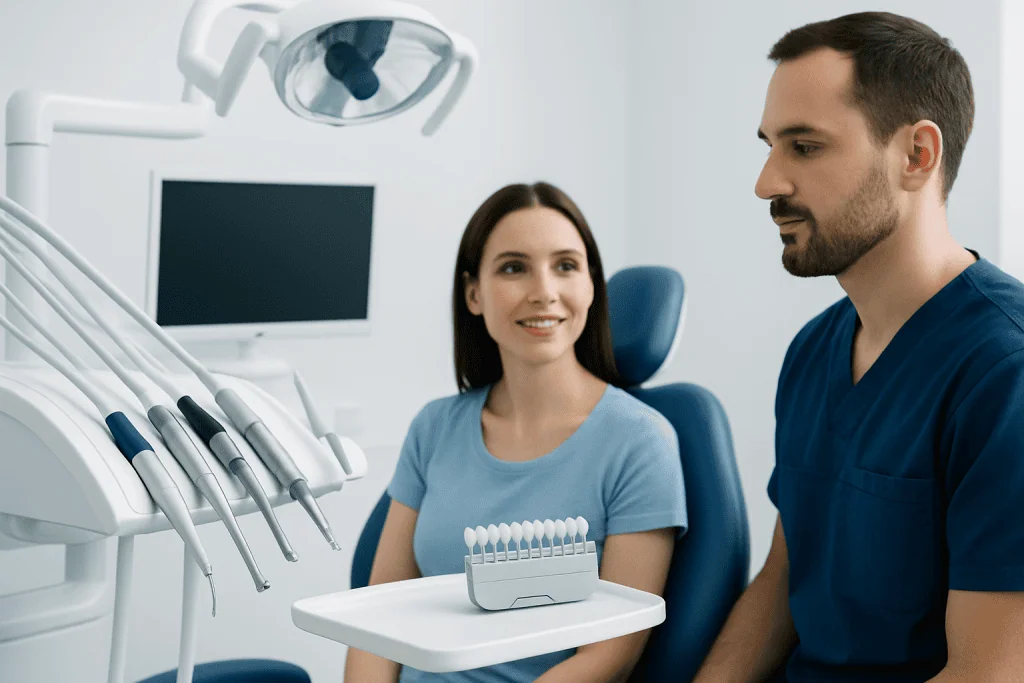
Patients usually choose veneers to improve smile appearance in a controlled and customized way. Common reasons include teeth that are deeply discolored, slightly misshapen, mildly worn down, or affected by small cracks and chips. Veneers may also help close very small gaps or create a more even smile line when the problem is cosmetic rather than functional.
One of the main advantages of veneers is that treatment can be tailored to the individual. Shape, shade, and size are selected to suit facial features, lip line, bite, and existing teeth. The goal is not simply to make teeth look whiter, but to create a balanced and realistic appearance that supports comfort and oral function.
At the same time, veneers involve a lasting decision. Some preparations require reshaping the tooth surface, and once enamel is removed it does not grow back. For this reason, patients benefit from a careful discussion about expectations, alternatives, and long-term care before moving ahead.
Types of veneers and alternatives

The two main types are porcelain veneers and composite veneers. Porcelain veneers are made in a dental laboratory and then bonded to the teeth. They are known for a lifelike appearance and resistance to staining. Composite veneers are shaped from tooth-colored resin, often in a single visit, and can be a more conservative option in selected cases, though they may be more prone to wear or discoloration over time.
Not every cosmetic concern needs veneers. Some patients may benefit from whitening, bonding, orthodontic treatment, crowns, or repair of damaged teeth instead. If a tooth has significant structural loss, a crown may be more appropriate than a veneer because it provides broader coverage and support. In other situations, improving alignment first may produce a healthier and more stable result than masking the issue with veneers.
A dentist may also look for conditions that can affect planning, such as tooth wear from grinding, enamel defects, or gum recession. If there is substantial damage, the dental team may discuss restorative options such as dental crowns or treatment for alignment and bite concerns before any cosmetic work is done.
What to expect during the veneer procedure
The process begins with consultation and examination. The dentist reviews the patient’s goals, examines the teeth and gums, and may take photographs, X-rays, or digital scans. This step helps confirm that the mouth is healthy enough for treatment and that veneers are suitable for the specific concerns involved.
If porcelain veneers are planned, the dentist may remove a small amount of enamel from the front of the teeth to make space and create a natural fit. Impressions or digital scans are then sent to a dental laboratory. Temporary veneers may sometimes be used while the final restorations are being made. At the next visit, the dentist checks fit, shape, and color before bonding the veneers in place.
Composite veneers can sometimes be completed in one appointment. The tooth surface is prepared, the resin is applied in layers, and the dentist shapes and polishes it. Whether porcelain or composite is used, proper bite adjustment is important to reduce excess pressure on the veneers and surrounding teeth.
Some people who seek veneers may also have discoloration, wear, or damage linked to broader dental conditions. In those cases, the dentist may first evaluate for problems such as tooth decay or gum inflammation so that cosmetic treatment does not cover an untreated issue.
Benefits, limits, and possible risks
Veneers can offer meaningful cosmetic improvement with relatively focused treatment. They may create a brighter appearance, improve symmetry, and restore confidence in smiling. For appropriate candidates, they can provide a durable and natural-looking option when designed and placed carefully.
However, veneers have limits. They cannot correct severe crowding, advanced gum disease, large cavities, or major tooth fractures by themselves. They also do not protect against future dental disease if oral hygiene is poor. Patients should know that veneers are not permanent in the sense of lasting forever; they may eventually need repair or replacement.
Possible risks include tooth sensitivity, edge chipping, debonding, color mismatch, gum irritation, and an unnatural look if planning is not precise. People who clench or grind their teeth may place extra stress on veneers, increasing the chance of damage. A night guard may be recommended if bruxism is present. When a patient has a heavily restored or severely weakened tooth, another restorative approach may be safer and more functional.
How to care for veneers after treatment
Caring for veneers is similar to caring for natural teeth. Patients should brush twice daily with a fluoride toothpaste, floss or clean between teeth every day, and attend regular dental checkups. These habits help protect both the veneers and the teeth underneath them, as well as the surrounding gums.
It is wise to avoid using teeth as tools to open packages or bite fingernails, ice, pens, or other hard objects. These habits can chip natural teeth and veneers alike. If a person grinds their teeth at night, a dentist may advise a protective guard to reduce pressure on the restorations.
Although porcelain veneers resist stains better than composite resin, limiting tobacco and highly staining beverages may still help maintain appearance. If the patient notices roughness, a changed bite, a loose veneer, gum bleeding, or persistent sensitivity, a dental review is appropriate rather than trying to ignore the problem.
For patients needing broader smile rehabilitation or replacement of damaged tooth structure, the dental team may combine veneers with other approaches such as dental implants when missing teeth are also part of the overall treatment plan.
Who may not be a good candidate
Not everyone is an ideal candidate for veneers. Active cavities, untreated gum disease, poor oral hygiene, severe teeth grinding, and major bite misalignment can all reduce the safety or success of treatment. If the enamel surface is very limited, bonding may also be more difficult. In some cases, these issues need to be managed first before cosmetic treatment can be considered.
Patients with extensive tooth loss, very large fillings, or significant cracks may need stronger restorative options. A dentist may recommend orthodontic care, periodontal treatment, crowns, or repair of damaged teeth instead. The best choice depends on the health of the tooth, the patient’s bite, and the long-term goal.
People interested in veneers should also think about maintenance and future replacement. Because cosmetic dentistry often involves long-term planning, treatment works best when patients understand both the expected result and the commitment to ongoing care.
When to seek medical care
A dental evaluation is important before getting veneers, especially if there is tooth pain, gum bleeding, sensitivity to hot or cold, jaw discomfort, or a history of grinding. These symptoms can signal problems that should be treated first. After veneers are placed, patients should contact a dentist if a veneer feels loose, chips, causes persistent irritation, or if the bite suddenly feels uneven.
Urgent dental attention may be needed for swelling, fever, facial pain, significant bleeding, or trauma to the teeth or jaw. These symptoms are not typical effects of veneers and may point to infection or injury. Early assessment can help prevent complications and protect both oral health and the cosmetic result.
Patients seeking comprehensive assessment may benefit from a multidisciplinary dental approach, particularly when cosmetic concerns overlap with structural or gum issues. Acibadem International’s multidisciplinary specialists in JCI-accredited hospitals diagnose and treat dental conditions for international patients, including cosmetic and restorative treatment planning such as smile design.
Frequently asked questions
Are veneers permanent?
Veneers are considered a long-term treatment, but they do not last forever. Some types require removal of a small amount of enamel, which means the tooth will usually always need some form of coverage afterward.
Do veneers damage natural teeth?
When veneers are planned and placed correctly, they are designed to preserve as much healthy tooth structure as possible. However, some veneer treatments involve irreversible enamel reduction, so careful patient selection and professional planning are important.
How long do veneers last?
The lifespan varies depending on the material, oral hygiene, bite forces, and habits such as grinding or chewing hard objects. With good care and regular dental follow-up, veneers can remain functional and attractive for many years, but they may eventually need repair or replacement.
Are veneers better than teeth whitening?
They serve different purposes. Whitening is usually used for color changes in otherwise healthy teeth, while veneers can also improve shape, small chips, wear, and minor spacing issues in addition to color.
Can veneers fix crooked teeth?
Veneers may improve the appearance of mild unevenness or very small gaps, but they do not truly move teeth. For more significant crowding or bite problems, orthodontic treatment is often a healthier and more stable option.
Do veneers require special care?
They do not usually require complicated care, but they do need consistent daily hygiene and regular dental checkups. Patients should brush, floss, avoid damaging habits, and use a night guard if recommended for grinding.
References
- American Dental Association
- National Institute of Dental and Craniofacial Research
- Mayo Clinic
- Cleveland Clinic
This article is for general information only and is not a substitute for professional medical advice. Please consult a qualified doctor about your individual situation.
Explore treatments in Turkey — costs, top hospitals & a free quote
JCI-accredited · board-certified surgeons · reply within 24h
Add us as a Preferred Source to see more of our trusted health content across Google Search, AI Overviews and Discover.

More from the Health Library



Related Specialists

Prof. Dr. Gamze Erfan
Dermatology
Assoc. Prof. Dr. Diğdem Özer Etik
Gastroenterology
Prof. Dr. Esen Demir
Pediatric Allergy
Dr. İlke Özer Aslan
Gynecology & Obstetrics