Ankle Weights: What Patients Need to Know

Ankle weights add resistance to selected exercises but are not appropriate for all workouts. They may help build strength in controlled movements, especially when recommended by a clinician or therapist.
Key Takeaways
- Ankle weights add resistance to selected exercises but are not appropriate for all workouts.
- They may help build strength in controlled movements, especially when recommended by a clinician or therapist.
- Using ankle weights while walking or with poor form can increase stress on joints and soft tissues.
- People with pain, arthritis, balance problems, or a recent injury should get medical advice before using them.
- Starting light, progressing slowly, and stopping if pain develops are key safety steps.
Ankle weights are wearable resistance tools that can support certain lower-body and rehabilitation exercises when used correctly. They are not ideal for every activity, and safe use depends on a person’s health, goals, movement quality, and any underlying joint or muscle problems.
Overview: what ankle weights do and who may benefit
Ankle weights are small wearable weights fastened around the lower leg, usually just above the ankle. They are designed to increase resistance during movement so muscles must work harder. In practical terms, ankle weights can be useful for some strength, conditioning, and rehabilitation exercises, but they are not automatically beneficial for every person or every activity.
For many patients, the main question is whether ankle weights are safe. The short answer is that they can be safe when they are light, used for the right exercises, and matched to the person’s physical condition. Problems are more likely when they are too heavy, used during high-impact or repetitive activities, or worn despite joint pain, poor balance, or an untreated injury.
Unlike general fitness advice that focuses only on burning calories or “toning,” a medical view looks at how ankle weights affect joints, tendons, gait, posture, and recovery. This matters because extra load at the end of the leg changes the force placed on the hips, knees, and ankles. For that reason, ankle weights are often best seen as a targeted tool rather than something to wear routinely all day or during every walk.
Potential benefits of ankle weights
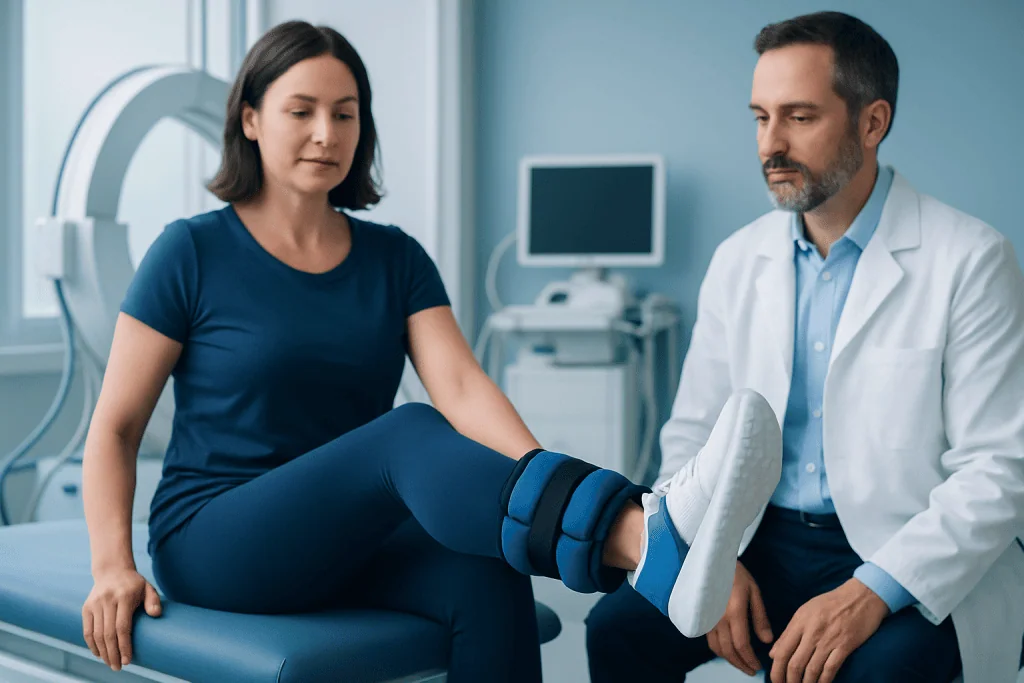
When used correctly, ankle weights can help increase muscular demand during controlled leg movements. This may support strengthening of the hip flexors, gluteal muscles, quadriceps, hamstrings, and some muscles that help stabilize the lower limb. In rehabilitation settings, a clinician may use them to gradually challenge weakened muscles after illness or injury.
They can be especially helpful in exercises such as straight-leg raises, side leg lifts, seated knee extension movements, or other slow, supervised strengthening routines. In these situations, the goal is not simply adding difficulty, but improving muscle control and endurance while keeping the movement pattern safe.
For some older adults or people recovering from limited mobility, ankle weights may be introduced as part of a broader rehabilitation plan. In this setting, they are usually combined with balance work, flexibility, and guided exercise rather than used alone. Patients involved in physical therapy and rehabilitation may be advised on whether weighted exercises are suitable for their needs.
It is also important to note that benefits depend on consistency and proper progression. Very heavy weights are not necessary for many people. Light resistance, good technique, and gradual progression often provide more benefit than using a weight that changes normal movement or causes discomfort.
Risks and limitations patients should understand

The main concern with ankle weights is that they increase leverage at the end of the leg. This can place extra stress on joints and soft tissues, especially during repetitive movement. If used carelessly, they may contribute to muscle strain, tendon irritation, joint pain, or an altered walking pattern.
Wearing ankle weights during walking, jogging, or aerobics may not be ideal for many people. Although it may seem like a simple way to make exercise harder, the added load can change gait mechanics and increase stress on the knees, hips, and lower back. This can be more noticeable in people who already have weakness, limited flexibility, or a history of joint problems.
People with arthritis, previous ligament injuries, poor balance, nerve problems, or swelling in the legs should be particularly cautious. In some cases, ankle weights may worsen symptoms rather than improve strength. For example, someone with knee pain or chronic ankle instability may need a more tailored strengthening plan instead of added resistance at the ankle.
Another limitation is that ankle weights are not a complete fitness solution. They do not replace general strength training, mobility work, cardiovascular exercise, or professional rehabilitation when needed. They are simply one tool, and their usefulness depends on selecting the right exercise and the right amount of resistance.
Who should avoid or use ankle weights only with guidance
Some patients should avoid ankle weights unless a doctor or physical therapist specifically recommends them. This includes people with recent surgery, a recent sprain or fracture, uncontrolled pain, significant swelling, balance disorders, or difficulty walking. In these situations, added resistance may delay healing or increase the risk of falls.
People with osteoarthritis, tendon disorders, chronic low back pain, or symptoms that travel down the leg should also be cautious. The extra load can aggravate inflamed tissues or change movement in ways that increase discomfort. This is particularly relevant for those with hip or knee symptoms, because the source of pain may not always be obvious without an assessment.
Children, frail older adults, and people with neurological conditions need extra care as well. Their exercise plan should be individualized to strength, coordination, and safety. If there is concern about balance, muscle control, or abnormal gait, a supervised evaluation is a better starting point than trying weighted exercise at home.
Patients with ongoing joint or soft-tissue concerns may benefit from specialist assessment through services such as orthopedics or structured rehabilitation. The aim is to identify the reason for weakness or pain first, then choose exercises that support recovery rather than adding unnecessary strain.
How to use ankle weights safely
Safe use begins with choosing a very light weight and using it only for planned exercise sessions. The weight should fit securely without compressing the skin or sliding during movement. Good form matters more than resistance. If the movement becomes jerky, posture changes, or pain appears, the load is too much or the exercise is not suitable.
In general, ankle weights are better for slow, controlled exercises than for long periods of walking or fast repetitive activity. A person should start with short sessions and allow time to see how the body responds over the next day. Soreness from muscle effort can happen, but sharp pain, swelling, limping, or back discomfort are warning signs to stop.
Helpful safety principles include:
- Start with the lightest available weight.
- Use them for specific exercises rather than all-day wear.
- Maintain smooth, controlled movement.
- Stop if there is joint pain, swelling, numbness, or a sense of instability.
- Progress gradually instead of increasing weight quickly.
Warm-up and recovery are also important. Gentle mobility work before exercise and stretching or light movement afterward may help reduce stiffness. People returning after injury often do best with a personalized plan, especially if there has been a prior ankle sprain or recurring lower-limb pain.
Choosing exercises and alternatives
The best exercises for ankle weights are usually non-impact movements where alignment can be controlled. Examples may include lying leg raises, side-lying hip abduction, seated knee lifts, and selected core exercises involving controlled leg motion. These patterns may strengthen muscles without placing the same repeated stress on the joints as weighted walking or jogging.
However, ankle weights are not the only way to build lower-body strength. Resistance bands, body-weight exercises, aquatic exercise, cycling, and machine-based strengthening can all be effective alternatives. For many patients, these options provide resistance with less stress on the joints or with better control over movement quality.
Patients recovering from injury or surgery may need a staged approach: first restoring pain-free movement and balance, then adding resistance, then progressing to more functional exercise. If symptoms are persistent, medical imaging or a specialist evaluation may be needed to identify a structural problem before resistance training is advanced. In selected cases, services such as MRI may help clarify the source of ongoing pain or weakness.
At Acibadem International, multidisciplinary specialists in JCI-accredited hospitals evaluate musculoskeletal symptoms and guide treatment plans for international patients, including exercise-based recovery when appropriate. The most suitable program depends on the person’s diagnosis, fitness level, and daily activity demands.
When to seek medical care
Medical advice is appropriate if pain starts soon after using ankle weights or if symptoms are severe, persistent, or getting worse. A patient should seek care for swelling, bruising, a popping sensation, inability to bear weight, repeated giving way of the joint, or pain that changes normal walking. These signs may suggest more than simple muscle fatigue.
Care is also important if there is numbness, tingling, calf swelling, significant weakness, or back pain radiating into the leg. These symptoms may point to nerve involvement or another condition that needs evaluation. If exercise is causing repeated discomfort, the issue may be technique, unsuitable load, or an unrecognized injury rather than a lack of effort.
Patients with ongoing symptoms may need assessment for joint, tendon, ligament, or spine-related causes. Depending on the findings, treatment could include rest, targeted rehabilitation, activity modification, bracing, or further evaluation for conditions involving the ankle, knee, hip, or lower back. Early assessment can help prevent a small problem from becoming a longer-term limitation.
Frequently asked questions
Are ankle weights safe for everyday use?
Ankle weights are generally safer when used for specific exercises rather than worn throughout the day. Continuous wear may alter walking mechanics and increase stress on the hips, knees, and ankles. A clinician can advise whether they fit a person’s health needs.
Can ankle weights help with walking workouts?
For many people, ankle weights are not the best choice for walking workouts. They can change gait and place extra stress on joints and soft tissues. Walking speed, incline, distance, or other forms of resistance may be safer alternatives.
Do ankle weights help build muscle?
They can contribute to muscle strengthening when used in controlled, targeted exercises. The benefit is usually greatest when the weight is light to moderate and movement quality is maintained. They work best as one part of a broader exercise plan.
Who should not use ankle weights?
People with recent injury, surgery, joint swelling, significant arthritis, balance problems, or unexplained leg pain should avoid ankle weights unless a clinician recommends them. They may also be unsuitable for people with nerve symptoms or difficulty walking. Professional guidance is especially important during recovery.
What weight should a beginner choose?
A beginner should start with the lightest available ankle weights and focus on short, controlled sessions. The right starting load depends on age, strength, coordination, and any medical conditions. If the exercise causes pain or changes normal form, the weight is too heavy or the exercise is not appropriate.
Can ankle weights worsen knee or back pain?
Yes, they can worsen symptoms in some people by increasing strain and changing movement patterns. This is more likely during walking, jogging, or poorly controlled exercise. Anyone with existing knee, hip, or back pain should ask a doctor or physical therapist before using them.
References
- American Academy of Orthopaedic Surgeons
- American College of Sports Medicine
- National Institute of Arthritis and Musculoskeletal and Skin Diseases
- MedlinePlus
- World Health Organization
This article is for general information only and is not a substitute for professional medical advice. Please consult a qualified doctor about your individual situation.
Joint and spine care in Turkey — expert assessment & treatment
JCI-accredited · board-certified surgeons · reply within 24h