Foot Blister: What Patients Need to Know

Most foot blisters are caused by friction from shoes, activity, heat, or moisture. Small, intact blisters usually heal best when kept clean, protected, and left unbroken.
Key Takeaways
- Most foot blisters are caused by friction from shoes, activity, heat, or moisture.
- Small, intact blisters usually heal best when kept clean, protected, and left unbroken.
- Medical care is important if a blister looks infected, is very painful, keeps returning, or occurs in a person with diabetes or poor circulation.
- Proper footwear, moisture control, and early protection of hot spots can help prevent foot blisters.
- Blood-filled or unusually frequent blisters may need evaluation to rule out injury or an underlying skin condition.
A foot blister is a small pocket of fluid that forms in the upper layers of the skin, usually after rubbing, pressure, heat, or moisture. Most foot blisters heal on their own with protection and reduced friction, but pain, signs of infection, or underlying conditions such as diabetes can make medical assessment important.
Overview
A foot blister is a raised area of skin filled with clear fluid, blood, or, less commonly, pus. It forms when the upper layers of the skin separate after repeated rubbing, pressure, heat exposure, or irritation. This fluid cushion is the body’s natural way of protecting the deeper tissue while healing begins.
In many people, a foot blister develops after wearing tight or poorly fitting shoes, starting a new exercise routine, walking long distances, or spending time in hot and humid conditions. Although blisters are common and often minor, they can interfere with walking and daily activity when they occur on weight-bearing parts of the foot.
Most uncomplicated blisters improve within several days to about a week if the area is protected. A blister should not always be popped. In general, skin over the blister acts like a natural dressing, helping lower the risk of infection and reducing tenderness as the area heals.
How a Foot Blister Forms and What It Can Look Like

A blister forms when repeated shear force causes the top layers of skin to move differently from the deeper layers beneath. This tiny separation allows fluid to collect in the space. On the foot, this often happens at the heel, toes, ball of the foot, or sides of the foot where shoes or socks create friction.
Many blisters contain clear fluid and feel tender or sore. Some become blood blisters after a stronger pinch or pressure injury damages small blood vessels. If bacteria enter broken skin, a blister may become infected and contain cloudy fluid or pus.
A foot blister may appear in different ways, including:
- A small, dome-shaped bubble of skin
- Redness or a “hot spot” before the blister fully forms
- Pain with walking or pressure
- Clear fluid under intact skin
- Darker red or purple fluid in a blood blister
- Raw, sensitive skin if the blister roof tears
Not every sore spot on the foot is a blister. Corns, calluses, athlete’s foot, eczema, burns, and some autoimmune skin conditions can cause similar discomfort or skin changes. When the diagnosis is unclear, especially if the problem keeps coming back, a clinician may consider other causes such as diabetes-related foot issues or skin disease.
Symptoms and Warning Signs
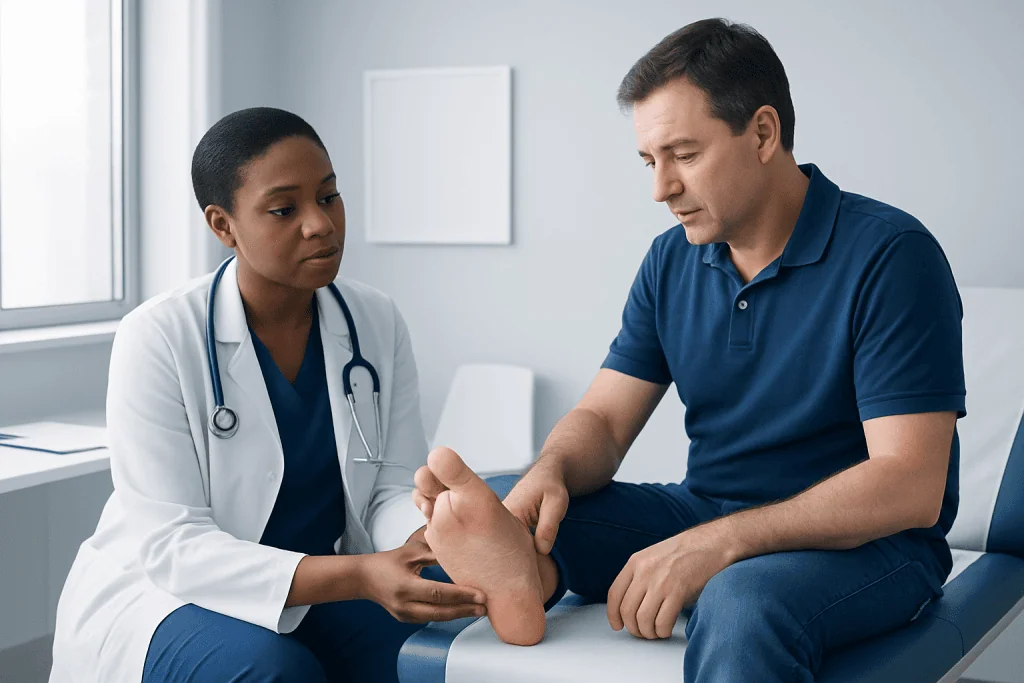
The most common symptom of a foot blister is localized pain or tenderness, often made worse by walking, running, or wearing shoes. Some people first notice a warm, irritated patch of skin before a visible blister develops. Once fluid collects, the area may feel tight, stinging, or sensitive to touch.
If the blister remains intact, the skin surface usually looks smooth and stretched. When it breaks, the raw skin underneath can be quite painful and may sting with soap, sweat, or pressure. Nearby swelling is usually mild, but more extensive redness can suggest irritation or infection.
Symptoms that deserve closer attention include:
- Increasing redness spreading beyond the blister
- Warmth, swelling, or worsening pain
- Cloudy drainage, pus, or bad odor
- Fever or feeling unwell
- A blister that is large, very tense, or repeatedly reopens
- Blisters developing without clear friction or injury
People with reduced feeling in the feet may not notice symptoms early. This can happen in nerve problems, including diabetic neuropathy, where a small blister may progress before it causes pain. In these situations, routine foot inspection becomes especially important.
Common Causes and Risk Factors
Friction is the leading cause of a foot blister. Repetitive rubbing between skin, socks, and shoes creates enough mechanical stress to separate layers of skin. New shoes, long walks, sports, hiking, dancing, and jobs that require prolonged standing can all contribute, especially when the feet are warm or damp.
Moisture increases risk because wet skin is more vulnerable to friction injury. Sweating, rainy conditions, non-breathable footwear, and socks that stay damp may all make blistering more likely. Shoes that are too tight, too loose, poorly shaped, or have rough seams can also create pressure points.
Other possible causes include burns from hot surfaces, sunburn, cold injury, contact dermatitis, and allergic reactions. Less commonly, recurrent or widespread blisters may be linked to skin conditions that need specialist assessment. In some cases, a clinician may evaluate whether the problem is related to a broader skin condition.
Certain factors increase the chance of complications from a foot blister:
- Diabetes or poor circulation
- Reduced sensation in the feet
- Immune suppression
- Foot deformities that alter pressure points
- Previous blistering with exercise or certain shoes
- Activities involving heat, moisture, or prolonged walking
Diagnosis and When It May Need Evaluation
Most foot blisters can be identified by simple examination. A doctor usually diagnoses them based on appearance, symptoms, recent activity, footwear history, and whether there was friction, heat, or trauma. In straightforward cases, tests are not needed.
Evaluation becomes more important when a blister is unusually large, repeatedly returns, appears infected, or occurs without an obvious cause. A clinician may also look for conditions that slow healing, such as circulation problems or nerve damage. If the surrounding skin is very inflamed or the pattern is unusual, other skin disorders may need to be ruled out.
People with diabetes, persistent numbness, or poor blood flow should not ignore even a small foot blister. These conditions can delay healing and increase the risk of ulcers or deeper infection. In some situations, imaging or vascular assessment may be recommended if there is concern about deeper tissue problems rather than a simple surface blister.
Treatment Options and Home Care
For most uncomplicated blisters, treatment focuses on protection, cleanliness, and removing the source of friction. If the blister is small and intact, it is usually best to leave it unbroken. The area can be washed gently with mild soap and water, then covered with a clean dressing or a cushioned blister pad. Reducing pressure with better-fitting footwear and dry socks helps healing.
If a blister is large, very painful, or in a spot that makes walking difficult, a healthcare professional may decide to drain it in a clean way while leaving the overlying skin in place as a protective layer. At home, cutting away the blister roof or repeatedly puncturing the skin can increase infection risk. Broken blisters should be cleaned gently and covered with a non-stick dressing that is changed regularly.
If there are signs of infection, treatment may involve medical cleaning of the wound, prescription medication, or assessment for a deeper problem. When pressure points, gait issues, or structural foot problems contribute to repeated blistering, more specialized care may be useful, including orthopedic evaluation or support from physical therapy and rehabilitation to improve foot mechanics and reduce recurrence.
Pain can often be managed with rest, protective dressings, and general over-the-counter pain relief when appropriate for the individual. A doctor can advise whether additional care is needed, especially in people with chronic conditions or frequent recurrence.
Prevention and Self-care
Preventing a foot blister is often easier than treating one. The most effective approach is to reduce friction before skin damage starts. Shoes should fit well in length, width, and heel hold, without tight pressure points or excessive slipping. New shoes are best broken in gradually rather than worn all day at once.
Moisture control also matters. Breathable footwear and socks that wick moisture away from the skin can help keep the feet drier. Some people benefit from changing socks during long activity, using protective padding on hot spots, or applying lubricants to friction-prone areas before exercise.
Helpful prevention strategies include:
- Choose activity-appropriate shoes with enough room for the toes
- Wear clean, dry, well-fitting socks
- Address seams, rough edges, or inserts that rub
- Use blister pads or tape at the first sign of a hot spot
- Keep feet clean and dry, especially between the toes
- Inspect the feet daily if sensation is reduced
People with diabetes or circulation problems should pay extra attention to footwear and foot checks. Supportive foot care and early treatment of any sore area may help prevent complications. If blistering is linked to pressure imbalance, a doctor may recommend assessment through services such as podiatry care when available within a broader foot care plan.
When to Seek Medical Care
Medical care is advisable when a foot blister becomes increasingly painful, shows signs of infection, or does not start to improve with basic care. Red streaking, spreading redness, swelling, pus, fever, or worsening tenderness should be assessed promptly. A large blood blister after significant injury may also need examination to rule out deeper tissue damage.
People with diabetes, poor circulation, immune suppression, or numbness in the feet should seek professional advice early, even for a small blister. These conditions can make seemingly minor skin injuries harder to heal and easier to miss. A clinician can help protect the skin, reduce pressure, and prevent progression to an ulcer or infection.
If blistering keeps coming back, appears in multiple places, or happens without clear rubbing or heat, a more detailed assessment may be needed. In that setting, specialists may look for skin disorders, movement patterns, or medical conditions affecting healing. Acibadem International’s multidisciplinary specialists in JCI-accredited hospitals evaluate and treat foot and skin problems for international patients when further assessment is needed.
Frequently asked questions
Should a foot blister be popped?
Usually, no. An intact blister protects the skin underneath and lowers the risk of infection. If it is very large or painful, a healthcare professional can advise whether safe drainage is appropriate.
How long does a foot blister take to heal?
Many simple foot blisters improve within a few days and heal in about one week. Healing may take longer if the blister keeps rubbing, has broken open, or becomes infected. People with diabetes or circulation problems may heal more slowly.
What is the best way to treat a blister on the foot at home?
Gently wash the area, keep it dry, and cover it with a clean protective dressing or blister pad. Try to avoid the shoes or activity that caused the friction until the skin settles. If the blister opens, protect the raw skin and watch for signs of infection.
How can someone tell if a foot blister is infected?
Possible signs of infection include increasing redness, warmth, swelling, pus, bad odor, and worsening pain. Fever or feeling generally unwell are also warning signs. These symptoms should be reviewed by a doctor.
Why do foot blisters keep coming back?
Recurring blisters often mean there is an ongoing source of friction or pressure, such as shoe fit problems, foot shape, gait issues, or moisture. Recurrent blistering can also happen with some skin conditions. A medical assessment can help identify the pattern and guide prevention.
Are foot blisters more serious in people with diabetes?
Yes, they can be. Diabetes may reduce sensation and slow healing, so a small blister may go unnoticed and become more complicated. Early medical advice is important to help prevent infection or ulcer formation.
References
- American Academy of Dermatology
- American Diabetes Association
- Centers for Disease Control and Prevention
- National Health Service
- Merck Manual Consumer Version
This article is for general information only and is not a substitute for professional medical advice. Please consult a qualified doctor about your individual situation.
Explore treatments in Turkey — costs, top hospitals & a free quote
JCI-accredited · board-certified surgeons · reply within 24h