

Perforated Septum: An Evidence-Based Guide for Patients

A perforated septum is an opening in the nasal septum, the wall between the nostrils. Common symptoms include crusting, dryness, nosebleeds, whistling when breathing, and nasal blockage.
Key Takeaways
- A perforated septum is an opening in the nasal septum, the wall between the nostrils.
- Common symptoms include crusting, dryness, nosebleeds, whistling when breathing, and nasal blockage.
- Causes range from prior nasal surgery and injury to inflammatory disease, long-term nasal drug use, and certain medications.
- Diagnosis usually involves nasal examination and, when needed, blood tests or imaging to look for an underlying cause.
- Many people improve with moisturizing care, while larger or more symptomatic perforations may need a septal button or surgery.
Medically reviewed by the Acıbadem International Medical Board — July 23, 2026
A perforated septum is a hole in the tissue that separates the two nasal passages. It may cause crusting, nosebleeds, whistling, dryness, or blocked breathing, and treatment depends on the size of the perforation, its cause, and the severity of symptoms.
What is a perforated septum?
A perforated septum is a hole in the nasal septum, the thin wall made of cartilage and bone that separates the left and right nasal passages. This opening can vary from very small to quite large. Some people have no symptoms at all, while others notice dryness, crusting, bleeding, discomfort, or a whistling sound when they breathe through the nose.
The impact of a perforated septum depends on more than the size alone. Its location, the health of the surrounding lining, and the underlying cause all matter. A small perforation near the front of the nose may cause more symptoms than a larger one located farther back, because the front of the nose is more exposed to airflow and drying.
A perforation is not a diagnosis by itself. It is a finding that should prompt a careful review of possible causes, including previous surgery, trauma, repeated inflammation, medication use, or less commonly an autoimmune or infectious condition. This cause-focused approach helps guide treatment and lowers the chance of the problem getting worse.
How a perforated septum feels and why symptoms happen
The nasal septum is lined by delicate tissue that keeps the inside of the nose moist and helps air move smoothly. When there is a hole in that lining and the structures beneath it, airflow becomes more turbulent. This can dry the tissue, lead to crust formation, and make the area prone to irritation and bleeding.
Symptoms often develop gradually. Patients may first notice a dry or sore feeling inside the nose, followed by repeated crusting or small nosebleeds. Some hear a whistling sound during breathing, especially when the perforation is near the front of the septum. Others feel as if the nose is blocked, even though the problem is not always classic congestion.
Less commonly, a perforated septum can contribute to pain, unpleasant odor from crust buildup, or changes in the shape of the nose if supporting tissue becomes weakened. These changes are more likely when the perforation enlarges or when the underlying cause continues to damage the septum.
- Dryness inside the nose
- Crusting or scab formation
- Recurrent nosebleeds
- Whistling with breathing
- Blocked or uncomfortable nasal airflow
- Soreness, irritation, or foul odor in some cases
Causes and risk factors

One of the most common causes of a perforated septum is previous nasal surgery, including septoplasty or other procedures performed to improve breathing or nasal shape. A perforation can also happen after nasal trauma, such as a fracture, repeated nose picking, or prolonged pressure inside the nose. Damage occurs when blood supply to the septal tissue is disrupted, preventing normal healing.
Long-term exposure to irritating substances is another important cause. Intranasal recreational drug use, especially cocaine, is strongly linked with septal injury because it reduces blood flow and causes direct tissue damage. Some prescribed nasal sprays, particularly if overused or used incorrectly for long periods, may also contribute to dryness and irritation, although they are a less common cause than surgery or drug exposure.
Doctors also consider medical conditions that inflame or damage blood vessels and tissues. These include autoimmune or inflammatory disorders such as granulomatosis with polyangiitis, sarcoidosis, and some forms of vasculitis. Infections can occasionally lead to septal perforation as well. Because the list of causes is broad, evaluation may involve both an ENT specialist and, if needed, other specialists. In some patients, related nasal problems such as a deviated septum or persistent sinusitis may also affect symptoms and treatment planning.
How doctors diagnose a perforated septum
Diagnosis begins with a medical history and an examination of the nose. A doctor will ask about symptoms, past nasal surgery, injuries, medication use, workplace exposures, smoking, and any history of autoimmune disease or drug use. These details are important because treating the hole without addressing its cause may not be enough.
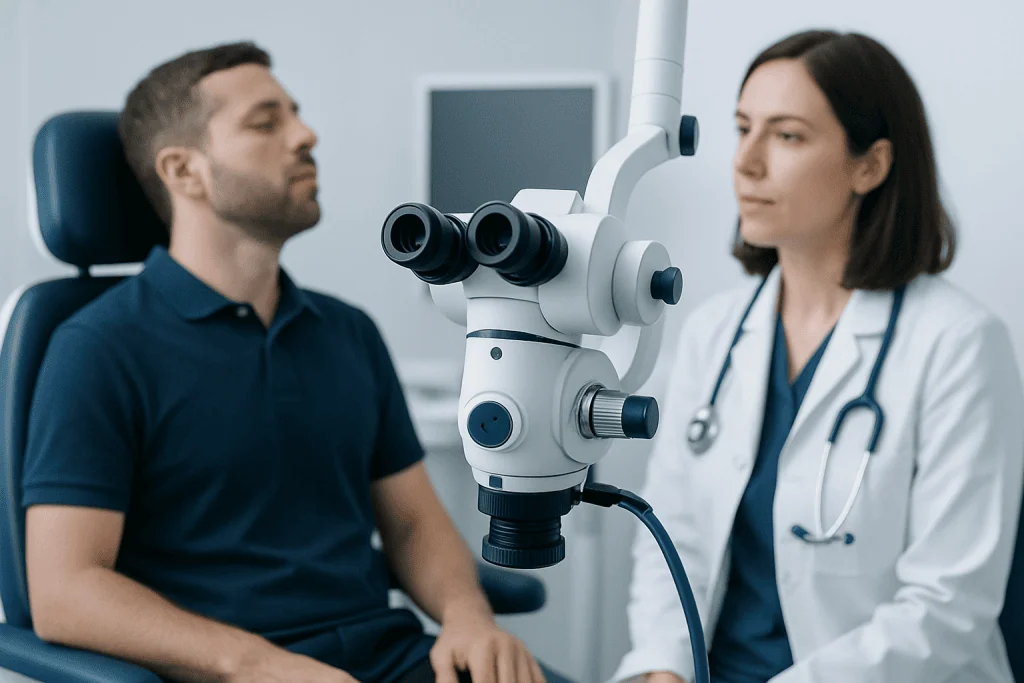
The nose is usually examined with a light and a nasal speculum, and many patients benefit from nasal endoscopy. During this office-based procedure, a thin camera helps the specialist see the size, location, and edges of the perforation and check for crusting, inflammation, infection, or other nasal problems. This can also help distinguish a perforation from other causes of nasal blockage or bleeding.
Further tests are not needed for everyone, but they may be recommended when the cause is unclear or when symptoms suggest a broader illness. These tests can include blood work, tissue sampling in selected cases, or imaging such as CT scanning if there are concerns about sinus disease, structural issues, or extensive tissue damage. If surgery is being considered, a detailed anatomical assessment is especially important, sometimes as part of a broader ENT diagnosis and treatment plan.
Treatment options and what they aim to achieve
Treatment for a perforated septum focuses on symptom relief, protecting the remaining tissue, and managing the underlying cause. For many patients, the first step is conservative care. Saline sprays or rinses, moisturizing gels, and humidification can reduce dryness and crusting. Avoiding digital trauma, smoke, and other irritants is also important. If a medication is contributing, a doctor may adjust how it is used or consider alternatives.
When symptoms continue despite moisturizing care, a septal button may be an option. This is a soft device placed in the perforation to reduce airflow turbulence and improve symptoms such as whistling, crusting, and bleeding. It does not heal the hole, but it can provide meaningful relief for selected patients who are not ideal surgical candidates or who prefer to avoid an operation.
Surgical repair may be considered for symptomatic perforations, especially when conservative measures do not help enough. The goal is to close the opening and restore healthier nasal function. Success depends on factors such as the size and location of the perforation, tissue quality, and whether the underlying cause has been controlled. In suitable cases, repair may be part of a broader nasal procedure such as septoplasty or reconstructive rhinoplasty when structure and airflow both need attention. A specialist will explain the likely benefits, limitations, and recovery expectations before treatment is chosen.
Self-care, prevention, and protecting nasal health
Daily nasal care can make a noticeable difference, even when a perforation remains present. Regular saline irrigation or saline spray helps loosen crusts and keep the lining moist. Many patients also benefit from applying a doctor-recommended moisturizing ointment or gel to the front of the septum. Picking at crusts should be avoided, since this can worsen bleeding and enlarge the perforation.
Environmental steps are often helpful. Using a humidifier, especially in dry indoor climates, may reduce irritation. Avoiding tobacco smoke, chemical fumes, and unprescribed intranasal substances protects the nasal lining. If prescribed nasal sprays are part of treatment for allergies or inflammation, proper technique matters; directing the spray away from the septum can reduce local irritation.
Prevention mainly means preventing further injury. Patients who have had nasal surgery should follow aftercare instructions closely and report persistent crusting or bleeding early. Those with autoimmune or inflammatory conditions should keep regular follow-up with their care team so that ongoing disease activity does not continue to damage the septum.
When to seek medical care
Medical review is sensible when nasal dryness, crusting, or nosebleeds keep returning, especially if there is a whistling sound with breathing or a feeling of blockage that does not improve. Early assessment can identify a perforation before it becomes larger and can also uncover treatable causes such as medication-related irritation or inflammatory disease.
Prompt medical attention is especially important if there is heavy bleeding, increasing pain, fever, visible collapse or change in the shape of the nose, or symptoms that are getting worse over time. People with a history of nasal surgery, trauma, cocaine use, or autoimmune disease should mention this during the visit because it can change the evaluation and treatment plan.
Assessment is typically performed by an ENT specialist. For international patients who need coordinated evaluation, Acibadem International’s multidisciplinary specialists and JCI-accredited hospitals diagnose and treat nasal conditions including perforated septum with individualized care planning.
Frequently asked questions
Can a perforated septum heal on its own?
A true perforation usually does not close by itself once a hole has formed through the septal tissue. However, symptoms may improve with good nasal moisturizing care and by removing the cause of irritation. A doctor can explain whether observation, a septal button, or surgery is the most suitable next step.
Is a perforated septum dangerous?
It is often more uncomfortable than dangerous, especially when it is small and stable. The main concerns are ongoing crusting, bleeding, infection risk in irritated tissue, or gradual enlargement of the hole. It is still important to find the cause, because some underlying conditions require treatment.
What does a perforated septum sound like?
Some people notice a whistling noise when they breathe through the nose. This tends to happen when airflow passes through a perforation near the front of the septum. Not everyone with a perforation has this symptom.
Can nasal sprays cause a perforated septum?
Most prescribed nasal sprays are safe when used correctly, but long-term irritation can occur in some people. Risk may be higher if the spray is directed toward the septum repeatedly or if the nose is already very dry or inflamed. A clinician can review technique and decide whether a medication change is needed.
How is a perforated septum confirmed?
An ENT specialist usually confirms it by examining the inside of the nose. Nasal endoscopy may be used to assess the size, location, and condition of the surrounding tissue. If the cause is uncertain, blood tests or imaging may also be recommended.
Does every perforated septum need surgery?
No. Many patients are managed successfully with saline, moisturizers, avoidance of irritants, and sometimes a septal button. Surgery is usually considered when symptoms are significant, the perforation is affecting nasal function, or conservative treatment has not provided enough relief.
References
- American Academy of Otolaryngology–Head and Neck Surgery
- National Institute on Drug Abuse
- Merck Manual Professional Edition
- Mayo Clinic
- Cleveland Clinic
This article is for general information only and is not a substitute for professional medical advice. Please consult a qualified doctor about your individual situation.
Explore treatments in Turkey — costs, top hospitals & a free quote
JCI-accredited · board-certified surgeons · reply within 24h

More from the Health Library



Related Specialists

Dr. Destina Suay Sarı
Oral and Dental Health
Prof. Dr. Yüksel Ersoy
Physical Medicine & Rehabilitation
Dr. Yelda Ertürk
Ophthalmology
Dt. Alen Palancıoğlu
Oral Dental & Maxillofacial Surgery