Ovu Kit: An Evidence-Based Guide for Patients

An ovu kit detects the LH surge that usually happens 24 to 36 hours before ovulation. Positive results suggest the fertile window is near, but they do not confirm that ovulation definitely occurred.
Key Takeaways
- An ovu kit detects the LH surge that usually happens 24 to 36 hours before ovulation.
- Positive results suggest the fertile window is near, but they do not confirm that ovulation definitely occurred.
- Irregular cycles, certain hormone conditions, and some medicines can affect test accuracy.
- Using the kit at the right time in the cycle improves the chance of getting meaningful results.
- If pregnancy does not occur after several months of well-timed attempts, medical evaluation may be helpful.
An ovu kit is a home ovulation test that helps identify the most fertile days by detecting the luteinizing hormone (LH) surge in urine. It can be a useful tool for people trying to conceive, but results are most helpful when they are interpreted alongside cycle patterns, symptoms, and medical advice when needed.
What an ovu kit does
An ovu kit is a home test designed to help predict ovulation. Most kits work by measuring luteinizing hormone, or LH, in urine. LH normally rises sharply shortly before the ovary releases an egg, so a positive result can help identify the days when pregnancy is most likely.
For many people, the main purpose of an ovu kit is to time intercourse during the fertile window. The fertile window includes the few days before ovulation and the day of ovulation itself. Because sperm can survive in the reproductive tract for several days, recognizing the LH surge can be helpful even before the egg is released.
It is important to know that an ovu kit predicts ovulation; it does not directly prove that ovulation happened. A positive result means the body is showing a hormonal pattern that usually comes before ovulation. In some situations, the body can have an LH rise without releasing an egg, which is why the test is best viewed as a guide rather than a guarantee.
How ovulation test kits work
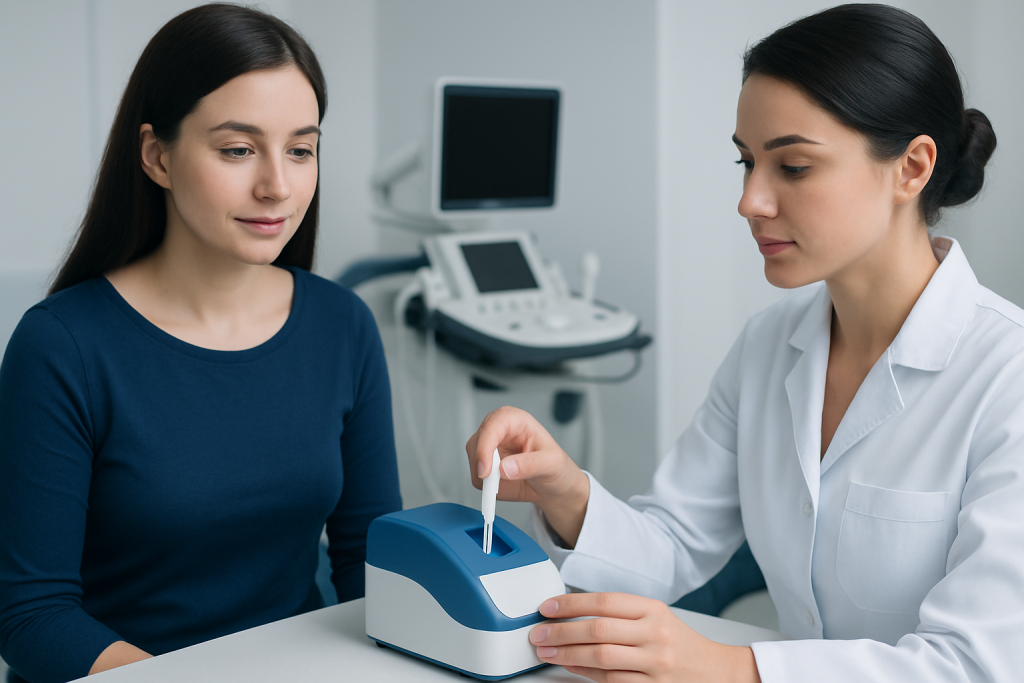
Most ovu kits are urine-based strips, cassettes, or digital devices. They look for LH, a hormone made by the pituitary gland. When LH rises above a certain threshold, the test becomes positive, signaling that ovulation will likely happen within the next day or so.
Some people confuse ovulation tests with pregnancy tests, but they measure different hormones. Pregnancy tests detect human chorionic gonadotropin, while ovulation tests detect LH. Because LH levels can vary from person to person, reading the instructions for a specific brand is important.
Digital tests may reduce confusion because they display a symbol rather than requiring the user to compare line darkness. Strip tests can also be reliable, but they need careful interpretation. In general, a test line that is as dark as or darker than the control line suggests an LH surge, although exact guidance depends on the manufacturer.
People who are tracking fertility more closely may combine an ovu kit with cycle charting, cervical mucus observations, or a clinician-guided fertility assessment. If there are ongoing concerns about ovulation, a specialist may recommend further evaluation for infertility or discuss options such as IVF treatment.
How to use an ovu kit correctly

Using an ovu kit correctly starts with estimating when ovulation might happen. In a typical 28-day cycle, ovulation often occurs around day 14, but many cycles are naturally shorter or longer. A common approach is to begin testing a few days before expected ovulation rather than waiting until the day it is thought to occur.
For people with regular cycles, the start day can be estimated from average cycle length. For example, if the cycle is usually 30 days, testing may begin around day 11 or 12. For irregular cycles, it may help to use the shortest recent cycle as a guide, though this can require more testing days.
Urine concentration matters. Many manufacturers advise testing around the same time each day and avoiding excessive fluid intake for a few hours beforehand. Some people are told not to use first-morning urine because LH may build up during the day, but this varies by product, so the kit instructions should be followed closely.
- Read the brand instructions before the first use.
- Test at a consistent time each day.
- Record results in an app or calendar.
- Continue testing until a clear positive is seen or the cycle ends.
What results mean and what can affect accuracy
A positive ovu kit usually means the LH surge has been detected and the most fertile time is approaching. Many clinicians advise intercourse on the day of the positive result and the following one to two days if pregnancy is the goal. A negative result means the surge has not been detected yet, or that it may have already passed.
Accuracy can be affected by irregular cycles, testing too early or too late in the day, and not following the product instructions. In some people, the LH surge is brief, so once-daily testing may miss it. In those cases, testing twice daily around the expected fertile days may be considered if the instructions allow it.
Certain medical conditions can make interpretation more difficult. Polycystic ovary syndrome can cause persistently elevated LH in some people, leading to repeated positive or hard-to-read results. Recent pregnancy, perimenopause, and some fertility medications may also affect the test pattern.
If test results seem confusing over several cycles, a doctor may look for hormone-related conditions such as polycystic ovary syndrome (PCOS). In some cases, blood tests, ultrasound monitoring, or a broader gynecologic evaluation may be more informative than repeated home testing alone.
Who may benefit most from an ovu kit
An ovu kit may be especially useful for people who are trying to conceive and want a practical way to identify their fertile window. It can be helpful when cycle timing is uncertain, when intercourse is being planned around work or travel, or when someone wants more structure than calendar counting alone.
People with regular cycles often find ovulation kits straightforward to use because the expected fertile days are easier to estimate. Those with mildly irregular cycles may still benefit, but they may need to test for more days. In contrast, people with very unpredictable cycles may find the process frustrating without additional medical guidance.
Ovulation tests can also provide useful information to share with a clinician. A cycle record showing repeated positives, no positives, or very inconsistent patterns may help guide next steps. When conception is not happening as expected, fertility specialists may recommend more detailed evaluation and sometimes fertility treatment depending on the overall history.
Limits of ovu kits and when other tests may be needed
Although an ovu kit can be helpful, it has limits. It does not assess egg quality, sperm health, fallopian tube function, or whether implantation occurs. For that reason, a positive ovulation test does not by itself explain why pregnancy has or has not happened.
Home kits also do not replace medical evaluation when symptoms suggest an underlying condition. Painful periods, very heavy bleeding, absent periods, or signs of hormone imbalance may need professional assessment. Depending on the situation, a doctor may recommend blood hormone tests, pelvic ultrasound, semen analysis, or imaging of the fallopian tubes.
Sometimes another tracking method is used alongside the ovu kit. Basal body temperature may help suggest that ovulation happened after the fact, while ultrasound can monitor follicle development more directly. These methods may be particularly useful for people undergoing fertility care or trying to understand a complex cycle pattern.
Self-care, fertility timing, and when to seek medical care
When using an ovu kit, practical self-care can improve the experience. Keeping a simple record of period dates, test results, and any mid-cycle symptoms can make patterns easier to see over time. Good general health habits, such as adequate sleep, balanced nutrition, not smoking, and limiting alcohol, also support reproductive health.
For pregnancy timing, many clinicians recommend intercourse during the few days before ovulation and on the day of the LH surge rather than waiting only for a single exact moment. Stressing over perfect timing is usually not necessary. If cycles are hard to predict, regular intercourse every two to three days through the cycle may help cover the fertile window.
Medical advice is worth seeking if periods are very irregular, absent, unusually painful, or very heavy; if ovu kit results are repeatedly confusing; or if there are known reproductive health concerns. Evaluation is also reasonable if pregnancy has not occurred after 12 months of trying, or after 6 months if the person trying to conceive is age 35 or older. Earlier care may be appropriate for known hormone disorders, prior pelvic infections, endometriosis, or male-factor concerns.
For people seeking expert assessment, Acibadem International’s multidisciplinary specialists in JCI-accredited hospitals diagnose and treat fertility-related conditions for international patients. A qualified clinician can help decide whether home ovulation tracking is enough or whether further testing is needed.
Frequently asked questions
What is an ovu kit used for?
An ovu kit is used to help predict the fertile window by detecting the LH surge before ovulation. Many people use it when trying to conceive so they can better time intercourse.
Does a positive ovu kit mean ovulation definitely happened?
No. A positive result usually means LH has risen and ovulation is likely soon, but it does not directly confirm that an egg was released. In some situations, the body may have an LH surge without actual ovulation.
When should someone start using an ovu kit in the cycle?
The best start day depends on average cycle length. In general, testing begins a few days before expected ovulation, using the kit instructions and recent cycle history as a guide.
Can irregular periods make an ovu kit harder to use?
Yes. Irregular cycles can make it harder to know when to start testing and may require more test days. In some hormone conditions, results may also be harder to interpret.
Can medications or health conditions affect ovu kit results?
Yes. Some fertility medicines, recent pregnancy, perimenopause, and hormone disorders such as PCOS can affect LH levels or make results less clear. A doctor can advise whether home testing is suitable in these situations.
How long should someone try before seeing a doctor about fertility?
A medical evaluation is often advised after 12 months of trying without pregnancy, or after 6 months if the person trying to conceive is age 35 or older. Earlier assessment may be appropriate if cycles are absent or very irregular, or if there are known fertility concerns.
This article is for general information only and is not a substitute for professional medical advice. Please consult a qualified doctor about your individual situation.
IVF & fertility treatment in Turkey — success rates and costs
JCI-accredited · board-certified surgeons · reply within 24h
Add us as a Preferred Source to see more of our trusted health content across Google Search, AI Overviews and Discover.
Check your numbers in seconds
BMI, calories, due date, blood pressure and 30+ more clinical calculators — free, instant, doctor-reviewed ranges.

More from the Health Library

Compassionate: What Patients Need to Know

Ins Eye: A Complete Medical Overview

Emotional Relationship Cheating — Explained by Medical Evidence, Not Myths

Trazodone for Anxiety: An Evidence-Based Guide for Patients

Ashwagandha and Magnesium: An Evidence-Based Guide for Patients