Nutrafol for Women — Explained by Medical Evidence, Not Myths

Nutrafol for women is a supplement, not a medicine, and research supporting it is still limited. It may be most relevant for women with mild to moderate thinning rather than sudden or scarring hair loss.
Key Takeaways
- Nutrafol for women is a supplement, not a medicine, and research supporting it is still limited.
- It may be most relevant for women with mild to moderate thinning rather than sudden or scarring hair loss.
- Hair loss in women can be linked to iron deficiency, thyroid disease, hormonal changes, stress, medications, and genetic female pattern hair loss.
- A medical assessment is important before relying on supplements, especially if shedding is sudden, severe, or accompanied by other symptoms.
- Evidence-based treatment may include correcting deficiencies, treating scalp disease, and using clinically recommended hair-loss therapies.
Medically reviewed by the Acıbadem International Medical Board — July 23, 2026
Nutrafol for women is a dietary supplement marketed for hair thinning, and some early studies suggest it may improve hair density in selected women. However, it is not a stand-alone treatment, and women with new, rapid, or patchy hair loss should still be medically evaluated for underlying causes.
What is Nutrafol for women, and does it work?
Nutrafol for women is a multi-ingredient dietary supplement promoted for hair thinning and reduced hair density. It typically combines vitamins, minerals, botanical extracts, and other compounds that are marketed as supporting the hair growth cycle, stress response, and scalp health. In simple terms, it is designed as a supportive product for women who notice gradual thinning, not as a cure for every kind of hair loss.
Medical evidence suggests that some women may see modest improvement in hair quality or density while using such supplements, particularly when thinning is related to nutritional gaps, chronic stress, or age-related changes. However, the evidence base remains smaller and less robust than it is for established medical treatments. Published studies on branded hair supplements are often limited by size, duration, or funding source, so results should be interpreted cautiously.
This means Nutrafol for women may be reasonable for selected patients after medical review, but it should not replace diagnosis. Hair loss is a symptom, not a diagnosis by itself. A woman with ongoing shedding may actually have hair loss related to iron deficiency, thyroid disease, hormonal shifts, scalp inflammation, or genetics, and those conditions need targeted care.
How hair thinning in women is medically understood
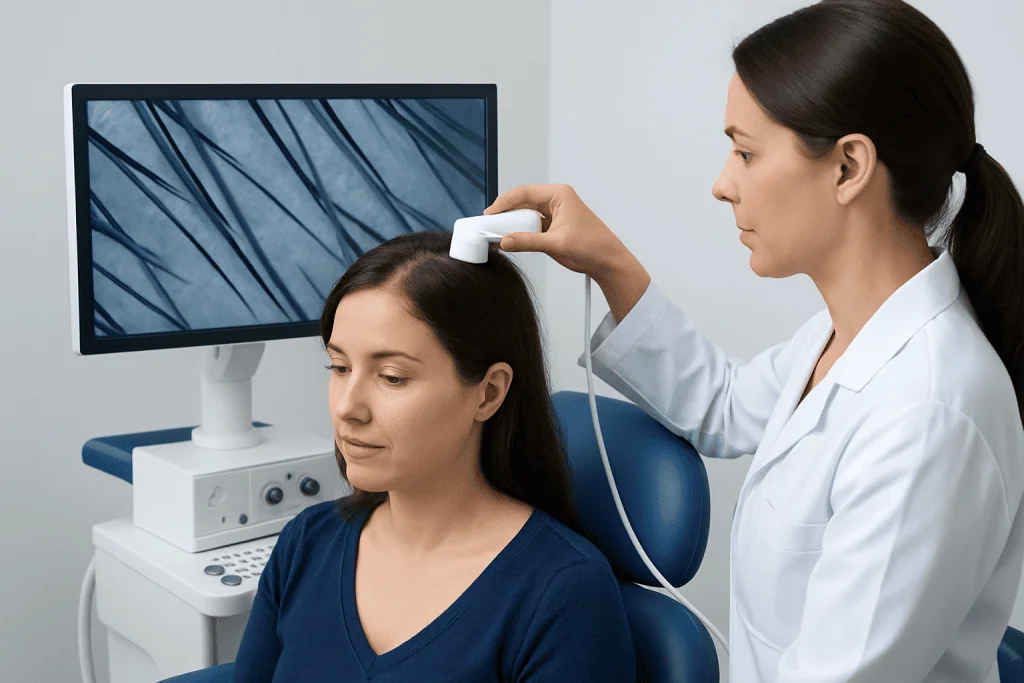
Hair grows in cycles. At any given time, some hairs are actively growing, some are resting, and some are shedding. Problems occur when more hairs enter the shedding phase, the growth phase shortens, or follicles gradually become smaller over time. This is why two women may both describe “hair loss” but have very different underlying causes.
One common cause is female pattern hair loss, also called androgenetic alopecia. This usually appears as gradual thinning over the top of the scalp or widening of the part line rather than complete bald patches. Another common pattern is telogen effluvium, in which many hairs shed at once after a trigger such as illness, childbirth, psychological stress, surgery, weight loss, or medication changes.
Scalp conditions can also affect hair growth. Inflammation, fungal infection, psoriasis, and some autoimmune disorders may lead to broken hairs, scaling, tenderness, or patchy loss. In some cases, hair loss is temporary and reversible; in others, early treatment matters because long-standing follicle damage becomes harder to treat.
Who might consider Nutrafol for women

Nutrafol for women is generally discussed for women with mild to moderate diffuse thinning who want a nonprescription option as part of a broader plan. It may appeal most to those whose doctor has excluded a major medical cause and who understand that any benefit is likely to be gradual. Hair changes are slow, so noticeable results from supportive measures often take several months.
It is less suitable as a first step for women with sudden shedding, bald patches, scalp pain, significant itching, signs of excess androgen such as new facial hair or severe acne, or symptoms of nutrient deficiency or hormonal disease. Those patterns require diagnosis rather than self-treatment. A supplement cannot correct every cause of hair loss, and delaying evaluation may prolong the problem.
Women who are pregnant, breastfeeding, trying to conceive, taking regular prescription medicines, or living with liver, kidney, thyroid, or autoimmune disease should ask a doctor before starting any complex supplement. “Natural” ingredients can still interact with medicines, affect lab results, or be inappropriate for certain medical conditions.
What ingredients aim to do—and the limits of the evidence
Products sold as Nutrafol for women often contain a mixture of micronutrients and plant-derived ingredients intended to support the body systems involved in hair growth. Depending on the formulation, these may include biotin, zinc, selenium, marine collagen, saw palmetto, curcumin, ashwagandha, and other compounds. The proposed goals are to support keratin production, reduce oxidative stress, address inflammation, or help modulate stress pathways.
From a medical perspective, the idea is plausible in some situations, especially when a person has an actual deficiency or a stress-related shedding pattern. But plausibility is not the same as proof. Not every ingredient has strong clinical evidence for hair regrowth in women, and some popular ingredients are supported more by theory, small trials, or indirect data than by large, independent studies.
It is also important to understand that more ingredients do not automatically mean better results. Hair growth depends on the cause of the loss. If a woman has significant iron deficiency, autoimmune alopecia, thyroid dysfunction, or traction-related damage, a broad supplement alone is unlikely to be enough. In many patients, the medically useful step is first to identify what kind of hair loss is present.
- Possible supportive role: gradual thinning, general nutritional support, adjunct to medical care
- Less likely to help alone: patchy hair loss, scarring alopecia, infection, major endocrine disorders
- Expected timeline: several months rather than days or weeks
Safety, side effects, and common myths
A common myth is that if a supplement is sold over the counter, it must be harmless. In reality, supplements can cause side effects and interactions. Depending on the formula, some women may experience stomach upset, nausea, altered bowel habits, headache, or sensitivity to certain herbal ingredients. People with allergies should also review the label carefully, especially if marine-derived collagen or other specialty ingredients are included.
Another myth is that biotin-heavy products are universally helpful. Most women with hair thinning do not have a true biotin deficiency. High biotin intake may also interfere with certain laboratory tests, including some thyroid and cardiac assays, which can complicate medical evaluation if clinicians are not informed.
It is equally important to avoid the belief that supplements can replace evidence-based treatment. If female pattern hair loss is present, a dermatologist may recommend hair restoration treatments in selected cases, or medical therapies depending on the diagnosis and patient factors. If scalp inflammation or another disease is driving the problem, that underlying condition should be treated directly.
How doctors evaluate hair loss before recommending supplements
Medical evaluation starts with the pattern and timeline of the hair change. Doctors usually ask when thinning began, whether shedding is sudden or gradual, which areas are affected, and whether there has been childbirth, severe stress, illness, surgery, diet change, or a new medication. Menstrual history, menopausal status, and family history can also provide important clues.
The scalp is then examined for widening of the part, miniaturized hairs, scaling, redness, broken hairs, scarring, or discrete patches. In some cases, the physician may perform a hair pull test, dermoscopic scalp examination, or order laboratory tests to look for iron deficiency, thyroid problems, vitamin deficiencies, or hormonal imbalance. If the presentation is unusual, referral to dermatology may be appropriate.
This evaluation matters because the best treatment differs by diagnosis. For example, a woman with thinning related to hormonal shifts may need endocrine assessment, while one with severe deficiency-related shedding may improve only after the deficiency is corrected. When used, supplements fit best as one part of a personalized plan rather than the entire plan.
Evidence-based treatment options beyond supplements
Treatment depends on the cause. For female pattern hair loss, clinicians often discuss established therapies that have stronger evidence than supplements alone. In suitable patients, treatment may include topical therapies, management of hormonal contributors, treatment of scalp inflammation, or procedural options. Women with significant or persistent thinning should discuss therapies that are medically appropriate for their age, reproductive plans, and health history.
When hair loss reflects another condition, that condition should be addressed directly. For instance, if there is an endocrine issue such as thyroid disease or a metabolic problem such as PCOS, treating the underlying disorder may improve shedding over time. Nutrient replacement is only useful when a real deficiency is present.
Some patients may also be assessed for supportive procedures aimed at scalp or follicle health. Depending on the diagnosis and specialist recommendation, options may include platelet-rich plasma treatment or, in selected advanced cases, hair transplant approaches. These are not appropriate for every type of hair loss, which is why diagnosis remains the key step.
Near the end of the care pathway, some women seek multidisciplinary review when the cause is complex or treatment has not helped. Acibadem International’s multidisciplinary specialists and JCI-accredited hospitals evaluate and treat hair and scalp conditions for international patients when further expert assessment is needed.
Self-care and when to seek medical care
Supportive self-care can help protect hair health regardless of whether a supplement is used. Gentle hair handling, avoiding tight hairstyles, limiting unnecessary heat or chemical processing, eating a balanced diet, and managing stress are sensible measures. If a doctor identifies low iron, protein malnutrition, or another deficiency, correcting that problem is more meaningful than taking multiple non-targeted products.
Women should seek medical care if hair loss is sudden, rapidly worsening, patchy, associated with scalp pain or inflammation, or accompanied by fatigue, menstrual changes, weight change, acne, excess facial hair, or other new symptoms. Medical review is also important if shedding continues for several months, begins after a new medicine, or occurs after illness without gradual recovery.
In practical terms, Nutrafol for women may be considered after assessment as a supportive option for selected patients, but it should not delay diagnosis. Hair thinning can be emotionally distressing, yet many causes are manageable once identified correctly. A qualified doctor or dermatologist can help distinguish whether reassurance, testing, treatment, or follow-up is the safest next step.
Frequently asked questions
Is Nutrafol for women FDA-approved?
Nutrafol for women is sold as a dietary supplement, not as an FDA-approved medicine for hair loss. In the United States, supplements are regulated differently from prescription or over-the-counter drugs, so they are not approved on the same basis for treating a disease.
How long does it take to see results from Nutrafol for women?
Hair growth is slow, so any visible change usually takes months rather than weeks. If a supplement is going to help, improvement is generally assessed over consistent use and alongside treatment of any underlying medical cause.
Can Nutrafol for women treat female pattern hair loss?
It may offer supportive benefit for some women, but it is not considered a replacement for evidence-based medical evaluation and treatment. Female pattern hair loss often needs a broader plan that may include diagnosis, scalp assessment, and medically recommended therapies.
Are there side effects from Nutrafol for women?
Possible side effects depend on the exact formula but may include digestive upset, nausea, headache, or sensitivity to certain herbal or marine-derived ingredients. Because supplements can interact with medicines and affect lab tests, women should tell their doctor what they are taking.
Should women with thyroid problems or PCOS use hair supplements on their own?
It is better to seek medical advice first. Hair thinning linked to thyroid disease or PCOS often improves only when the underlying hormonal issue is properly evaluated and managed.
What kind of hair loss needs urgent medical evaluation?
Sudden shedding, patchy bald spots, scalp redness or pain, and signs of scarring or infection deserve prompt medical review. Hair loss with fatigue, weight changes, menstrual changes, or other systemic symptoms should also be assessed rather than self-treated.
References
- American Academy of Dermatology
- National Institutes of Health Office of Dietary Supplements
- Mayo Clinic
- British Association of Dermatologists
- Cochrane
This article is for general information only and is not a substitute for professional medical advice. Please consult a qualified doctor about your individual situation.
Explore treatments in Turkey — costs, top hospitals & a free quote
JCI-accredited · board-certified surgeons · reply within 24h

More from the Health Library



Related Specialists

Dt. Büşra Sevinç
Oral and Dental Health
Prof. Dr. Ethem Tankurt
Gastroenterology
Fzt. Munise Nilay Güven
Physical Medicine and Rehabilitation
Prof. Dr. Hakan Cincik
Otorhinolaryngology