Thyroid Nodules
Thyroid Nodules are lumps in the thyroid gland. Learn symptoms, causes, ultrasound diagnosis, biopsy and treatment options.
Quick answer
Thyroid nodules are lumps that form within the thyroid gland and are often benign, but some may affect hormone function or require evaluation for cancer. At Acibadem in Turkey, thyroid nodules are assessed with clinical examination, ultrasound, blood tests, and when needed fine-needle biopsy, with treatment ranging from monitoring and medication to minimally invasive procedures or surgery depending on the…
What is thyroid nodules?
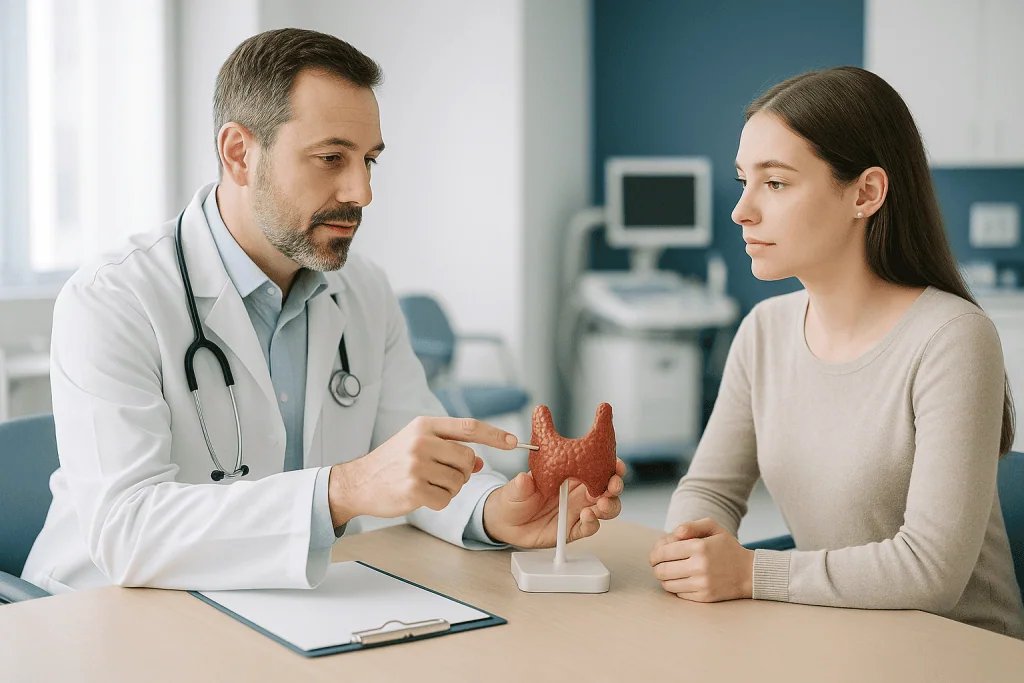
Thyroid nodules are lumps or growths that form within the thyroid gland, the small butterfly-shaped organ located at the front of the neck, just below the Adam’s apple. The thyroid gland produces hormones that help regulate metabolism, which is the way the body uses energy. A thyroid nodule may be solid, filled with fluid (a cyst), or a mixture of both. Some people have a single nodule, while others have several, a condition doctors sometimes call a multinodular goiter. In medical coding, nontoxic single thyroid nodules are classified under ICD-10 code E04.1.
So, what is thyroid nodules in practical terms for patients? It is one of the most common thyroid conditions worldwide. Many nodules are discovered by chance during an imaging test performed for another reason, such as an ultrasound of the neck or a CT scan of the chest. The large majority of thyroid nodules are benign, meaning they are not cancerous. A smaller proportion turn out to be malignant (cancerous), which is why careful evaluation matters.
Thyroid nodules can affect people of any age, but they become more common as people get older. They are found more often in women than in men. People who have had radiation exposure to the head or neck, those with a family history of thyroid disease, and people living in areas with low iodine in the diet may be more likely to develop them. In many cases, a nodule causes no problems at all and simply needs periodic monitoring.
Symptoms of thyroid nodules
Most thyroid nodules cause no symptoms, especially when they are small. This is why so many are found incidentally on scans done for other reasons. When thyroid nodules symptoms do occur, they usually relate either to the size and position of the nodule or to changes in thyroid hormone levels.
Possible symptoms include:
- A visible or palpable lump in the front of the neck, which may be noticed while shaving, applying makeup, or looking in a mirror
- A feeling of fullness or pressure in the neck
- Difficulty swallowing (dysphagia), if a larger nodule presses on the esophagus, the tube that carries food to the stomach
- Difficulty breathing or a sense of tightness, if a nodule presses on the windpipe (trachea)
- Hoarseness or voice changes, which can occur if a nodule affects the nerve that controls the voice box
- Neck pain or discomfort, which is less common and may occur if a nodule bleeds internally or grows quickly
Some nodules produce thyroid hormone on their own, independent of the body’s normal control system. Doctors call these “hot” or autonomously functioning nodules. They can lead to hyperthyroidism, meaning an overactive thyroid. Symptoms of hyperthyroidism may include unintended weight loss, a rapid or irregular heartbeat, nervousness or anxiety, tremor (shaking of the hands), sweating, heat intolerance, and trouble sleeping.
Less often, nodules occur in a thyroid gland that is underactive, a condition called hypothyroidism. This can happen when nodules develop alongside an inflammatory thyroid condition such as Hashimoto’s thyroiditis, an autoimmune disease in which the immune system attacks the thyroid. Symptoms of an underactive thyroid may include fatigue, weight gain, feeling cold, dry skin, and constipation.
How symptoms present can also differ by the type of nodule. Fluid-filled cysts can sometimes enlarge suddenly and cause pain if they bleed internally. Slowly growing solid nodules often cause no discomfort until they are large enough to press on nearby structures. Importantly, the presence or absence of symptoms does not reliably indicate whether a nodule is benign or cancerous; even nodules that turn out to be cancer are often painless.
Causes and risk factors
In many cases, the exact cause of an individual thyroid nodule is not known. However, doctors have identified several common thyroid nodules causes and contributing factors:
- Overgrowth of normal thyroid tissue. Sometimes thyroid cells simply grow more than they should, forming a benign lump called a thyroid adenoma. Why this happens in a particular person is often unclear.
- Thyroid cysts. Fluid-filled cavities can develop in the thyroid, often when a solid adenoma degenerates. Cysts are usually benign, although some contain solid components that need evaluation.
- Chronic thyroid inflammation. Hashimoto’s thyroiditis and other forms of thyroiditis (inflammation of the thyroid) can cause nodular changes in the gland.
- Iodine deficiency. Iodine is a mineral the thyroid needs to make hormones. In regions where dietary iodine is low, nodules and goiter (an enlarged thyroid) are more common. This is less frequent in countries where salt is iodized.
- Multinodular goiter. Some thyroid glands enlarge overall and develop multiple nodules over time.
- Thyroid cancer. A minority of nodules are malignant. Risk is somewhat higher in people with a family history of thyroid cancer, prior radiation exposure to the head or neck (especially in childhood), and certain inherited genetic syndromes.
Risk factors that make thyroid nodules more likely include female sex, increasing age, a family history of thyroid nodules or goiter, previous radiation therapy to the head, neck, or chest, and iodine deficiency. Smoking, obesity, and certain metabolic conditions have also been associated with nodule development in some studies, though these links are less firmly established. Having a risk factor does not mean a person will develop nodules, and many people with nodules have no identifiable risk factor at all.
Diagnosis
Thyroid nodules diagnosis usually follows a stepwise process designed to answer two main questions: Is the nodule affecting thyroid hormone levels, and could it be cancerous?
Physical examination and history
Your doctor will typically begin by feeling the neck while you swallow, since the thyroid moves with swallowing. They will ask about symptoms, family history of thyroid disease or thyroid cancer, and any past radiation exposure.
Blood tests
A blood test measuring thyroid-stimulating hormone (TSH) is usually the first laboratory step. TSH is a hormone from the pituitary gland that signals the thyroid to work harder or slower. A low TSH may suggest an overactive nodule, while a high TSH may point to an underactive thyroid. Depending on the result, your doctor may order additional tests, such as free thyroxine (T4), triiodothyronine (T3), or thyroid antibody tests that check for autoimmune thyroid disease.
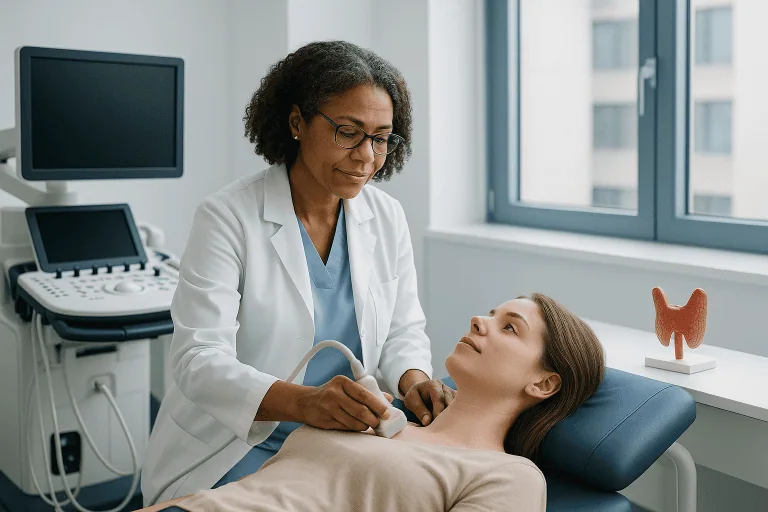
Thyroid ultrasound
Ultrasound is the key imaging test for thyroid nodules. It uses sound waves, involves no radiation, and gives detailed pictures of the nodule’s size, shape, and internal structure. Radiologists assess specific features, such as whether a nodule is solid or cystic, its edges, its shape, and whether it contains tiny calcium deposits (microcalcifications), to estimate how suspicious it looks. Many centers use standardized scoring systems, such as TI-RADS (Thyroid Imaging Reporting and Data System), to grade nodules and decide whether a biopsy is needed.
Fine-needle aspiration biopsy
If a nodule is large enough or has suspicious features on ultrasound, your doctor may recommend a fine-needle aspiration (FNA) biopsy. In this procedure, a thin needle is passed into the nodule, usually with ultrasound guidance, to collect cells for examination under a microscope. It is generally quick, done in an outpatient setting, and well tolerated. Pathologists often report results using the Bethesda classification system, which grades findings from benign to malignant, with several indeterminate categories in between. When results are indeterminate, doctors may suggest repeating the biopsy, ordering molecular (genetic) testing of the sample where available, or considering surgery.
Thyroid scan
If blood tests show a low TSH, your doctor may order a radionuclide thyroid scan. This nuclear medicine test uses a small, safe amount of radioactive tracer to show whether a nodule is “hot” (producing hormone on its own) or “cold” (not producing hormone). Hot nodules are very rarely cancerous, so this finding can change the evaluation pathway.
Evaluation and long-term management of thyroid nodules are commonly coordinated by endocrinology specialists, doctors who focus on hormone-related conditions. At Acibadem, for example, this condition falls under the Endocrinology & Metabolism department, often working together with radiology, pathology, and surgery teams when needed.
Treatment options for thyroid nodules
Thyroid nodules treatment depends on the type of nodule, its size, whether it causes symptoms, whether it affects hormone levels, and the biopsy results. There is no single approach that fits everyone, and in many cases no active treatment is needed at all.
Watchful waiting (active surveillance)
If a nodule is benign on biopsy or has a low-risk appearance on ultrasound, doctors often recommend simply monitoring it. This usually involves periodic ultrasound examinations and, in some cases, repeat blood tests. If the nodule grows significantly or changes in appearance, a repeat biopsy or further steps may be considered. For many people, monitoring continues for years without the nodule ever requiring intervention.
Medication
Medication does not remove nodules, but it can address related hormone problems. If a nodule or associated thyroid disease causes hypothyroidism, thyroid hormone replacement (levothyroxine) may be prescribed to restore normal hormone levels. If a nodule causes hyperthyroidism, antithyroid drugs may be used to reduce hormone production, sometimes as a bridge to a more definitive treatment. Routine use of thyroid hormone to “shrink” benign nodules is no longer generally recommended, as evidence for meaningful benefit is limited and long-term suppression carries risks.
Radioactive iodine
For hot nodules causing an overactive thyroid, radioactive iodine therapy is a common option. The thyroid naturally absorbs iodine, so a swallowed capsule or liquid containing radioactive iodine is taken up by the overactive tissue, gradually shrinking it and reducing hormone production. This treatment is not suitable during pregnancy or breastfeeding, and your doctor will discuss precautions and possible outcomes, including the chance of developing an underactive thyroid afterward that requires hormone replacement.
Minimally invasive procedures
Several nonsurgical procedures may be options in selected cases:
- Cyst aspiration. Fluid-filled cysts can be drained with a needle. Some cysts refill and may need repeat drainage or another approach.
- Ethanol ablation. For recurring cysts, injecting a small amount of medical alcohol into the cyst can help prevent it from refilling.
- Thermal ablation. Techniques such as radiofrequency ablation use heat delivered through a needle to shrink benign solid nodules that cause symptoms. Availability and suitability vary, and these procedures are typically reserved for confirmed benign nodules.
Surgery
Surgery may be recommended when a biopsy shows cancer or a suspicious result, when a nodule is very large or causes pressure symptoms such as difficulty swallowing or breathing, or when an overactive nodule is best treated by removal. Depending on the situation, the surgeon may remove half of the thyroid (lobectomy or hemithyroidectomy) or the whole gland (total thyroidectomy). If the entire thyroid is removed, lifelong thyroid hormone replacement is necessary. As with any operation, thyroid surgery carries risks, including effects on the voice nerves and on the parathyroid glands, which regulate calcium; your surgical team will explain these in detail before any decision.
The right combination of these options is a shared decision between you and your care team, weighing the nodule’s characteristics, your overall health, and your preferences.
Living with thyroid nodules and outlook
For most people, the outlook with thyroid nodules is reassuring. The large majority are benign, and many never grow, cause symptoms, or require treatment. Living with thyroid nodules often means little more than attending scheduled follow-up appointments and having periodic ultrasounds or blood tests so any change can be detected early.
If a nodule turns out to be cancerous, it is worth knowing that the most common types of thyroid cancer are often slow-growing and frequently respond well to treatment, particularly when found early. Outcomes vary with the cancer type, its extent, and individual factors, so no general statement can predict any one person’s course; your care team can discuss what your specific findings mean.
Practical points that may help in daily life include:
- Keep follow-up appointments, even if you feel completely well, since nodules can change slowly and silently.
- Take prescribed thyroid medication consistently if you need it, and have hormone levels checked as advised, since dose needs can change over time.
- Aim for adequate but not excessive iodine intake. In most countries with iodized salt, a normal balanced diet provides enough. Avoid high-dose iodine or kelp supplements unless a doctor specifically recommends them.
- Tell any new doctor about your nodules, especially before imaging tests or procedures involving iodine-based contrast dye, and if you become pregnant, since thyroid function is important in pregnancy.
- Watch for new symptoms, such as a growing lump, voice changes, or trouble swallowing, and report them rather than waiting for the next scheduled visit.
Nodules cannot always be prevented, and no diet or supplement has been proven to make existing nodules disappear. Being cautious about unverified remedies is sensible; monitoring and evidence-based treatment remain the standard of care.
Frequently asked questions
What is thyroid nodules in simple terms?
A thyroid nodule is a lump that forms inside the thyroid gland at the front of the neck. It can be solid tissue, a fluid-filled cyst, or a mix of both. Nodules are very common, become more frequent with age, and are usually benign, meaning they are not cancer. Most are found by chance during an examination or scan done for another reason.
Are thyroid nodules cancerous?
The majority of thyroid nodules are benign. Only a small proportion turn out to be cancer, which is why doctors evaluate nodules with ultrasound and, when needed, a fine-needle biopsy. Certain features, such as rapid growth, hard texture, hoarseness, or suspicious ultrasound findings, make cancer more likely and prompt closer evaluation, but only testing can confirm the diagnosis in an individual case.
Can thyroid nodules go away on their own?
Some nodules, especially fluid-filled cysts, can shrink or resolve over time, and some remain stable for many years without changing. Solid nodules rarely disappear completely on their own. There is no proven diet, supplement, or home remedy that reliably makes nodules go away, so regular monitoring as advised by your doctor remains the safest approach.
What are the main thyroid nodules symptoms I should watch for?
Most nodules cause no symptoms at all. When they do, common signs include a visible lump in the neck, a feeling of pressure or fullness, difficulty swallowing, hoarseness, or, less often, neck pain. Nodules that overproduce thyroid hormone can additionally cause weight loss, a rapid heartbeat, tremor, sweating, and anxiety. Any new or changing neck lump deserves medical evaluation.
How are thyroid nodules diagnosed?
Diagnosis usually starts with a physical examination of the neck and a blood test measuring TSH, a hormone that reflects thyroid function. An ultrasound scan then assesses the nodule’s size and appearance. If the nodule is large enough or looks suspicious, a fine-needle aspiration biopsy collects cells for microscopic examination. In some situations, a nuclear medicine thyroid scan is added to see whether the nodule is producing hormone.
Do all thyroid nodules need treatment?
No. Many benign, symptom-free nodules need only periodic monitoring with ultrasound and occasional blood tests. Treatment, which may include medication, radioactive iodine, minimally invasive procedures, or surgery, is generally reserved for nodules that are cancerous or suspicious, cause pressure symptoms, or disturb thyroid hormone levels. Your doctor will recommend an approach based on your specific findings.
What is recovery like after thyroid nodule surgery?
Recovery varies with the extent of surgery and the individual, but many people go home within a day or two and return to normal activities within a few weeks. Temporary voice hoarseness or low calcium levels can occur and usually improve, though in a small number of cases these effects can persist. If the whole thyroid is removed, lifelong thyroid hormone replacement is needed, with periodic blood tests to adjust the dose.
When to see a doctor
You should arrange a medical evaluation if you notice a new lump in your neck, if a known nodule seems to be growing, or if you develop symptoms of an overactive or underactive thyroid, such as unexplained weight change, rapid heartbeat, marked fatigue, or heat or cold intolerance.
Seek prompt or urgent medical attention if you experience any of the following red-flag warning signs:
- Difficulty breathing or a sensation that your airway feels blocked
- Severe or worsening difficulty swallowing
- A neck lump that grows rapidly over days to weeks
- Persistent hoarseness or voice change without another explanation, lasting more than a few weeks
- Sudden neck pain and swelling, which can occur if a nodule bleeds internally
- A hard, fixed lump in the neck, or enlarged lymph nodes on the side of the neck
- Symptoms of severe hyperthyroidism, such as a very rapid or irregular heartbeat, chest discomfort, fever with agitation, or confusion, which can signal a medical emergency
Most thyroid nodules turn out to be harmless, but only a proper medical evaluation can determine this. If you are unsure whether a symptom matters, it is always reasonable to have it checked by a qualified healthcare professional.
Medically reviewed by the Acıbadem International Medical Board September 3, 2026
See our medical review board →
Update history
- PublishedJune 9, 2026
- Medical review approvedSeptember 3, 2026
- Last content updateSeptember 2, 2026