Graves Disease Treatment
Graves disease is an autoimmune thyroid disorder that causes hyperthyroidism, leading to symptoms such as weight loss, palpitations, tremor and eye changes. Care focuses on diagnosis, hormone control and complication prevention.
Quick answer
Graves disease is an autoimmune thyroid condition that causes an overactive thyroid and can lead to symptoms such as weight loss, palpitations, tremor, and eye problems. At Acibadem in Turkey, evaluation typically includes hormone tests and imaging when needed, and treatment may involve medication to control thyroid activity, radioactive iodine, or surgery depending on the patient’s condition and complications.
When Graves Disease Changes How Your Body Feels
Graves disease can make the body feel as if it is running too fast. You may notice a racing heartbeat, trembling hands, unexplained weight loss, heat intolerance, anxiety, poor sleep, frequent bowel movements, or muscle weakness. For some people, the first concern is not the thyroid at all, but changes around the eyes: pressure, irritation, swelling, double vision, or a noticeable bulging appearance. These symptoms can be unsettling, especially when they appear gradually and begin to affect work, travel, relationships, and daily confidence.
For international patients researching care abroad, the decision can feel particularly complex. You may be trying to understand whether your symptoms are caused by Graves disease, whether medication is enough, whether radioactive iodine or surgery is appropriate, and how to prevent complications affecting the heart, bones, pregnancy, or eyes. You may also be comparing medical opinions from different countries and wondering which approach is safest for your situation.
Graves disease is treatable. The goal of care is not only to lower thyroid hormone levels, but also to identify the cause of hyperthyroidism, protect organs affected by excess thyroid hormone, manage eye or skin involvement when present, and choose a long-term strategy that fits the patient’s age, medical history, priorities, and follow-up needs. At Acibadem, evaluation and treatment are planned through modern diagnostic pathways and, when needed, collaboration among endocrinology, nuclear medicine, endocrine surgery, ophthalmology, cardiology, obstetrics, and other specialties. This coordinated approach is especially important because Graves disease is not the same in every patient.
Timely treatment matters. When thyroid hormone levels remain high, the heart may be placed under strain, bones may lose density, muscle strength may decline, and quality of life may deteriorate. In rare situations, untreated or poorly controlled hyperthyroidism can lead to severe complications. With careful diagnosis and an individualized treatment plan, many patients regain stable thyroid control and return to normal activities while continuing appropriate monitoring.
What Is Graves Disease Treatment?
Graves disease is an autoimmune thyroid disorder. In this condition, the immune system produces antibodies that stimulate the thyroid gland to make too much thyroid hormone. The thyroid then becomes overactive, a condition known as hyperthyroidism. Because thyroid hormones influence metabolism, heart rhythm, temperature regulation, digestion, mood, muscle function, and reproductive health, the effects can be widespread.
Treatment for Graves disease focuses on three connected goals: controlling excess thyroid hormone, reducing symptoms and risks, and selecting a durable long-term plan. This may include antithyroid medications, beta-blocker medications for symptom relief, radioactive iodine therapy, thyroid surgery, or a combination of approaches over time. When eye involvement occurs, known as thyroid eye disease or Graves ophthalmopathy, additional assessment and treatment may be needed.
Antithyroid drugs reduce the thyroid gland’s ability to produce hormone. They are commonly used as an initial treatment, particularly when hormone levels are significantly elevated or when a patient needs stabilization before another therapy. Beta-blockers do not treat the autoimmune cause, but they can reduce symptoms such as palpitations, tremor, and nervousness while thyroid hormone levels are being brought under control.
Radioactive iodine therapy uses a targeted form of iodine taken up by thyroid cells. Over time, it reduces thyroid activity. It is an established treatment option for many adults with Graves disease, though it is not suitable for everyone, including pregnant patients, breastfeeding patients, and certain patients with active thyroid eye disease. Thyroid surgery, usually removal of most or all of the thyroid gland, may be recommended when the thyroid is very large, nodules raise concern, medication is not tolerated, rapid control is needed, or the patient prefers a definitive surgical approach.
Because each option has advantages, limitations, and follow-up requirements, effective Graves disease care begins with a precise diagnosis and a thorough discussion of the patient’s medical situation. Treatment is not simply about choosing one therapy; it is about choosing the right sequence of care, monitoring carefully, and preventing avoidable complications.
Who May Need Graves Disease Care?
Patients may seek evaluation for Graves disease after developing symptoms of hyperthyroidism, after abnormal thyroid blood tests are found during a routine examination, or after eye changes suggest an autoimmune thyroid condition. Some patients arrive with a known diagnosis but are uncertain whether their current treatment is working. Others are seeking a second opinion because symptoms have returned, medication has caused side effects, or they have been advised to consider radioactive iodine or surgery.
Common symptoms include rapid or irregular heartbeat, palpitations, unexplained weight loss despite normal or increased appetite, heat intolerance, sweating, tremor, fatigue, irritability, anxiety, insomnia, increased bowel movements, menstrual changes, reduced exercise tolerance, and muscle weakness. Some patients notice a swelling in the lower neck caused by an enlarged thyroid gland, called a goiter. In older adults, symptoms may be less obvious and may present mainly as heart rhythm problems, weight loss, or weakness.
Graves disease may also affect the eyes. Eye symptoms can include dryness, redness, tearing, light sensitivity, a gritty sensation, swelling around the eyelids, pressure behind the eyes, double vision, or protrusion of the eyes. Eye disease can occur before, during, or after thyroid hormone abnormalities are detected. Smoking is an important risk factor for more severe thyroid eye disease and can influence treatment decisions.
Diagnosis usually begins with thyroid blood tests. These typically include thyroid-stimulating hormone, known as TSH, and thyroid hormone levels such as free T4 and sometimes T3. In Graves disease, TSH is often low and thyroid hormone levels are elevated. Antibody tests, especially TSH receptor antibodies, can help confirm the autoimmune cause. Depending on the situation, thyroid ultrasound may be used to evaluate gland size, blood flow, and nodules. A radioactive iodine uptake test or thyroid scan may be recommended in selected patients to distinguish Graves disease from other causes of hyperthyroidism, such as thyroiditis or overactive nodules.
Additional tests may be needed to assess the impact of hyperthyroidism on the body. These may include an electrocardiogram for palpitations or arrhythmias, bone health evaluation in patients at risk for osteoporosis, liver and blood count tests before or during antithyroid medication, and ophthalmologic assessment when eye symptoms are present. For women who are pregnant, planning pregnancy, or recently postpartum, diagnosis and treatment require special attention because thyroid hormone levels and treatment choices can affect both mother and baby.
Conditions and Indications Addressed by Graves Disease Treatment
Graves disease treatment addresses autoimmune hyperthyroidism and the complications that may develop from excess thyroid hormone. The most direct indication is persistent overproduction of thyroid hormone caused by TSH receptor antibody stimulation. Treatment aims to restore hormone levels to a safe range and relieve symptoms that interfere with daily life.
Care may also be needed for Graves-related goiter. An enlarged thyroid gland can cause visible neck swelling and, in some patients, pressure symptoms such as difficulty swallowing, a sense of fullness, or discomfort when lying down. Large goiters may influence the choice of treatment, particularly when rapid or definitive control is needed.
Thyroid eye disease is another important indication for coordinated care. Not every patient with Graves disease develops eye involvement, and severity varies widely. Mild cases may require lubrication, risk factor management, and monitoring. More active or severe disease may need specialized ophthalmologic care, imaging, immunomodulatory treatment, prism lenses, or surgery at an appropriate stage. Thyroid control is an important part of protecting eye health, but eye disease often requires its own assessment.
Treatment is also important for patients with heart-related effects. Hyperthyroidism can cause persistent tachycardia, atrial fibrillation, high-output heart strain, worsening angina in patients with coronary disease, or heart failure in vulnerable individuals. Older adults and patients with existing cardiovascular conditions require careful and timely management.
Other situations that lead to treatment include relapse after a previous course of medication, intolerance or adverse reactions to antithyroid drugs, high thyroid hormone levels requiring rapid stabilization, Graves disease during pregnancy or before planned pregnancy, and patient preference for a definitive treatment. In some cases, thyroid nodules discovered during evaluation may require additional imaging or biopsy, and their presence may affect the recommended plan.
How Graves Disease Treatment Is Performed
Graves disease care begins with a structured evaluation. The physician reviews symptoms, duration, previous thyroid tests, medications, pregnancy plans, family history, iodine exposure, smoking status, and any eye complaints. Physical examination may include heart rate and blood pressure assessment, thyroid palpation, tremor evaluation, skin findings, and a basic eye examination. This first step helps determine how urgently hormone control is needed and which diagnostic tests are most appropriate.
Blood testing is central. Thyroid hormone levels show the degree of hyperthyroidism, while antibody testing helps confirm Graves disease. Liver function and blood counts are often checked before antithyroid drugs because these medications, although widely used, can rarely affect the liver or white blood cell count. If palpitations are significant, an electrocardiogram may be performed. If eye symptoms are present, referral to ophthalmology may be arranged, and orbital imaging may be considered depending on severity.
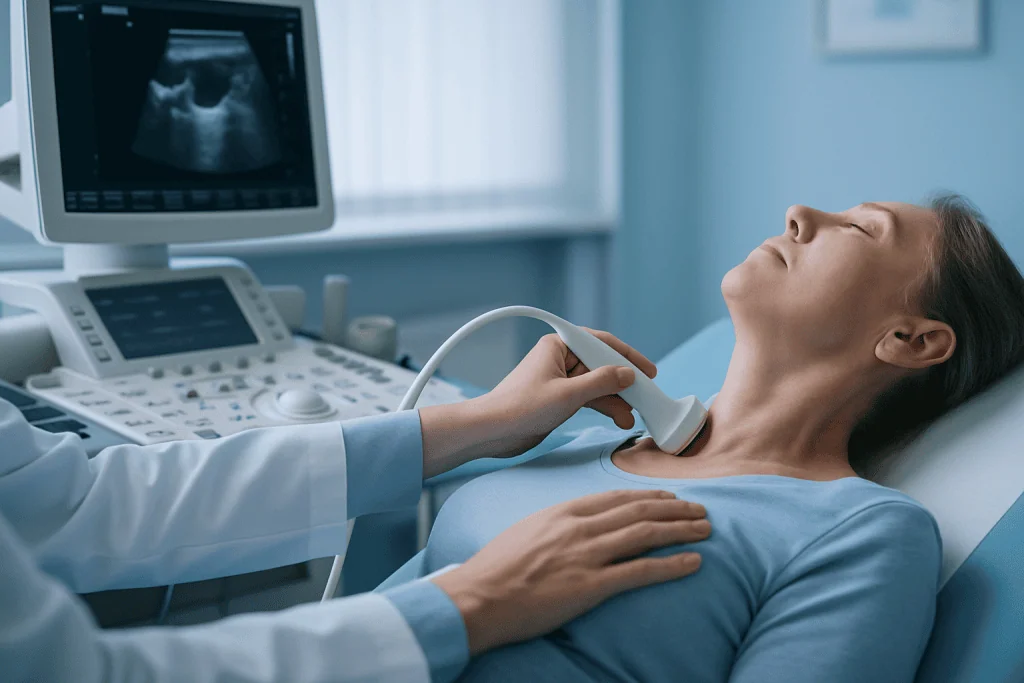
Imaging may include thyroid ultrasound, which uses sound waves to show the size and structure of the thyroid and to evaluate nodules. In selected cases, nuclear medicine imaging or uptake testing helps determine whether the thyroid is diffusely overactive, as is typical in Graves disease, or whether another cause is present. These diagnostic technologies help physicians avoid assumptions and select treatment based on the actual pattern of disease.
Initial treatment often includes medications. Antithyroid drugs are prescribed to reduce hormone production. The dose is adjusted based on thyroid blood tests and clinical response. Beta-blockers may be used for short-term symptom control, especially when palpitations, tremor, or anxiety-like physical symptoms are prominent. Patients are educated about warning signs that require urgent medical contact, such as fever, sore throat, severe fatigue, jaundice, dark urine, or significant abdominal pain while taking antithyroid medication.
Follow-up testing is essential. Thyroid hormone levels do not normalize immediately, and TSH may remain suppressed for some time even after hormone levels improve. For this reason, physicians interpret results in context and adjust therapy carefully. Over-treatment can lead to hypothyroidism, while under-treatment leaves the patient exposed to ongoing hyperthyroidism. Regular monitoring supports safer dose changes and helps the care team decide whether medication is likely to remain appropriate.
If radioactive iodine therapy is selected, the patient is evaluated for suitability. Pregnancy must be excluded, and breastfeeding must be stopped in accordance with medical guidance before this treatment. The patient receives a calculated amount of radioactive iodine, usually by mouth. The iodine is taken up mainly by thyroid tissue, where it gradually reduces hormone production. The treatment itself is typically brief, but patients receive radiation-safety instructions for a defined period afterward, such as limiting close contact with young children or pregnant individuals. The effect develops over weeks to months, and blood tests are repeated to track thyroid function. Many patients eventually require lifelong thyroid hormone replacement if the thyroid becomes underactive, which is an expected and manageable outcome of definitive therapy.
If surgery is recommended, preparation focuses on making the patient as medically stable as possible. The thyroid hormone level is usually controlled before surgery when time allows. Beta-blockers, antithyroid medication, and sometimes iodine preparations may be used to reduce thyroid activity and blood flow before the operation. An experienced endocrine surgeon evaluates the thyroid size, anatomy, nodules, vocal cord considerations, and any previous neck surgery. Anesthesia assessment is performed, and patients receive instructions about medications, fasting, and hospital admission.
Thyroidectomy is performed under general anesthesia. The surgeon removes the thyroid gland through an incision in the lower neck, taking care to protect the recurrent laryngeal nerves, which control the vocal cords, and the parathyroid glands, which regulate calcium balance. Intraoperative visualization, meticulous surgical technique, and appropriate monitoring help reduce risk. The duration varies depending on thyroid size, anatomy, inflammation, and whether additional procedures are needed, but many thyroid operations are completed within several hours. After surgery, patients are monitored for breathing, voice changes, bleeding, and calcium levels. Thyroid hormone replacement is started after total thyroidectomy and adjusted through follow-up blood tests.
Recovery depends on the treatment chosen. Medication-based treatment usually allows patients to continue normal activities, though symptom improvement may take several weeks and follow-up is ongoing. After radioactive iodine, many patients resume routine activities quickly while following safety instructions, but thyroid levels require monitoring for months. After thyroid surgery, patients commonly stay in the hospital for observation and return gradually to normal activity over one to two weeks, depending on their health and the extent of surgery. Voice fatigue, neck tightness, swallowing discomfort, and temporary calcium changes may occur and are managed through postoperative care.
Throughout treatment, modern digital imaging, laboratory diagnostics, ultrasound, nuclear medicine methods, ophthalmologic assessment tools, anesthetic monitoring, and surgical safety protocols may be used according to the patient’s needs. The value of technology is not only in sophistication, but in how it supports more accurate diagnosis, safer planning, and timely adjustment of care.
Why Acting Early Matters
Graves disease can progress beyond uncomfortable symptoms. Excess thyroid hormone increases the workload of the heart and may trigger fast or irregular rhythms. Atrial fibrillation, in particular, can increase the risk of stroke in some patients and may require additional management. Over time, uncontrolled hyperthyroidism can weaken muscles, reduce exercise capacity, worsen anxiety and sleep disruption, and contribute to bone loss, especially in postmenopausal women and older adults.
Delay can also complicate eye disease. Thyroid eye disease has an active inflammatory phase during which symptoms may worsen. Early recognition, smoking cessation, thyroid stabilization, eye protection, and specialist care can help reduce avoidable harm. Patients with pain, double vision, reduced color vision, or declining vision require prompt assessment because severe eye disease can threaten sight.
For women who are pregnant or planning pregnancy, early care is particularly important. Both uncontrolled hyperthyroidism and inappropriate medication exposure can create risk. Treatment must be individualized by trimester, severity, antibody levels, and maternal-fetal considerations. Patients should not stop or change thyroid medication without medical advice, but they should seek timely specialist guidance.
In rare cases, severe untreated hyperthyroidism can lead to thyroid storm, a medical emergency with fever, severe rapid heartbeat, confusion, vomiting, diarrhea, and organ stress. While uncommon, this possibility illustrates why persistent symptoms should not be ignored. Early diagnosis allows treatment to begin before the condition becomes medically unstable.
Benefits of Graves Disease Treatment
The benefits of treatment extend beyond thyroid blood test results and can affect many aspects of physical health and daily life.
| Benefit | What It Means for You |
|---|---|
| Control of excess thyroid hormone | Bringing thyroid hormone levels into a safer range can reduce strain on the heart, muscles, metabolism, and nervous system. |
| Relief of disruptive symptoms | Palpitations, tremor, heat intolerance, sweating, sleep disturbance, and unexplained weight loss often improve as thyroid levels stabilize. |
| Reduced risk of complications | Timely care can help lower the risk of rhythm problems, bone loss, muscle weakness, and severe hyperthyroid events. |
| Better planning for pregnancy or surgery | Controlled thyroid function supports safer pregnancy planning and reduces anesthesia and surgical risks when procedures are needed. |
| Appropriate care for eye involvement | Recognizing thyroid eye disease early allows eye symptoms to be monitored and treated by the right specialists. |
| A long-term strategy | An individualized plan helps determine whether medication, radioactive iodine, surgery, or continued monitoring best fits your health and preferences. |
Recovery and Follow-Up Timeline
Recovery varies depending on whether the main treatment is medication, radioactive iodine, surgery, or a combination of therapies.
| Time Period | What Patients Can Expect |
|---|---|
| Day 1 | Evaluation may include blood tests, antibody testing, heart assessment, ultrasound, or eye review. If treatment begins, symptom-control medication may help palpitations and tremor relatively quickly. |
| First Week | Patients on medication may begin to feel gradual symptom improvement, although hormone levels take longer to normalize. After radioactive iodine, safety instructions are followed. After surgery, monitoring focuses on voice, calcium, incision healing, and comfort. |
| First Month | Repeat thyroid blood tests help guide medication adjustment. After surgery, many patients return to usual daily activities, with thyroid hormone replacement monitored. After radioactive iodine, hormone levels may still be changing. |
| Three to Six Months | Treatment response becomes clearer. Medication doses may be reduced or adjusted. After radioactive iodine, hypothyroidism may develop and require replacement therapy. Eye symptoms, if present, continue to be assessed. |
| Longer Term | Some patients remain stable after a course of medication, while others need definitive treatment. Patients who become hypothyroid after radioactive iodine or surgery usually take lifelong thyroid hormone replacement with periodic monitoring. |
What Influences a Good Outcome?
A good result in Graves disease treatment depends on accurate diagnosis, appropriate treatment selection, careful monitoring, and patient-specific risk management. The first step is confirming that Graves disease is truly the cause of hyperthyroidism. Other conditions, such as thyroiditis or toxic nodular goiter, can produce abnormal thyroid tests but require different strategies. Antibody testing, imaging, and clinical pattern recognition help clarify the diagnosis.
The severity of hyperthyroidism also matters. Patients with very high hormone levels, significant weight loss, heart rhythm disturbances, or marked goiter may need more urgent stabilization. Older adults and patients with heart disease require particularly careful management because they may be more vulnerable to complications. In these cases, cardiology input may be appropriate alongside endocrine care.
Medication tolerance and adherence influence outcomes. Antithyroid drugs can be highly useful, but they require regular blood testing and awareness of rare side effects. Patients who miss follow-up appointments or adjust medication without guidance are at higher risk of unstable thyroid levels. Clear instructions, accessible communication, and an agreed monitoring schedule are essential, especially for international patients returning home after initial treatment.
Eye disease is another major factor. Active thyroid eye disease can affect the choice and timing of radioactive iodine, and patients who smoke have a higher risk of more severe eye involvement. Smoking cessation is one of the most important modifiable steps a patient can take. Eye symptoms should be evaluated on their own terms rather than assumed to improve automatically with thyroid control.
Pregnancy plans can significantly shape treatment. Some medications are preferred or avoided at different stages of pregnancy, and radioactive iodine is not used during pregnancy or breastfeeding. Women planning pregnancy may benefit from stabilizing Graves disease before conception and discussing whether medication, surgery, or another strategy is most appropriate. Antibody levels may also require monitoring because they can affect the fetus or newborn in selected cases.
The size and structure of the thyroid gland can influence treatment success. Large goiters, compressive symptoms, suspicious nodules, or coexisting thyroid cancer concern may lead physicians to recommend surgery rather than prolonged medication or radioactive iodine. Surgical outcome depends on careful preparation, endocrine surgical experience, and postoperative monitoring of calcium and thyroid hormone replacement.
Finally, long-term follow-up is central. Graves disease can relapse after medication, and definitive treatments often result in hypothyroidism that must be treated with daily thyroid hormone replacement. This is usually straightforward, but the dose must be personalized. A stable outcome is achieved through ongoing partnership between the patient and medical team, not through a single test or visit.
Why International Patients Choose Acibadem for Graves Disease Care
International patients often seek care for Graves disease when they need a clear diagnosis, a second opinion, coordinated specialist input, or treatment that can be organized efficiently while they are away from home. At Acibadem, Graves disease care is built around evidence-based evaluation and individualized planning. The aim is to understand the full picture: thyroid hormone levels, autoimmune activity, eye involvement, heart effects, goiter size, medication tolerance, pregnancy considerations, and the patient’s personal goals.
Acibadem Hospitals are JCI-accredited, reflecting structured quality and patient safety standards across many aspects of care. For a patient traveling from another country, this matters because Graves disease treatment often involves several steps: laboratory testing, imaging, specialist consultation, treatment selection, and follow-up planning. International patients also need clear communication about records, medications, travel timing, and what can safely be continued after returning home.
Care may involve endocrinologists, nuclear medicine physicians, endocrine surgeons, ophthalmologists, cardiologists, radiologists, anesthesiologists, and obstetric specialists when appropriate. Complex cases can be reviewed through multidisciplinary boards or specialist discussions, particularly when eye disease, pregnancy, nodules, severe hyperthyroidism, or surgical decisions are involved. This collaborative model helps ensure that treatment is not based on a narrow view of the thyroid alone, but on how the disease is affecting the whole patient.
Diagnostic resources may include advanced thyroid laboratory testing, high-resolution ultrasound, nuclear medicine assessment, cardiac testing, ophthalmologic evaluation, and cross-sectional imaging when clinically indicated. These tools help define the cause and consequences of disease with greater precision. For patients considering surgery, preoperative planning, anesthetic evaluation, intraoperative safety practices, and postoperative monitoring are coordinated to reduce avoidable risk.
Acibadem International supports patients before, during, and after travel with services in more than 20 languages. This can include assistance with appointment scheduling, medical record transfer, interpretation, hospital admission arrangements, and coordination of follow-up recommendations. For patients who have already received treatment elsewhere, the team can review prior test results and help determine whether current symptoms reflect persistent hyperthyroidism, relapse, medication effects, hypothyroidism, or eye disease activity.
Personalized treatment planning is especially important in Graves disease because the best option differs from patient to patient. A young patient planning pregnancy, an older patient with atrial fibrillation, a person with active eye disease, a patient with a very large goiter, and someone who has relapsed after medication may all need different strategies. The discussion should be practical and transparent: what the treatment can achieve, what monitoring is required, what side effects to watch for, how travel affects timing, and what long-term thyroid care will look like.
For many international patients, choosing care abroad is not only a medical decision but also a trust decision. Clear explanations, access to the right specialists, careful interpretation of tests, and a written plan for follow-up are central to that trust. Acibadem’s approach is designed to give patients a medically sound pathway while respecting the realities of international travel and ongoing care in the patient’s home country.
Taking the Next Step
If you have symptoms of hyperthyroidism, abnormal thyroid blood tests, eye changes, a known diagnosis of Graves disease, or uncertainty about your current treatment plan, a specialist evaluation can help clarify the safest path forward. The right plan may involve medication and monitoring, definitive treatment with radioactive iodine or surgery, focused eye care, or a coordinated approach that addresses several issues at once.
Before your consultation, it is helpful to gather previous thyroid blood tests, antibody results, ultrasound or scan reports, medication names and doses, eye examination records, heart evaluations, and pregnancy-related information if relevant. These details allow the medical team to understand how the disease has behaved over time and what decisions have already been made.
Graves disease can feel unpredictable, but it can be managed with careful diagnosis, appropriate treatment, and consistent follow-up. If you are considering treatment in Turkey or seeking an international second opinion, Acibadem can review your case and help you understand your options in a structured and medically responsible way.
This information is general and is not a substitute for professional medical advice. Diagnosis and treatment decisions should be made with a qualified physician who can evaluate your individual condition.
Preparation
- Preparation usually includes a detailed medical history, physical examination and blood tests for thyroid hormone and antibody levels. Your doctor may request thyroid ultrasound, scintigraphy or eye assessment if needed. Bring current medications, previous test results and inform your doctor if you are pregnant or planning pregnancy.
Aftercare
- Aftercare involves regular thyroid function tests to adjust medication and monitor response. Patients should report worsening palpitations, shortness of breath, fever, eye pain or vision changes promptly. Long-term follow-up helps prevent relapse, thyroid imbalance and eye-related complications.
Frequently Asked Questions
What affects the cost of Graves disease treatment?
Cost depends on the treatment pathway, the number of specialist consultations, laboratory testing, imaging, eye assessment, medication needs, and whether radioactive iodine or surgery is required. International services such as interpretation, transfers, and follow-up coordination can also affect the final quote.
How can I get a personalised quote for Graves disease care in Turkey?
You can request a free consultation by sharing recent thyroid test results, previous imaging, medication history, symptoms, and any eye-related complaints. A specialist review helps determine which tests or treatments are needed before a personalised quote is prepared.
Is Graves disease usually treated with medicine or a definitive procedure?
Many patients begin with medication and monitoring, while some may need radioactive iodine or thyroid surgery. The best option depends on hormone levels, goitre size, eye disease, pregnancy plans, medication tolerance, and specialist assessment.
Will my package include diagnosis and follow-up?
Package contents vary by hospital and care plan. A typical plan may include endocrinology consultation, thyroid blood tests, antibody testing, imaging when needed, treatment planning, and guidance for follow-up, but the exact inclusions should be confirmed in the written quote.
Does thyroid eye disease change the cost?
Yes. If eye symptoms are present, additional ophthalmology assessment, imaging, eye treatments, or longer monitoring may be needed. This can change the care pathway and the final cost.
Is this information medical or financial advice?
No. This is general educational information only. A personalised medical plan and quote require specialist evaluation, review of your records, and discussion of your treatment goals.
Medically reviewed by the Acıbadem International Medical Board June 20, 2026
See our medical review board →
Update history
- PublishedJune 8, 2026
- Medical review approvedJune 20, 2026
- Last content updateSeptember 8, 2026
References1
- Graves' Disease my.clevelandclinic.org
Trusted care for international patients
From the Acibadem Blog

Long-Term Graves Disease Care: Follow-Up Blood Tests, Relapse Watch and Ongoing Monitoring
Living with Graves disease usually means years of scheduled thyroid blood tests, most often TSH and free T4, with the interval set by your…