Symptoms of Sexually Transmitted Infections in Women Explained: Common Triggers and Red Flags

Many sexually transmitted infections in women cause few symptoms or none at all. Common warning signs include changes in discharge, genital sores, pain during urination, pelvic pain, itching, and bleeding between periods or after sex.
Key Takeaways
- Many sexually transmitted infections in women cause few symptoms or none at all.
- Common warning signs include changes in discharge, genital sores, pain during urination, pelvic pain, itching, and bleeding between periods or after sex.
- Symptoms alone cannot identify the exact infection; laboratory testing is needed for diagnosis.
- Early treatment helps prevent complications such as pelvic inflammatory disease, chronic pelvic pain, and fertility problems.
- Partners may also need testing and treatment to reduce reinfection.
Medically reviewed by the Acıbadem International Medical Board — July 25, 2026
Symptoms of sexually transmitted infections in women can range from unusual vaginal discharge and burning with urination to pelvic pain, sores, bleeding after sex, or no noticeable symptoms at all. Because several common infections can be mild or silent at first, testing is often the only reliable way to know what is causing symptoms and to start the right treatment.
Overview: what STI symptoms in women can look like
Symptoms of sexually transmitted infections in women are not always obvious. Some women notice vaginal discharge that looks or smells different, burning during urination, genital itching, a rash, sores, or pelvic discomfort. Others have no symptoms at all, which is one reason routine screening can be important even when a person feels well.
Sexually transmitted infections, often called STIs, are caused by bacteria, viruses, or parasites that can spread through vaginal, anal, or oral sexual contact. The same symptom can have different causes, and not every genital symptom is due to an STI. Yeast infections, urinary tract infections, bacterial vaginosis, skin irritation, and hormonal changes can sometimes cause similar complaints.
A practical way to think about symptoms is to look for patterns: discharge changes, irritation or sores on the vulva, urinary burning, bleeding outside the usual menstrual cycle, pain during sex, or lower abdominal pain. These signs do not confirm an STI on their own, but they are good reasons to seek medical advice and testing.
Common symptoms and red flags to watch for
The most common symptoms of sexually transmitted infections in women include unusual vaginal discharge, a new or unpleasant odor, burning or pain with urination, itching around the vulva, and pain during sex. Some infections also cause small blisters, open sores, bumps, or a rash in the genital or anal area. If the throat is affected after oral sex, a sore throat can occasionally occur.
Pelvic or lower abdominal pain can be a more concerning sign, especially when it comes with fever, nausea, or worsening discomfort. This can suggest that an infection has moved upward into the reproductive organs, a condition known as pelvic inflammatory disease. Prompt evaluation matters because untreated upper genital tract infection can affect fertility and long-term pelvic health.
Bleeding between periods, spotting after sex, or an increase in menstrual-like cramping may also occur with some infections. Women who have rectal exposure may notice anal pain, discharge, bleeding, or discomfort during bowel movements. Because symptoms overlap so much, laboratory testing is the clearest way to identify the cause.
- Unusual discharge that is yellow, green, gray, or frothy
- Burning during urination
- Genital sores, blisters, ulcers, or warts
- Pelvic pain or pain during sex
- Itching, irritation, or rash in the genital area
- Bleeding between periods or after intercourse
Why symptoms vary: common infections and their typical patterns

Different infections often create different symptom patterns, although overlap is common. Chlamydia and gonorrhea may cause discharge, urinary burning, pelvic pain, or bleeding after sex, but they are also frequently silent in women. Trichomoniasis can lead to discharge, odor, itching, and discomfort with urination or intercourse. Genital herpes more often causes painful blisters or sores, while human papillomavirus may cause genital warts or no symptoms at all.
Some women develop symptoms soon after exposure, while others may not notice anything for weeks, months, or longer. The body’s immune response, the specific organism involved, whether the cervix or urethra is affected, and the presence of another vaginal condition can all influence how symptoms appear. Menstrual timing can also make symptoms more noticeable, especially discharge or pelvic cramps.
It is also possible for symptoms to reflect more than one condition at the same time. For example, a person may have an STI along with bacterial vaginosis, cervicitis, or a yeast infection. That is why self-diagnosis can be unreliable, and why a clinician may recommend swabs, urine testing, blood tests, or imaging depending on the symptoms present.
Common triggers and risk factors
STIs are not caused by poor hygiene. They are triggered by exposure to an infectious organism during sexual contact. Risk is influenced by several factors, including unprotected sex, a new sexual partner, multiple partners, a partner with symptoms, or a partner whose STI status is unknown. Previous STIs can also increase the risk of future infection.
Age can matter because younger women often have a higher risk of certain infections, particularly chlamydia. Biological factors also play a role. Changes in the cervix, vaginal flora, and mucosal tissues may affect susceptibility. Some infections become easier to acquire or transmit when there is genital irritation, small skin breaks, or another untreated infection present.
Not every woman with risk factors develops symptoms, and not every woman with symptoms has an STI. Still, a history of recent unprotected sex, a new partner, sexual assault, or a partner diagnosed with an STI makes prompt assessment especially important. Clinicians may also consider blood-borne infections such as HIV, hepatitis B, and syphilis depending on exposure history.
How doctors diagnose the cause
Diagnosis starts with a medical history and symptom review. A doctor may ask about discharge, pain, bleeding, sexual exposures, menstrual timing, pregnancy possibility, prior infections, and any medicines already tried. A pelvic exam may be recommended if there is pelvic pain, sores, significant discharge, or bleeding, though the need for an exam depends on the situation.
Testing often includes a urine sample or vaginal/cervical swab for chlamydia and gonorrhea, and a swab for trichomoniasis or herpes when indicated. Blood tests may be used for syphilis, HIV, hepatitis infections, or herpes in selected situations. If pain is more severe or the clinician suspects an internal complication, imaging such as MRI or other pelvic evaluation may be considered to look for alternative causes or the extent of inflammation.
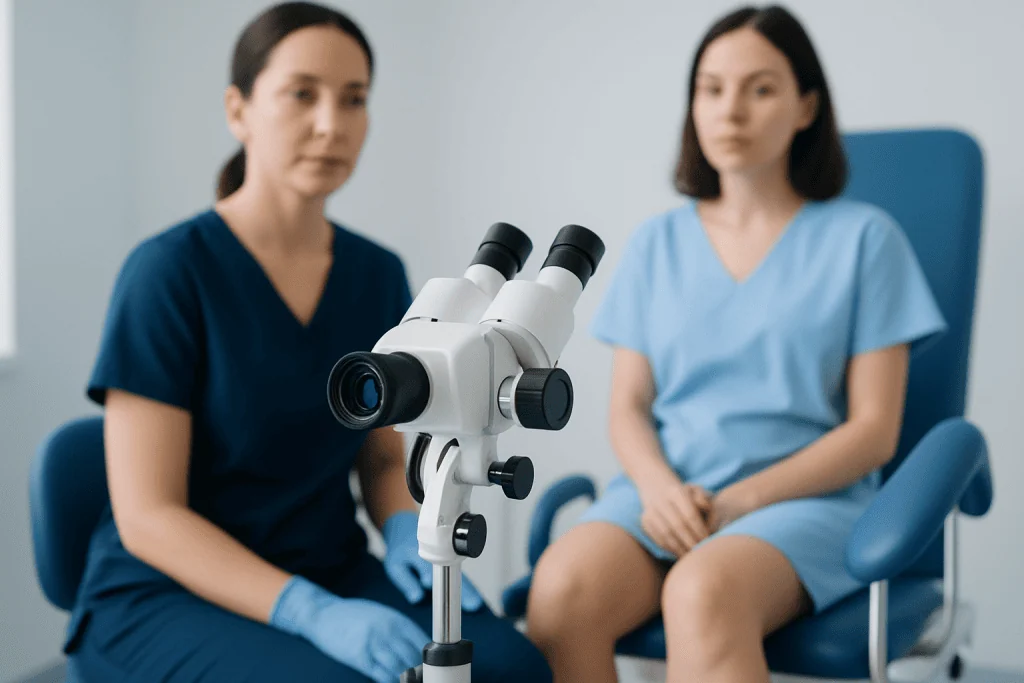
Because discharge changes can have non-STI causes, doctors may also test for yeast infection or bacterial vaginosis. In some cases, further gynecologic assessment helps clarify whether symptoms are related to the cervix, uterus, ovaries, bladder, or skin. Depending on the presentation, clinicians may also use colposcopy or gynecological examination as part of a broader evaluation.
Treatment options and why early care matters
Treatment depends on the organism causing the infection. Bacterial STIs such as chlamydia, gonorrhea, and syphilis are treated with prescription antibiotics. Trichomoniasis is treated with antiparasitic medication. Viral infections such as herpes are managed with antiviral medicines that can shorten outbreaks and reduce transmission risk, while genital warts may require local treatments or procedures. Human papillomavirus itself may clear on its own, but abnormal cervical cell changes still need follow-up.
Early treatment matters because untreated infection can spread to the uterus and fallopian tubes, leading to pelvic inflammatory disease, chronic pelvic pain, ectopic pregnancy risk, or fertility problems. If symptoms suggest upper genital tract infection or another serious condition, a doctor may recommend urgent treatment and close follow-up. Women with persistent pelvic pain may need assessment for related gynecologic conditions such as endometriosis if tests do not fully explain symptoms.
Partner management is an important part of care. A clinician may advise that current or recent sexual partners be informed, tested, and treated when needed to reduce reinfection. It is also important to avoid sexual contact until treatment is completed and a healthcare professional confirms when it is safe to resume sexual activity.
Prevention, self-care, and protecting long-term health
Safer sex strategies can lower the risk of STIs. Correct and consistent use of condoms or dental dams helps reduce exposure, though it does not eliminate it completely because some infections spread through skin-to-skin contact. Regular screening is especially useful for women with new or multiple partners, those under routine screening recommendations, and anyone who is pregnant or planning pregnancy.
Vaccination is another important preventive tool. HPV vaccination helps protect against several high-risk and wart-causing strains of human papillomavirus, and hepatitis B vaccination protects against hepatitis B infection. Women should also keep up with routine cervical screening as advised by their clinician, because it can detect cell changes related to HPV even when no symptoms are present.
At home, it is best to avoid douching or using harsh scented products in the genital area, since these can irritate tissues and make symptoms harder to interpret. Over-the-counter treatments should be used carefully; repeatedly treating presumed yeast infection without testing can delay the diagnosis of an STI. Near the end of the care pathway, women seeking coordinated evaluation may choose centers such as Acibadem International, where multidisciplinary specialists in JCI-accredited hospitals diagnose and treat gynecologic and infectious conditions for international patients.
When to seek medical care
A woman should seek medical care if she has new genital sores, unusual discharge, burning with urination, bleeding after sex, pelvic pain, pain during intercourse, or itching that does not improve. Testing is also wise after unprotected sex with a new partner, after learning that a partner may have an STI, or before trying to become pregnant if there are any concerns about past exposure.
Urgent care is especially important for severe lower abdominal pain, fever, fainting, vomiting, pregnancy with possible STI symptoms, or rapidly worsening symptoms. These may point to pelvic inflammatory disease, ectopic pregnancy, or another condition that needs prompt attention. Women who think they may have been exposed should avoid sexual contact until they have been assessed and have clear guidance about testing and treatment.
Even when symptoms are mild, they should not be ignored. Many STIs are straightforward to diagnose and treat once identified, and timely care helps protect reproductive health and reduce transmission to partners.
Frequently asked questions
Can a woman have an STI without symptoms?
Yes. Many sexually transmitted infections in women cause very mild symptoms or no symptoms at all, especially chlamydia, gonorrhea, and HPV. That is why screening based on age, risk, and sexual history is often recommended even when someone feels completely well.
What discharge changes may suggest an STI?
Discharge that is new, heavier than usual, foul-smelling, yellow, green, gray, or frothy can sometimes be linked to an STI. However, discharge changes can also happen with bacterial vaginosis, yeast infection, hormonal changes, or irritation, so testing is needed to know the cause.
Do STI symptoms always appear soon after exposure?
No. Some infections can cause symptoms within days, while others may stay silent for weeks, months, or longer. A lack of early symptoms does not rule out infection, which is why post-exposure testing advice from a clinician is important.
Can STI symptoms feel like a urinary tract infection or yeast infection?
Yes. Burning with urination, itching, irritation, and discharge can overlap with urinary tract infections, yeast infections, and bacterial vaginosis. Because the symptoms are similar, self-diagnosis is often unreliable and professional testing is the safest approach.
Should sexual partners be tested too?
Often, yes. If an STI is diagnosed, current or recent partners may also need testing and treatment, depending on the infection. This helps reduce reinfection and lowers the chance of passing the infection back and forth.
When is pelvic pain with STI symptoms more serious?
Pelvic pain is more concerning when it is severe, getting worse, associated with fever, nausea, vomiting, unusual bleeding, or pregnancy. These signs can suggest pelvic inflammatory disease or another urgent condition and should be assessed promptly.
References
- Centers for Disease Control and Prevention
- World Health Organization
- American College of Obstetricians and Gynecologists
- Office on Women's Health
- National Health Service
This article is for general information only and is not a substitute for professional medical advice. Please consult a qualified doctor about your individual situation.
Explore treatments in Turkey — costs, top hospitals & a free quote
JCI-accredited · board-certified surgeons · reply within 24h

More from the Health Library



Related Specialists

Assoc. Prof. Dr. Yunus Dönder
General Surgery
Assoc. Prof. Dr. Emel Ur Özçelik
Neurology
Assoc. Prof. Dr. Caner Baran
Urology
Prof. Dr. Murat Toprak
Otorhinolaryngology