Gluteus Medius Exercises — Explained by Medical Evidence, Not Myths

The gluteus medius is an important hip stabilizer, not just a muscle for shaping the outer hip. Well-chosen gluteus medius exercises may improve balance, walking mechanics, and pelvic control.
Key Takeaways
- The gluteus medius is an important hip stabilizer, not just a muscle for shaping the outer hip.
- Well-chosen gluteus medius exercises may improve balance, walking mechanics, and pelvic control.
- More is not always better; painful or poorly performed exercises can overload the hip and lower back.
- Exercise selection usually progresses from simple activation to weight-bearing and functional movements.
- Persistent hip pain, limping, weakness, or pain that spreads down the leg should be assessed by a qualified clinician.
Medically reviewed by the Acıbadem International Medical Board — July 25, 2026
Gluteus medius exercises are movements designed to strengthen a key side-hip muscle that helps stabilize the pelvis during walking, standing, and single-leg activity. Evidence suggests they can support hip control, reduce strain on nearby structures, and be useful in rehabilitation when matched to the person’s symptoms and movement pattern.
Overview: What gluteus medius exercises are and why they matter
Gluteus medius exercises are movements that target the gluteus medius, a broad muscle on the outer side of the hip. Its main role is to help move the leg out to the side and, just as importantly, to keep the pelvis level during walking, stair climbing, running, and standing on one leg. In practical terms, this muscle helps the body stay steady rather than letting the hip drop or the knee drift inward.
Medical and rehabilitation research does not support the common myth that every hip or knee problem comes from a “weak glute med.” However, the evidence does show that reduced hip abductor strength, altered pelvic control, or poor exercise tolerance can contribute to symptoms in some people. That is why gluteus medius exercises are often used as part of broader care for hip pain, overuse injuries, and movement-related discomfort rather than as a one-size-fits-all solution.
Another common myth is that only side-lying leg raises count as gluteus medius work. In reality, this muscle is active in many tasks, especially when the body must control weight on one leg. Exercises may include simple activation drills, side-stepping with a band, step-downs, balance training, and functional strengthening. The best choice depends on symptoms, mobility, strength, and daily activity demands.
How the gluteus medius affects movement and pain
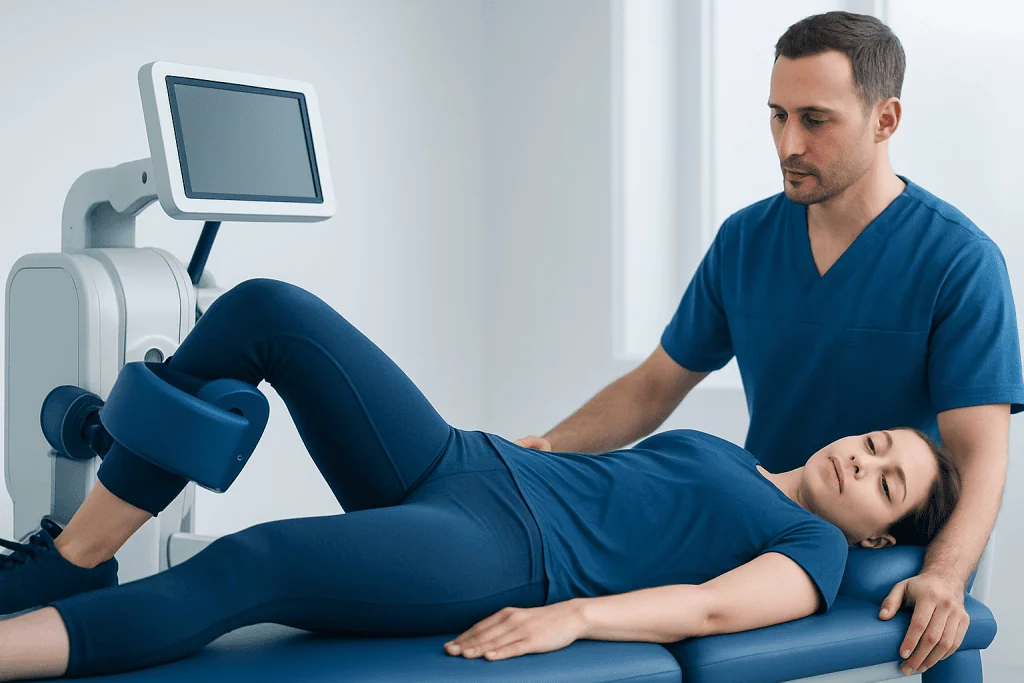
The gluteus medius works closely with the gluteus minimus, deep hip rotators, trunk muscles, and the opposite side of the pelvis. During walking, it helps prevent the pelvis from dropping excessively on the unsupported side. If this control is reduced, the body may compensate by leaning the trunk, rotating the leg differently, or placing extra strain on the outer hip, lower back, knee, or even the foot.
This does not mean that pain automatically equals muscle weakness. Pain can change how muscles activate, and people with hip pain may avoid loading the area, which may lead to deconditioning over time. In other words, pain and weakness can influence each other. A careful assessment is often needed to decide whether the main issue is tendon irritation, joint disease, referred pain from the back, or another cause.
Clinicians commonly consider gluteus medius loading in people with outer hip pain, some running-related problems, and certain movement patterns after injury or surgery. It may also be relevant in conditions such as hip pain or rehabilitation after hip replacement when restoring safe walking and single-leg stability becomes a goal.
When gluteus medius exercises may help most

These exercises are often most useful when a person has difficulty controlling the hip during everyday activities. Examples include pain or fatigue on the outside of the hip when walking, discomfort when lying on one side, a noticeable hip drop when standing on one leg, or knee movement that collapses inward during squats and stairs. They can also be part of return-to-sport rehabilitation after a period of inactivity.
One evidence-based reason gluteus medius exercises can help is that tendons and muscles usually respond best to gradual, appropriately dosed loading. When the outer hip area is sensitive, complete rest may not solve the underlying problem. Instead, a measured program can improve tissue tolerance over time, provided exercises do not cause a prolonged flare-up.
These exercises may be included in broader plans for people with gluteal tendinopathy, some forms of overuse-related pelvic instability, and selected cases of knee or lower-back pain where hip control is part of the picture. They can also complement programs using physical therapy and rehabilitation to restore strength, coordination, and confidence in movement.
Examples of evidence-informed gluteus medius exercises
Exercise choices are usually more effective when they follow a progression. Early-stage exercises often focus on gentle activation with good alignment and manageable load. Examples may include side-lying hip abduction, isometric wall press variations, or supported standing hip abduction. These options can help a person feel the side-hip muscles working without demanding too much balance or joint motion.
As symptoms and control improve, loading often progresses to more functional tasks. Common examples include banded side steps, monster walks, single-leg balance drills, step-downs, lateral step-ups, split squats, and controlled single-leg deadlift patterns. These exercises may recruit the gluteus medius more meaningfully because they challenge pelvic stability under body weight, which is closer to real-life movement demands.
A few technique points matter. The pelvis should stay relatively level, the trunk should not lean excessively unless specifically coached, and the movement should come from the hip rather than the lower back. Quality usually matters more than doing many repetitions. A clinician may suggest slower tempo, shorter range, or external support at first to improve control.
- Begin with exercises that cause little or no lingering pain.
- Progress one variable at a time, such as resistance, range, balance challenge, or repetitions.
- Avoid turning the exercise into a low-back movement by arching the spine.
- Stop and seek review if pain is sharp, causes limping, or worsens steadily over days.
Common mistakes and myths to avoid
A frequent misconception is that the gluteus medius should be trained to exhaustion with strong bands or high-volume repetition. In reality, tissues often respond better to the right dose than to the highest possible dose. Too much load too early can irritate the outer hip, especially when there is an underlying tendon problem. Pain during exercise is not always harmful, but a marked increase in soreness lasting into the next day may mean the program is too aggressive.
Another myth is that there is one “best” gluteus medius exercise for everyone. Muscle activity studies can help guide exercise selection, but they do not replace clinical reasoning. An exercise that creates high muscle activation in a laboratory may still be unsuitable for someone with poor balance, severe pain, stiffness, or recent surgery. Comfort, safety, function, and the person’s goals all matter.
It is also important not to ignore neighboring contributors. Limited ankle mobility, trunk weakness, altered gait, arthritis, tendon irritation, or spine-related symptoms may all affect how the hip functions. If pain is due to a condition such as osteoarthritis, strengthening may still help, but it works best when integrated with education, pacing, and overall joint care rather than viewed as a stand-alone cure.
How a clinician evaluates side-hip weakness or pain
Assessment usually starts with the story of the symptoms: where the pain is felt, what activities provoke it, how long it has lasted, and whether there was an injury. A clinician may ask about walking tolerance, sleep discomfort, training changes, back pain, or numbness and tingling. This helps distinguish local hip problems from referred symptoms coming from the lower back or other structures.
The physical examination often includes observing walking, standing on one leg, and performing tasks such as squats or step-downs. Strength testing, flexibility, range of motion, and tenderness over the outer hip may be checked. Special attention is paid to whether the pelvis drops, the trunk compensates, or symptoms are reproduced by compression or loading of the gluteal tendons.
Imaging is not always necessary for simple overuse symptoms, but it may be considered when pain persists, there is significant weakness, trauma, loss of mobility, or concern about arthritis, tendon tear, bursitis, or another structural cause. Depending on the case, doctors may use MRI or other studies to clarify the diagnosis and guide treatment.
Treatment, self-care, and safe progression
Treatment depends on the underlying cause. For many people, a conservative approach is appropriate and may include activity modification, graded exercise, movement retraining, and short-term pain relief measures as advised by a clinician. Relative rest can be helpful during a flare, but complete inactivity for long periods may reduce strength and confidence, which can delay recovery.
Self-care usually centers on reducing aggravating positions and building tolerance gradually. For example, someone with outer hip pain may be advised to avoid repeatedly crossing the legs, hanging on one hip while standing, or sleeping directly on the painful side. A pillow between the knees when side sleeping may reduce compression at the outer hip in some cases.
Progression works best when symptoms are monitored over 24 hours, not only during the exercise session. Mild discomfort may be acceptable in some rehabilitation plans, but swelling, marked limping, night pain that is getting worse, or pain that clearly escalates after each session deserves review. In complex cases, multidisciplinary care may be useful. Acibadem International’s specialists in orthopedics, rehabilitation, and imaging at JCI-accredited hospitals evaluate and treat hip-related conditions for international patients.
When to seek medical care
Medical assessment is sensible if side-hip pain lasts more than a few weeks, limits walking or stairs, repeatedly interrupts sleep, or returns whenever activity increases. A person should also seek care if home exercises do not help, if strength seems to be declining, or if the source of pain is unclear. A proper diagnosis can prevent unnecessary exercises and help target treatment more effectively.
Prompt medical evaluation is especially important after a fall or direct injury, or if there is sudden severe pain, inability to bear weight, visible deformity, fever, unexplained swelling, or redness around the hip. Symptoms such as numbness, marked leg weakness, loss of bladder or bowel control, or pain that radiates below the knee may suggest a spine or nerve problem and should not be ignored.
In children, older adults, and people with known bone disease, cancer history, inflammatory conditions, or recent surgery, new hip pain should be assessed sooner rather than later. Exercises can be helpful, but they are safest and most effective when matched to the true cause of symptoms.
Frequently asked questions
What does the gluteus medius do?
The gluteus medius is a side-hip muscle that helps move the leg outward and stabilize the pelvis. It is especially important during walking, stair climbing, and standing on one leg.
Are gluteus medius exercises helpful for hip pain?
They can be helpful for some causes of hip pain, especially when poor load tolerance or hip control is part of the problem. However, they are not the right answer for every type of pain, so persistent symptoms should be assessed professionally.
Which exercise is best for the gluteus medius?
There is no single best exercise for everyone. The best option depends on pain level, balance, strength, mobility, and whether the goal is early rehabilitation or return to sport and daily function.
Can gluteus medius weakness cause knee or back problems?
Reduced hip stability can sometimes contribute to movement patterns that increase stress around the knee or lower back. Still, these symptoms are usually influenced by several factors, so the hip is only one part of the assessment.
Should gluteus medius exercises be painful?
Some people may feel mild, manageable discomfort during rehabilitation, but exercises should not cause sharp pain or a major flare-up afterward. If pain clearly worsens over the next day or causes limping, the program may need adjustment.
How often should these exercises be done?
The ideal frequency varies by the type of exercise, current symptoms, and recovery between sessions. A clinician or physical therapist can tailor the plan, but in general, gradual progression and good technique matter more than doing large amounts every day.
References
- American Academy of Orthopaedic Surgeons
- National Institute for Health and Care Excellence
- American Physical Therapy Association
- National Institute of Arthritis and Musculoskeletal and Skin Diseases
- BMJ Best Practice
This article is for general information only and is not a substitute for professional medical advice. Please consult a qualified doctor about your individual situation.
Explore treatments in Turkey — costs, top hospitals & a free quote
JCI-accredited · board-certified surgeons · reply within 24h