Gastritis Diet: What the Clinical Research Actually Says

No single gastritis diet cures gastritis; diet mainly helps reduce symptoms and irritation. The strongest treatment evidence is for addressing the cause, such as Helicobacter pylori infection or NSAID-related stomach injury.
Key Takeaways
- No single gastritis diet cures gastritis; diet mainly helps reduce symptoms and irritation.
- The strongest treatment evidence is for addressing the cause, such as Helicobacter pylori infection or NSAID-related stomach injury.
- Common triggers include alcohol, very spicy or fatty foods, large meals, and excessive coffee, but triggers vary from person to person.
- Eating smaller, simpler meals and keeping a food-symptom diary can help identify patterns.
- People with persistent pain, vomiting, bleeding, weight loss, or anemia should seek medical care rather than rely on diet alone.
A gastritis diet is not a single proven cure, but research supports a practical eating pattern that reduces stomach irritation, helps manage symptoms, and complements medical treatment. The most evidence-based approach is individualized: avoid clear triggers, limit alcohol and irritating foods, and treat the underlying cause such as infection or medication-related injury.
Overview: what a gastritis diet can and cannot do
A gastritis diet is a way of eating intended to reduce irritation of the stomach lining and make symptoms easier to manage. Clinical research does not support one universal menu that heals gastritis in every person. Instead, evidence suggests that food choices matter mainly because they can trigger or calm symptoms, while the underlying cause of gastritis often determines which medical treatment is needed.
Gastritis refers to inflammation of the stomach lining. It may be short-term or chronic, and it can be linked to infection, pain-relieving medicines such as nonsteroidal anti-inflammatory drugs, alcohol, bile reflux, autoimmune conditions, or other less common causes. Because these causes differ, nutrition advice needs to be practical and individualized rather than built around rigid food lists.
Research most consistently supports a few core principles: avoid substances that directly irritate the stomach, eat in a way that reduces symptom burden, and seek diagnosis when symptoms are ongoing. Diet can be useful, but it should be seen as part of management rather than a stand-alone cure. People who have not been evaluated may in fact have gastritis or another digestive problem with similar symptoms.
What clinical research suggests about eating patterns

Studies do not show that one named diet reliably treats all forms of gastritis. However, clinicians commonly recommend a bland, lower-irritation eating pattern during symptom flares because it is biologically plausible and often well tolerated. This usually means softer, simpler foods, less fat, less spice if spice is a trigger, and smaller portions spread through the day.
Evidence also supports paying attention to meal context, not only the food itself. Large meals can stretch the stomach and worsen discomfort, while late-night eating may increase upper abdominal symptoms in some people. Smaller, more frequent meals may therefore feel better, although this is a symptom-management strategy rather than a cure proven in trials.
There is some research interest in foods that may support gut health, including fiber-rich foods, fruits, vegetables, and fermented foods. These may fit into a healthy eating pattern for some people, but they are not substitutes for medical treatment, and fermented or acidic foods can worsen symptoms in others. A careful, individualized approach is more evidence-based than assuming that any one “stomach-healing” food works for everyone.
A useful way to apply the research is to focus on tolerability and consistency. If a food repeatedly increases burning, nausea, bloating, or pain, reducing or avoiding it is reasonable. If a balanced food is well tolerated, there is usually no evidence-based reason to exclude it simply because it appears on a generic online “avoid” list.
What to eat with gastritis
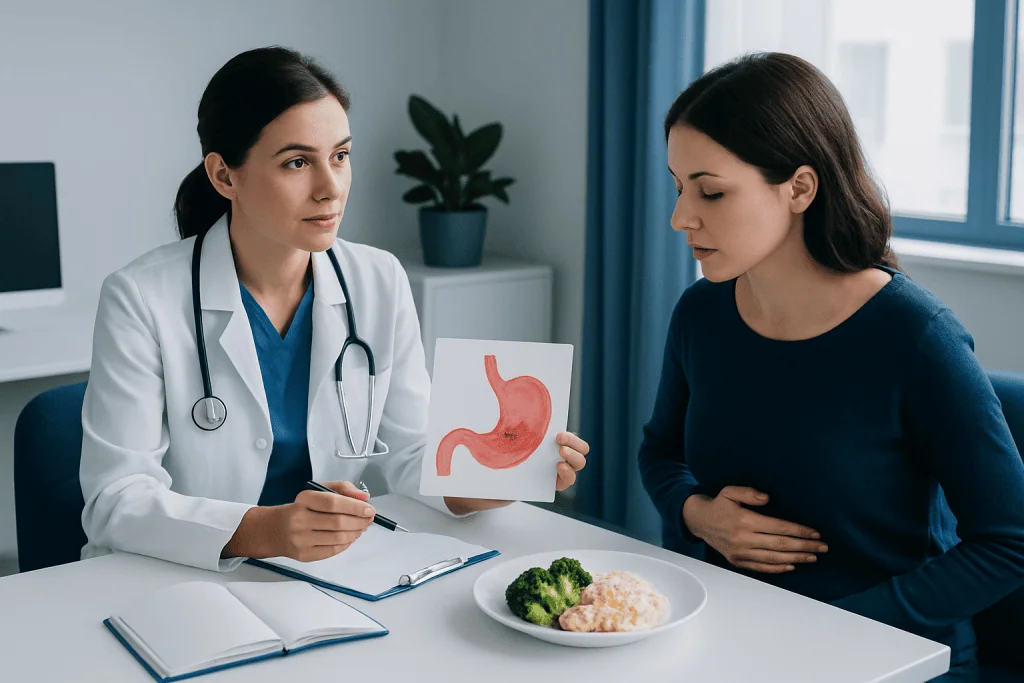
During active symptoms, many people do best with gentle foods that are less likely to irritate the stomach. These may include oatmeal, rice, bananas, applesauce, toast, potatoes, soup, yogurt if tolerated, eggs, lean poultry, fish, tofu, and cooked vegetables. The goal is not perfection but choosing foods that provide nutrition while being easier on the stomach.
Protein is important, especially if appetite is low, but very heavy or fried meals may worsen symptoms. Leaner preparations such as baking, steaming, boiling, or grilling are often better tolerated than deep-frying. Drinking enough water also matters, especially if nausea or reduced intake has led to mild dehydration.
For some people, fiber-rich foods are helpful as part of a balanced pattern, particularly from oats, beans, fruits, and vegetables. But if bloating is prominent, it may help to introduce higher-fiber foods gradually rather than all at once. Tolerance can change over time, so a temporary flare does not necessarily mean a food must be avoided forever.
- Choose smaller meals instead of very large portions.
- Prefer lower-fat cooking methods when symptoms are active.
- Include simple carbohydrate foods if nausea is present.
- Add lean protein to support recovery and fullness.
- Use a food and symptom diary to identify personal triggers.
Foods, drinks, and products that may worsen symptoms
Foods to avoid on a gastritis diet are not identical for everyone, but certain triggers are well recognized. Alcohol is one of the most important because it can directly irritate the stomach lining and worsen inflammation. Excessive coffee intake, especially on an empty stomach, can also aggravate symptoms in some people, though not everyone is sensitive to it.
Highly spicy foods, acidic foods such as citrus or tomato products, carbonated drinks, chocolate, peppermint, and high-fat meals are commonly reported triggers. The clinical evidence for each item is mixed, but if symptoms clearly worsen after a specific food, avoiding it is sensible. This is especially true during flares, when the stomach may be more sensitive than usual.
Over-the-counter products and supplements also deserve attention. Pain relievers such as ibuprofen, naproxen, and aspirin can injure the stomach lining or make existing gastritis worse. Some herbal supplements, high-dose vitamin preparations, and iron tablets may also cause stomach upset. A gastritis diet works best when paired with a review of medicines and supplements that may be contributing to symptoms.
People should also be cautious about highly restrictive internet diets that promise rapid healing. Eliminating many food groups without medical guidance can make it harder to meet energy, protein, iron, calcium, or vitamin needs, especially if symptoms already limit intake.
What diet does not treat: the underlying causes still matter
One of the clearest lessons from clinical practice is that symptom relief and disease treatment are not the same thing. If gastritis is caused by Helicobacter pylori, diet alone will not eradicate the infection. If it is caused by long-term NSAID use, the main step is addressing that medicine exposure and protecting the stomach under medical supervision.
Doctors may evaluate for causes using history, blood tests, stool tests, breath tests, or endoscopy. This is important because symptoms such as upper abdominal pain, nausea, bloating, or early fullness can overlap with other conditions. In some cases, the issue may be peptic ulcer disease, reflux, or another digestive condition rather than gastritis alone. Internal evaluation and condition-specific care may involve stomach ulcer assessment or specialized gastroenterology care.
Medication treatment may be recommended depending on the cause and severity. This can include acid-suppressing medicines, stopping or replacing an irritating drug, or antibiotics for H. pylori when confirmed. Diet supports these treatments by reducing symptom triggers, but it does not replace them.
For persistent or unclear cases, a doctor may advise further testing, including endoscopy, to examine the stomach lining directly. This can help confirm the diagnosis and rule out ulcers, bleeding, or other problems that need targeted treatment.
Special considerations, side effects, interactions, and who should be cautious
Most gastritis diet advice is low risk because it focuses on avoiding known irritants and choosing balanced meals. The main concern is going too far: very restrictive eating can lead to weight loss, poor nutrition, and anxiety around food. This is particularly relevant for older adults, children, people with chronic illness, and anyone who already has low body weight or reduced appetite.
People with diabetes, kidney disease, food allergies, celiac disease, inflammatory bowel disease, or a history of eating disorders should not follow broad elimination plans without professional guidance. For example, replacing regular meals with only plain carbohydrates may worsen blood sugar control, while avoiding dairy unnecessarily may reduce calcium intake. Personalized advice from a physician or dietitian is often more effective than generic online rules.
Some foods often promoted for stomach health may interact with medicines or symptoms. Citrus juices and acidic drinks may aggravate burning. Very spicy or fermented foods may worsen discomfort in sensitive people. Herbal products marketed for digestion can also have side effects or interact with prescribed medicines, so they should be discussed with a healthcare professional before regular use.
If symptoms are ongoing despite careful dietary adjustment, it is important not to self-diagnose indefinitely. Persistent symptoms deserve formal medical review, and in selected cases this may include a comprehensive check-up to look for contributing conditions.
A practical evidence-based approach at home
An evidence-based gastritis diet is usually simple. Start by removing the most likely irritants for a short period: alcohol, very fatty meals, highly spicy foods if they trigger symptoms, and unnecessary NSAID pain relievers after discussing safe alternatives with a doctor. Then build meals around tolerated staples such as grains, lean proteins, cooked vegetables, and fruits that do not worsen symptoms.
Keeping a food and symptom diary for one to two weeks can be more informative than following a long exclusion list. Record what was eaten, how much, the timing, symptoms afterward, and any medicines taken. This often reveals patterns such as symptoms being worse with large evening meals, coffee on an empty stomach, or specific sauces rather than with all foods in a category.
People can then test foods back in gradually when symptoms settle. Reintroduction helps identify what is truly problematic and reduces the chance of unnecessary long-term restriction. If symptoms return repeatedly, those foods can be limited while the person seeks medical advice about the underlying cause.
Near the end of the care pathway, some patients benefit from coordinated specialist input. Acibadem International’s multidisciplinary specialists and JCI-accredited hospitals diagnose and treat digestive conditions for international patients when further evaluation is needed.
When to seek medical care
Medical care is important if symptoms are severe, persistent, or accompanied by warning signs. These include vomiting blood, black stools, trouble swallowing, repeated vomiting, fainting, unexplained weight loss, chest pain, or signs of anemia such as unusual fatigue or shortness of breath. These features are not typical simple food intolerance and need prompt assessment.
A doctor should also be consulted if upper abdominal pain lasts more than a few days, keeps returning, or begins after starting pain relievers such as ibuprofen or aspirin. People over a certain age, those with a family history of stomach disease, and anyone with chronic conditions should be especially careful about prolonged self-treatment.
If symptoms are mild but ongoing, a clinician can help distinguish between gastritis and other digestive disorders and decide whether tests or treatment are needed. Seeking care early may prevent complications and can make diet changes more targeted and effective.
Frequently asked questions
What is the best gastritis diet?
There is no single best gastritis diet for everyone. The most evidence-based approach is to avoid personal trigger foods, limit alcohol and stomach-irritating medicines when possible, and choose smaller, balanced meals that are easier to tolerate.
Can diet cure gastritis?
Diet alone usually does not cure gastritis. It may reduce irritation and improve symptoms, but the underlying cause may still need treatment, such as antibiotics for Helicobacter pylori or medication changes if NSAIDs are involved.
Are spicy foods always bad for gastritis?
Not always. Spicy foods are common triggers, but tolerance varies between individuals. If spicy meals reliably worsen pain, burning, or nausea, it is reasonable to avoid them, especially during symptom flares.
Is coffee allowed on a gastritis diet?
Some people tolerate coffee, while others notice more discomfort, especially on an empty stomach. It may help to reduce the amount, switch to a less irritating pattern such as taking it with food, or stop temporarily to see whether symptoms improve.
What foods are usually easier to eat during a flare?
Many people do better with simple, lower-fat foods such as oatmeal, rice, bananas, toast, soup, yogurt if tolerated, eggs, lean chicken, fish, and cooked vegetables. The best choice is whatever provides nutrition without clearly worsening symptoms.
Should people take probiotics or herbal remedies for gastritis?
Some products are being studied, but evidence is not strong enough to recommend them as a universal treatment. They can also cause side effects or interact with medicines, so it is safest to discuss them with a qualified doctor before use.
References
- National Institute of Diabetes and Digestive and Kidney Diseases
- American College of Gastroenterology
- National Health Service
- Merck Manual Consumer Version
- World Gastroenterology Organisation
This article is for general information only and is not a substitute for professional medical advice. Please consult a qualified doctor about your individual situation.
Persistent digestive symptoms? Get evaluated in Turkey
JCI-accredited · board-certified surgeons · reply within 24h