What Is Mosaic Down Syndrome? Causes, Explanations, and Next Steps

Mosaic Down syndrome happens after conception when an extra chromosome 21 is present in some, but not all, cells. The proportion of cells with an extra chromosome 21 in a blood test cannot reliably predict a person’s health, learning, or development.
Key Takeaways
- Mosaic Down syndrome happens after conception when an extra chromosome 21 is present in some, but not all, cells.
- The proportion of cells with an extra chromosome 21 in a blood test cannot reliably predict a person’s health, learning, or development.
- Some babies and children need assessment for heart, hearing, vision, thyroid, feeding, and developmental concerns.
- Diagnosis is confirmed with chromosome testing, often called a karyotype; further testing may be needed when mosaicism is suspected.
- Support is individualized and can include routine health surveillance, early-intervention services, and specialist care when needed.
Mosaic Down syndrome is a form of Down syndrome in which some body cells have three copies of chromosome 21 while other cells have the usual two copies. It is not usually an emergency, and a person’s health and development can vary widely; early medical checks and ongoing support help address individual needs.
Overview: What Is Mosaic Down Syndrome?
What is mosaic Down syndrome? It is a form of Down syndrome in which some cells in the body have an extra copy of chromosome 21, while other cells have the usual number of chromosomes. This chromosome difference is not typically an urgent medical problem by itself, and many people with mosaic Down syndrome lead fulfilling lives with individualized healthcare, learning support, and family support.
Down syndrome occurs when a person has extra genetic material from chromosome 21. In the most common form, called full trisomy 21, the extra chromosome is present in nearly all cells. In mosaic Down syndrome, the extra chromosome is present only in a proportion of cells. The word “mosaic” describes this mixture of cell lines, not a separate illness that a person can catch or pass to others.
Features of mosaic Down syndrome can range from subtle to more noticeable. Some people may have physical traits, developmental differences, or health conditions associated with Down syndrome, while others may have fewer apparent features. The amount of mosaicism found in one sample, such as blood, does not accurately forecast a person’s abilities, health, or future needs.
Mosaic Down syndrome is different from translocation Down syndrome, in which extra chromosome 21 material is attached to another chromosome. A genetics professional can explain the specific chromosome result and what it may mean for the individual and family.
Possible Signs and Health Needs
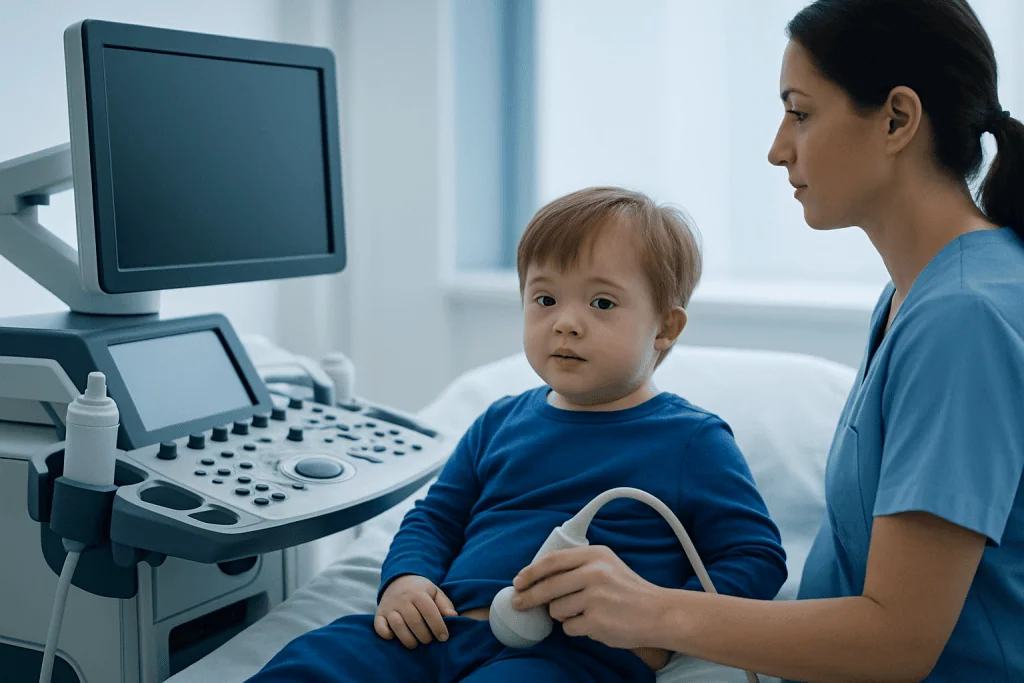
Some newborns with mosaic Down syndrome have physical characteristics that lead a clinician to recommend chromosome testing. These can include low muscle tone, a flatter facial profile, upward-slanting eyes, a single crease across the palm, smaller ears, or differences in the shape of the hands and feet. These features vary, and none on its own confirms Down syndrome.
Development may also differ from one child to another. A baby may take longer to feed, sit, crawl, walk, or develop speech and language. Learning differences can become more apparent during the preschool or school years. Early-intervention services, including physiotherapy, occupational therapy, speech and language therapy, and educational support, can help a child build skills at their own pace.
Like other people with Down syndrome, a person with mosaic Down syndrome may have a higher chance of certain health concerns. These can include congenital heart differences, hearing or vision problems, thyroid conditions, sleep-disordered breathing, digestive concerns, celiac disease, infections, and cervical spine instability. However, not every person develops these conditions.
Regular health checks are useful because some concerns are not obvious at first. A clinician may recommend hearing and vision assessments, growth and developmental monitoring, thyroid testing, and other reviews based on age, symptoms, and clinical findings. Preventive care should be tailored rather than based on assumptions about any one person’s needs.
How Mosaic Down Syndrome Happens

Mosaic Down syndrome usually results from a random cell-division event shortly after fertilization. The pregnancy begins with cells that have the usual chromosome number, but an error occurs as early cells divide. This creates two or more groups of cells: one with three copies of chromosome 21 and one with two copies.
This event is generally not caused by something a parent did or did not do before or during pregnancy. It is not caused by food, exercise, stress, work, or routine activities. Families may understandably look for a reason, but in most cases there is no preventable explanation.
The cells with an extra chromosome may be present in different proportions in blood, skin, or other tissues. For this reason, results can differ depending on the tissue tested and the number of cells examined. A blood result may not reflect the exact level of mosaicism elsewhere in the body.
Most cases are sporadic, meaning they occur by chance. A genetics specialist may recommend parental chromosome testing in selected situations, particularly if the result suggests a translocation involving chromosome 21. Genetic counseling can provide clear, personalized information about recurrence considerations for a future pregnancy.
When to Seek Medical Care
A baby or child with suspected mosaic Down syndrome should have a timely medical assessment, even when they appear well. This is mainly to identify health issues that may benefit from early care, rather than because mosaicism itself is an emergency. A pediatrician can coordinate initial evaluations and referrals.
Urgent medical review is important for symptoms such as blue or gray coloring of the lips or skin, breathing difficulty, poor feeding with sweating or tiredness, repeated vomiting, dehydration, extreme sleepiness, fever in a young infant, or poor weight gain. These symptoms can have many causes, but they should be assessed promptly, particularly in a newborn or young baby.
Parents and caregivers should also arrange a non-urgent appointment for persistent snoring or pauses in breathing during sleep, concerns about hearing or vision, constipation that does not improve, unexplained fatigue, developmental regression, or changes in walking, balance, or neck pain. A clinician can decide whether screening tests or specialist assessment is appropriate.
For adults with mosaic Down syndrome, routine primary care and age-appropriate preventive care remain important. New concerns involving mood, memory, sleep, mobility, swallowing, hearing, or day-to-day functioning should be discussed with a healthcare professional rather than attributed automatically to Down syndrome.
How Doctors Confirm the Diagnosis
Healthcare professionals diagnose mosaic Down syndrome with chromosome testing. The standard test is a karyotype, in which laboratory specialists examine chromosomes from a blood sample and count how many cells have an extra chromosome 21. Testing more cells may help detect mosaicism when it is present at a low level.
If physical findings strongly suggest Down syndrome but a blood karyotype is normal or inconclusive, a doctor may discuss testing a different tissue, such as skin cells. Additional laboratory methods, including fluorescent in situ hybridization (FISH), may be used in particular circumstances. A genetics team can explain what each result can and cannot show.
During pregnancy, screening tests can estimate the chance of Down syndrome but cannot diagnose mosaic Down syndrome. If diagnostic testing suggests mosaicism, specialists may discuss the differences between testing placental cells and amniotic fluid. Mosaic findings in placental tissue do not always reflect the chromosome pattern in the fetus, so further testing may sometimes be advised.
After confirmation, clinicians commonly arrange a careful physical examination and health screening. For a newborn, this often includes assessment of the heart and feeding, with an echocardiogram when indicated or recommended under Down syndrome care guidance. Hearing, vision, thyroid function, growth, and development are monitored over time according to individual needs.
Treatment, Developmental Support, and Follow-Up
There is no treatment that removes the extra chromosome 21. Care instead focuses on supporting health, development, independence, communication, and quality of life. The plan is personalized because mosaic Down syndrome affects people differently, and a chromosome result alone should not set limits on expectations.
Some medical conditions associated with Down syndrome can be treated or monitored effectively. For example, congenital heart differences may need observation, medicines, catheter-based procedures, or surgery depending on the specific finding. Hearing loss, vision problems, thyroid conditions, sleep apnea, and digestive conditions also have their own assessment and treatment approaches.
Early-intervention services can begin in infancy when helpful. Physical therapy may support movement and strength, occupational therapy can assist with everyday skills and sensory needs, and speech and language therapy can support communication and feeding. School-based planning and regular review can help ensure that support changes as the child grows.
Families may benefit from care coordinated by a pediatrician, family doctor, geneticist, cardiologist, developmental specialist, therapists, educators, and other professionals as needed. Acibadem International’s multidisciplinary specialists and JCI-accredited hospitals can assess and treat the individual health needs of international patients with Down syndrome.
Practical Support for Families and Everyday Life
Parents who receive a diagnosis may feel relief at having answers, as well as uncertainty about what comes next. It can help to focus first on the child in front of them: feeding, growth, bonding, routine appointments, and developmental opportunities. A healthcare team can help prioritize evaluations so families do not need to manage every question at once.
Keeping a record of medical appointments, test results, medications, developmental progress, and questions can make follow-up visits easier. Families may also find it useful to ask for written screening recommendations and contact details for local early-intervention, education, and parent-support services.
Children and adults with mosaic Down syndrome benefit from the same foundations that support everyone: nutritious food, physical activity suited to their abilities, sleep routines, vaccinations, dental care, meaningful social participation, and respect for their preferences. Families should seek medical advice before starting supplements or alternative treatments marketed as ways to change chromosomes or “cure” Down syndrome, as these claims are not supported by evidence.
Outlook is individual. Some people need considerable medical or learning support, while others have relatively mild needs. Regular healthcare, responsive developmental support, and opportunities for inclusion can help each person reach their own potential.
Frequently asked questions
Is mosaic Down syndrome less severe than other forms of Down syndrome?
Mosaic Down syndrome can be associated with a wide range of physical, developmental, and health outcomes. Some people may have fewer features associated with Down syndrome, but this is not guaranteed. The percentage of mosaic cells in a blood test cannot reliably predict an individual’s needs or abilities.
Can mosaic Down syndrome be missed on prenatal screening?
Yes. Prenatal screening estimates the likelihood of chromosome differences but does not diagnose mosaic Down syndrome. Diagnostic testing may be needed to clarify an abnormal screening result, and a genetics specialist can explain the limits of each test.
Can mosaic Down syndrome be inherited?
Most cases happen by chance after fertilization and are not inherited. In some situations, especially when chromosome testing identifies a translocation, parental testing and genetic counseling may be recommended. This provides individualized information for the family.
Does every child with mosaic Down syndrome have a heart condition?
No. Heart differences are more common in people with Down syndrome, but many children do not have a congenital heart condition. A doctor may recommend a heart examination and echocardiogram because early identification is important when a problem is present.
What support should start after a diagnosis?
The first steps usually include a pediatric assessment, recommended health screening, and discussion of developmental support. Early-intervention services can be helpful for feeding, movement, communication, and everyday skills. Support should be based on the child’s individual strengths and needs.
Can adults be diagnosed with mosaic Down syndrome?
Yes. Although many people are diagnosed before or shortly after birth, some individuals with subtle features may be diagnosed later. A clinician or genetics professional can arrange chromosome testing when there is a clinical reason to investigate.
This article is for general information only and is not a substitute for professional medical advice. Please consult a qualified doctor about your individual situation.
Explore treatments in Turkey — costs, top hospitals & a free quote
JCI-accredited · board-certified surgeons · reply within 24h
Add us as a Preferred Source to see more of our trusted health content across Google Search, AI Overviews and Discover.

More from the Health Library
How Much Weight Can You Lose in a Month? Here Is What the Evidence Says
Is Neuropathy a Disability? A Doctor-Reviewed Answer

Is Cheese Bad for Cholesterol? Here Is What the Evidence Says

E Cigarette vs Vape: Key Differences and How Doctors Tell Them Apart

High Pain Tolerance: Possible Causes and When to Seek Care