

Where Is the Gallbladder Located: An Evidence-Based Guide for Patients

The gallbladder sits under the liver in the upper right abdomen. It stores and concentrates bile, which helps break down dietary fats.
Key Takeaways
- The gallbladder sits under the liver in the upper right abdomen.
- It stores and concentrates bile, which helps break down dietary fats.
- Gallbladder discomfort is often felt in the upper right abdomen or center of the upper belly and may spread to the right shoulder or back.
- Ultrasound is commonly used to check the gallbladder when symptoms suggest gallstones or inflammation.
- Sudden severe pain, fever, jaundice, or vomiting should be assessed by a doctor promptly.
The gallbladder is located in the upper right part of the abdomen, tucked just beneath the liver and behind the lower ribs. It is a small organ that stores bile and releases it into the small intestine to help digest fats.
Overview: where is the gallbladder located?
The gallbladder is located in the upper right side of the abdomen, just underneath the liver. It rests below the rib cage, near the area where the liver meets the small intestine. For most people, it cannot be felt from the outside unless the organ becomes enlarged or inflamed.
This small, pear-shaped organ is part of the digestive system. Its main role is to store bile, a fluid made by the liver, and release it when the body needs help digesting fats. Knowing the gallbladder’s location can help patients better understand where symptoms may arise and why gallbladder problems can sometimes feel similar to other upper abdominal conditions.
Although the question seems simple, the answer is most useful when paired with function and symptom patterns. Gallbladder-related discomfort is not always limited to one pinpoint spot, and many people first notice symptoms after meals rather than by pressing on the area itself.
What the gallbladder looks like and how it relates to nearby organs
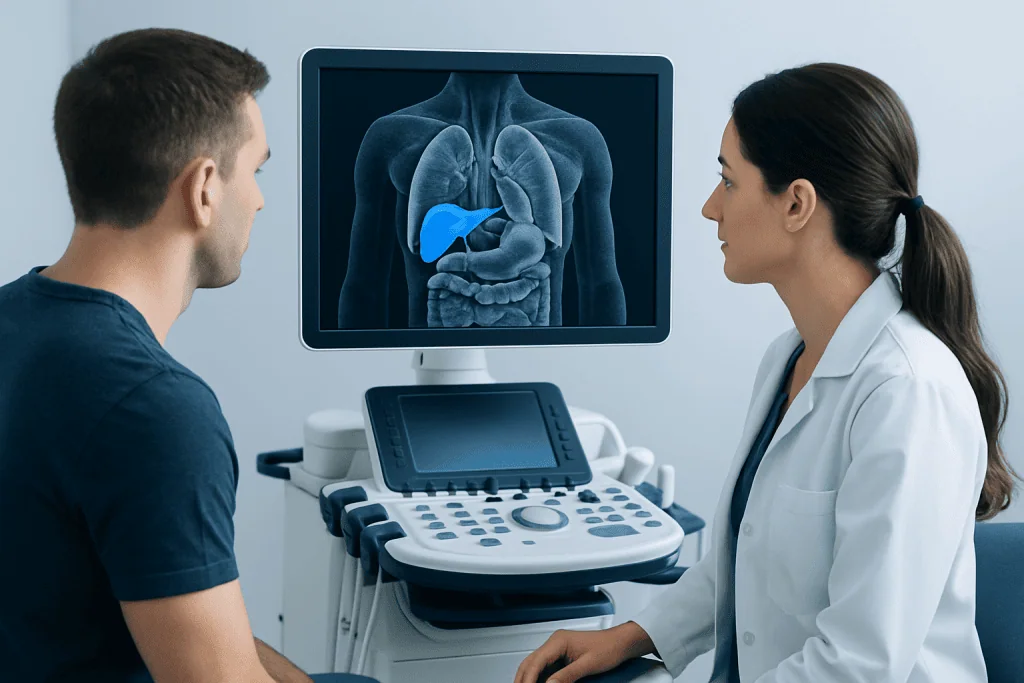
The gallbladder is a small sac, usually around the size of a small pear. It lies on the underside of the liver, which partially covers and protects it. From there, it connects to a network of bile ducts that carry bile from the liver and gallbladder toward the first part of the small intestine, called the duodenum.
Its close relationship with nearby organs explains why symptoms can be confusing. The gallbladder sits near the liver, stomach, pancreas, and upper intestine, so pain in this region may have several possible causes. Conditions such as indigestion, acid-related stomach problems, liver disease, and pancreatitis can sometimes produce overlapping symptoms.
Because the gallbladder is tucked beneath the ribs, many people describe pain as being “under the right ribs” rather than in a visible or obvious external spot. In some cases, discomfort is felt more in the middle of the upper abdomen than on the right side, especially early on.
What does the gallbladder do?
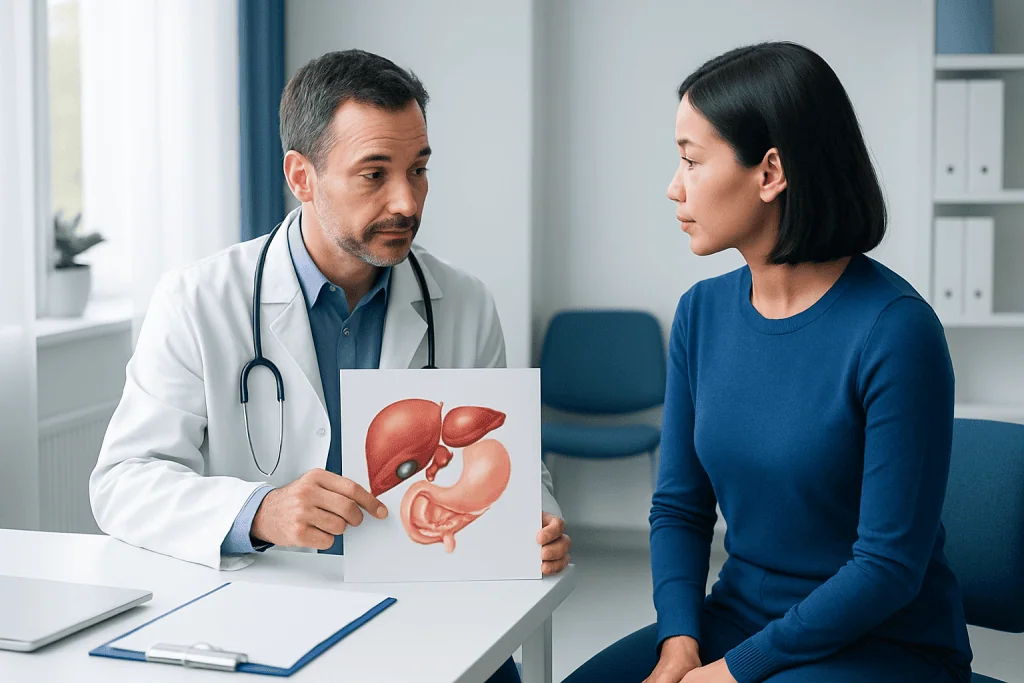
The liver continuously produces bile, a digestive fluid that helps the body absorb fats and certain vitamins. The gallbladder stores this bile between meals and concentrates it by removing some of the water. When a person eats, especially a meal containing fat, the gallbladder contracts and sends bile into the small intestine.
This means the gallbladder is helpful, but it is not essential for survival. If it is removed because of disease, bile can still flow directly from the liver into the intestine. Many people digest food normally after recovery, though some may notice temporary changes such as bloating or looser stools.
Understanding this function helps explain why symptoms often appear after eating fried, rich, or fatty foods. It also helps patients understand why gallbladder disease can cause nausea, fullness, or upper abdominal pressure rather than only sharp pain.
Where gallbladder pain is usually felt
Gallbladder pain is most often felt in the upper right abdomen, beneath the ribs. Some people feel it in the center of the upper abdomen instead, especially just below the breastbone. The discomfort may be steady rather than cramp-like, and it can build over minutes before becoming more intense.
Pain may also spread to the right shoulder, right shoulder blade, or upper back. This pattern happens because nerves in the area can refer pain beyond the organ itself. For that reason, not every person with gallbladder disease feels pain exactly where the gallbladder sits.
Symptoms commonly associated with gallbladder problems include:
- Pain after eating, especially after fatty meals
- Nausea or vomiting
- Bloating or a sense of fullness
- Tenderness in the upper right abdomen
- Fever if inflammation or infection is present
- Yellowing of the skin or eyes if a bile duct becomes blocked
Gallbladder pain should not be self-diagnosed based on location alone. Other problems, including ulcers, liver conditions, heart-related pain, and appendicitis in unusual positions, may also cause abdominal discomfort and need proper medical evaluation.
Common gallbladder conditions and risk factors
The most common gallbladder problem is gallstones, which are hardened deposits that can form inside the gallbladder. Some people have gallstones without symptoms, while others develop pain when a stone temporarily blocks the flow of bile. If blockage persists, inflammation of the gallbladder, called cholecystitis, can occur.
Other gallbladder-related problems include inflammation without stones, bile duct blockage, polyps, and less commonly cancer. Some patients are also evaluated for abnormal gallbladder emptying when symptoms suggest a functional problem even if no stones are visible.
Risk factors for gallbladder disease can include:
- Increasing age
- Female sex
- Obesity or rapid weight loss
- Pregnancy
- A family history of gallstones
- Diabetes or certain metabolic conditions
- Diets high in refined carbohydrates or low in fiber
Having one or more risk factors does not mean a person will definitely develop gallbladder disease. Many people with risk factors never have symptoms, while others with no obvious risk factors may still form stones or develop inflammation.
How doctors diagnose gallbladder problems
Diagnosis begins with a medical history and physical examination. A doctor will ask where the pain is located, when it occurs, whether it is related to meals, and whether symptoms such as fever, vomiting, or jaundice are present. The abdomen may be examined for tenderness, especially in the upper right side.
Blood tests can help look for signs of infection, inflammation, liver irritation, or bile duct blockage. Imaging is often the next step. Ultrasound is usually the first test because it is widely available, does not use radiation, and is very useful for identifying gallstones and signs of gallbladder inflammation.
In some situations, additional imaging or procedures may be needed, such as CT, MRI-based bile duct imaging, or endoscopic evaluation if doctors suspect a stone in the bile ducts. Patients who need more detailed assessment may be referred for MRI scanning or endoscopy depending on the likely cause of symptoms.
The goal is not only to confirm whether the gallbladder is involved, but also to rule out other conditions that may require a different treatment approach. That is why persistent or severe upper abdominal pain should be assessed rather than managed only at home.
Treatment options and life after treatment
Treatment depends on the diagnosis and symptom severity. If gallstones are present but causing no symptoms, immediate treatment may not be necessary. When stones cause repeated pain, inflammation, or complications, the most common treatment is surgical removal of the gallbladder, known as cholecystectomy.
Many gallbladder operations are performed using minimally invasive techniques, which often allow smaller incisions and a shorter recovery than open surgery. Patients discussing management options may hear about laparoscopic surgery as a common approach for suitable cases.
If infection, inflammation, or bile duct blockage is present, treatment may also include hospital care, intravenous fluids, pain control, antibiotics when appropriate, and procedures to clear obstructing stones. The exact plan depends on the person’s overall health and whether complications have developed.
After gallbladder removal, most people return to normal daily life and continue digesting food adequately. Some may benefit from eating smaller, lower-fat meals during early recovery. A doctor can advise on activity, diet, and follow-up based on the individual case.
Prevention, self-care, and when to seek medical care
Not all gallbladder disease can be prevented, but some habits may help reduce risk. Maintaining a steady, healthy weight, avoiding very rapid weight loss, eating a balanced diet rich in fiber, and staying physically active may support gallbladder health. People with diabetes or metabolic conditions can also benefit from regular medical follow-up.
For mild digestive discomfort, it may help to notice whether symptoms are triggered by large or high-fat meals. However, repeated upper abdominal pain should not simply be attributed to diet without an evaluation. Self-care can support comfort, but it should not replace diagnosis when symptoms suggest gallbladder disease.
Medical care should be sought promptly if there is severe or persistent upper abdominal pain, fever, chills, repeated vomiting, jaundice, dark urine, pale stools, or pain that makes breathing deeply difficult. These signs can suggest inflammation, infection, or blockage that needs urgent attention.
For patients seeking specialist assessment, Acibadem International’s multidisciplinary teams in JCI-accredited hospitals diagnose and treat gallbladder and digestive conditions for international patients. In selected cases, doctors may also evaluate related digestive disorders with tools such as colonoscopy when symptoms point to a broader gastrointestinal cause.
Frequently asked questions
Can a person feel exactly where the gallbladder is?
Usually, no. The gallbladder is tucked beneath the liver and rib cage, so it is not normally felt from the outside. People may notice pain in that area if the gallbladder becomes inflamed or blocked.
Is the gallbladder on the right or left side?
The gallbladder is on the right side of the upper abdomen. It sits just under the liver, below the right lower ribs.
What does gallbladder pain feel like?
Gallbladder pain is often described as a steady ache or pressure in the upper right abdomen or the center of the upper belly. It may start after eating and can spread to the right shoulder or back.
Can gallbladder problems cause back or shoulder pain?
Yes. Pain from the gallbladder can sometimes be referred to the right shoulder or upper back. This happens because of the way nerves carry pain signals from the upper abdomen.
Can a person live normally without a gallbladder?
Yes. The liver still makes bile after the gallbladder is removed, and bile can flow directly into the intestine. Most people recover well and return to normal activities, though some notice temporary digestive changes.
When should upper right abdominal pain be checked by a doctor?
It should be checked if it is severe, keeps coming back, or is associated with fever, vomiting, or jaundice. These symptoms can indicate a blocked bile duct, gallbladder inflammation, or another condition needing timely treatment.
References
- National Institute of Diabetes and Digestive and Kidney Diseases
- American College of Gastroenterology
- National Health Service
- Mayo Clinic
- Merck Manual Consumer Version
This article is for general information only and is not a substitute for professional medical advice. Please consult a qualified doctor about your individual situation.
Persistent digestive symptoms? Get evaluated in Turkey
JCI-accredited · board-certified surgeons · reply within 24h

More from the Health Library



Related Specialists

Dr. Şekip Şimşek
Internal Medicine
Assoc. Prof. Dr. Cem Gün
Emergency Service
Dr. Mehmed Fatih Yumrutaş
Inpatient Clinic Physicians Clinical Service
Dr. Ulaankhuu Batgerel
Cardiology